Cooling Agent Ws-5
Cooling agent WS-5 is ethyl 3-(p-menthane-3-carboxamido)acetate, also written as the ethyl ester of N-(p-menthane-3-carbonyl)glycine. It carries FEMA number 4309 and is registered under CAS number 68489-14-5. Structurally it is the glycine ester analogue of the earlier p-menthane carboxamide coolers, and functionally it is the most potent member of the group in general commercial use.
It acts as an agonist at TRPM8, the cold and menthol receptor, and delivers a cooling sensation several times stronger than N-ethyl-p-menthane-3-carboxamide at equal weight, with a slower onset, a longer persistence and very little of the bitterness or burn associated with high menthol dosage. Because it is almost odourless it can be used at cooling levels that menthol could never reach without dominating the aroma, and it is common in formulations that need cooling to last through an entire chewing or rinsing cycle.
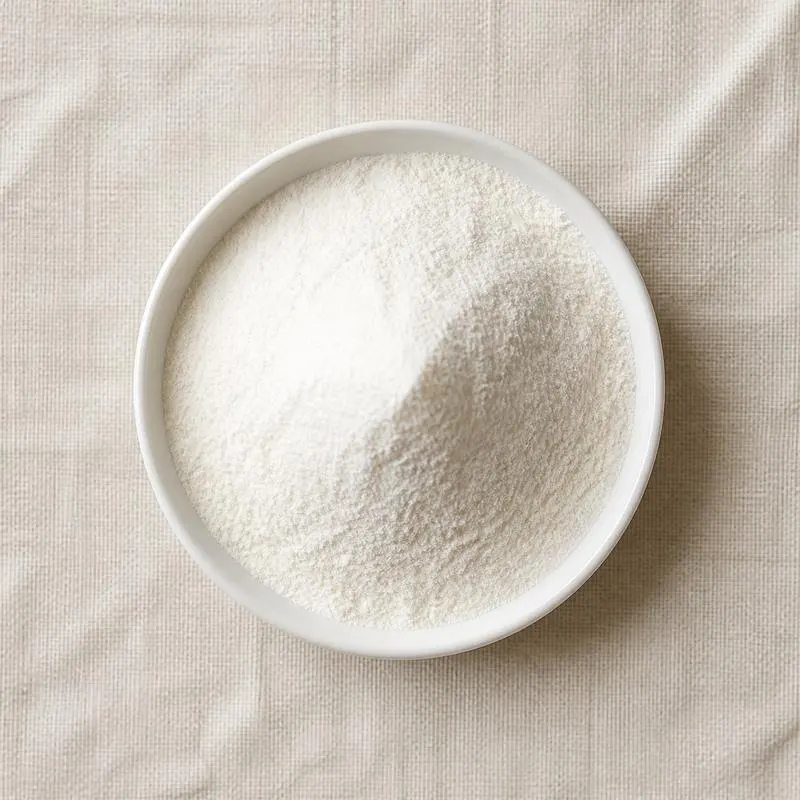
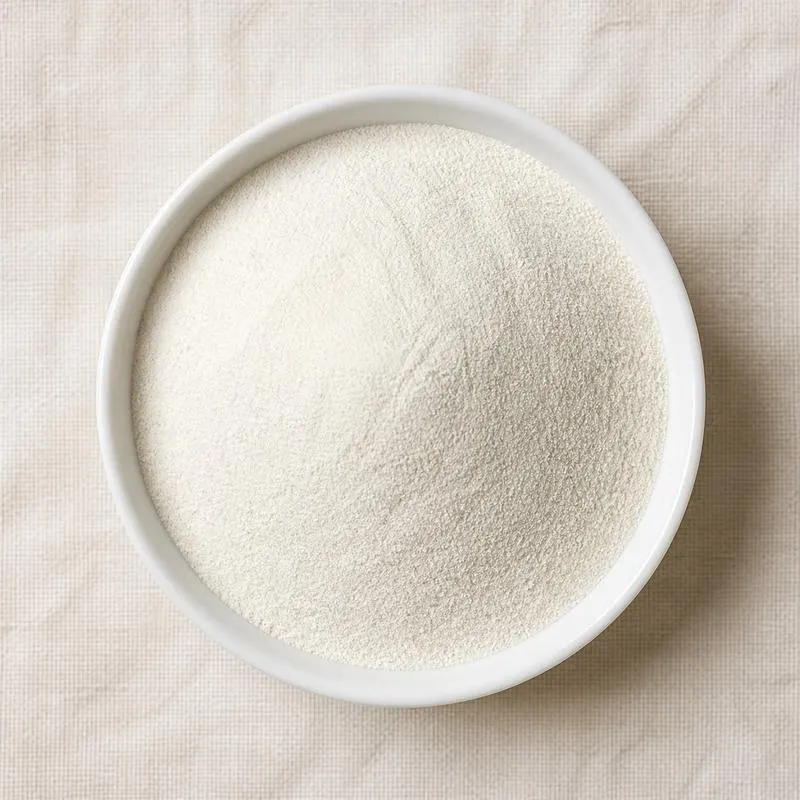
The material is a white to off white crystalline solid melting around eighty degrees Celsius. It is readily soluble in ethanol, propylene glycol, triacetin and vegetable oils and only sparingly soluble in water, so aqueous products are dosed from a carrier solution. Its high potency means dosage in a finished food is measured in parts per million, and accurate low weight dispensing or a pre-diluted solution is a practical necessity.
We source bulk Cooling Agent Ws-5 from top China manufacturers for our partners. The manufacturer is in Anhui. A smaller requirement can ship in a combined container with other ingredients.
Please send the grade you need, the volume and your destination port, and we will come back with a solution and a price.
or call +86-21-6858 0751
- Function
- Flavours and Aromas
Specifications
| Item | Specification |
|---|---|
| Appearance | White to off white crystalline powder |
| Odour | Practically odourless |
| Taste Effect | Strong, slow onset and long lasting cooling, matching reference |
| Assay by GC | Not less than 98.0 percent |
| Identification | Infrared and mass spectra conform to reference |
| Melting Range | 78 to 84 °C |
| Optical Rotation | Within the range declared for the grade |
| Loss on Drying | Not more than 0.5 percent |
| Residue on Ignition | Not more than 0.1 percent |
| Related Substances | Any single impurity not more than 0.5 percent |
| Free Glycine Ethyl Ester | Not more than 0.1 percent |
| Residual Solvent | Within the applicable limits for the solvents used |
| Solubility | Freely soluble in ethanol and propylene glycol, slightly soluble in water |
| Lead | Not more than 2 mg/kg |
| Arsenic | Not more than 1 mg/kg |
Common Markets Grades
WS-5 is a single chemical substance, so grades differ by purity, isomer distribution, physical form and carrier rather than by composition. Flavour grade material runs at not less than ninety eight or ninety nine percent by gas chromatography, with related substances and residual solvent controlled. The p-menthane ring carries several stereocentres, so optical rotation is specified alongside assay, since isomer ratio affects cooling potency and is fixed by the feedstock and the synthetic route.
Presentation covers crystalline solid and milled powder for dry blending, and pre-made solutions at typically five to twenty percent in propylene glycol, triacetin, ethanol or medium chain triglyceride, which are the usual form in which the material is bought because the neat solid is potent enough that weighing errors matter. Encapsulated and spray dried grades on maltodextrin, modified starch or a hardened fat matrix are made for chewing gum, tablets and dry mixes where delayed release is the objective. Separate specifications apply for oral care and personal care, where the substance is declared under its INCI name, and for vapour and tobacco use, where solvent and cross contamination limits are tighter.
Applications
- Chewing gum, where the long cooling persistence outlasts the flavour
- Toothpaste, mouthwash and oral films, delivering sustained cooling at low dosage
- Mints, lozenges and compressed tablets
- Electronic cigarette liquids and vapour products, where potency per unit weight matters
- Oral nicotine pouches and tobacco, as a non-menthol cooling component
- Menthol free confectionery, giving cooling without a mint aroma
- Sports and functional drinks, at parts per million dosage for a lasting refreshing finish
- Skin care, aftershave and shaving preparations
- Antiperspirant and body wash, where sustained cooling is a claimed benefit
- Topical analgesic and cooling gels, in combination with other counterirritants
China Manufacturers of Cooling Agent Ws-5
Top Cooling Agent Ws-5 manufacturers in China.

Company names and logos are the property of the manufacturers themselves. They are listed here because our own directory records them as producing this ingredient. A listing is not an endorsement by them, and we do not represent them or speak on their behalf.
Regulatory Status
In the United States WS-5 is used as a flavouring substance and holds FEMA GRAS status under FEMA number 4309, which is the basis for its use in food, beverage and chewing gum. Oral care and personal care applications sit outside the food framework and are governed by the cosmetic provisions of the Federal Food, Drug, and Cosmetic Act, or by the relevant over the counter monograph where a therapeutic claim is made, and tobacco and vapour use is regulated separately by the Centre for Tobacco Products.
In the European Union the carboxamide coolers are treated as flavouring substances under Regulation (EC) No 1334/2008, and a formulator must confirm that this particular substance appears in the Union list of authorised flavouring substances for the intended category before using it, since the cooling agent group is not listed uniformly and market positions differ. Flavouring substances carry no E number, while any carrier or solvent blended with the material is an additive or processing aid in its own right. Cosmetic use falls under Regulation (EC) No 1223/2009 with declaration by INCI name. Codex addresses flavourings through its general guidelines for their use, and the international expert evaluations of cooling agents have been conducted within the flavouring substance programmes rather than as food additive assessments.
Manufacturing Process
The synthesis starts from p-menthane-3-carboxylic acid, the same intermediate used for the earlier carboxamide coolers, which is produced from terpene raw materials in the menthol and turpentine chain and purified by distillation or through a crystalline salt. Its isomer ratio is checked at this point because it carries through unchanged into the finished cooler.
The acid is converted to its acid chloride with thionyl chloride under reflux, with evolved hydrogen chloride and sulphur dioxide taken to a caustic scrubber and excess reagent stripped under vacuum. The acid chloride is then condensed with glycine ethyl ester, charged as its hydrochloride salt and liberated in situ with a tertiary amine or aqueous alkali, in a chilled solvent so that hydrolysis of the acid chloride and of the ester is kept low. The reaction mass is washed with dilute acid to remove amine salts and then with alkali and water to remove unreacted acid, and the solvent is recovered by distillation. The crude solid is recrystallised, most often from a hydrocarbon or an alcohol and water mixture, centrifuged and dried under vacuum well below its melting point, then milled and packed in lined drums or fibre kegs. Release covers assay, related substances, optical rotation, melting range, residual solvent and heavy metals, with a sensory check of cooling intensity and duration against a retained reference.