Crocetin
Crocetin is a C20 apocarotenoid dicarboxylic acid, chemically 8,8-diapo-8,8-carotenedioic acid, and the aglycone of the crocins that colour saffron and gardenia fruit. Its molecular formula is C20H24O4 and its molar mass is 328.4 g/mol. The molecule is much shorter than a conventional C40 carotenoid and carries a carboxylic acid at each end of the polyene chain. That is what gives it its unusual solubility behaviour: the free acid is poorly soluble in both water and oil, while its salts dissolve in water and its glycosyl esters, the crocins, are freely water soluble.
As a colour it gives an intense golden yellow to orange, the same shade that crocin delivers in saffron and gardenia yellow, but with a higher tinctorial strength per unit mass because none of the weight is sugar. In practice the material is traded less as a bulk colour than as a defined active, sold on assay for supplement and research use, with the bulk colouring trade served by the crocin containing gardenia and saffron extracts instead.
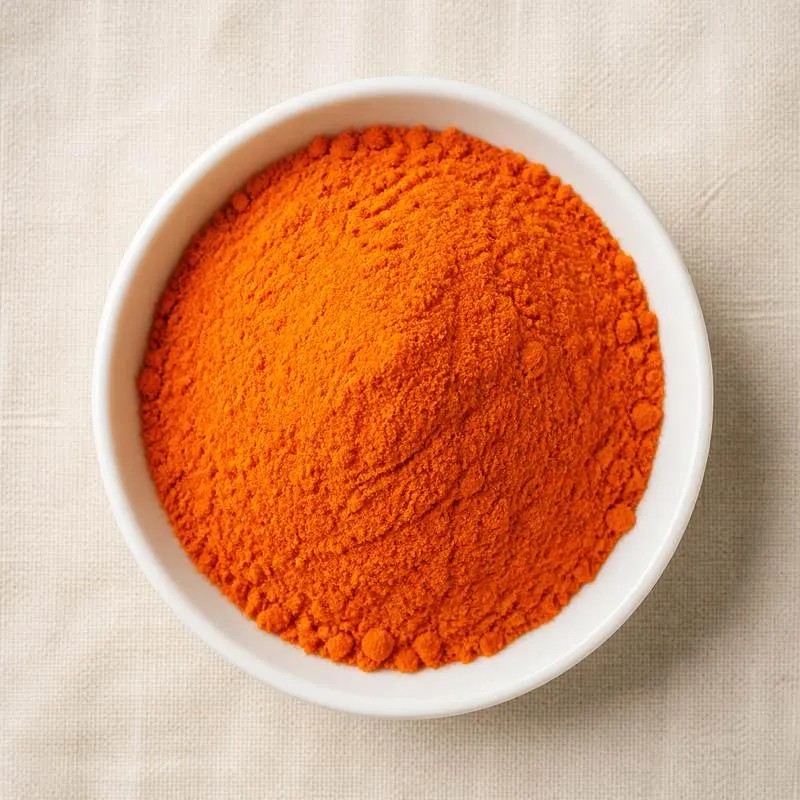
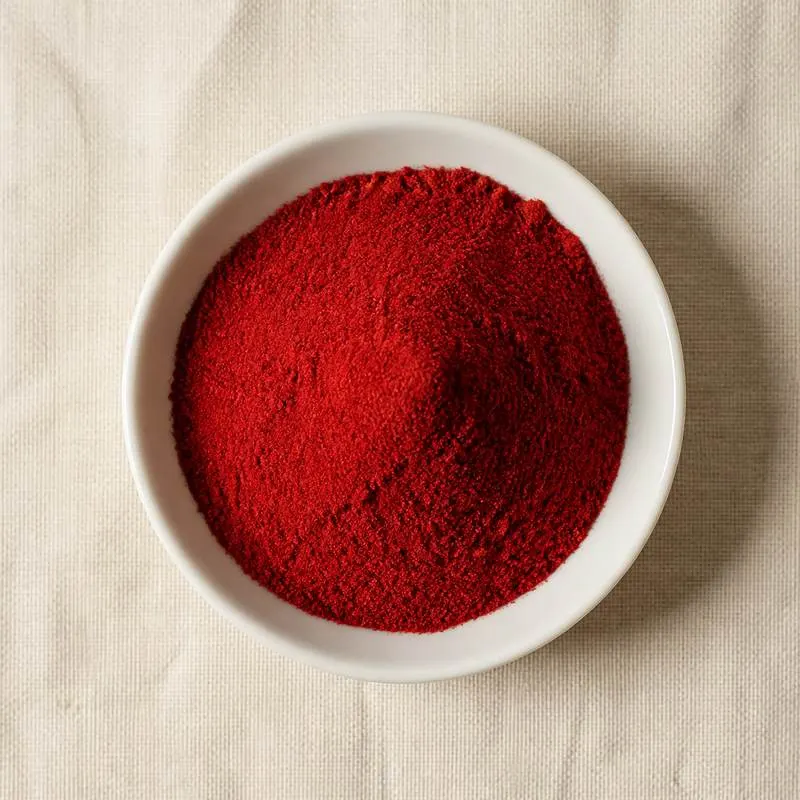
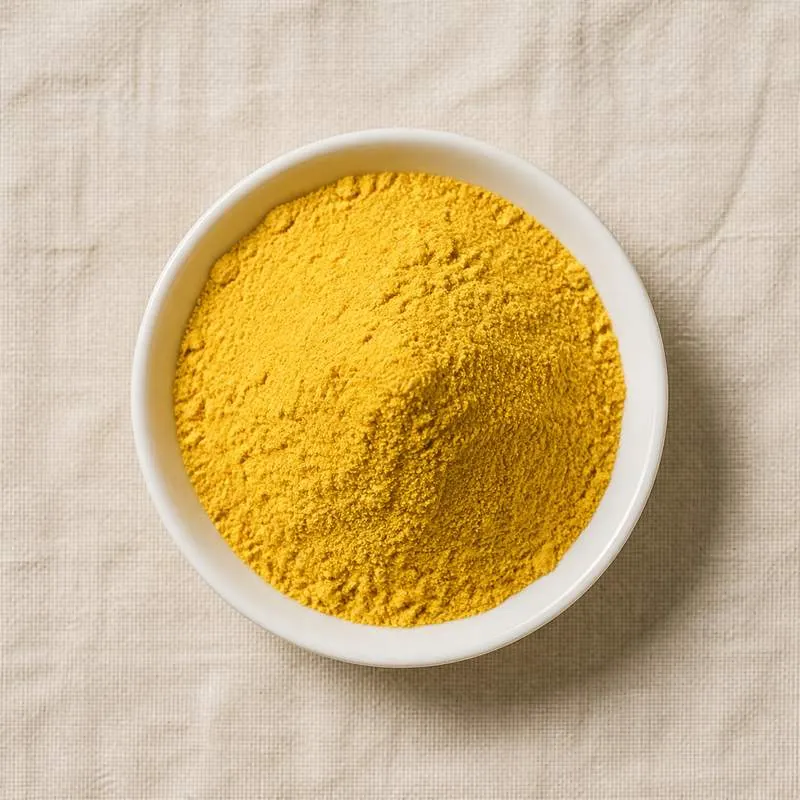
The purified substance is a brick red to orange crystalline powder that is stable when dry and dark but sensitive to light, oxygen and alkali in solution. It trades as a high assay powder and as standardised extracts in which crocetin and its glycosides are quantified together. Handling follows carotenoid practice: packed under nitrogen, protected from light, stored cool.
We source bulk Crocetin from top China manufacturers for our partners. The manufacturer is in Henan. A smaller requirement can ship in a combined container with other ingredients.
Please send the grade you need, the volume and your destination port, and we will come back with a solution and a price.
or call +86-21-6858 0751
- Function
- Colorant
Specifications
| Item | Specification |
|---|---|
| Appearance | Brick red to orange crystalline powder |
| Assay, crocetin by chromatography | 95.0% minimum |
| All-trans Isomer | 90% minimum of total crocetin |
| Identification | Absorption maxima at approximately 400, 423 and 447 nm in pyridine |
| Melting Point | Approximately 285 degrees Celsius with decomposition |
| Loss on Drying | 2.0% maximum |
| Sulphated Ash | 1.0% maximum |
| Residual Solvent, ethanol | 0.5% maximum |
| Lead | 1 mg/kg maximum |
| Arsenic | 1 mg/kg maximum |
| Cadmium | 1 mg/kg maximum |
| Total Plate Count | 1000 cfu/g maximum |
| Yeast and Mould | 100 cfu/g maximum |
| Salmonella | Absent in 25 g |
Common Markets Grades
Two grade families are traded. High purity crocetin, at 90 to 98 percent by chromatography, is produced by hydrolysing crocin and purifying the aglycone, and is sold as an active ingredient for supplements and for analytical reference. Standardised extracts, in which the specification quotes total crocins or total crocetin derivatives at 2 to 20 percent on a gardenia or saffron base, serve formulators who want the material in its natural glycoside form and are content to dose on the extract.
Within the high purity family the practical distinctions are botanical origin, gardenia fruit or saffron stigma, which affects both cost and the trace apocarotenoid profile, and the isomer specification, since the all-trans form is the commercial target and cis isomers are limited. Salt forms, chiefly the sodium and potassium crocetinates, are made where water solubility is needed and are specified separately. Because dosage in supplements is low, particle size and blend uniformity are usually specified alongside assay.
Applications
- Sleep and relaxation supplements, the largest single application, formulated in capsules and tablets at low dosage
- Eye health supplements, where it is combined with lutein and zeaxanthin
- Sports and recovery formulations positioned on antioxidant content
- Functional beverages and shots, using a water soluble salt or a crocin rich extract
- Saffron branded supplement blends, in which crocetin derivatives are the standardisation marker
- Colouring of confectionery and desserts in markets where gardenia and saffron colours are authorised
- Rice, noodle and bakery products in East Asian manufacture, using crocin bearing extracts for a saffron like yellow
- Cosmetic serums and creams formulated on carotenoid activity
- Analytical reference standard for the authentication of saffron and the detection of adulteration
- Research material in carotenoid metabolism and bioavailability studies
China Manufacturers of Crocetin
Top Crocetin manufacturers in China.
Company names and logos are the property of the manufacturers themselves. They are listed here because our own directory records them as producing this ingredient. A listing is not an endorsement by them, and we do not represent them or speak on their behalf.
Regulatory Status
Crocetin does not hold a food colour authorisation in the major Western markets. In the United States there is no colour additive listing for crocetin or for gardenia yellow, so neither may be used to colour food there; saffron itself is a spice with a separate and long standing status. In the European Union crocetin has no E number under Regulation (EC) No 1333/2008 and cannot be used as a food colour. A purified preparation offered for supplement use would need to be assessed against the novel food rules in Regulation (EU) 2015/2283 unless a significant history of consumption in the Union can be demonstrated.
The position is different in Japan and in several other Asian markets that follow similar lists. In Japan, gardenia derived yellow colour is long established among the listed natural colouring agents, and crocetin is used in food supplements. Codex does not carry a crocetin colour provision in the General Standard for Food Additives and JECFA has not adopted specifications for it. Buyers should therefore confirm the intended market and the intended function, colour or supplement active, before committing to a specification.
Manufacturing Process
The commercial feedstock is gardenia fruit rather than saffron, since gardenia carries the same crocins at a far higher concentration and a much lower cost. Dried fruit is crushed and extracted with warm water or aqueous ethanol, and the crude extract is passed over a food grade adsorption resin to separate the crocin fraction from the iridoid geniposide that accompanies it. The crocin eluate is concentrated under vacuum at low temperature.
Crocetin is then released by hydrolysis. The crocin concentrate is treated under mild alkaline conditions, or with a glycosidase enzyme where an enzymatic route is preferred, which cleaves the gentiobiose esters and frees the dicarboxylic acid. Acidifying the hydrolysate precipitates crocetin, which is filtered off, washed to remove sugars and salts, and purified by recrystallisation from a suitable solvent or by preparative chromatography where the highest assays are required. The wet cake is dried under vacuum at low temperature and milled under nitrogen. Where a salt is the target, the purified acid is neutralised with sodium or potassium hydroxide and the solution is spray dried.