Cuttlefish Ink
Cuttlefish ink is the dark secretion recovered from the ink sac of cuttlefish, principally Sepia officinalis and related species, and used in food both as a black colouring and as a marine flavouring. The black is eumelanin, an insoluble polymer of indolequinone units, present as fine granules suspended in a viscous matrix of protein, mucopolysaccharide and salt. Squid ink from Loligo and Illex species is traded alongside it and behaves in much the same way, although cuttlefish ink is denser and generally regarded as the finer material.
Because the pigment is a suspended polymer rather than a dissolved dye, the ink colours by dispersion. It gives a deep grey black in a dough or a sauce, is completely stable to heat, light and pH, and does not migrate or fade over the shelf life of a product. Alongside the colour it carries a distinct savoury marine taste from its amino acids, free glutamate and salt content, which is why it is normally treated as an ingredient chosen for both properties rather than as a colour alone.
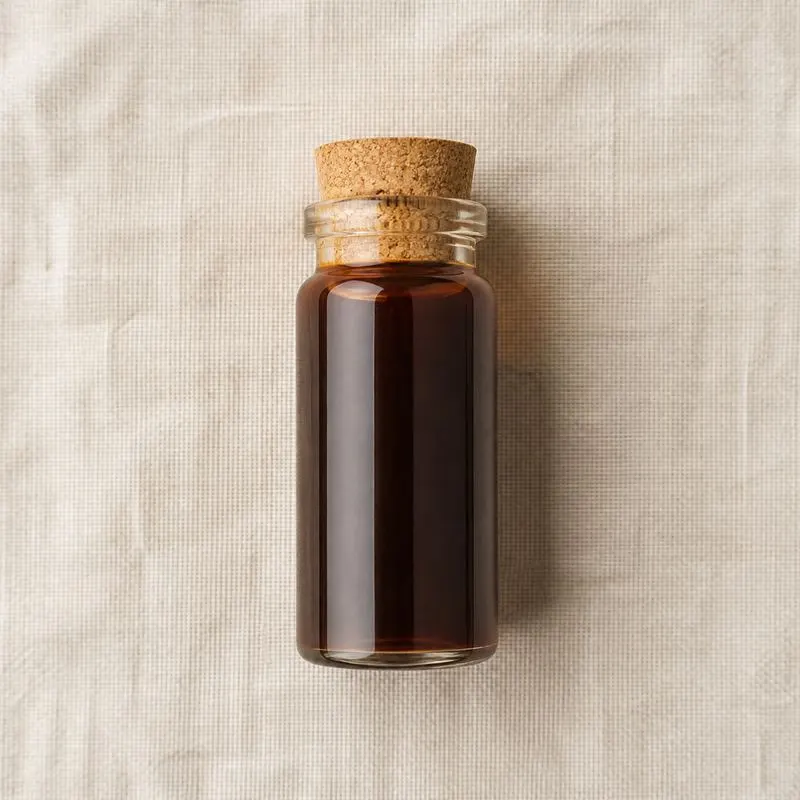
It comes as a viscous black paste or liquid, usually salted and pasteurised, at roughly 10 to 25 percent solids, and as a spray dried powder. It disperses in water and in aqueous doughs and is insoluble in oil. As a mollusc derived material it is a declarable allergen in the major markets, which limits where it can be used.
We source bulk Cuttlefish Ink from top China manufacturers for our partners. The manufacturer is in Zhejiang. A smaller requirement can ship in a combined container with other ingredients.
Please send the grade you need, the volume and your destination port, and we will come back with a solution and a price.
or call +86-21-6858 0751
- Function
- Colorant
Specifications
| Item | Specification |
|---|---|
| Appearance | Viscous black paste, homogeneous |
| Total Solids | 15.0% to 25.0% |
| Protein | 4.0% minimum |
| Sodium Chloride | 8.0% to 15.0% |
| pH | 5.5 to 7.0 |
| Total Volatile Basic Nitrogen | 35 mg N per 100 g maximum |
| Cadmium | 1.0 mg/kg maximum |
| Lead | 1.0 mg/kg maximum |
| Mercury | 0.5 mg/kg maximum |
| Total Plate Count | 10,000 cfu/g maximum |
| Yeast and Mould | 100 cfu/g maximum |
| E. coli | Absent in 1 g |
| Staphylococcus aureus | Absent in 1 g |
| Salmonella | Absent in 25 g |
Common Markets Grades
The main distinction is species and presentation. Cuttlefish ink sells at a higher price than squid ink on the strength of its blacker tone and thicker body, and specifications state the species and the catch area. Within each, the ink is sold as a pasteurised paste in tubs or sachets, as a frozen block for industrial use, and as a spray dried powder on a salt or maltodextrin carrier for dry blending, and the powder trades convenience for some loss of the fresh marine note.
Composition varies with how the ink is handled after removal from the sac. A pure ink grade is the sac contents with salt and water only; a standardised grade is diluted and stabilised with salt, water and sometimes a thickener such as xanthan gum to give a consistent viscosity and colour depth. Salt content ranges widely as a result, from a few percent to over fifteen, and is one of the figures that must be checked against a formulation. Ready to use dispersions with a stated colour depth are made for pasta and bakery lines where dosing accuracy matters.
Applications
- Black pasta, in which the ink is worked into the dough for both colour and marine flavour
- Risotto nero and paella, where it is stirred into the cooking liquid
- Black bread, buns and pizza bases
- Black gnocchi, dumpling wrappers and noodles
- Seafood sauces and stews, contributing colour and a concentrated marine taste
- Surimi and seafood analogues where a dark ingredient derived colour is wanted
- Crackers, crisps and savoury snacks in charcoal styled ranges
- Ice cream and dessert applications in savoury sweet menus
- Cheese and butter with a black marbled effect in speciality dairy
- Sauces and condiments for retail, where the ink is declared as an ingredient rather than as a colour
Brands Using Cuttlefish Ink
Widely-distributed consumer products that list Cuttlefish Ink on the ingredient label.
Brand names, product names and logos are the property of their owners. They appear here as published evidence that the ingredient is used, taken from the brand's own label or website. Their appearance is not an endorsement, and it does not mean the brand buys from us or from any manufacturer listed on this site.
China Manufacturers of Cuttlefish Ink
Top Cuttlefish Ink manufacturers in China.

Company names and logos are the property of the manufacturers themselves. They are listed here because our own directory records them as producing this ingredient. A listing is not an endorsement by them, and we do not represent them or speak on their behalf.
Regulatory Status
Cuttlefish ink is regulated as a food ingredient rather than as a colour additive in the major markets, and is declared in the ingredient list by a name such as cuttlefish ink or squid ink. This is why it appears in products that carry no additive declaration at all, and it is the principal commercial reason for choosing it over vegetable carbon. General food law applies in full: the material must meet the hygiene, contaminant and traceability requirements that apply to seafood, and it falls within the scope of fishery product controls in both the United States and the European Union.
Allergen labelling is the constraint that matters most. Molluscs are a declarable allergen in the European Union under Regulation (EU) No 1169/2011 and are among the major food allergens recognised in the United States, so any product containing the ink must declare its molluscan origin. Heavy metal limits for cephalopod products, particularly cadmium, apply to the ink as they do to the flesh, and specifications carry a cadmium figure for that reason. There is no E number and no colour additive listing, since the material is not authorised or used as an additive.
Manufacturing Process
Ink sacs are removed by hand or by mechanical separator during the primary processing of cuttlefish and squid, and are chilled immediately because the material spoils quickly at ambient temperature. The sacs are washed to remove viscera and residual mantle tissue, then opened and the contents flushed out with chilled brine. This recovery step is the one that sets quality: sacs that are ruptured or contaminated with digestive tract material carry bitter notes and a higher microbial load into the finished ink.
The crude ink is screened to remove membrane fragments and connective tissue, then standardised with water and salt to the target solids and colour depth. A thickener may be added where a defined viscosity is specified. The batch is homogenised to break up melanin agglomerates and give an even dispersion, then pasteurised, usually at around 85 degrees Celsius with a short hold, and filled hot or cooled and filled aseptically. Frozen grades are packed and blast frozen instead. Powder grades are taken from the standardised liquid, blended with salt or maltodextrin and spray dried at a moderate outlet temperature.