Cuttlefish Juice
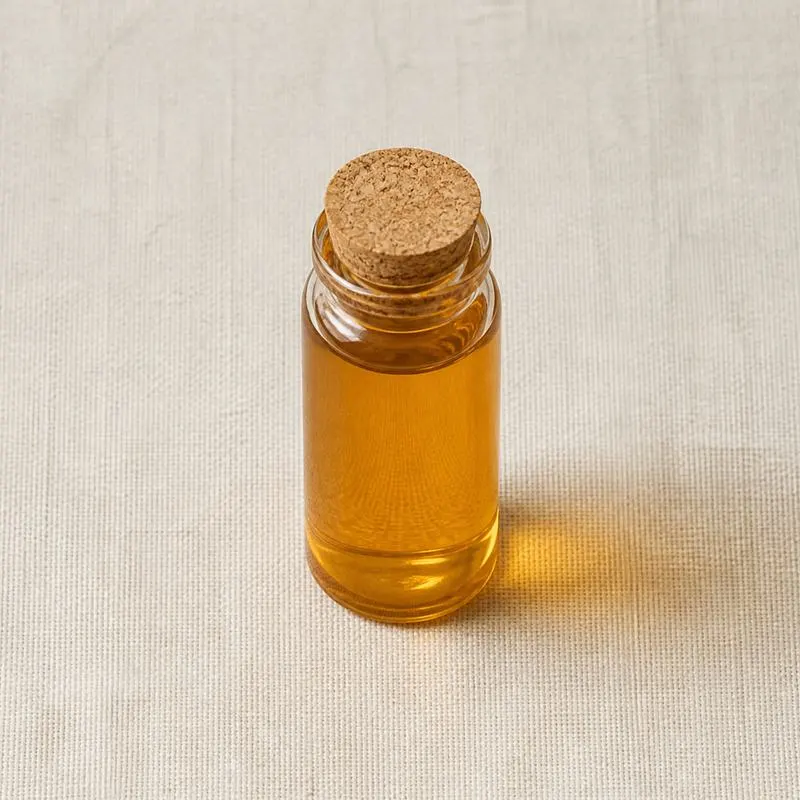
Cuttlefish juice is the culinary name for cephalopod ink, the dark secretion held in the ink sac of cuttlefish and squid and recovered during processing of the animal. It is a viscous, intensely black liquid or paste, used both as a natural colouring ingredient and as a source of marine savoury flavour.
Its colour comes from eumelanin, an insoluble polymer of indole units formed by oxidation of tyrosine, which is present as fine particles rather than as a dissolved dye. That is the fact that decides how the material behaves. The pigment is a suspension, so it will settle or streak if it is not properly dispersed, it stains equipment and porous surfaces permanently, and its colour is not sensitive to pH in the way that anthocyanin or other soluble plant pigments are. The melanin particles are held in a matrix of protein and mucopolysaccharide, and the ink also carries free amino acids, taurine, and small amounts of catecholamines and metal ions.
The savoury contribution is a briny, faintly bitter, distinctly marine taste that is much milder than the visual impact suggests. Commercial grades are salted, and ship frozen, chilled or pasteurised in sachets, tubs and drums.
We source bulk Cuttlefish Juice from top China manufacturers for our partners. The manufacturer is in Zhejiang. A smaller requirement can ship in a combined container with other ingredients.
Please send the grade you need, the volume and your destination port, and we will come back with a solution and a price.
or call +86-21-6858 0751
- Function
- Flavours and Aromas
Specifications
| Item | Specification |
|---|---|
| Appearance | Viscous homogeneous black liquid or paste, free from membrane fragments |
| Odour and Flavour | Clean marine and briny, free from ammoniacal or putrid notes |
| Colour Strength | Conforms to retained reference at declared dilution |
| Total Solids | Not less than 15.0 percent |
| Sodium Chloride | 8.0 to 15.0 percent depending on grade |
| Protein | Not less than 3.0 percent |
| pH | 5.5 to 7.0 |
| Viscosity (20°C) | Within 20 percent of reference |
| Histamine | Not more than 50 mg/kg |
| Cadmium | Within the applicable limit for the destination market |
| Lead | Not more than 1 mg/kg |
| Total Plate Count | Not more than 10,000 cfu/g |
| E. coli | Absent in 1 g |
| Salmonella | Absent in 25 g |
Common Markets Grades
The primary distinctions are species, purity and preservation. Ink from cuttlefish is generally considered denser and more flavourful than squid ink, and the two are traded separately although they are used interchangeably in many kitchens. Purity depends on how cleanly the sac has been separated, since ruptured viscera introduce digestive enzymes and off flavour, and grades are described as whole sac, expressed ink or filtered ink accordingly.
Preservation defines the commercial form. Frozen ink in blocks or sachets is closest to the raw material. Pasteurised or retorted grades in tubs and pouches are shelf stable and are the form most used industrially, though thermal processing thickens the ink and can dull the flavour. Salt is added in most grades both for taste and for preservation, and salt content is specified. Some grades are standardised with water, salt and a thickener such as xanthan or modified starch to a fixed colour strength and viscosity, since natural ink varies from lot to lot, and colour strength measured spectrophotometrically or against a reference dilution is the attribute buyers pay for.
Applications
- Black pasta and noodles, coloured in the dough rather than in the sauce
- Squid ink risotto and paella, where it supplies both colour and marine taste
- Black bread, buns and pizza bases
- Sauces for seafood dishes, giving a dense black finish
- Surimi and seafood analogues, colouring and flavouring the paste
- Filled pasta and dumpling wrappers, as a decorative contrast
- Snack seasoning and coated products with a squid ink positioning
- Retail cooking sauces and meal kits with a Mediterranean or Japanese theme
- Confectionery and novelty bakery, purely for the depth of colour
China Manufacturers of Cuttlefish Juice
Top Cuttlefish Juice manufacturers in China.

Company names and logos are the property of the manufacturers themselves. They are listed here because our own directory records them as producing this ingredient. A listing is not an endorsement by them, and we do not represent them or speak on their behalf.
Regulatory Status
Cephalopod ink is treated as a food ingredient rather than as a colour additive in most markets, because it is a traditional edible part of the animal used for its own properties. In the United States it is handled as a seafood ingredient, and a facility processing it is subject to the seafood hazard analysis and critical control point regulation at 21 CFR 123 as well as to the preventive controls rules. Molluscan shellfish is not among the major food allergens requiring declaration under United States law, which differs from the European position and is a point that has to be managed when the same product serves both markets.
In the European Union cuttlefish ink is a food of animal origin, so the establishment requires approval under Regulation (EC) No 853/2004 and the raw material must be traceable and fit for human consumption. Molluscs are among the allergens requiring mandatory declaration under the food information regulation. The ink is used as a colouring food rather than as an authorised colour additive, so it carries no E number, but that distinction is a regulated one and the European Commission guidance on the difference between colouring foods and colour additives is the relevant reference, since a selectively extracted pigment would be treated as an additive requiring authorisation. Codex is relevant through its standard and code of practice for fish and fishery products, and contaminant compliance follows the destination market limits for cadmium and lead in cephalopods.
Manufacturing Process
Ink sacs are removed by hand or by machine during the dressing of cuttlefish and squid, at the same point in the line where the viscera, beak and cuttlebone are taken out. Careful separation is the critical control, because a ruptured digestive gland contaminates the ink with enzymes and off flavour and cannot be corrected downstream. The sacs are chilled immediately and either frozen whole or emptied.
To recover the ink the sacs are pressed or the contents expressed and screened to remove membrane, then the crude ink is diluted with brine and passed through a fine filter or a decanter to take out connective tissue. The suspension is standardised with water and salt to a target colour strength, and a thickener is added where a stable, non settling paste is required. It is then homogenised, which breaks up melanin aggregates and gives an even dispersion, and preserved by one of three routes: blast freezing, pasteurisation followed by chilled distribution, or filling and retorting for an ambient shelf life. Metal detection and weight checking follow, and release covers colour strength, salt, viscosity, histamine where relevant and microbiology. Because the pigment stains, dedicated lines or thorough validated cleaning between products are normal practice.