D-α Tocopheryl Acid Succinate
D-α Tocopheryl Acid Succinate is the succinic acid half ester of natural vitamin E, formed by joining succinic acid to the phenolic hydroxyl of RRR-alpha-tocopherol and leaving the second carboxyl group of the succinate free.
That free carboxyl is what distinguishes it from the acetate ester. It raises the melting point enough that the compound is a solid rather than an oil, and it gives the molecule an acidic function that can be neutralised to a salt or reacted further, most notably with polyethylene glycol to make the surfactant tocopheryl polyethylene glycol succinate. As with the acetate, capping the ring hydroxyl removes antioxidant activity while protecting the molecule from oxidation, and intestinal esterases release free alpha-tocopherol after ingestion, so vitamin activity is preserved.
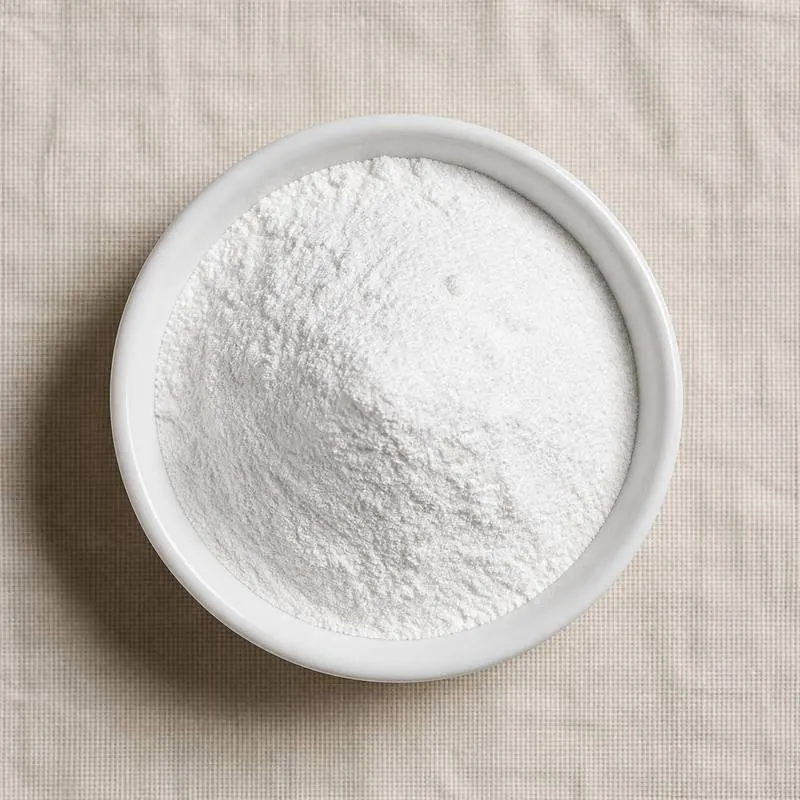
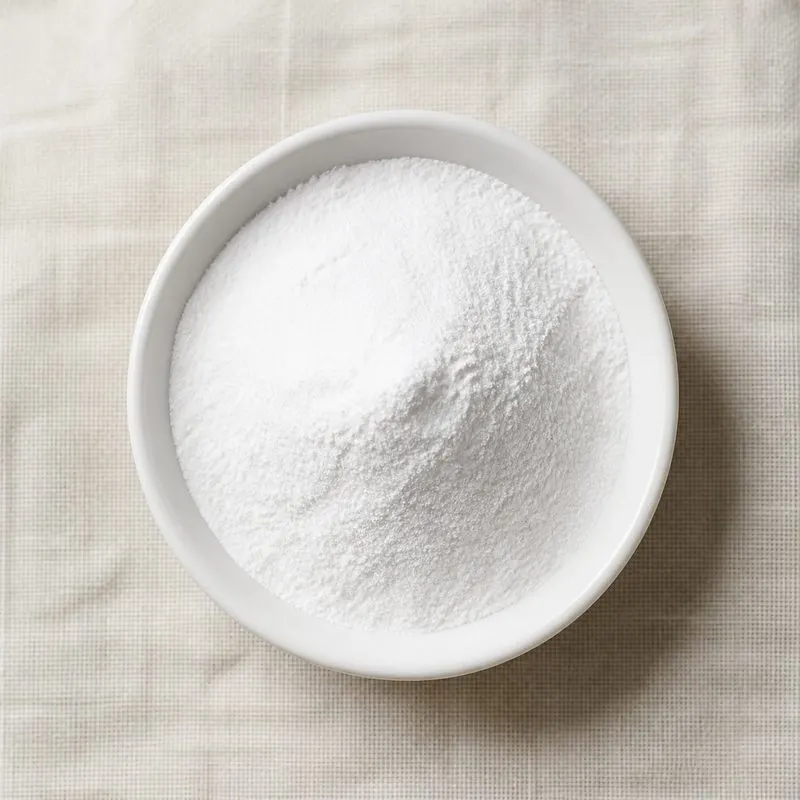
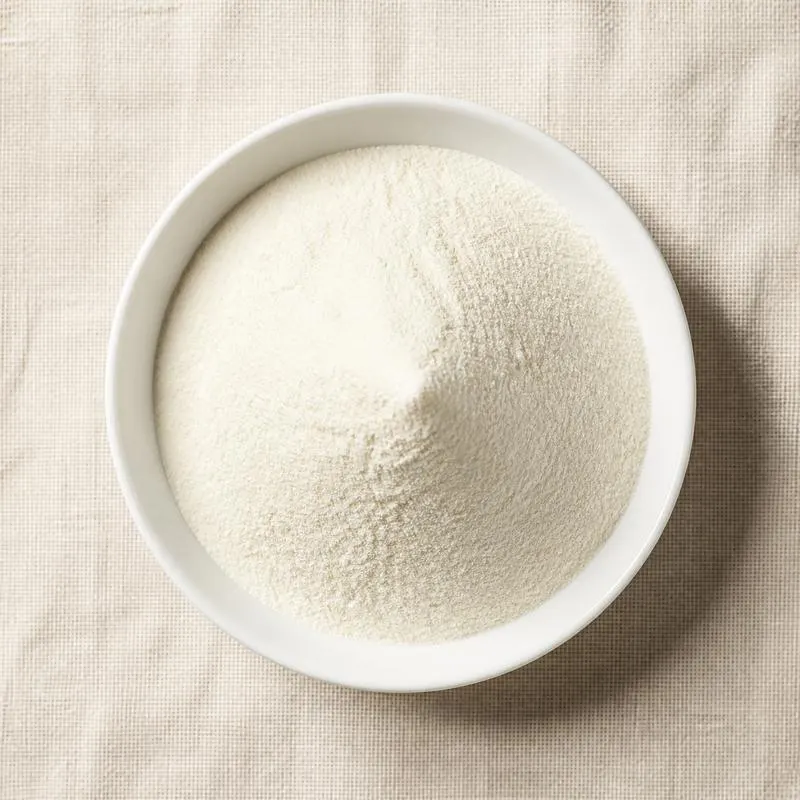
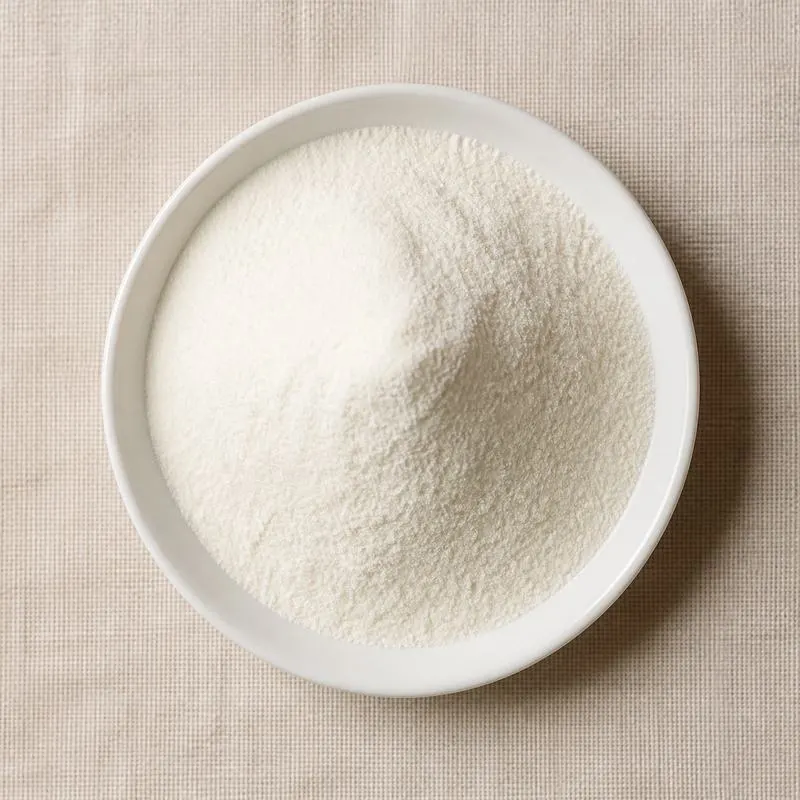
It is a white to off-white crystalline powder melting a little above 75 degrees Celsius, practically insoluble in water, soluble in ethanol, acetone and vegetable oils, and soluble in dilute alkali as the salt. Being a free flowing crystalline solid rather than a viscous oil, it can be blended and compressed directly without a spray dried carrier, which is why it is the form of choice in tablets and in dry powder supplements where adding a starch or gelatin matrix would be unwelcome.
We source bulk D-α Tocopheryl Acid Succinate from top China manufacturers for our partners. The manufacturer is in Shandong. A smaller requirement can ship in a combined container with other ingredients.
Please send the grade you need, the volume and your destination port, and we will come back with a solution and a price.
or call +86-21-6858 0751
- Function
- Vitamin
Specifications
| Item | Specification |
|---|---|
| Appearance | White to off-white crystalline powder |
| Identification | Infrared spectrum conforms to reference standard |
| Assay, as tocopheryl acid succinate | 96.0 to 102.0% |
| Potency | 1,210 IU/g minimum |
| Specific Rotation | ≥ +25.0° in ethanol |
| Melting Range | 75 to 79 °C |
| Free Tocopherol | ≤ 1.0% |
| Acid Value | 96 to 106 mg KOH/g |
| Loss on Drying | ≤ 0.5% |
| Residue on Ignition | ≤ 0.1% |
| Residual Solvents | Conforms to pharmacopoeial limits |
| Lead | ≤ 2.0 mg/kg |
| Arsenic | ≤ 1.0 mg/kg |
| Heavy Metals | ≤ 10 mg/kg |
Common Markets Grades
The material is traded essentially as one article: crystalline powder assaying 96 percent and above, corresponding to a potency of at least 1210 international units per gram, produced to the United States Pharmacopeia monograph for vitamin E and the corresponding European Pharmacopoeia monograph. Synthetic all-rac-alpha-tocopheryl acid succinate is a separate product with a different assigned activity and must not be confused with the natural RRR material.
What varies between lots is physical rather than chemical. Particle size and bulk density are specified for direct compression and capsule filling, with micronised grades made where content uniformity at low dose is critical, and granulated grades made to improve flow. A small quantity is sold not for nutritional use at all but as the intermediate for tocopheryl polyethylene glycol succinate, where the specification emphasises acid value and residual free tocopherol because both affect the esterification that follows.
Applications
- Vitamin E tablets and caplets, where a crystalline solid can be compressed directly
- Multivitamin and mineral tablets, contributing the vitamin E fraction without an oil phase
- Dry powder supplements and sachets, blending as a free flowing solid
- Chewable and effervescent tablets, where an oil form would weaken the tablet
- Capsule blends and two piece hard capsules filled with dry powder
- Clinical nutrition powders, providing a stable fat soluble vitamin in a dry matrix
- Intermediate for tocopheryl polyethylene glycol succinate, used as a solubiliser and absorption enhancer
- Fortified powdered beverages, where its low hygroscopicity suits dry blending
- Cosmetic powders and anhydrous formulations, as a stable vitamin E derivative
Brands Using D-α Tocopheryl Acid Succinate
Widely-distributed consumer products that list D-α Tocopheryl Acid Succinate on the ingredient label.
- SolarayVitamin E Dry 268 mg (400 IU) Capsules ↗Ingredient listing reads 'Vitamin E (as Natural d-Alpha Tocopheryl Succinate, Unesterified Mixed Tocopherols)', the dry oil-free form of the vitamin.Label verified 2026-08-31
- SolarayVitamin E Dry 165 mg (200 IU) Capsules ↗Same dry form at a lower dose, listing 'Vitamin E (as Natural d-Alpha Tocopheryl Succinate, Unesterified Mixed Tocopherols)'.Label verified 2026-08-31
- Nature's WayAlive! Max6 Potency Adult Complete Multivitamin ↗Supplement facts panel lists 'Vitamin E (as d-alpha tocopheryl succinate) 134 mg' among the multivitamin's nutrients.Label verified 2026-08-31
Brand names, product names and logos are the property of their owners. They appear here as published evidence that the ingredient is used, taken from the brand's own label or website. Their appearance is not an endorsement, and it does not mean the brand buys from us or from any manufacturer listed on this site.
China Manufacturers of D-α Tocopheryl Acid Succinate
Top D-α Tocopheryl Acid Succinate manufacturers in China.

Company names and logos are the property of the manufacturers themselves. They are listed here because our own directory records them as producing this ingredient. A listing is not an endorsement by them, and we do not represent them or speak on their behalf.
Regulatory Status
In the United States D-alpha-tocopheryl acid succinate is described in the United States Pharmacopeia monograph for vitamin E, which covers the alcohol, acetate and acid succinate in both natural and synthetic configurations, and it is used in dietary supplements under the general framework for supplement ingredients. Labelling must identify it as the natural RRR form where that is claimed, since the activity assigned per milligram differs from the all-rac material.
In the European Union D-alpha-tocopheryl acid succinate is among the vitamin E forms permitted in food supplements under Directive 2002/46/EC. It is not a food additive and carries no E number, since the esterified molecule has no antioxidant function. The European Pharmacopoeia carries a monograph for the succinate, and where the substance is used in a medicinal product the pharmacopoeial specification applies. Use in infant formula and in general food fortification is governed by the lists of permitted vitamin forms in the relevant compositional and fortification rules, which do not include every ester in every category, so the intended food category should be checked before use.
Manufacturing Process
The route starts from natural alpha-tocopherol recovered from vegetable oil deodoriser distillate. Free fatty acids in the distillate are esterified with methanol and stripped, sterols are crystallised out at low temperature, and molecular distillation under high vacuum concentrates the tocopherols. Because the concentrate is gamma dominant, the beta, gamma and delta homologues are converted to alpha by aminomethylation with formaldehyde and a secondary amine followed by catalytic hydrogenation, which leaves the natural RRR side chain configuration unchanged.
The purified alpha-tocopherol is then reacted with succinic anhydride in an inert solvent, usually with a base or an acid catalyst at moderate temperature, so that the anhydride ring opens onto the phenolic hydroxyl and leaves one carboxyl group free. The reaction mixture is washed to remove unreacted anhydride and succinic acid, then the ester is crystallised from a solvent such as ethanol or heptane, filtered, washed and vacuum dried below its melting point. The dried cake is milled and screened to the target particle size and blended to a declared potency, with handling under nitrogen to protect any residual free tocopherol.