Succinic Acid
Succinic acid is butanedioic acid, a four carbon dicarboxylic acid of formula C4H6O4, occurring naturally in amber, in sugarcane and in the tissues of most living organisms as an intermediate of the citric acid cycle. In food it is used as an acidulant and flavour agent, and it is unusual among the common food acids in that its taste is not simply sour, carrying a salty, slightly bitter character that reinforces savoury and shellfish notes.
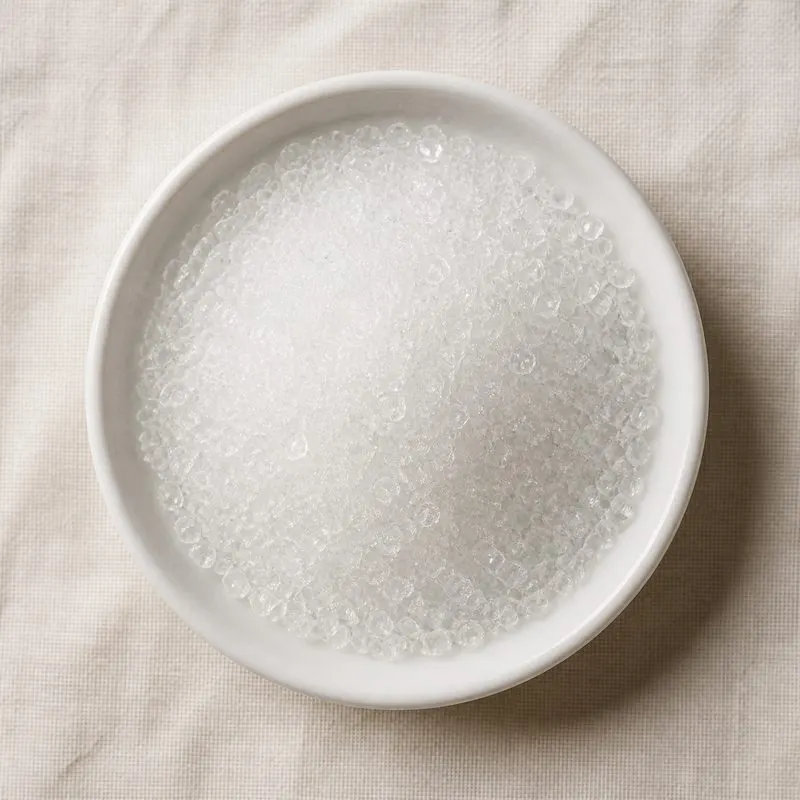
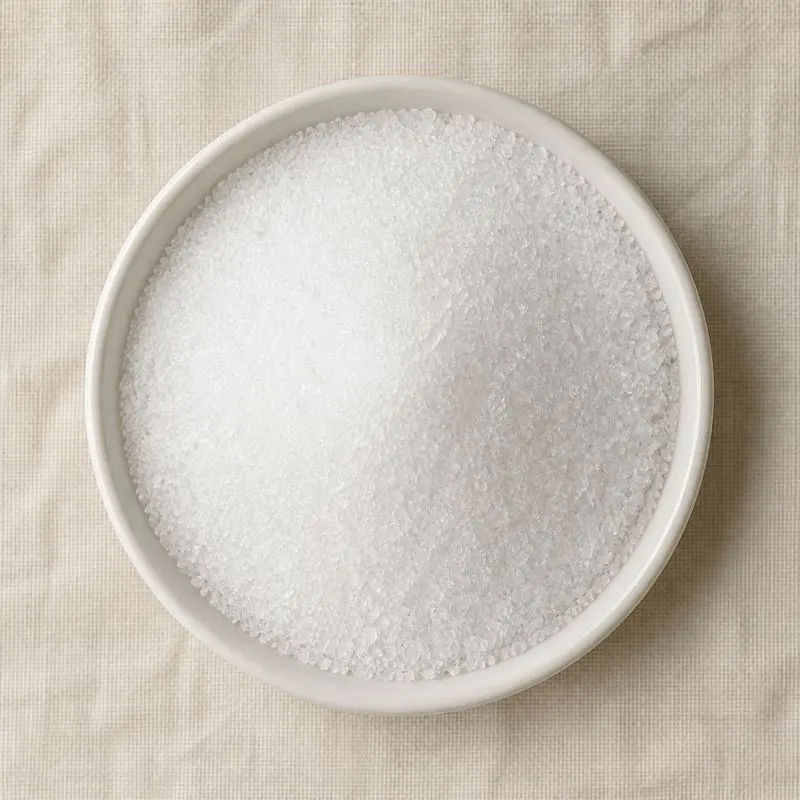
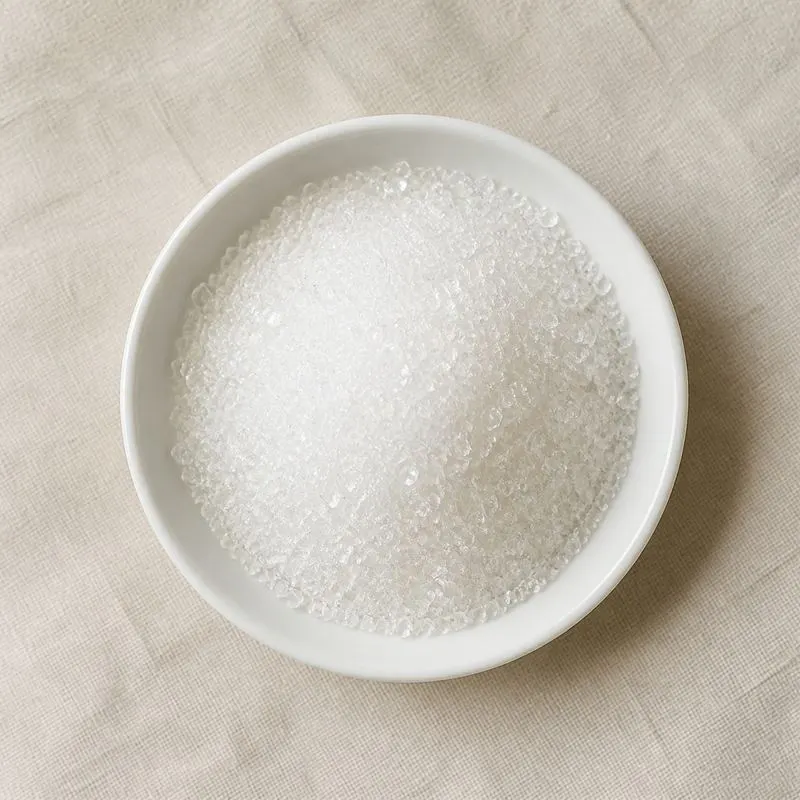
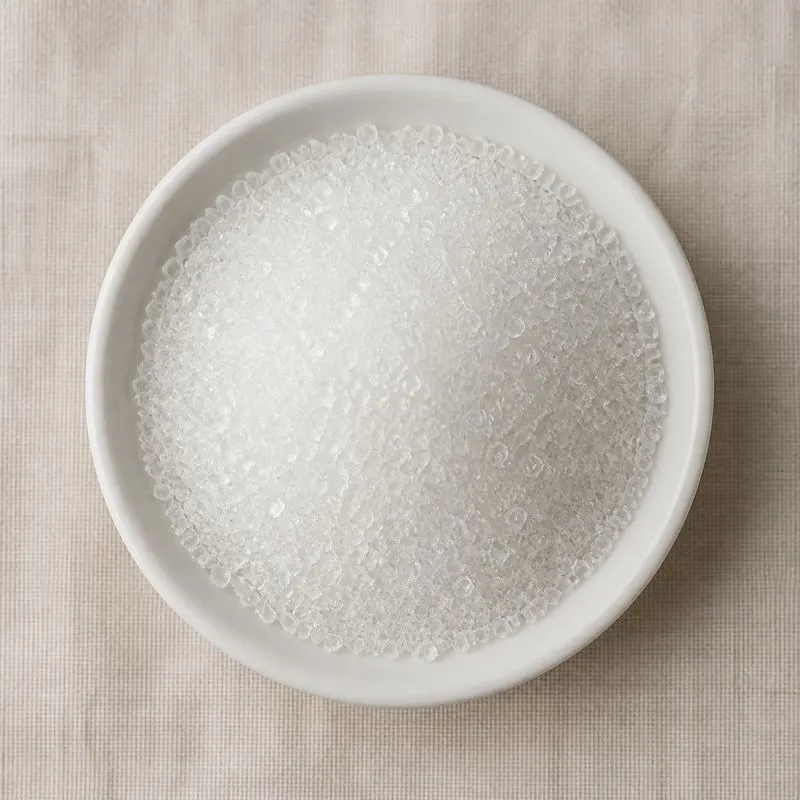
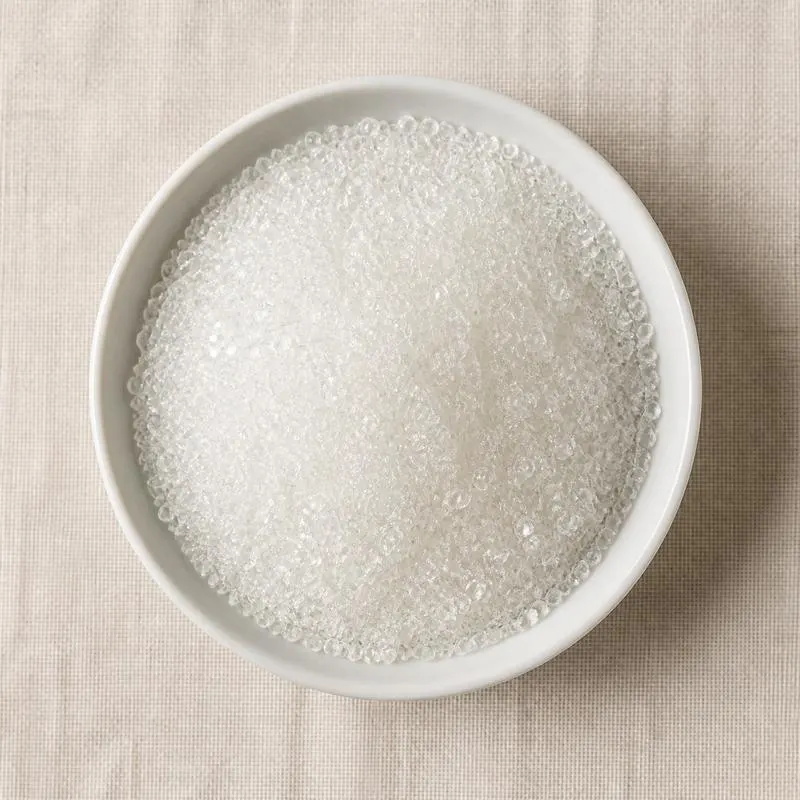
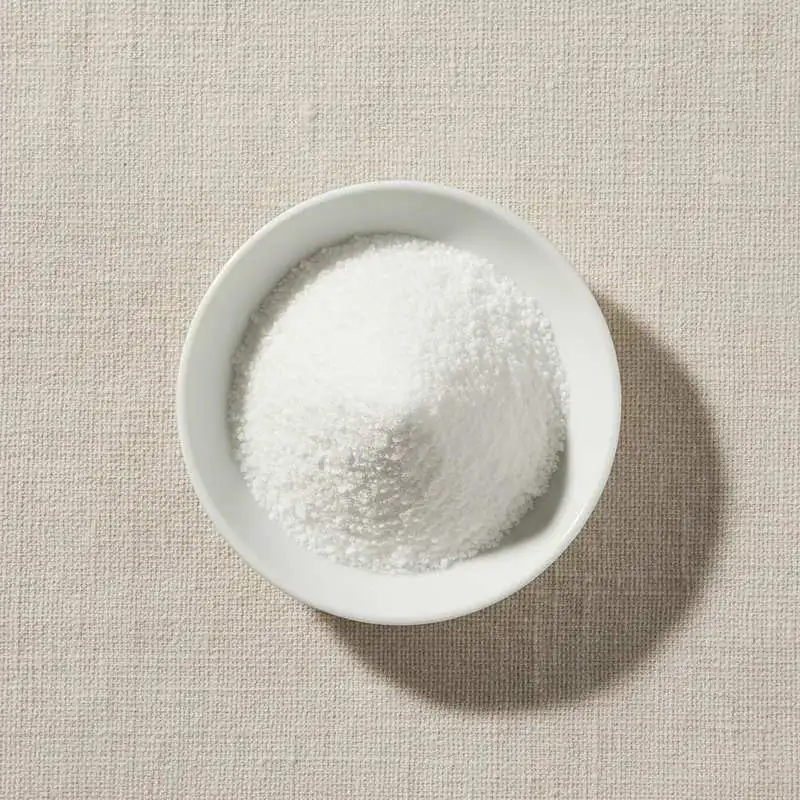
The commercial material is a white crystalline powder or colourless crystals, odourless, with a melting point around 185 degrees Celsius. It is moderately soluble in water, roughly 8 grams per 100 millilitres at room temperature and much more soluble hot, soluble in ethanol and poorly soluble in nonpolar solvents. A one percent aqueous solution sits near pH 2.7.
Because the acid is only sparingly soluble in cold water and is not hygroscopic, it behaves differently from citric or malic acid in a dry system. It dissolves slowly, which gives a delayed and prolonged acid release rather than an immediate sour hit, and it does not draw moisture into a dry blend. Both properties make it useful in dough conditioning, in dry seasonings and in effervescent and encapsulated systems where premature reaction has to be avoided.
We source bulk Succinic Acid from top China manufacturers for our partners. The manufacturer is in Anhui. A smaller requirement can ship in a combined container with other ingredients.
Please send the grade you need, the volume and your destination port, and we will come back with a solution and a price.
or call +86-21-6858 0751
Specifications
| Item | Specification |
|---|---|
| Appearance | White crystalline powder or colourless crystals |
| Identification | Infrared spectrum conforms to reference; positive succinate reaction |
| Assay, dried basis | Not less than 99.0% |
| Melting range | 184 to 190 degrees Celsius |
| pH, 1% aqueous solution | 2.5 to 3.0 |
| Loss on drying | Not more than 0.5% |
| Residue on ignition | Not more than 0.05% |
| Colour of solution | Clear and colourless at 5% in water |
| Sulphate, as SO4 | Not more than 0.02% |
| Chloride, as Cl | Not more than 0.02% |
| Arsenic, as As | Not more than 1 mg/kg |
| Lead, as Pb | Not more than 1 mg/kg |
| Total plate count | Not more than 100 cfu/g |
| Salmonella | Absent in 25 g |
Common Markets Grades
Food grade succinic acid is traded at an assay of 99 percent minimum, most commonly as a fine to standard crystalline powder. Particle size options run from milled fine grades for dry beverage and seasoning blends to coarse crystals for effervescent and tabletting use, where a larger crystal delays dissolution and limits dust. The disodium salt, sodium succinate, is a distinct article traded alongside the free acid and is used where the savoury effect is wanted without lowering pH.
Bio-based and petrochemical material are both on the market and are chemically identical, but they are documented differently. Fermentation derived product comes with the renewable carbon and non genetically modified declarations that clean label and bio-polymer buyers require, and typically carries a tighter colour specification. Technical and polymer grades of the same acid, used for polyester polyols, plasticisers and resins, are made to looser residual and colour limits and are held separately from food stock. Pharmaceutical grade is produced against pharmacopoeia monographs.
Applications
- Savoury seasonings and instant soup bases, where it contributes the shellfish and broth character associated with clam and scallop and reinforces glutamate driven savouriness
- Bread and steamed bun doughs, where it acts as a conditioner, strengthening the gluten network and adjusting dough pH without the fast dissolution of citric acid
- Dry beverage powders and confectionery, where its slow dissolution gives an acid release that builds rather than spikes
- Meat curing and marinades, where it lowers pH, supports colour set and works with other acids to control spoilage flora
- Sake, wine and brewed products, where it occurs naturally from fermentation and is adjusted to the target profile
- Effervescent tablets and drink discs, where its low hygroscopicity keeps a bicarbonate blend stable through storage
- Fats and oil systems, where its two carboxyl groups chelate trace metals and slow oxidative rancidity
- Pickles and relishes, where it modifies the acid profile away from a purely sharp vinegar note
- Feed and pet food acidification, where it lowers gut pH and is used alongside other organic acids
- Bio-based polyester and polyurethane manufacture, where it is the diacid monomer, in grades outside the food specification
Brands Using Succinic Acid
Widely-distributed consumer products that list Succinic Acid on the ingredient label.
- The Inkey ListSuccinic Acid Treatment ↗A blemish treatment cream using 2 percent succinic acid together with 2 percent sulfur and 1 percent salicylic acid.Label verified 2026-08-31
- The Inkey ListHydrocolloid Invisible Pimple Patches ↗Hydrocolloid patches infused with 0.4 percent salicylic acid, 0.4 percent succinic acid and 0.2 percent ectoin.Label verified 2026-08-31
- Glow RecipeStrawberry Smooth BHA+AHA Salicylic Serum ↗An exfoliating serum whose acid complex combines salicylic and mandelic acids with strawberry, azelaic acid and succinic acid.Label verified 2026-08-31
Brand names, product names and logos are the property of their owners. They appear here as published evidence that the ingredient is used, taken from the brand's own label or website. Their appearance is not an endorsement, and it does not mean the brand buys from us or from any manufacturer listed on this site.
China Manufacturers of Succinic Acid
Top Succinic Acid manufacturers in China.

Company names and logos are the property of the manufacturers themselves. They are listed here because our own directory records them as producing this ingredient. A listing is not an endorsement by them, and we do not represent them or speak on their behalf.
Regulatory Status
In the United States succinic acid is affirmed as generally recognised as safe for use as a flavour enhancer, flavouring agent, pH control agent and as a component of dough conditioning systems, listed under 21 CFR 184.1091, with use at levels consistent with good manufacturing practice. The Flavour and Extract Manufacturers Association has also recognised it for flavour use, and purity is normally certified against the Food Chemicals Codex monograph.
In the European Union succinic acid is an authorised food additive with the number E 363. Its permission is narrower than that of the other common food acids, and Regulation (EC) No 1333/2008 restricts it to a limited set of categories including dry powdered products such as desserts, soups and broths and drink mixes, rather than granting it a general quantum satis clearance. Identity and purity criteria are set out in Regulation (EU) No 231/2012. Succinic acid appears in the Codex General Standard for Food Additives as an acidity regulator, and JECFA has published specifications for it. Where the acid is used as a flavouring rather than as an additive, the flavouring regulations of the market apply instead.
Manufacturing Process
Two routes supply the market. The established petrochemical route hydrogenates maleic anhydride, obtained from the catalytic oxidation of butane or benzene, over a palladium or nickel catalyst to give succinic anhydride, which is hydrolysed to the acid, then crystallised and dried. This route is well understood and gives a low colour product, and it remains a large part of supply.
The fermentation route is now the principal source of food grade material. Glucose from hydrolysed maize or cassava starch, or sucrose from cane, is fermented anaerobically with organisms such as Actinobacillus succinogenes, Basfia succiniciproducens or engineered Escherichia coli and yeast strains, which run the reductive branch of the citric acid cycle and fix carbon dioxide into the product, so the fermenter is fed carbon dioxide as a co-substrate. Base is added continuously to hold pH, giving a succinate salt in the broth. Cells are removed by filtration, and the acid is recovered by acidification and crystallisation, by electrodialysis and ion exchange, or by direct crystallisation from a low pH broth in processes designed to avoid a gypsum residue. The liquor is decolourised over activated carbon, concentrated under vacuum, crystallised, centrifuged, dried in a fluid bed, milled or sieved to the target cut and packed.