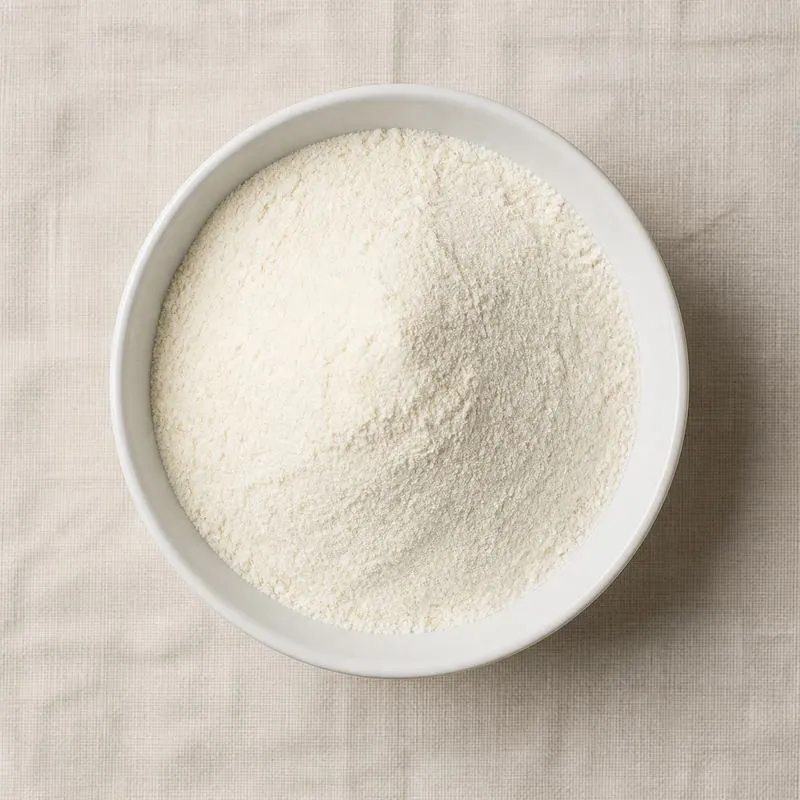
Demineralized Whey
Demineralised whey is whey powder from which a defined proportion of the mineral salts has been removed, leaving the lactose and whey protein largely intact. Sweet whey as it comes from cheese making carries around 8 to 10 percent ash on a dry basis, a mineral load dominated by potassium, sodium, chloride and calcium that makes the powder salty and gives it an osmotic load unsuitable for infant nutrition.
Grades are named for the percentage of minerals removed. D40 whey has around 40 percent of the ash taken out, D50 and D70 sit in the middle of the range, and D90 has roughly 90 percent removed, bringing ash down to about 1 percent or below. As demineralisation proceeds the powder loses its salty note and becomes clean and mildly sweet, dominated by lactose, and the protein fraction, roughly 11 to 13 percent of the powder, remains in its native undenatured state provided the process is run cold.
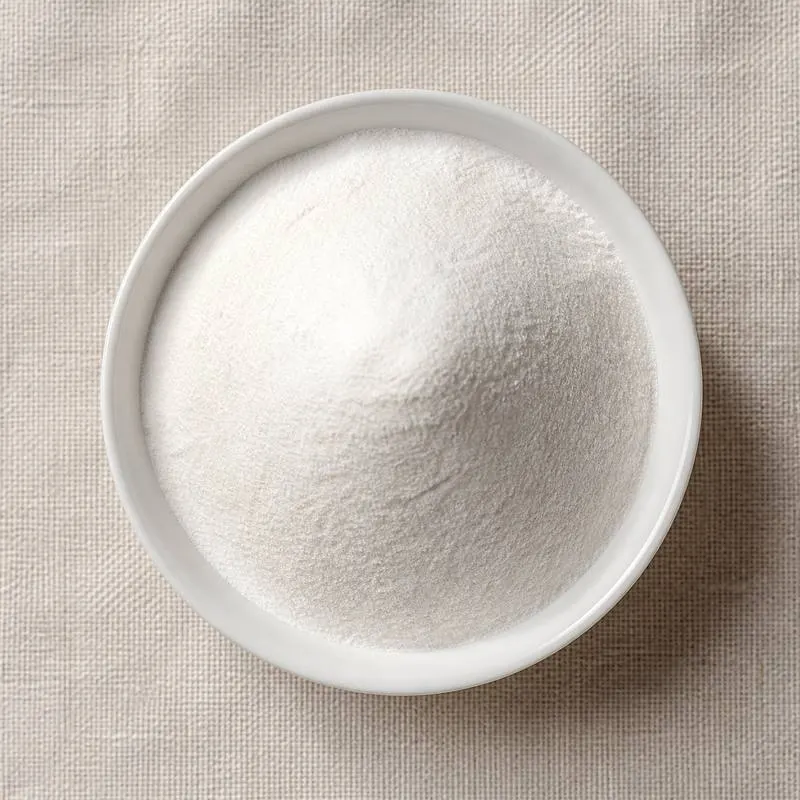
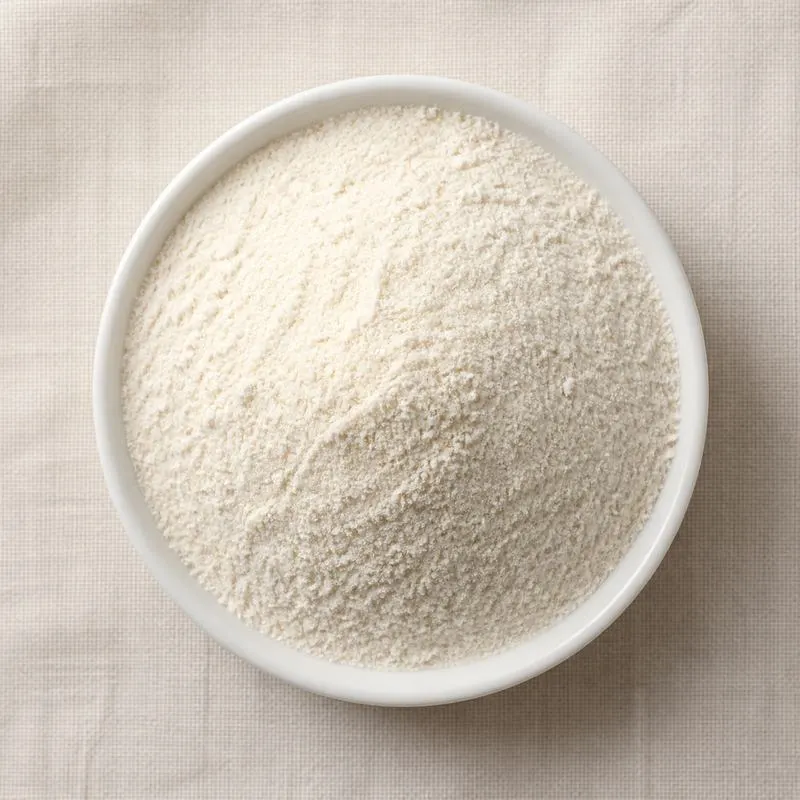
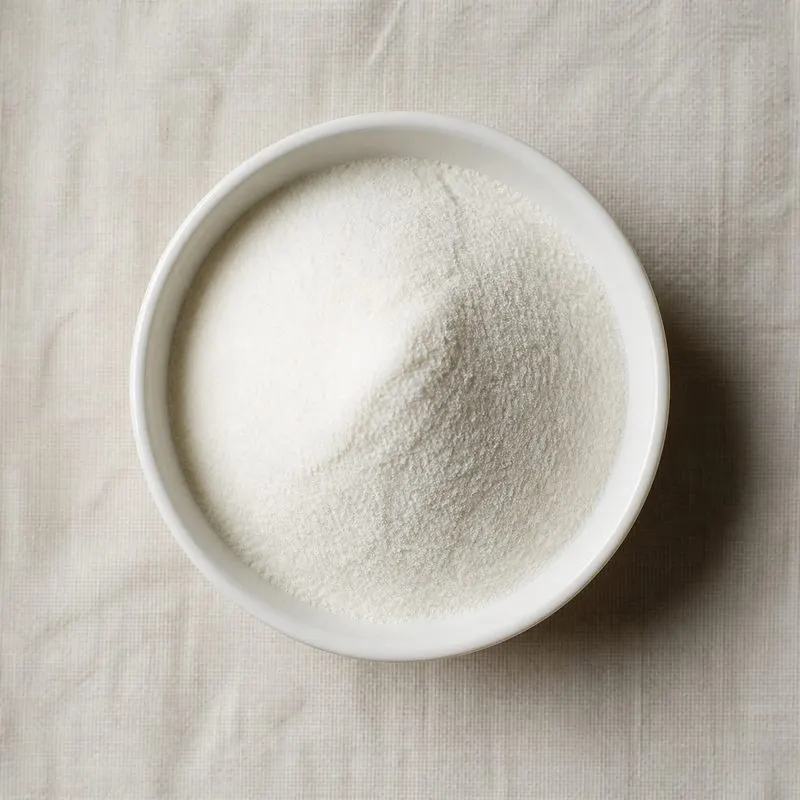
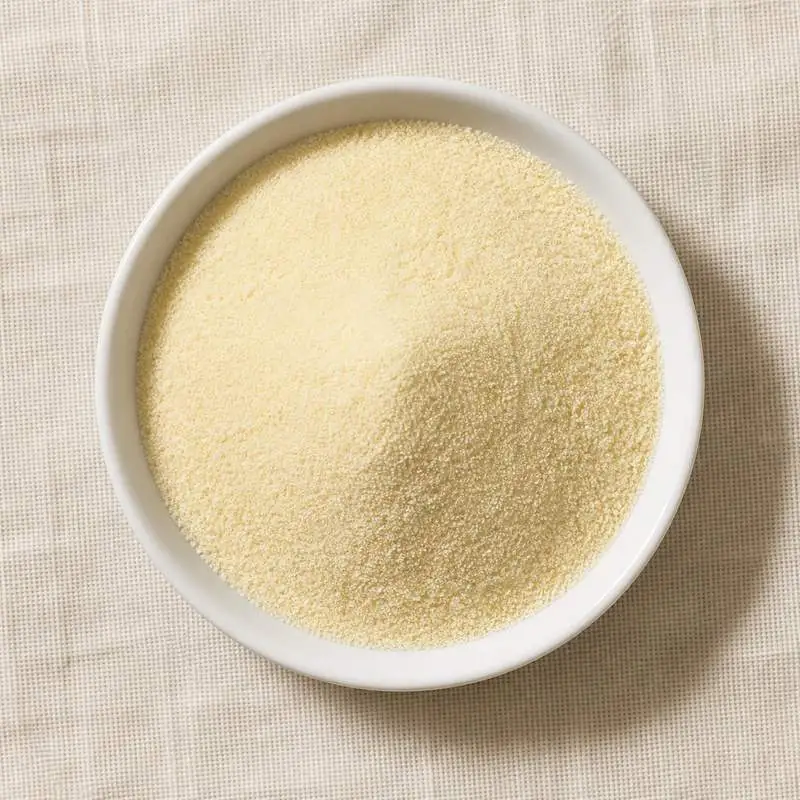
The material is a white to pale cream free flowing powder, highly soluble, and hygroscopic in proportion to its lactose content. Because the lactose is present largely in amorphous form unless deliberately crystallised, the powder cakes readily if it takes up moisture, which decides how it is packed and stored.
We source bulk Demineralized Whey from top China manufacturers for our partners. The manufacturer is in Beijing. A smaller requirement can ship in a combined container with other ingredients.
Please send the grade you need, the volume and your destination port, and we will come back with a solution and a price.
or call +86-21-6858 0751
- Function
- Protein
Specifications
| Item | Specification |
|---|---|
| Appearance | White to pale cream free flowing powder, free from lumps |
| Odour and Taste | Clean mildly sweet dairy flavour, free from salty or bitter notes |
| Demineralisation Level | Not less than 90 percent for D90 grade |
| Protein (dry basis, N x 6.38) | Not less than 11.0 percent |
| Lactose | Not less than 80.0 percent |
| Ash | Not more than 1.5 percent |
| Moisture | Not more than 4.0 percent |
| Fat | Not more than 1.5 percent |
| pH (10 percent solution) | 6.0 to 7.0 |
| Titratable Acidity | Not more than 0.16 percent as lactic acid |
| Insolubility Index | Not more than 0.5 mL |
| Nitrate and Nitrite | Not more than 10 mg/kg as nitrate |
| Lead | Not more than 0.1 mg/kg |
| Total Plate Count | Not more than 10000 cfu/g |
| Coliforms | Negative in 0.1 g |
| Cronobacter sakazakii | Negative in 10 g |
| Salmonella | Negative in 25 g |
Common Markets Grades
The ladder runs from D40 through D50, D70 and D90 to the fully demineralised material sometimes described as D95. D40 is the commodity grade, used in confectionery, bakery and ice cream where a moderate reduction in salt is enough. D50 and D70 serve dairy and beverage applications and some follow on nutrition products. D90 is the infant formula grade and carries by far the tightest specification, since it is used at high inclusion in a product for the most vulnerable consumers.
Beyond the ash figure, D90 grades are differentiated by whether they were made by ion exchange, electrodialysis or a nanofiltration led route, because each leaves a different residual mineral balance and different trace residues. Protein content, lactose content and the degree of protein denaturation are specified alongside, with infant grades required to show minimal denaturation. Whey source is also declared, since sweet whey from rennet coagulated cheese and acid whey from fresh cheese and casein manufacture behave differently, acid whey being higher in calcium and phosphate and harder to demineralise.
Applications
- Infant formula manufacture, where D90 whey adjusts the casein to whey protein ratio toward that of human milk
- Follow on and growing up milk formulations, using D70 and D90 grades
- Clinical and medical nutrition, where a low mineral, low osmolality protein and lactose source is required
- Chocolate and confectionery, where lower ash grades replace milk powder without a salty note
- Ice cream and frozen desserts, contributing milk solids not fat at lower cost than skimmed milk powder
- Bakery products, where lactose supports crust colour and the protein contributes to structure
- Beverage powders and instant drinks, where high solubility and clean flavour matter
- Processed cheese and dairy spreads, as a source of dairy solids
- Calf milk replacers and young animal feeds, where a low mineral lactose source aids digestion
Brands Using Demineralized Whey
Widely-distributed consumer products that list Demineralized Whey on the ingredient label.
- Cow & Gate (Nutricia)Cow & Gate 1 First Infant Milk Powder, 800 g ↗Ingredient list reads 'Lactose (from milk), Vegetable oils..., Skimmed milk, Demineralised whey (from milk), Whey concentrate (from milk)...'.Label verified 2026-08-31
- Aptamil (Nutricia)Aptamil 1 First Infant Milk Powder, 700 g ↗Demineralised whey from milk is listed in the dairy-based blend alongside lactose, vegetable oils, skimmed milk and whey concentrate.Label verified 2026-08-31
Brand names, product names and logos are the property of their owners. They appear here as published evidence that the ingredient is used, taken from the brand's own label or website. Their appearance is not an endorsement, and it does not mean the brand buys from us or from any manufacturer listed on this site.
China Manufacturers of Demineralized Whey
Top Demineralized Whey manufacturers in China.
Company names and logos are the property of the manufacturers themselves. They are listed here because our own directory records them as producing this ingredient. A listing is not an endorsement by them, and we do not represent them or speak on their behalf.
Regulatory Status
In the United States whey and modified whey products are conventional dairy ingredients handled as generally recognised as safe, produced under the Pasteurised Milk Ordinance and, for dried products, the associated dry milk and whey requirements. Whey used in infant formula falls under the infant formula regulations, which impose specific nutrient requirements, quality control procedures, notification before marketing a new formula and audited good manufacturing practice. Milk is a major food allergen and whey must be declared as a milk derived ingredient.
In the European Union whey processing is covered by the hygiene rules for food of animal origin, and whey products used in infant and follow on formula fall under the delegated regulation on food for specific groups, which sets compositional requirements, contaminant limits and pesticide residue restrictions considerably stricter than those applying to general foods. Milk is a listed allergen under the food information regulation. Ion exchange resins and membranes used in processing are covered by the food contact materials framework. Codex maintains a standard for whey powders that defines sweet and acid whey powder and their compositional limits, alongside the standard for infant formula, which is the reference used in international trade for the D90 grade.
Manufacturing Process
Liquid whey is drawn from the cheese vat, separated to recover residual fat and casein fines, and pasteurised. It is then concentrated by reverse osmosis or evaporation to raise the solids before demineralisation, since treating dilute whey is uneconomic. Nanofiltration is normally the first demineralisation step, and it removes monovalent ions and part of the water in a single operation, taking the whey to roughly 30 to 35 percent demineralisation on its own, which is enough to reach D40 without further treatment.
Deeper demineralisation uses one of two technologies, often in combination. Electrodialysis passes the concentrate through a stack of alternating cation and anion selective membranes under an electric field, drawing ions out into a brine stream. Ion exchange passes it through cation and anion resin beds that exchange the mineral ions for hydrogen and hydroxide, with the resins subsequently regenerated with acid and alkali. Electrodialysis is efficient down to about 70 percent removal and ion exchange takes the material the rest of the way to D90. The demineralised concentrate is then evaporated under vacuum, held in crystallisation tanks so that the lactose forms alpha monohydrate crystals and the powder does not cake, and spray dried, then fluid bed cooled, sieved and packed.