Dilute Boiling Starch
Dilute boiling starch is the trade name for what English language technical literature calls thin boiling starch, a converted starch whose molecular chains have been shortened so that it cooks to a low viscosity paste even at high solids. The name describes the behaviour rather than the chemistry: the starch boils thin where a native starch of the same concentration would boil thick.
The defining characteristic is the combination of low hot paste viscosity with high cold gel strength. Because the chains are short, the cooked paste is fluid enough to be pumped and deposited at 30 or 40 percent solids, against the 6 to 8 percent at which a native starch becomes unmanageable. Because those short chains, and especially the shortened amylose, realign readily on cooling, the same paste sets to a firm, rigid, opaque gel. No other starch class delivers both at once, and it is why the confectionery industry has used thin boiling starch for well over a century.
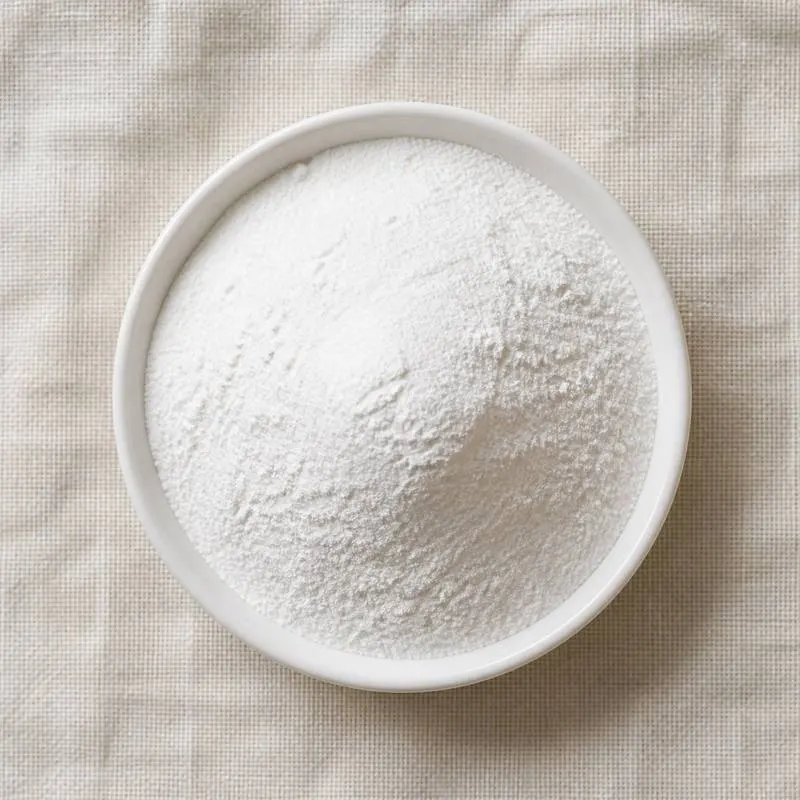
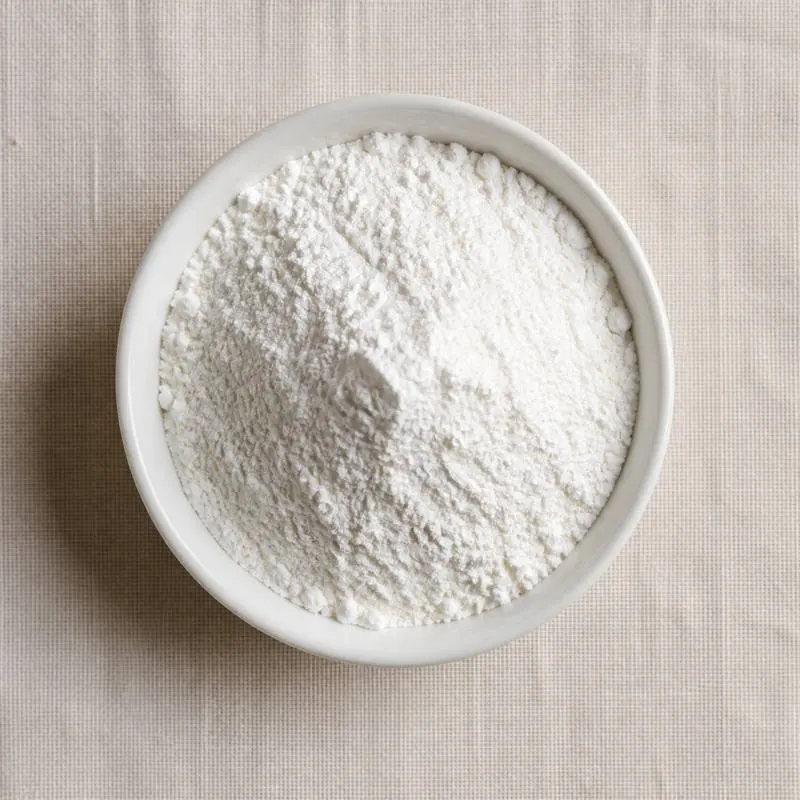
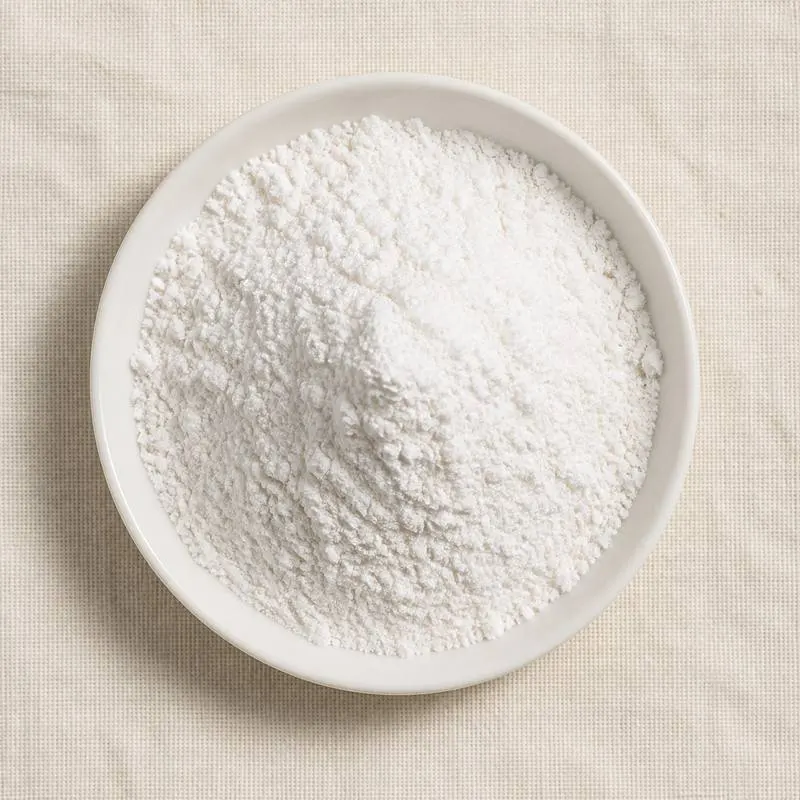
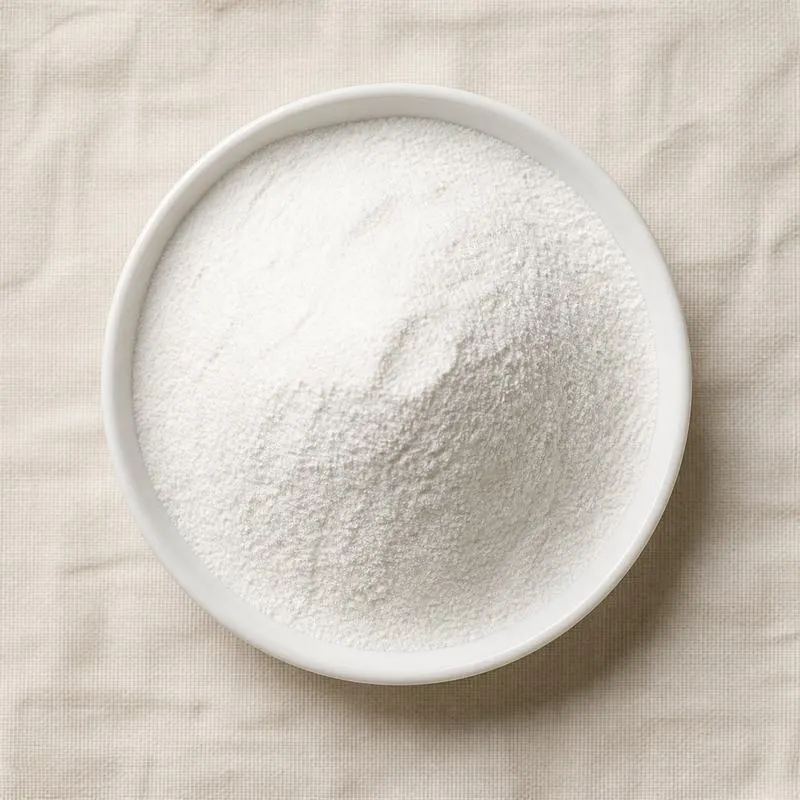
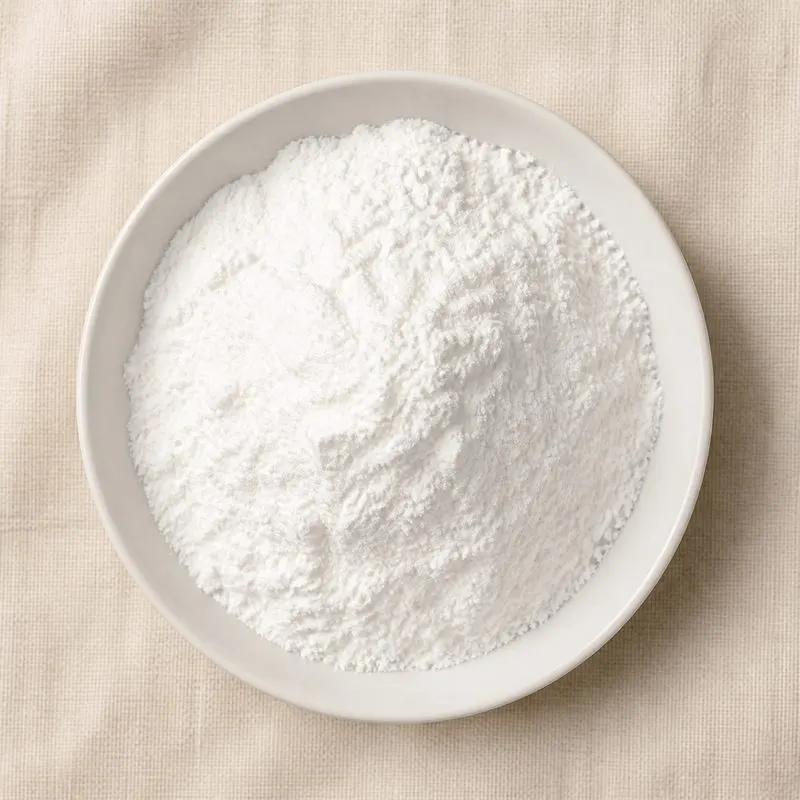
The granule survives the conversion, since the treatment is carried out below the gelatinisation temperature, so the product remains a white free flowing powder that is insoluble in cold water and looks and handles like the native starch it came from. Gelatinisation temperature is usually a little higher than that of the parent starch, because the amorphous regions are preferentially degraded and the crystalline lamellae are left relatively enriched. Grades are bought against fluidity, a direct measure of how thin the paste cooks, rather than against any chemical assay.
We source bulk Dilute Boiling Starch from top China manufacturers for our partners. The manufacturer is in Zhejiang. A smaller requirement can ship in a combined container with other ingredients.
Please send the grade you need, the volume and your destination port, and we will come back with a solution and a price.
or call +86-21-6858 0751
- Function
- Texturisers
Specifications
| Item | Specification |
|---|---|
| Appearance | White free flowing powder, free of foreign matter |
| Odour and taste | Bland, no off odour |
| Identification | Iodine stain and granule microscopy conform to starch reference |
| Total starch, dry basis | 97.0 percent minimum |
| Water fluidity | Grade dependent, 40 to 60 for confectionery grade |
| Gel strength, 20 percent gel at 24 hours | Conforms to agreed grade profile |
| Moisture | 14.0 percent maximum |
| Cold water solubles | 2.0 percent maximum |
| Ash, dry basis | 0.5 percent maximum |
| Protein, dry basis | 0.5 percent maximum |
| pH, 10 percent slurry | 4.5 to 7.0 |
| Sulphur dioxide | 50 mg/kg maximum |
| Lead | 0.5 mg/kg maximum |
| Arsenic | 0.5 mg/kg maximum |
| Total plate count | 10000 cfu/g maximum |
| Yeast and mould | 500 cfu/g maximum |
| E. coli | Absent in 1 g |
| Salmonella | Absent in 25 g |
Common Markets Grades
Conversion level is the specification, expressed as water fluidity or alkali fluidity, with a higher number meaning a more extensively converted and thinner cooking starch. Low conversion grades near 20 water fluidity retain considerable body and are used in coatings and sizing; mid range grades of 40 to 60 are the confectionery standard, thin enough to deposit and strong enough to set; high conversion grades approaching 80 are used where solids must be pushed as high as possible and gel strength matters less.
The route to the conversion is the second variable. Acid thinning with dilute mineral acid is the traditional and dominant method. Enzyme thinning with a controlled alpha amylase treatment gives a narrower molecular weight distribution and is used where a more uniform gel is wanted, and it avoids a chemically modified declaration in some jurisdictions. Base starch determines the set: regular maize is standard for jelly confectionery, high amylose maize gives faster and firmer setting for gum sweets, waxy maize gives a thin cooking, non setting paste for adhesives, and potato and tapioca give clearer but softer setting pastes.
Applications
- Starch jelly confectionery and wine gums, cooked at high solids and deposited into moulding starch beds where the paste sets to a firm chewy gel
- Jelly beans, liquorice and gum sweets, providing the setting matrix at solids a native starch could not reach
- Confectionery pan coating, forming a hard clear film as a gum arabic replacement
- Instant pudding and dessert powders, where a firm set on cooling is the desired texture
- Batter and adhesion coatings, allowing a high starch loading without the batter becoming too thick to pump
- Marshmallow and aerated confectionery, contributing set and structure to the foam
- Textile warp sizing outside food, applied hot at high solids and forming a strong film on the yarn
- Paper surface sizing and coating binders, where high solids at low viscosity is the economic requirement
- Corrugating and laminating adhesives, carrying the bond at workable viscosity
- Gypsum board and building product binders, applied at high solids
China Manufacturers of Dilute Boiling Starch
Top Dilute Boiling Starch manufacturers in China.
Company names and logos are the property of the manufacturers themselves. They are listed here because our own directory records them as producing this ingredient. A listing is not an endorsement by them, and we do not represent them or speak on their behalf.
Regulatory Status
In the United States, 21 CFR 172.892 permits acid thinned starch as a food starch modified, lists hydrochloric acid and sulphuric acid among the permitted treatment agents and sets the conditions for their use, and the product is labelled as modified food starch or food starch modified. Enzyme thinned starch involves a processing aid rather than a listed chemical treatment agent, and the enzymes used are themselves affirmed as generally recognised as safe or the subject of GRAS notifications, so an enzyme converted starch may be labelled simply as starch.
In the European Union the acid thinned product is authorised as E 1401, acid treated starch, under the food additives framework, is permitted quantum satis in most categories, and must be declared as a food additive rather than simply as starch, with purity criteria in the specifications regulation. Enzyme treated starch is not among the listed modified starch additives and is regulated as a food, with the enzyme itself subject to the food enzyme authorisation framework. JECFA has evaluated the modified starches as a group and maintains a specification monograph for acid treated starch, and Codex lists it among the permitted additives in the General Standard for Food Additives.
Manufacturing Process
Native starch, usually regular or high amylose maize, is slurried in water at around 35 to 40 percent solids in a stirred, jacketed reactor. For the acid route, dilute hydrochloric or sulphuric acid is added and the batch is heated to a temperature safely below the gelatinisation point of that starch, typically 40 to 55 degrees Celsius, so that the granules do not swell and the converted starch can still be filtered off. The acid diffuses into the granule and hydrolyses glycosidic bonds preferentially in the amorphous growth rings, shortening the chains while leaving the granule shape and the crystalline lamellae largely intact.
Conversion is followed by drawing samples and measuring fluidity, and the reaction is stopped at the target by neutralising to about pH 5.5 with sodium carbonate or dilute sodium hydroxide. For the enzyme route, the slurry is instead adjusted to the optimum pH for the chosen alpha amylase, held below gelatinisation for the required time, and the enzyme is then inactivated by acidifying or by a short heat treatment. Either way the converted slurry is washed on a rotary vacuum filter or a countercurrent hydrocyclone train to remove the salts formed on neutralisation and the soluble dextrins produced during conversion, dewatered to a cake, and flash dried in hot air with a residence time short enough to avoid gelatinising the granule. The dried powder is cooled, milled if needed, sieved, passed over a magnet and metal detector and packed, with fluidity re checked on the finished powder before release.