Fumaric Acid Cws
Fumaric acid CWS is cold water soluble fumaric acid, meaning ordinary food grade fumaric acid that has been finely milled and surface treated with a small quantity of a permitted wetting agent so that it disperses and dissolves in cold water. The acid itself is unmodified trans-butenedioic acid; the CWS designation refers only to the surface treatment and the particle size, and the product is chemically the same material as the standard grade.
The treatment addresses the one serious drawback of fumaric acid. It is the strongest solid food acid on a weight for weight basis, roughly two and a half times as acidic as citric acid at equal dose, but it is also by far the least soluble, at under 0.7 g per 100 mL of cold water, and untreated crystals float on the surface and refuse to wet. A dry beverage powder made with untreated acid leaves a raft of undissolved crystals in the glass. Adding a wetting agent at a fraction of a percent and reducing the particle size lets the acid sink and dissolve within seconds.
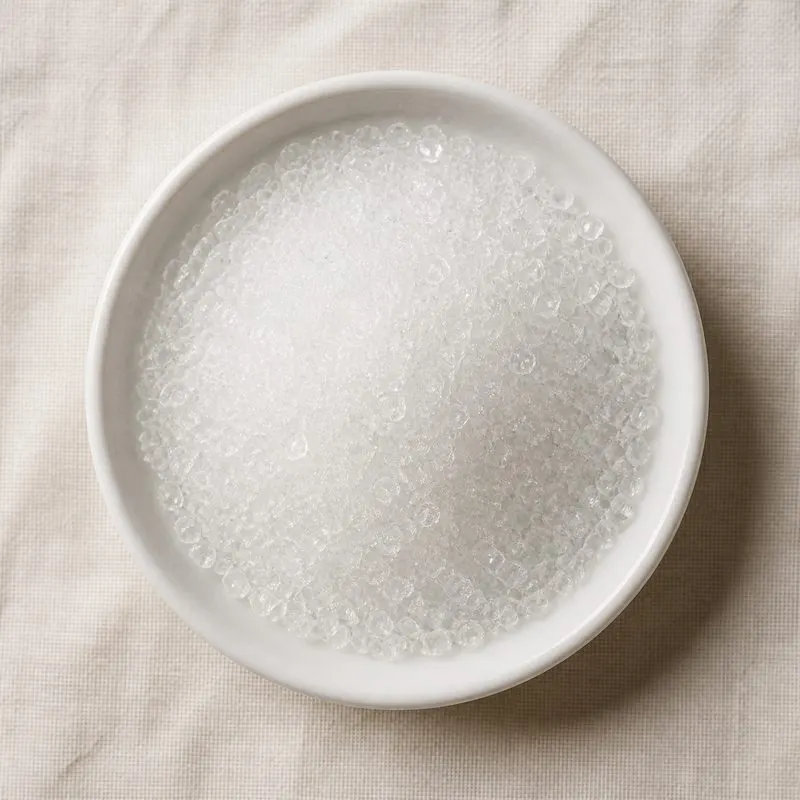
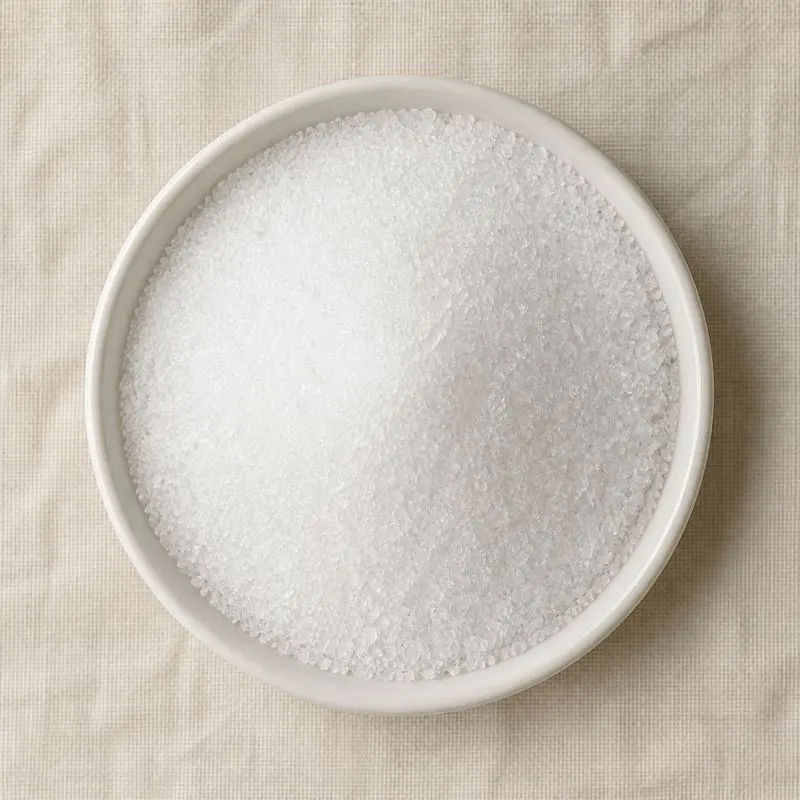
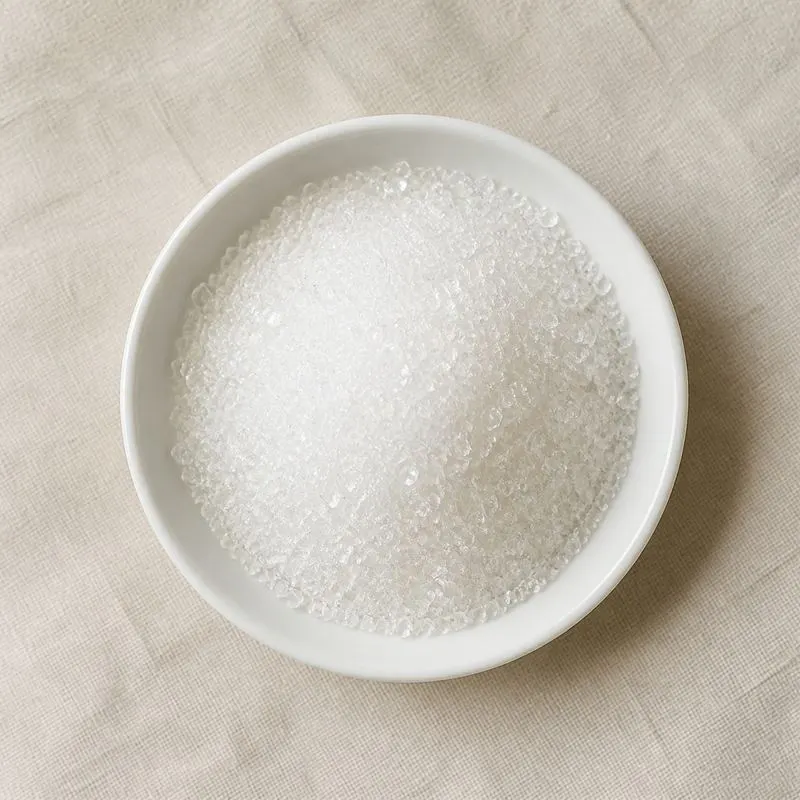
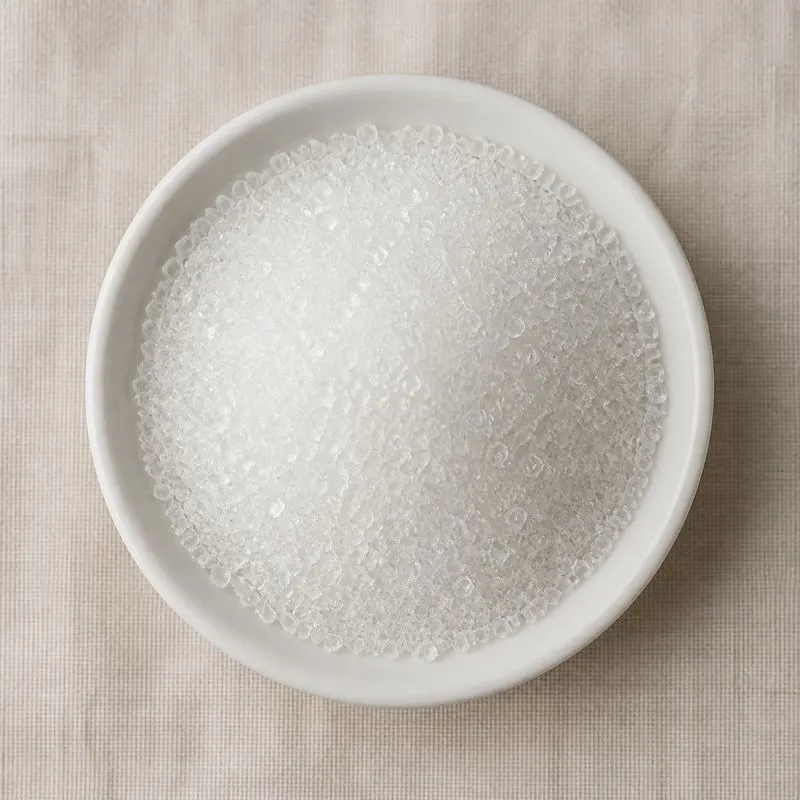
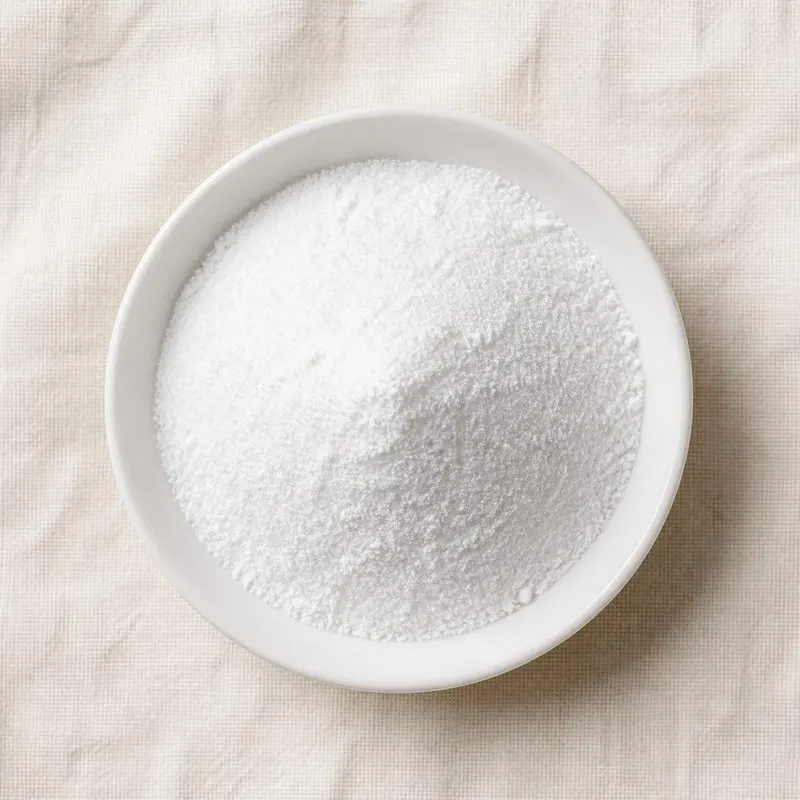
The product is a fine white to off-white free flowing powder with a sharp, persistent sourness, essentially non-hygroscopic, and stable through long ambient storage. Its low solubility remains an advantage in dry systems, since the acid does not migrate or attack neighbouring ingredients before the powder is used.
We source bulk Fumaric Acid Cws from top China manufacturers for our partners. The manufacturer is in Shaanxi. A smaller requirement can ship in a combined container with other ingredients.
Please send the grade you need, the volume and your destination port, and we will come back with a solution and a price.
or call +86-21-6858 0751
- Function
- Acidulant
Specifications
| Item | Specification |
|---|---|
| Appearance | Fine white to off-white free flowing powder |
| Odour and Taste | Odourless, sharply acid |
| Assay, dried basis | 99.5 to 100.5 percent fumaric acid |
| Identification | Positive for fumarate |
| Wetting Agent Content | Not more than 0.5 percent of the fumaric acid |
| Dispersion Time in Cold Water | Not more than 60 seconds |
| Particle Size | Not less than 98 percent through 200 mesh |
| pH, saturated solution | 2.0 to 2.5 |
| Loss on Drying, 105 degrees Celsius | Not more than 0.5 percent |
| Residue on Ignition | Not more than 0.1 percent |
| Maleic Acid | Not more than 0.1 percent |
| Lead | Not more than 1 mg per kg |
| Arsenic | Not more than 1 mg per kg |
| Heavy Metals as Pb | Not more than 10 mg per kg |
Common Markets Grades
The grade is defined by particle size and by the identity and level of the wetting agent rather than by assay, which is standard food grade fumaric acid at 99.5 percent minimum. Dioctyl sodium sulphosuccinate is the classical wetting agent, used at a few tenths of a percent on the acid, with polysorbates and sodium lauryl sulphate used in some formulations. Fineness is the second variable: milling to a median particle size in the low tens of micrometres is what allows the wetted particle to disperse quickly, and a coarser CWS grade will still raft.
The standard uncoated fumaric acid grades sold alongside this article are specified only on particle size and are intended for hot process and dough applications where solubility is not the constraint. Coated and encapsulated grades form a third family, aimed at delayed release rather than rapid dissolution. These three are not interchangeable, and specifying the wrong one is the commonest source of complaint in the category.
Applications
- Dry beverage powders and instant drink mixes, as the acidulant that dissolves fully in cold water in the glass
- Powdered gelatin desserts, where fast acid dissolution is needed as the mix is stirred into water
- Sports and electrolyte drink sticks, giving high acidity at low addition weight, which matters in a single serve sachet
- Instant soups, sauces and noodle seasonings, where the powder must reconstitute quickly
- Sour confectionery dusting blends, giving a sharp, long lasting acid impression at low weight
- Wine and cider making, as an acidulant for musts and for pH correction in the cellar
- Dry mix bakery, as a leavening acid in systems where a fine, quickly wetting particle is needed
- Effervescent and fizzing powders, as the acid partner to bicarbonate in a cold water system
- Animal feed and pet food, as an acidifier and preservative delivered through a dry premix
China Manufacturers of Fumaric Acid Cws
Top Fumaric Acid Cws manufacturers in China.

Company names and logos are the property of the manufacturers themselves. They are listed here because our own directory records them as producing this ingredient. A listing is not an endorsement by them, and we do not represent them or speak on their behalf.
Regulatory Status
In the United States fumaric acid is affirmed as generally recognised as safe under 21 CFR 184.1307, with functions given as flavour enhancer, flavouring agent and pH control agent, at levels consistent with good manufacturing practice within the limits stated in that section. A separate regulation covers the wetting agent: 21 CFR 172.810 permits dioctyl sodium sulphosuccinate as a wetting agent for fumaric acid in dry beverage and gelatin dessert bases at a limited proportion of the acid, and that regulation is the basis on which the CWS grade is sold in the United States.
In the European Union Regulation (EC) No 1333/2008 authorises fumaric acid as food additive E 297 and restricts its use to defined categories at specified maximum levels rather than permitting it quantum satis, with identity and purity criteria in Regulation (EU) No 231/2012. The wetting agent used must itself be an authorised additive or processing aid in the market of sale, and the permitted options differ from those in the United States, so the specification of a CWS grade has to be matched to the destination market. JECFA has evaluated fumaric acid and its salts, and fumaric acid is listed in the Codex General Standard for Food Additives as an acidity regulator and raising agent.
Manufacturing Process
The acid is made from maleic anhydride, itself produced by vapour phase oxidation of butane over a vanadium phosphorus oxide catalyst. The anhydride is hydrolysed to maleic acid in water, then isomerised from the cis to the trans configuration by heating in the presence of a catalyst such as a thiourea or mineral acid system. Because fumaric acid is so much less soluble than maleic acid, it precipitates from the hot reaction liquor as it forms. The crystals are recovered by centrifuge and washed thoroughly to strip residual maleic acid, then dried.
Conversion to the cold water soluble grade is a separate finishing operation. The dried acid is milled, typically in a pin or jet mill, to a fine and narrowly distributed particle size, since both the mean size and the width of the distribution affect wetting behaviour. The wetting agent is then applied, either sprayed as a dilute solution onto the powder in a ribbon or plough blender and dried off, or added to the acid slurry before the final drying step so that it deposits evenly on the crystal surfaces as water is removed. The treated powder is passed through a safety screen, checked for dispersion time in cold water, which is the release test for this grade, and packed into moisture barrier bags.