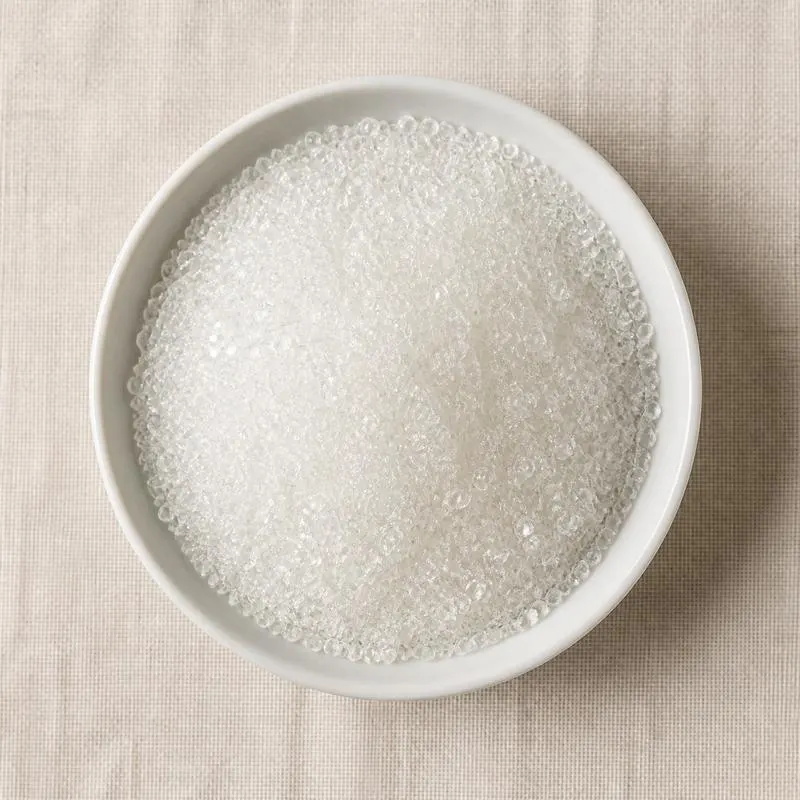
Lactic Acid
Lactic Acid is an alpha-hydroxy carboxylic acid with the formula CH₃CH(OH)COOH. It is the dominant acidulant of fermented dairy and one of the most widely used organic acids in the global food, pharmaceutical, cosmetic, and biopolymer industries.
The molecule carries a single chiral centre, giving rise to two enantiomers (L(+) and D(−)) and a racemic mixture (DL). The L(+) form is the one produced by human muscle and by lactic acid bacteria during the souring of milk, while the synthetic process route yields the DL racemate.
Lactic Acid contributes a clean, mildly sour taste at low concentrations and acts as a broad-spectrum antimicrobial against pathogenic bacteria at higher concentrations. These twin properties drive its use as both a flavour agent and a shelf-life extender.
We source bulk Lactic Acid from top China manufacturers for our partners, working with several of them. The manufacturers are mostly in Henan, Shandong and Anhui. For this ingredient the minimum order is 1,000 kg and a 20-foot container takes 20 MT, and a smaller requirement can ship in a combined container with other ingredients.
Please send the grade you need, the volume and your destination port, and we will come back with a solution and a price.
or call +86-21-6858 0751
- Minimum order
- 1,000 kg
- Qty in 20' FCL
- 20 MT
- Packaging
- 250 kg plastic drum or 1,000 kg IBC tote
- ISO 9001
- HACCP
- Halal
- Kosher
Specifications
| Item | Specification |
|---|---|
| Appearance | Yellowish to colorless viscous liquid |
| Assay | ≥ 80% (standard) / ≥ 88% (premium) |
| Heavy metals (as Pb) | ≤ 10 mg/kg |
| Iron | ≤ 10 mg/kg |
| Sulphate | ≤ 200 mg/kg |
| Chloride | ≤ 200 mg/kg |
| Reducing sugars | Passes test |
| Color (APHA) | ≤ 50 |
| Density (20 °C) | 1.18 to 1.21 g/mL |
Common Markets Grades
Liquid solutions dominate the commercial market.
The standard food-grade product runs at 80 percent w/w, with a 88 percent grade reserved for applications requiring lower water transport costs or tighter colour specifications. A heat-stable 90 percent grade is produced for high-temperature processing such as meat curing.
Enantiomeric variants are produced separately. L(+)-Lactic Acid is the premium grade for infant nutrition, clinical solutions, and biopolymer production. DL-Lactic Acid serves general food and industrial uses where stereochemistry is irrelevant. D(−)-Lactic Acid has niche applications, primarily as a chiral building block.
The corresponding lactate salts (sodium lactate, calcium lactate, potassium lactate) come as 60 percent solutions or as crystalline powders, and serve as buffered or solid-form alternatives.
Pharmaceutical and USP grades meet stricter limits on residual sugars, chloride, sulphate, and heavy metals than food-grade material.
Applications
- Cultured dairy products: yogurt, kefir, sour cream, buttermilk, and direct-set cheeses
- Cured meats, fermented sausages, and brine-injected hams as both acidulant and antimicrobial
- Pickled vegetables, sauerkraut, kimchi, and other lacto-fermented foods
- Sourdough bread for flavour development and crumb structure
- Beverage acidulant in functional drinks, craft beer, kombucha, and shrubs
- Confectionery: hard candies and gummies where a softer sourness profile than citric acid is preferred
- Cosmetics: alpha-hydroxy acid (AHA) exfoliants, pH adjusters, and humectant blends
- Pharmaceutical formulations as a pH buffer, dissolution aid, and excipient in dialysis and parenteral solutions
- Animal feed acidifier for piglet starter rations and poultry water
- Precursor to polylactic acid (PLA) biopolymer used in compostable packaging and 3D-printing filament
- Industrial: leather tanning, descaling agents, and biodegradable cleaning formulations
Brands Using Lactic Acid
Widely-distributed consumer products that list Lactic Acid on the ingredient label.
- Hidden ValleyHidden Valley Original Ranch Seasoning Mix ↗Listed: 'Maltodextrin, Buttermilk, Salt, Monosodium Glutamate, Garlic, Onion, Lactic Acid, Calcium Lactate, Spices, Citric Acid...'Label verified 2026-05-24
- Land O'LakesLand O'Lakes Light Butter with Canola Oil ↗Listed: '...Mono and Diglycerides and PGPR (emulsifiers), Lactic Acid, Potassium Sorbate and Sodium Benzoate'Label verified 2026-05-24
- Land O'LakesLand O'Lakes Margarine Sticks ↗Listed: '...Soy Lecithin and Mono and Diglycerides (emulsifiers), Lactic Acid, Natural and Artificial Flavor...'Label verified 2026-05-24
- Mars/Wrigley (Skittles)Skittles Sour Gummies ↗Listed: 'Corn Syrup, Sugar, Modified Corn Starch, Gelatin, Fumaric Acid; Less Than 2% Of: Lactic Acid, Calcium Lactate, Citric Acid, Malic Acid...'Label verified 2026-05-24
Brand names, product names and logos are the property of their owners. They appear here as published evidence that the ingredient is used, taken from the brand's own label or website. Their appearance is not an endorsement, and it does not mean the brand buys from us or from any manufacturer listed on this site.
China Manufacturers of Lactic Acid
Top Lactic Acid manufacturers in China.
- Henan Honghui Biotechnology Co., Ltd.9 ingredients in the directory
 Henan Jindan Lactic Acid Technology Co., Ltd.6 ingredients in the directory
 Henan Xinghan Biotechnology Co., Ltd.5 ingredients in the directory
- Pliith Biotechnology Co., Ltd.1 ingredient in the directory
 Qingdao Baotai Pure Food Technology Co., Ltd.16 ingredients in the directory
 Qingdao Jiutai Biotechnology Co., Ltd.8 ingredients in the directory
- Weikuang (Jining) New Materials.Co., Ltd.5 ingredients in the directory
 Wuhan Sanjiang Space Good Biotech Co., Ltd.4 ingredients in the directory
Company names and logos are the property of the manufacturers themselves. They are listed here because our own directory records them as producing this ingredient. A listing is not an endorsement by them, and we do not represent them or speak on their behalf.
How We Help Source Lactic Acid
Direct Factory Sourcing
We run the whole process: selecting the manufacturer from the top Chinese food ingredient producers, negotiating the price, verifying quality, and coordinating the logistics. You deal with us instead of with several factories at once.
Original Packaging and Documents from the Manufacturer
The manufacturer sends your Lactic Acid out of its own factory in the original packing, through to your destination port. The COA, COO, MSDS, TDS and any certifications reach you from the manufacturer as well.
Free Samples and Lead Time
We send 100 to 500 g free for your own laboratory to test and you cover only the courier, usually within 2 to 3 working days. ETD is usually within 7 to 15 days once the order is confirmed, and we check that date against the factory's own manufacturing schedule before we give it to you.
Combined Shipment
We can load Lactic Acid together with other ingredients such as Calcium Acetate, Citric Acid and Glucono-Delta-Lactone into one 20' FCL. If your quantity is small, we can also ship LCL.
Regulatory Status
Lactic Acid carries broad regulatory acceptance in every major jurisdiction.
In the European Union it is listed as food additive E270 and is permitted at quantum satis in essentially all food categories without numerical caps.
The U.S. Food and Drug Administration recognises it as Generally Recognized as Safe (GRAS) under 21 CFR 184.1061 for direct human consumption, and 21 CFR 184.1639 for use as a buffer.
JECFA has reviewed lactic acid as a food additive and assigned it acceptable group status without restriction for the L(+) and DL forms. The D(−) form carries a specific caution for infant formula because newborn infants metabolise it less efficiently.
Pharmacopoeial monographs appear in the United States Pharmacopeia (USP), the European Pharmacopoeia (Ph. Eur.), the British Pharmacopoeia (BP), and the Japanese Pharmacopoeia (JP).
Halal and Kosher certifications are routinely available, including from manufacturers using non-animal substrates such as corn or cane sugar.
Manufacturing Process
Nearly all commercial lactic acid is produced by microbial fermentation rather than chemical synthesis.
The dominant route uses homofermentative strains of Lactobacillus, most often L. delbrueckii subsp. bulgaricus, L. casei, or L. helveticus. The carbohydrate substrate is typically glucose syrup, sucrose, or hydrolysed whey permeate; corn-starch hydrolysate dominates U.S. and Asian capacity while cane sugar is preferred in Brazil.
Fermentation runs at 40 to 50 °C and pH 5 to 6, with calcium hydroxide or ammonium hydroxide added continuously to neutralise the acid as it forms. After 2 to 4 days the broth is filtered to remove biomass, acidified with sulphuric acid to release free lactic acid, decolourised on activated carbon, and concentrated by vacuum evaporation.
Final purification uses electrodialysis or ion exchange for pharmaceutical and biopolymer grades, where ash content and optical purity must reach 99 percent or higher.
Strain selection determines the enantiomer. L(+)-only strains such as Lactobacillus casei are used for polymer-grade and infant-nutrition supply. DL or D(−) material comes from heterofermentative organisms or chemical synthesis from acetaldehyde and hydrogen cyanide, a minor legacy route.