Calcium Acetate
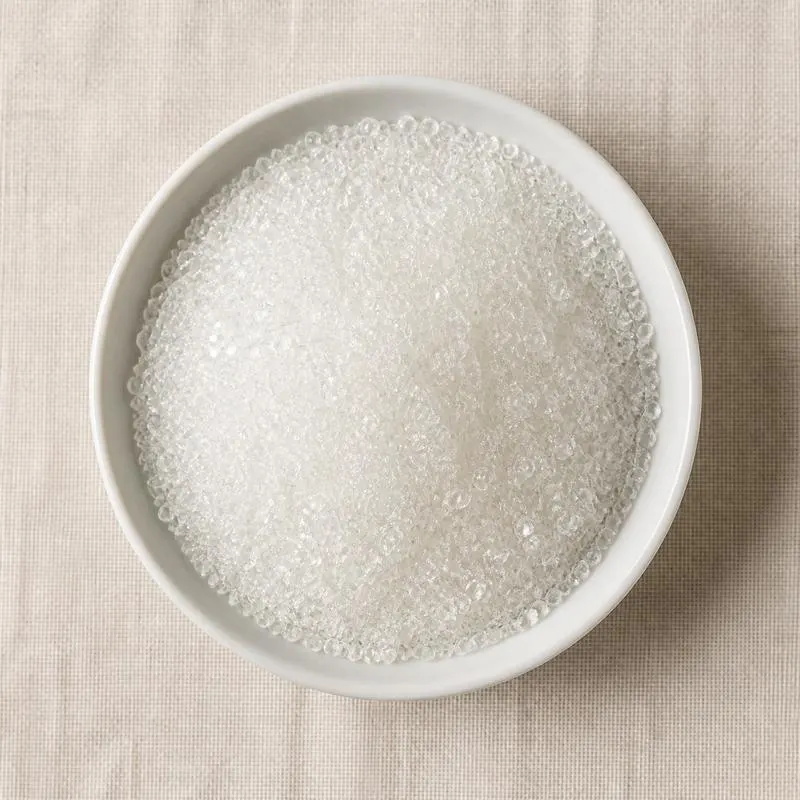
Calcium acetate is the calcium salt of acetic acid, formula Ca(CH3COO)2, sold to the food industry as an anhydrous or monohydrate white powder. It functions as a mould inhibitor, a buffering salt, a firming agent and a source of soluble calcium, combining the antimicrobial action of the acetate ion with the texturising action of divalent calcium.
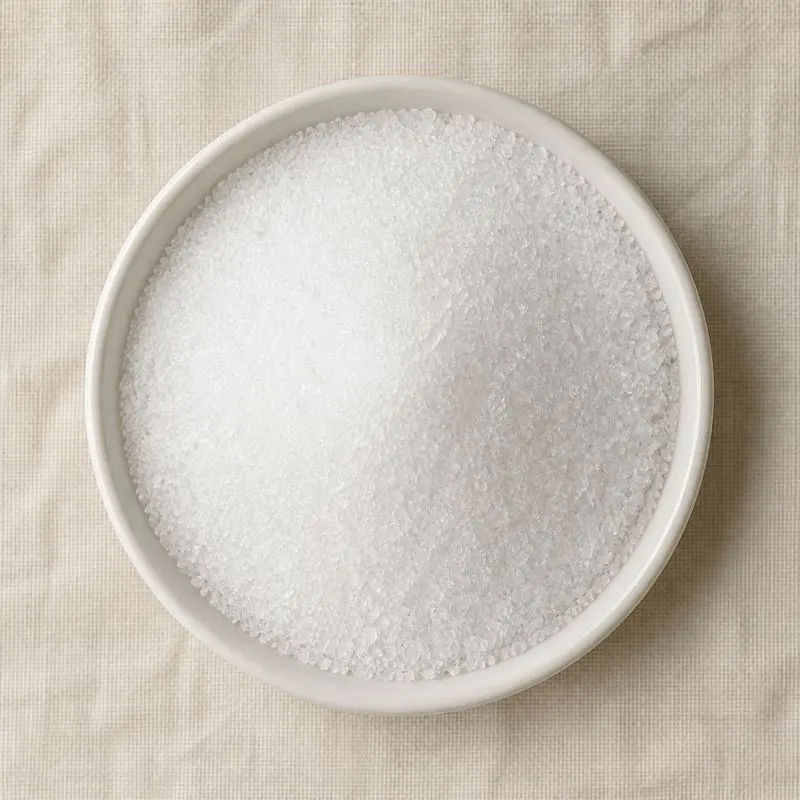
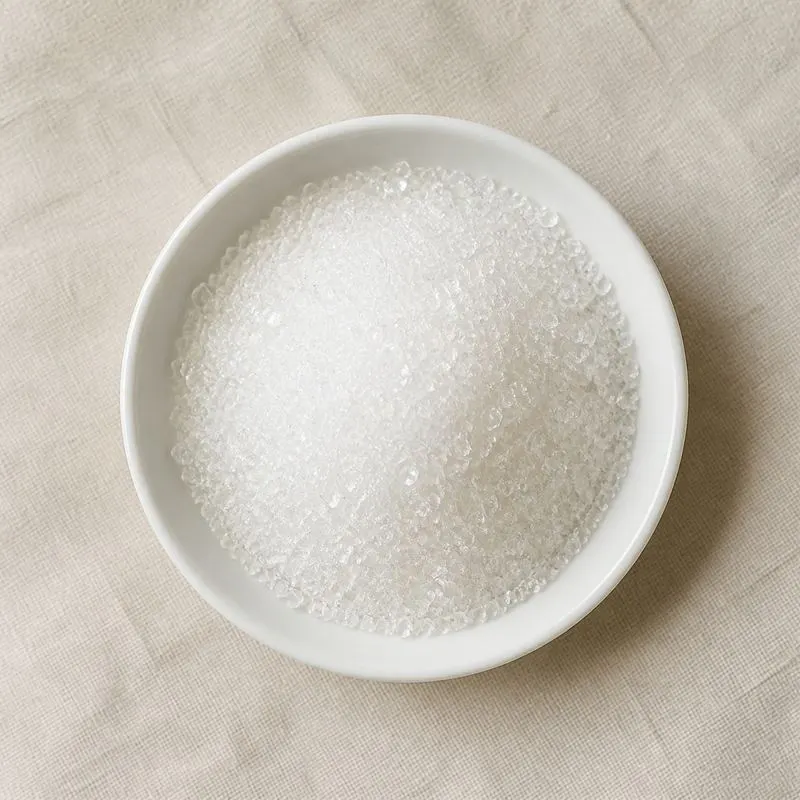
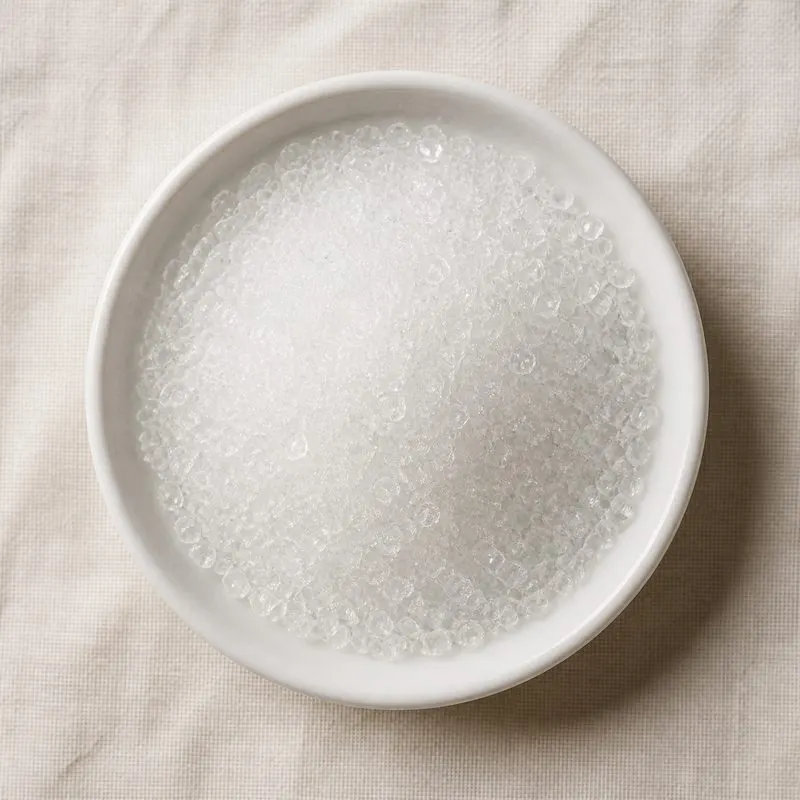
The commercial material is a fine white to off-white powder or granule with a faint acetic odour. It is strongly hygroscopic and is packed in lined bags or drums to keep moisture out. Solubility in water is high, roughly 35 g per 100 mL at room temperature, and it dissolves to give a near neutral to mildly alkaline solution in the region of pH 7 to 9. Unusually, solubility falls as temperature rises, so hot solutions can go cloudy, and the cloudiness clears again on cooling.
Thermally the salt is stable through normal baking and retorting, decomposing only well above 160 degrees Celsius to calcium carbonate and acetone. In dough systems the acetate is released slowly enough to persist through the bake, which is the property that makes it useful as a rope and mould inhibitor in bread.
We source bulk Calcium Acetate from top China manufacturers for our partners, working with several of them. The manufacturers are in Shandong, Jiangsu and Anhui. A smaller requirement can ship in a combined container with other ingredients.
Please send the grade you need, the volume and your destination port, and we will come back with a solution and a price.
or call +86-21-6858 0751
- Function
- Acidulant
Specifications
| Item | Specification |
|---|---|
| Appearance | White crystalline powder or granule |
| Odour | Faint acetic, free from foreign odour |
| Assay, dried basis | 99.0 to 100.5 percent |
| Identification | Positive for calcium and for acetate |
| Loss on Drying, 155 degrees Celsius | Not more than 11.0 percent as monohydrate |
| pH, 5 percent solution | 6.0 to 9.0 |
| Water Insoluble Matter | Not more than 0.05 percent |
| Free Acid or Alkali | Not more than 0.05 percent as acetic acid |
| Chloride | Not more than 0.05 percent |
| Sulphate | Not more than 0.06 percent |
| Fluoride | Not more than 0.005 percent |
| Lead | Not more than 2 mg per kg |
| Arsenic | Not more than 3 mg per kg |
| Heavy Metals as Pb | Not more than 10 mg per kg |
Common Markets Grades
Two grades dominate trade. Food grade calcium acetate is sold at 99 percent minimum on the dried basis, either as the anhydrous salt or as the monohydrate, and is the material used in bakery and processed foods. Pharmaceutical grade of the same assay is produced for phosphate binder tablets and carries tighter limits on heavy metals and residual solvents, with additional identification and dissolution testing.
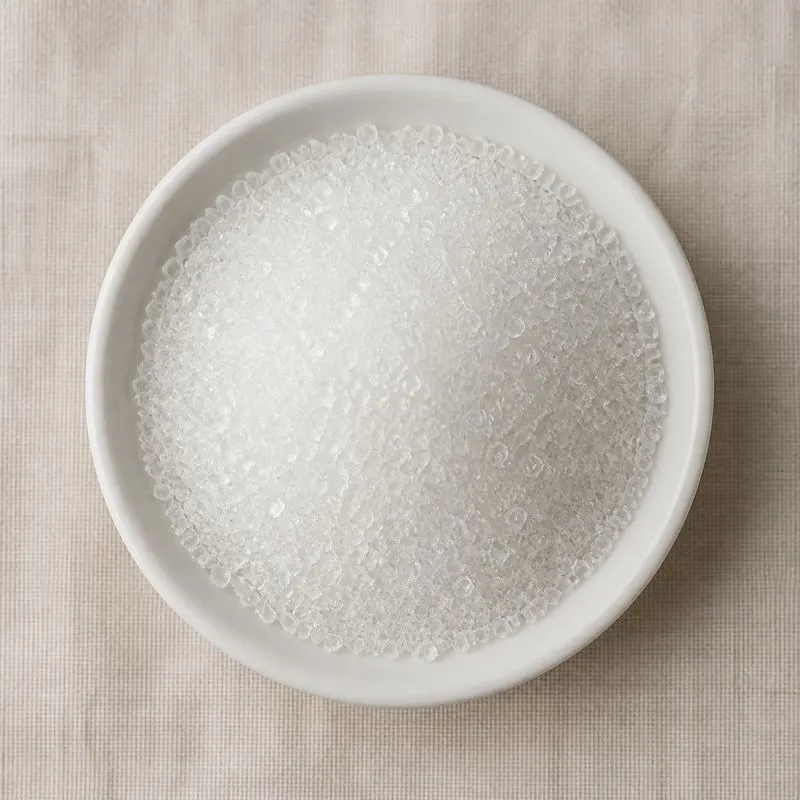
Physical form is the practical difference between offers. Fine powder is chosen where rapid dissolution in a brine or dough water is needed, while agglomerated or granular material of roughly 20 to 60 mesh is preferred for dry blending, since it segregates less and picks up less moisture during handling. A low bulk density spray dried grade is also traded for direct addition to flour blends.
Applications
- Packaged bread and rolls, where it suppresses rope caused by Bacillus subtilis and delays mould growth without the flavour impact of higher propionate doses
- Tortillas and flat breads, as an antimicrobial that also tightens the crumb slightly
- Processed cheese and cheese analogues, as a calcium source that firms the set and controls melt
- Canned and pickled vegetables, as a firming agent that crosslinks pectin in cucumbers, peppers and tomatoes
- Tofu and soy protein gels, as a coagulant giving a softer set than calcium sulphate
- Calcium fortification of beverages and dry mixes, where the high solubility avoids the sediment left by carbonate
- Cured meat brines, as a buffer that holds pH while acetate contributes to Listeria control
- Pet food and animal feed, as a calcium supplement and mould inhibitor in high moisture products
- Pharmaceutical phosphate binders for dialysis patients, the main non-food outlet
Brands Using Calcium Acetate
Widely-distributed consumer products that list Calcium Acetate on the ingredient label.
- QuornMeatless ChiQin Nuggets ↗Breaded mycoprotein nuggets whose ingredient list names calcium acetate among the sub 2 percent ingredients, alongside calcium chloride, as a firming and setting agent for the mycoprotein.Label verified 2026-08-31
- QuornMeatless Kickin' ChiQin Cutlets ↗Spiced breaded mycoprotein cutlets listing calcium acetate with calcium chloride in the sub 2 percent portion of the ingredient statement.Label verified 2026-08-31
Brand names, product names and logos are the property of their owners. They appear here as published evidence that the ingredient is used, taken from the brand's own label or website. Their appearance is not an endorsement, and it does not mean the brand buys from us or from any manufacturer listed on this site.
China Manufacturers of Calcium Acetate
Top Calcium Acetate manufacturers in China.
 ETON Food Co., Ltd.7 ingredients in the directory
- Jiangsu Dingguan Food Technology Co., Ltd.10 ingredients in the directory
 Lianyungang Nuoxin Food Ingredient Co., Ltd.13 ingredients in the directory
 Lianyungang Tongyuan Biotechnology Co., Ltd.11 ingredients in the directory
 Penglai Marine (Shandong) Co., Ltd.10 ingredients in the directory
 Runda Food Technology (Shandong) Co., Ltd.7 ingredients in the directory
 Shandong Luhu Biological Technology Co., Ltd.9 ingredients in the directory
- Shandong Ruiheng Biotechnology Co., Ltd.8 ingredients in the directory
 Shandong Tongtaiweirun Food Science Tech Co., Ltd.9 ingredients in the directory
- SUNRISE FOOD INGREDIENTS (HUAI NAN) Co., Ltd.5 ingredients in the directory
 Tengzhou Aolong Chemical Co., Ltd.12 ingredients in the directory
 Tengzhou Luhu Biological Technology Co., Ltd.6 ingredients in the directory
 Tengzhou Tenglong Food Science And Technology Development Co., Ltd.5 ingredients in the directory
Company names and logos are the property of the manufacturers themselves. They are listed here because our own directory records them as producing this ingredient. A listing is not an endorsement by them, and we do not represent them or speak on their behalf.
Regulatory Status
In the United States calcium acetate is affirmed as generally recognised as safe for use as a food ingredient under 21 CFR 184.1185, with function listed as firming agent, pH control agent, sequestrant, stabiliser and texturiser. Use is at levels consistent with good manufacturing practice. The pharmaceutical grade is separately covered by a United States Pharmacopeia monograph.
In the European Union Regulation (EC) No 1333/2008 authorises it as food additive E 263, and Regulation (EU) No 231/2012 sets the purity criteria. It is permitted in a range of categories under the quantum satis principle. JECFA has evaluated the acetate salts of sodium, potassium, calcium and ammonium as a group and concluded they raise no safety concern at the levels used in food, and calcium acetate is listed in the Codex General Standard for Food Additives.
Manufacturing Process
Industrial production is a straightforward neutralisation. Glacial or dilute acetic acid is reacted with a calcium base, most often calcium carbonate in the form of limestone or precipitated chalk, and less commonly calcium hydroxide. The reaction is run in a stirred vessel with the acid added under control, since carbonate feedstock releases carbon dioxide quickly. The batch is held slightly on the alkaline side at the end point so that no free acetic acid remains in the finished salt.
The crude liquor is clarified to remove silica, iron and unreacted carbonate, usually by filtration through a precoat filter after a short settling step. The clear solution is concentrated in a vacuum evaporator, then either crystallised and centrifuged to give the monohydrate, or taken directly to a spray dryer to give the anhydrous powder. Spray dried material is milled or agglomerated to the required particle size, sieved and packed immediately, since the dry salt takes up atmospheric moisture quickly.