Citric Acid
Citric acid is a tribasic hydroxy acid, formula C6H8O7, that occurs naturally in citrus fruit and functions in food as the dominant acidulant, flavour enhancer and metal chelator. It supplies a clean, fast, fruit-like sourness that peaks early on the palate and fades quickly, which is why it sets the reference against which other food acids are described.
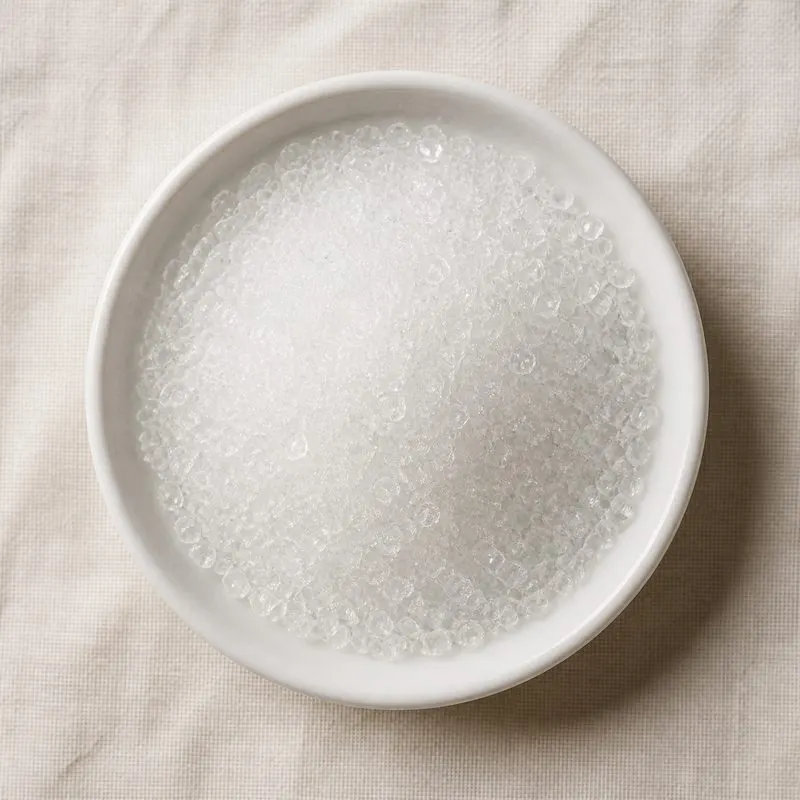
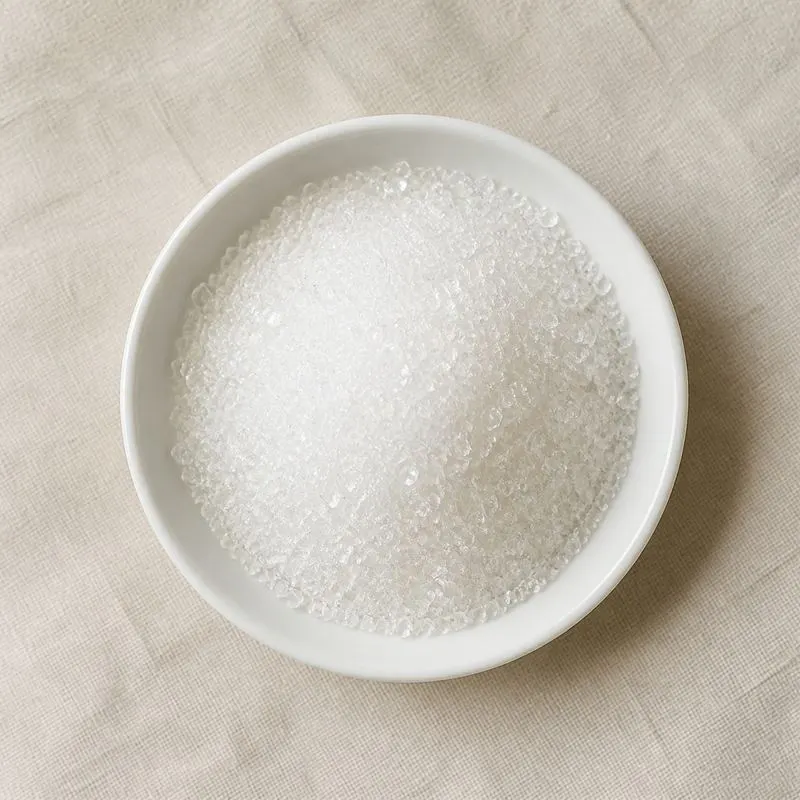
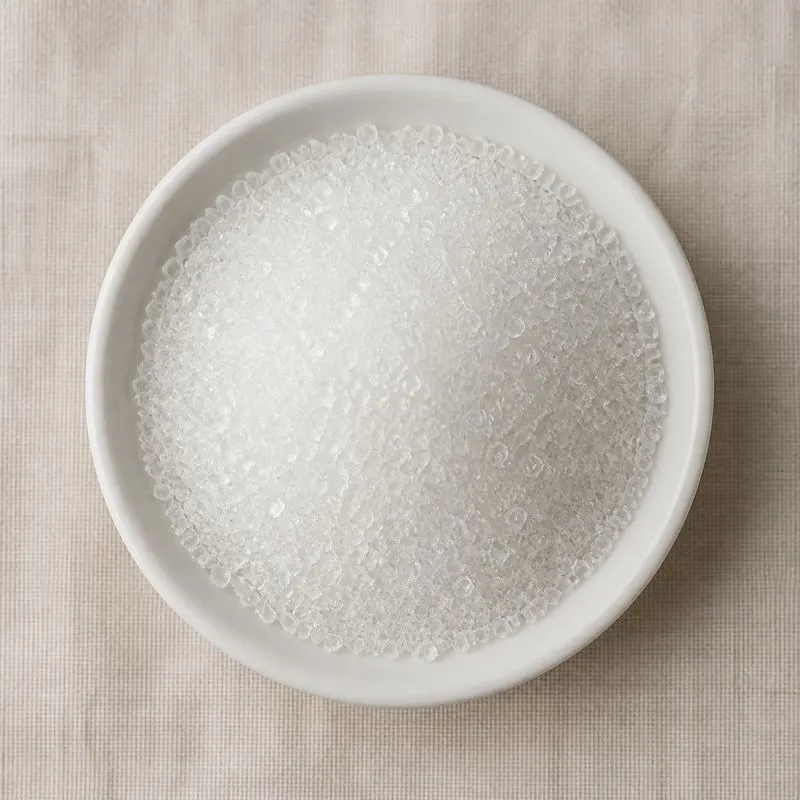
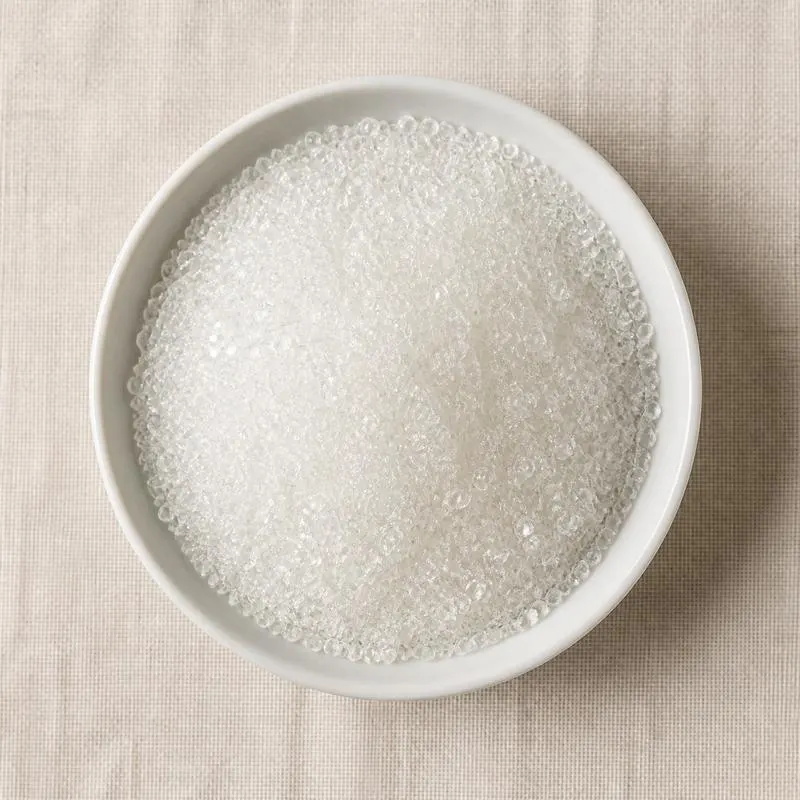
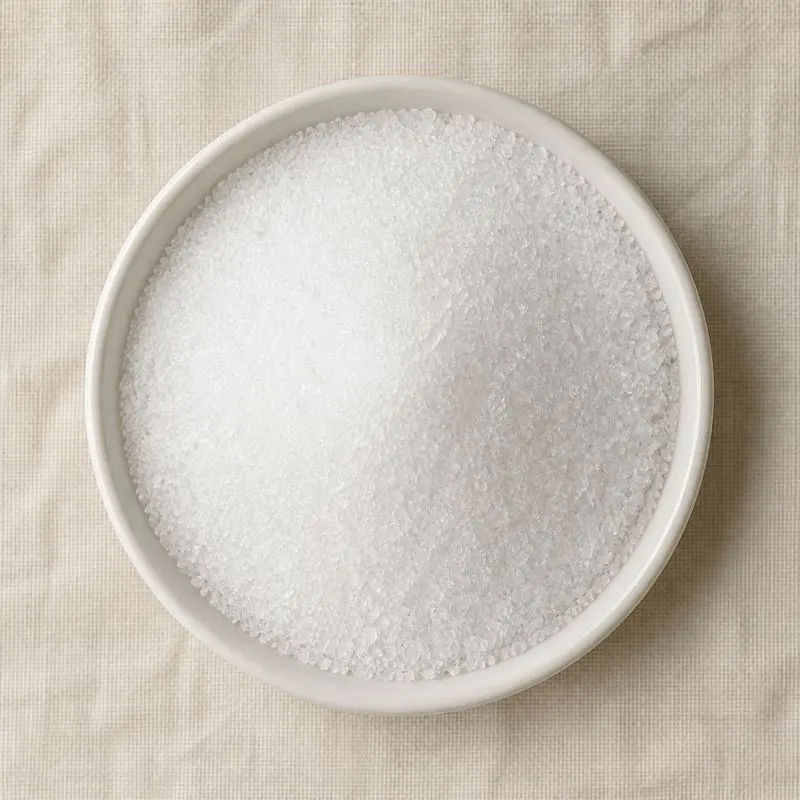
It is traded as colourless crystals or a white crystalline powder in two forms, the anhydrous acid and the monohydrate. Both are extremely soluble in water, above 145 g per 100 mL at room temperature, and freely soluble in ethanol. A one percent solution measures close to pH 2.2. The monohydrate loses its water of crystallisation above about 70 degrees Celsius, and the anhydrous acid melts near 153 degrees Celsius with decomposition.
Its three carboxyl groups give it a broad buffering range when paired with its sodium or potassium salts, and a strong affinity for iron, copper and calcium ions. That chelating action is a large part of its practical value, since sequestering trace metals slows oxidative rancidity, protects added vitamins and prevents haze in beverages.
We source bulk Citric Acid from top China manufacturers for our partners, working with several of them. The manufacturers are in Shandong and Jiangsu. A smaller requirement can ship in a combined container with other ingredients.
Please send the grade you need, the volume and your destination port, and we will come back with a solution and a price.
or call +86-21-6858 0751
- Function
- Acidulant
Specifications
| Item | Specification |
|---|---|
| Appearance | Colourless crystals or white crystalline powder |
| Assay, anhydrous basis | 99.5 to 100.5 percent |
| Identification | Positive for citrate |
| Water Content, anhydrous grade | Not more than 0.5 percent |
| Water Content, monohydrate grade | 7.5 to 9.0 percent |
| Residue on Ignition | Not more than 0.05 percent |
| Readily Carbonisable Substances | Passes test |
| Oxalate | Not more than 100 mg per kg |
| Sulphate | Not more than 150 mg per kg |
| Chloride | Not more than 50 mg per kg |
| Lead | Not more than 0.5 mg per kg |
| Arsenic | Not more than 1 mg per kg |
| Total Plate Count | Not more than 1000 cfu per g |
| Yeast and Mould | Not more than 100 cfu per g |
Common Markets Grades
Citric acid anhydrous and citric acid monohydrate are the two standard products, both at 99.5 to 100.5 percent assay against the food chemical and pharmacopoeial monographs. The monohydrate is the older form, preferred in liquid applications and in confectionery where its cooler dissolution is useful. The anhydrous form is preferred wherever added water is a problem, in dry beverage powders, effervescent tablets and moisture sensitive seasoning blends, and it is the form that must be used in hot processing above the dehydration temperature.
Particle size is the real point of specification. Fine and extra fine powders are used for dry blending and for dusting confectionery, standard granular for general liquid work, and coarse and extra coarse grades of roughly 12 to 30 mesh for effervescent formulations and for direct compression tabletting where flow and low dust matter. Coated and encapsulated citric acid, with a hydrogenated fat or maltodextrin shell, is sold separately for systems where the acid must stay unreactive until heat or moisture releases it.
Applications
- Carbonated soft drinks and still fruit beverages, as the primary acidulant setting titratable acidity and the sharp opening note of the flavour
- Fruit preserves, jellies and pie fillings, where it lowers pH into the range that lets high methoxyl pectin set
- Hard boiled and gummy confectionery, as the sour note applied either in the cook or as a surface dust
- Canned vegetables and tomato products, as an acidifier that brings pH below 4.6 and secures the safety of the thermal process
- Fats, oils and oil-containing snacks, as a synergist for phenolic antioxidants by chelating pro-oxidant iron and copper
- Wine and cider, for acid correction of musts from low acid fruit
- Frozen fish and shellfish, in dips that inhibit melanosis and oxidative discolouration
- Processed cheese and dairy desserts, in combination with its sodium salts as a buffered acid system
- Effervescent tablets and instant drink powders, as the acid half of the carbon dioxide generating pair with sodium bicarbonate
- Cleaning and boiler descaling formulations, the main industrial outlet outside food
Brands Using Citric Acid
Widely-distributed consumer products that list Citric Acid on the ingredient label.
- NuunNuun Sport Electrolyte Tablets ↗Effervescent hydration tablet whose ingredient statement opens with citric acid, which drives the fizz with sodium bicarbonate and adds tartness.Label verified 2026-08-31
- Emergen-CEmergen-C Super Orange Vitamin C Drink Mix ↗Fizzy vitamin C drink mix that lists citric acid among its non-medicinal ingredients as the acidulant behind the effervescence.Label verified 2026-08-31
- Dr. Bronner'sPeppermint Pure-Castile Liquid Soap ↗Liquid castile soap that names citric acid near the end of its ingredient list, where it acts as a pH adjuster.Label verified 2026-08-31
Brand names, product names and logos are the property of their owners. They appear here as published evidence that the ingredient is used, taken from the brand's own label or website. Their appearance is not an endorsement, and it does not mean the brand buys from us or from any manufacturer listed on this site.
China Manufacturers of Citric Acid
Top Citric Acid manufacturers in China.
 Jiangsu Guoxin Union Energy Co., Ltd.3 ingredients in the directory
 Laiwu Taihe Biochemistry Co., Ltd.1 ingredient in the directory
 Nanjing Jiayi Sunway Chemical Co., Ltd.2 ingredients in the directory
 Qingdao Fuso Refining & Processing Co., Ltd.7 ingredients in the directory
 Seven Star Lemon Technology Co., Ltd.1 ingredient in the directory
 Shandong Ensign Industry Co., Ltd.3 ingredients in the directory
 Shandong Qufeng Food Tech Co., Ltd.3 ingredients in the directory
- Weikuang (Jining) New Materials.Co., Ltd.5 ingredients in the directory
Company names and logos are the property of the manufacturers themselves. They are listed here because our own directory records them as producing this ingredient. A listing is not an endorsement by them, and we do not represent them or speak on their behalf.
Regulatory Status
In the United States citric acid is affirmed as generally recognised as safe under 21 CFR 184.1033, for use as a buffer, acidifier, flavour enhancer, sequestrant and solubiliser at levels consistent with good manufacturing practice. It also appears in the standards of identity for a number of canned and preserved foods as a permitted acidifying agent, and it carries United States Pharmacopeia monographs in both the anhydrous and monohydrate forms.
In the European Union, Regulation (EC) No 1333/2008 authorises it as food additive E 330 and permits it quantum satis across most food categories, with identity and purity criteria laid down in Regulation (EU) No 231/2012. JECFA has evaluated citric acid and concluded that a numerical limit is not required, and it is listed in the Codex General Standard for Food Additives as an acidity regulator, sequestrant and antioxidant synergist. Material of fermentation origin is generally accepted as suitable for kosher and halal certification depending on the carbohydrate feedstock used.
Manufacturing Process
Essentially all commercial citric acid is made by submerged fermentation. The feedstock is a purified carbohydrate, most commonly glucose or high dextrose syrup from maize or cassava starch, and in some plants cane or beet molasses. The medium is sterilised, adjusted to a strongly acid pH and deliberately made deficient in manganese and iron, since trace metal restriction is what forces Aspergillus niger to overflow the tricarboxylic acid cycle and excrete citrate rather than metabolise it. Fermentation runs aerobically in large stirred or airlift vessels for several days at around 30 degrees Celsius with tight control of dissolved oxygen and pH.
The broth is filtered free of mycelium and then recovered by one of two routes. The classical route precipitates calcium citrate with lime, filters and washes the precipitate, then releases the acid with sulphuric acid and filters off calcium sulphate. The newer route uses reactive solvent extraction with a long chain amine, avoiding the gypsum by-product. Either liquor is decolourised over activated carbon, polished through ion exchange to strip residual cations, concentrated under vacuum, and crystallised. Crystallising above about 40 degrees Celsius gives the anhydrous form and below that the monohydrate. Crystals are centrifuged, washed, dried in a fluid bed, screened to particle size and packed.