Trisodium Citrate
Trisodium citrate is the fully neutralised sodium salt of citric acid, formula Na3C6H5O7, traded almost entirely as the dihydrate. It is the standard buffering and sequestering salt of the food industry, holding pH in the mildly acid to neutral range, chelating calcium and magnesium, and acting as the emulsifying salt that allows processed cheese to melt smoothly.
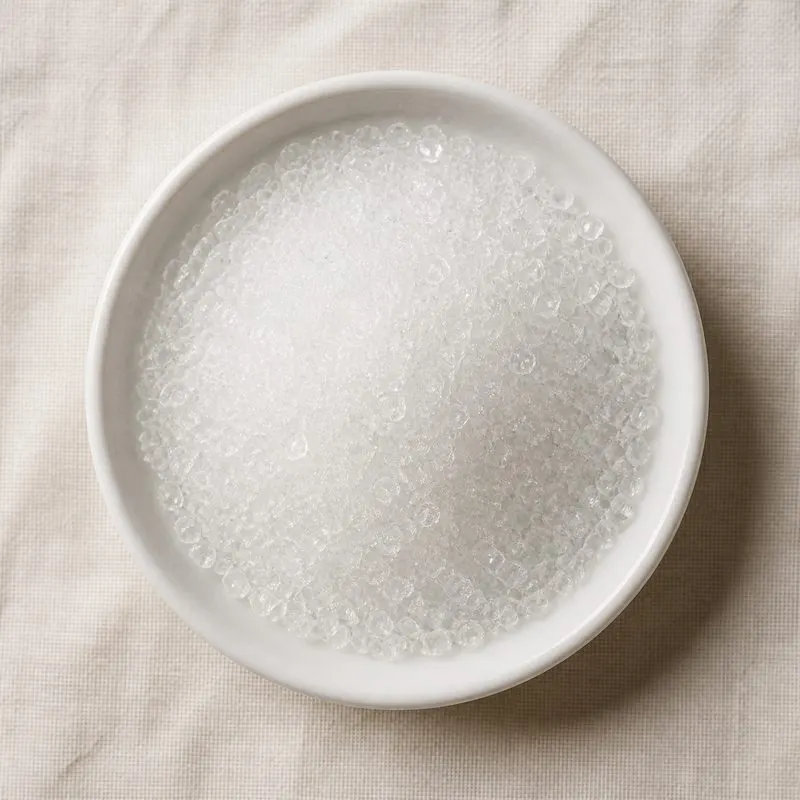
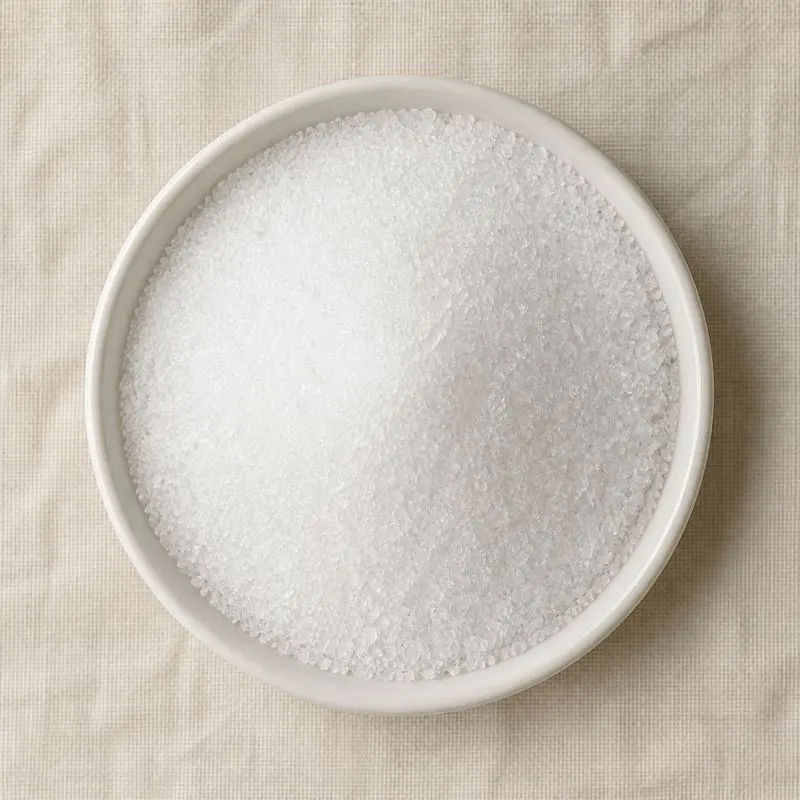
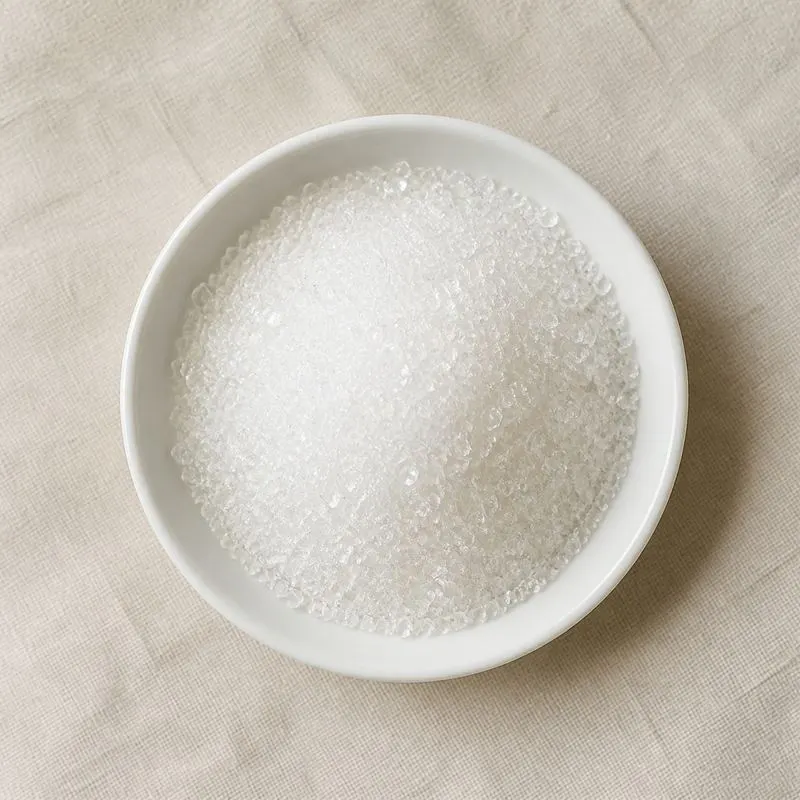
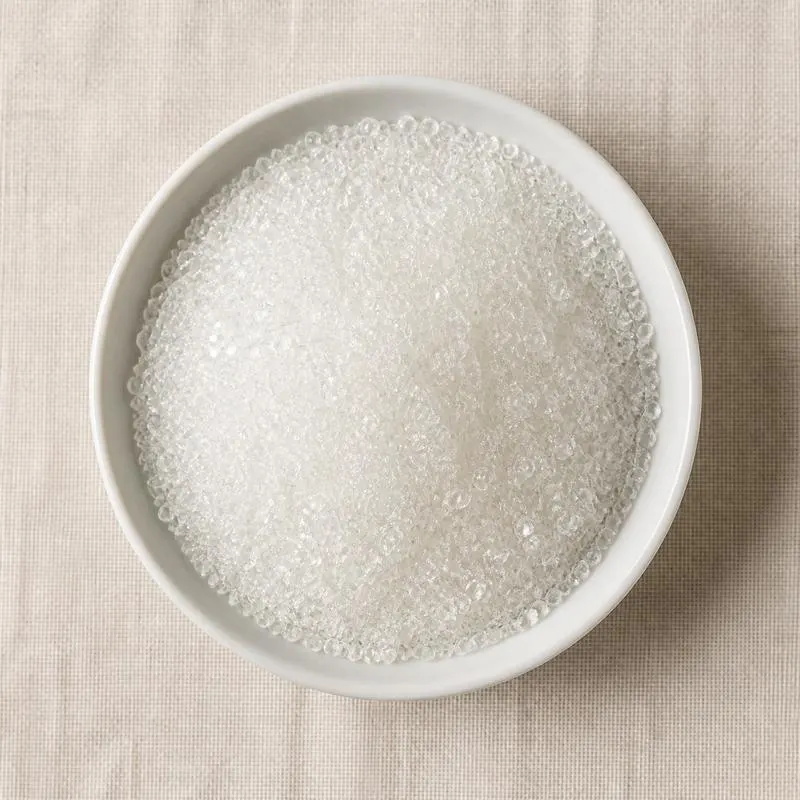
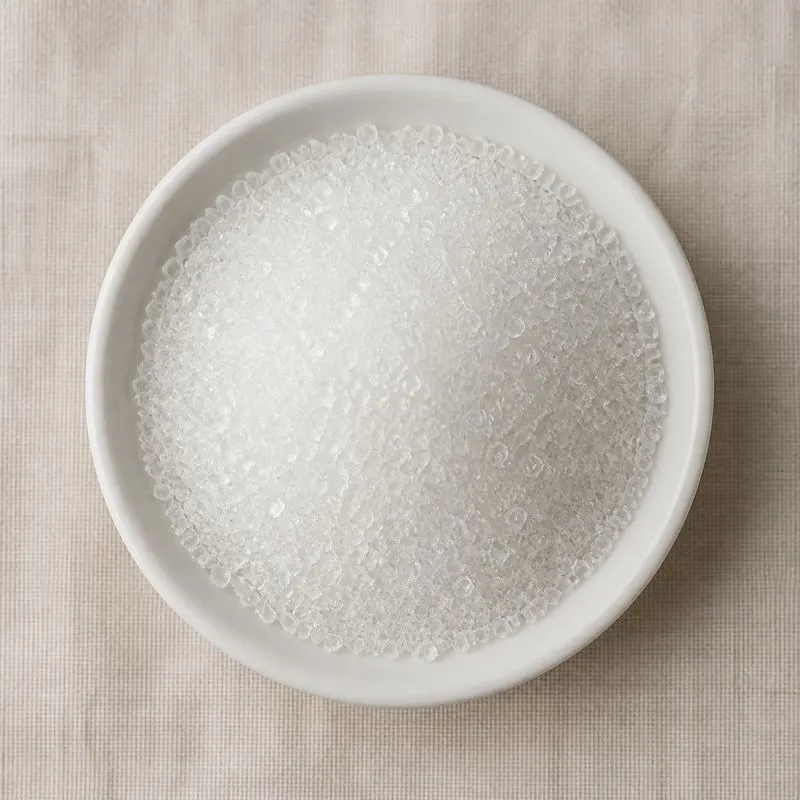
The material forms colourless to white crystals or a white crystalline powder with a mildly saline, faintly cooling taste. It is freely soluble in water, roughly 72 g per 100 mL at 25 degrees Celsius, and practically insoluble in ethanol. A one percent solution sits near pH 8, and solutions are stable to heat, so the salt survives pasteurisation, retorting and spray drying without loss of function.
Its buffering strength is greatest between pH 4 and 6 when paired with citric acid, and its affinity for divalent cations is what lies behind most of its secondary effects, from preventing calcium precipitation in beverages to destabilising the casein micelle in cheese processing.
We source bulk Trisodium Citrate from top China manufacturers for our partners, working with several of them. The manufacturers are in Jiangsu and Shandong. A smaller requirement can ship in a combined container with other ingredients.
Please send the grade you need, the volume and your destination port, and we will come back with a solution and a price.
or call +86-21-6858 0751
- Function
- Acidulant
Specifications
| Item | Specification |
|---|---|
| Appearance | White crystals or crystalline powder |
| Assay, anhydrous basis | 99.0 to 100.5 percent |
| Identification | Positive for sodium and for citrate |
| Water Content, dihydrate | 11.0 to 13.0 percent |
| pH, 5 percent solution | 7.5 to 9.0 |
| Clarity of Solution | Clear, free from insoluble matter |
| Readily Carbonisable Substances | Passes test |
| Oxalate | Not more than 100 mg per kg |
| Chloride | Not more than 0.005 percent |
| Sulphate | Not more than 0.015 percent |
| Lead | Not more than 0.5 mg per kg |
| Arsenic | Not more than 1 mg per kg |
| Heavy Metals as Pb | Not more than 10 mg per kg |
| Total Plate Count | Not more than 1000 cfu per g |
Common Markets Grades
Food grade trisodium citrate dihydrate at 99 percent minimum assay is the standard article and covers most food, beverage and dairy use. A pharmaceutical grade to United States Pharmacopeia and European Pharmacopoeia monographs is produced in parallel for blood collection anticoagulant solutions, dialysis concentrates and oral rehydration salts, differing mainly in tighter microbiological, endotoxin and heavy metal limits rather than in assay. An anhydrous grade is also traded where formulation water must be minimised, such as effervescent tablets and dry beverage powders.
Particle size is the main commercial variable. Fine powder passing 80 mesh dissolves quickly and suits dry blends, while coarse and granular grades in the 12 to 40 mesh range are chosen for direct addition to liquid systems because they resist dust and caking. A low bulk density agglomerated grade is offered for instant powders where fast wetting matters.
Applications
- Processed cheese and cheese slices, as the emulsifying salt that sequesters calcium from casein and gives a smooth, non-oiling melt
- Carbonated soft drinks and fruit flavoured beverages, as a buffer that holds the acid profile steady and softens the sharpness of citric acid alone
- Sports and electrolyte drinks, as a sodium source that contributes to the citrate buffer system without the sharpness of chloride
- Ice cream and cream liqueurs, where it chelates calcium and prevents protein aggregation during processing
- Evaporated and recombined milks, as a stabiliser against heat induced coagulation during sterilisation
- Processed meat and poultry, where it controls pH and improves water binding in injected brines
- Jams, jellies and fruit preparations, as part of the buffered acid system that controls pectin setting
- Confectionery, especially gelatin and pectin gums, where it moderates the pH so acid does not hydrolyse the gel
- Blood collection tubes and dialysis concentrates, the principal pharmaceutical outlet
Brands Using Trisodium Citrate
Widely-distributed consumer products that list Trisodium Citrate on the ingredient label.
- True LemonTrue Lemon Original Lemonade Drink Mix ↗Powdered lemonade stick pack whose ingredient list names sodium citrate, the trisodium salt of citric acid, as the acidity buffer alongside crystallized lemon and cane sugar.Label verified 2026-08-31
- PiqueB·T Fountain Beauty Electrolyte ↗Electrolyte drink powder that lists its sodium as sodium citrate and sodium chloride, so trisodium citrate carries part of the sodium load.Label verified 2026-08-31
- PiqueR·E Fountain Calming Electrolyte ↗Companion electrolyte powder listing its sodium as pink Himalayan salt and sodium citrate.Label verified 2026-08-31
- Transparent LabsHydrate ↗Electrolyte powder whose supplement facts panel gives 500 mg of sodium as sodium citrate and Himalayan rock salt.Label verified 2026-08-31
Brand names, product names and logos are the property of their owners. They appear here as published evidence that the ingredient is used, taken from the brand's own label or website. Their appearance is not an endorsement, and it does not mean the brand buys from us or from any manufacturer listed on this site.
China Manufacturers of Trisodium Citrate
Top Trisodium Citrate manufacturers in China.
- Jiangsu Debang Duoling Health Technology Co., Ltd.10 ingredients in the directory
 Jiangsu Guoxin Union Energy Co., Ltd.3 ingredients in the directory
 Jiangsu Weizhisheng Food Technology Co., Ltd.6 ingredients in the directory
 Lianyungang Hengsheng Fine Chemical Co., Ltd.10 ingredients in the directory
- Lianyungang Shuren Kechuang Food Additive Co., Ltd.4 ingredients in the directory
- Natural Biological Group Co., Ltd.9 ingredients in the directory
 Nature Food Technology Co.;Ltd.12 ingredients in the directory
 Ttca Co., Ltd.5 ingredients in the directory
Company names and logos are the property of the manufacturers themselves. They are listed here because our own directory records them as producing this ingredient. A listing is not an endorsement by them, and we do not represent them or speak on their behalf.
Regulatory Status
In the United States sodium citrate is affirmed as generally recognised as safe under 21 CFR 184.1751, for use as a buffer, emulsifier, sequestrant and stabiliser at levels consistent with good manufacturing practice. Its use as an emulsifying salt in pasteurised process cheese is additionally recognised in the standards of identity for those products. Pharmaceutical use is covered by a United States Pharmacopeia monograph.
In the European Union Regulation (EC) No 1333/2008 authorises it as E 331(iii), trisodium citrate, within the citrates group E 331, with identity and purity criteria in Regulation (EU) No 231/2012. It is permitted quantum satis in most categories. JECFA has evaluated the citrate salts and concluded that no numerical limit is required, and sodium citrate is listed in the Codex General Standard for Food Additives as an acidity regulator, sequestrant and stabiliser.
Manufacturing Process
Production begins with citric acid, which is itself made by submerged fermentation of a carbohydrate feedstock, typically glucose syrup from maize starch or cane molasses, using Aspergillus niger. Most trisodium citrate plants sit alongside a citric acid plant and take either finished acid or an intermediate citrate liquor directly.
The acid is neutralised with sodium hydroxide or sodium carbonate in a stirred reactor, with the end point controlled to a pH near 8 so that all three carboxyl groups are converted and no monosodium or disodium salt remains. The neutral liquor is treated with activated carbon to strip colour and residual fermentation impurities, then filtered clear. Concentration in a vacuum evaporator brings the solution to supersaturation, and controlled cooling crystallisation in a draft tube baffle crystalliser grows dihydrate crystals of the target shape. The slurry is centrifuged, the cake washed with clean condensate, then dried in a fluid bed at a temperature low enough to retain the two molecules of water of crystallisation. Dried crystal is screened to grade, with oversize milled and returned.