Furaneol
Furaneol is 4-hydroxy-2,5-dimethyl-3(2H)-furanone, a hydroxy substituted furanone that carries a sweet caramel and burnt sugar odour at high concentration and a distinctly fruity strawberry and pineapple character on dilution. It is one of the most important single flavour compounds in the trade, occurring naturally in strawberry, pineapple, tomato, raspberry and mango, and being formed in almost any heated sugar and amino acid system.
The molecule is an enolised diketone, which explains most of its behaviour. It is weakly acidic, freely soluble in water and in ethanol, and unusually polar for a flavour compound of its molecular weight, so it stays in the aqueous phase of an emulsion rather than partitioning into the fat. That polarity is what makes it effective in beverages and jams where lipophilic top notes are lost.
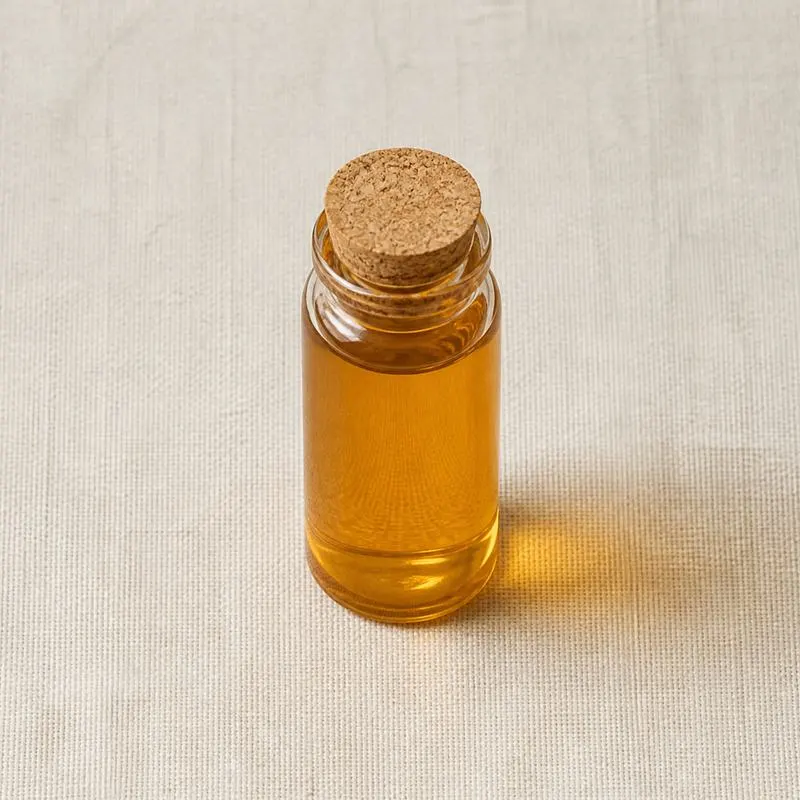
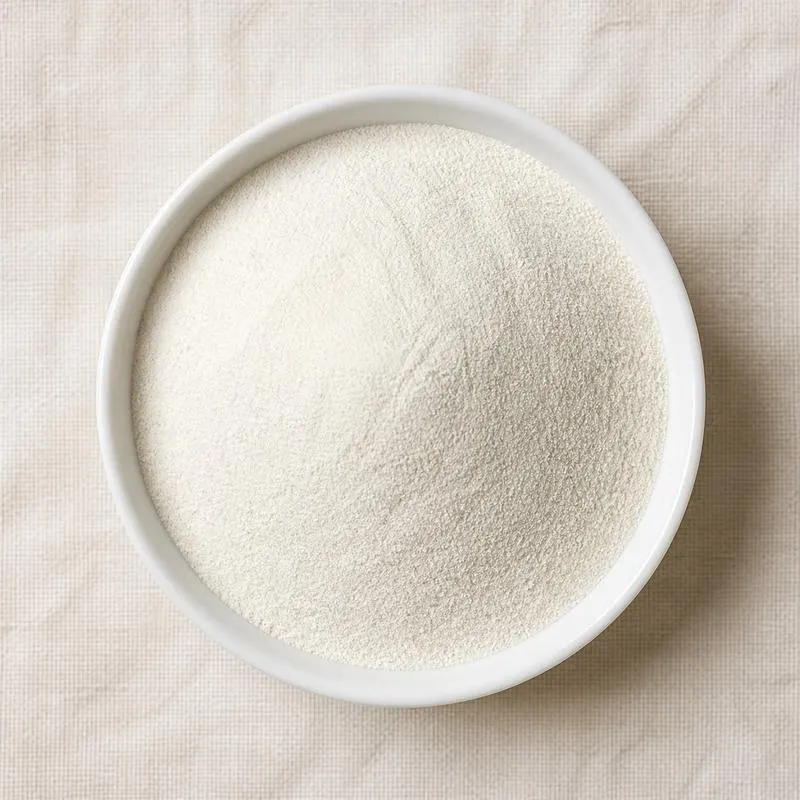
The crystal is white to pale yellow and melts near eighty degrees. It is hygroscopic and darkens on exposure to air, light and alkaline conditions, and it degrades quickly above neutral pH, so it is used in acidic products and stored cold in sealed containers. Working solutions in propylene glycol or water are common because the neat crystal cakes.
We source bulk Furaneol from top China manufacturers for our partners. The manufacturers are in Beijing and Jiangxi. A smaller requirement can ship in a combined container with other ingredients.
Please send the grade you need, the volume and your destination port, and we will come back with a solution and a price.
or call +86-21-6858 0751
- Function
- Flavours and Aromas
Specifications
| Item | Specification |
|---|---|
| Appearance | White to pale yellow crystalline powder |
| Odour | Sweet caramel and burnt sugar, fruity strawberry on dilution |
| Assay by Gas Chromatography | Not less than 98.0% |
| Related Substances | Not more than 2.0% total |
| Melting Range | 77 C to 81 C |
| Loss on Drying | Not more than 0.5% |
| Residue on Ignition | Not more than 0.1% |
| Solubility | Freely soluble in water, ethanol and propylene glycol |
| pH, 1% Aqueous Solution | 3.0 to 4.5 |
| Colour of 10% Solution | Not darker than pale yellow |
| Heavy Metals as Lead | Not more than 10 mg/kg |
| Lead | Not more than 1.0 mg/kg |
| Arsenic | Not more than 0.5 mg/kg |
Common Markets Grades
The synthetic grade at ninety eight percent or better by gas chromatography is the volume article and is what most flavour houses buy. It is specified on assay, on melting range and on colour, since a yellowed or brown lot indicates oxidation and gives a burnt rather than fruity effect. The powder is offered in a standard crystalline form and in a milled form for easier dissolution, and dilutions at one, ten or fifty percent in propylene glycol, water or triacetin are traded as ready to dose solutions.
Natural grade, produced from rhamnose or by fermentation, is a separate article at a considerably higher price and is bought with an isotope ratio certificate supporting the natural claim. Grades destined for the tobacco and pet food trades are specified in the same way as flavour grade but with different documentation. There is no feed only or technical grade in normal trade.
Applications
- Strawberry flavours, where it is the character impact compound and no convincing profile can be built without it
- Pineapple, mango and tropical fruit flavours, contributing a ripe, jammy sweetness
- Caramel, toffee and butterscotch flavours, supplying the burnt sugar note at higher dose levels
- Bakery and biscuit flavours, reproducing the furanone fraction that develops during baking
- Coffee, malt and cocoa flavours, where it rounds the roasted profile and adds sweetness without sugar
- Meat and savoury reaction flavours, in which it is a natural Maillard product and reinforces the brothy body
- Sweetness enhancement in reduced sugar beverages and dairy, where it raises perceived sweetness at very low addition
- Jams, fruit preparations and yoghurt fruit bases, where its water solubility keeps it available in the aqueous phase
- Tobacco flavourings and pet food palatants, using the same material under different documentation
China Manufacturers of Furaneol
Top Furaneol manufacturers in China.
 Beijing Zoteq Co., Ltd.10 ingredients in the directory
 Jiangxi Shamhai Bio-technology Co., Ltd.5 ingredients in the directory
Company names and logos are the property of the manufacturers themselves. They are listed here because our own directory records them as producing this ingredient. A listing is not an endorsement by them, and we do not represent them or speak on their behalf.
Regulatory Status
Furaneol is an established flavouring substance in the major markets. In the United States it holds FEMA GRAS status, and the Food and Drug Administration listing of synthetic flavouring substances and adjuvants permitted for use in food covers it. In the European Union it appears on the Union list of authorised flavouring substances with its own FLAVIS number, which is the clearance that applies for food use, and no E number applies because flavourings fall outside the food additive framework.
JECFA has evaluated the substance within its group assessment of furfuryl derivatives and related furanones and concluded that there is no safety concern at the levels at which it is used as a flavouring. Because the compound also arises naturally during cooking and fermentation, dietary exposure from added flavouring is small relative to the amount formed in food itself, a point noted in the flavouring evaluations.
Manufacturing Process
The natural route runs from L-rhamnose, the deoxy sugar recovered from citrus and other plant sources. Rhamnose is dissolved in water with a secondary amine catalyst such as piperidine, usually with an acid to form the amine salt, and the solution is heated. The sugar undergoes an Amadori type rearrangement, loses water and cyclises to the hydroxyfuranone ring, giving furaneol directly from a natural precursor by a reaction that qualifies as a natural process. The reaction liquor is extracted into an organic solvent, decolourised over activated carbon, concentrated under vacuum and crystallised, and the crystals are centrifuged, washed and dried under vacuum at low temperature.
The synthetic route builds the same ring from a six carbon chain rather than from a sugar. One established process starts from 3-hexyne-2,5-diol, which is oxidised and then cyclised under acid conditions to the hydroxyfuranone, with the crude product purified by the same carbon treatment, crystallisation and vacuum drying train. Because the compound decomposes on prolonged heating, both routes avoid distillation and rely on crystallisation for final purification.