Ganoderma Lucidum Spore Oil
Ganoderma lucidum spore oil is the lipid fraction extracted from the sporoderm broken spores of the reishi or lingzhi mushroom. It is the most concentrated commercial form of the fungus, since roughly one kilogram of oil is recovered from something on the order of fifty to one hundred kilograms of spore powder, and that concentration ratio is what sets it apart from spore powder and fruiting body extract.
The oil carries the lipid soluble fraction of the spore: triterpenoid ganoderic acids, ergosterol and related sterols, and a fatty acid profile dominated by oleic and linoleic acid with palmitic and stearic acid making up most of the balance. Triterpenoid content is the property the trade prices on, typically 20 to 30 percent by chromatographic assay, and it is the fraction associated with the bitter taste of reishi. Water soluble beta glucan polysaccharides remain in the defatted spore residue rather than in the oil, so spore oil and spore powder are complementary rather than interchangeable ingredients.
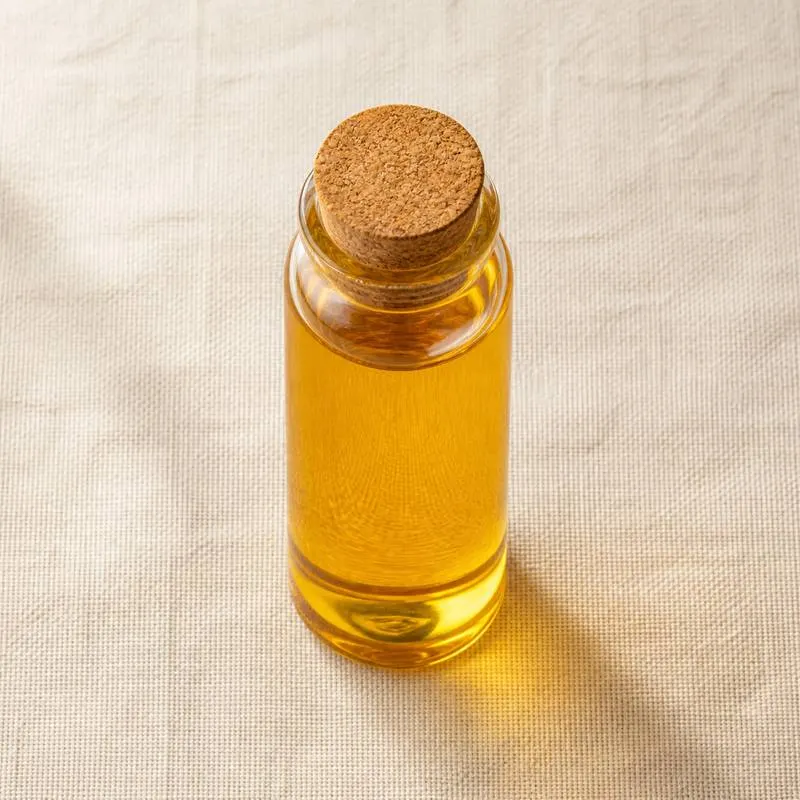
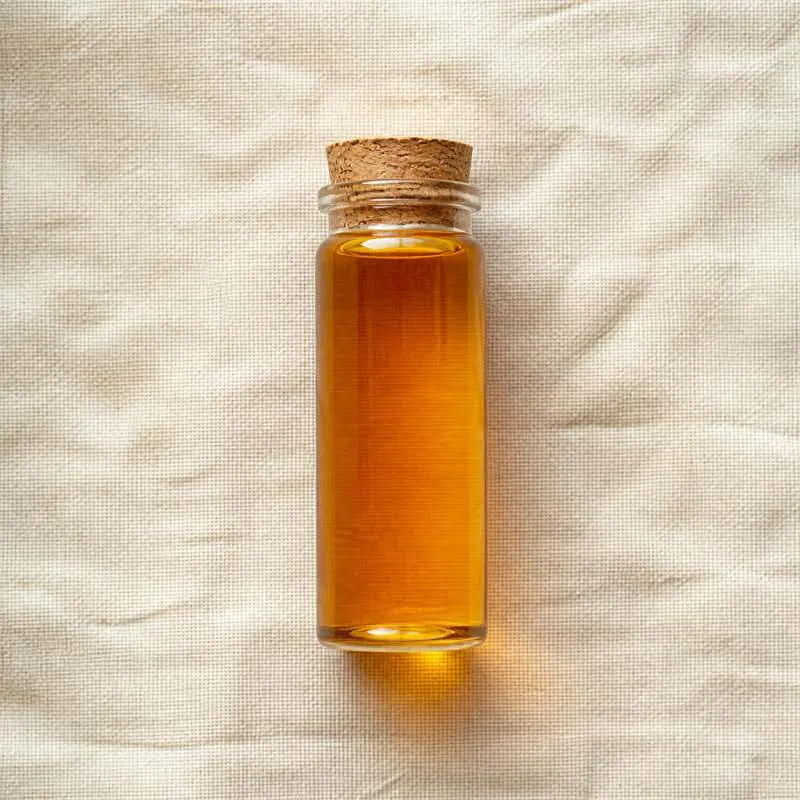
It is a viscous dark brown to reddish brown oil with a strong bitter taste and a characteristic mushroom odour, insoluble in water and miscible with vegetable oils. It is almost always sold encapsulated in softgels rather than as a bulk consumer product, both because of the taste and because the unsaturated lipid and the triterpenoids oxidise on exposure to air and light.
We source bulk Ganoderma Lucidum Spore Oil from top China manufacturers for our partners. The manufacturers are in Anhui and Fujian. A smaller requirement can ship in a combined container with other ingredients.
Please send the grade you need, the volume and your destination port, and we will come back with a solution and a price.
or call +86-21-6858 0751
- Function
- Nutraceutical
Specifications
| Item | Specification |
|---|---|
| Appearance | Viscous dark brown to reddish brown oil |
| Odour and Taste | Characteristic mushroom odour, strongly bitter |
| Identification | Triterpenoid profile by HPLC conforms to reference |
| Total Triterpenoids (as ganoderic acid) | Not less than 20.0 percent |
| Acid Value | Not more than 10 mg KOH/g |
| Peroxide Value | Not more than 5.0 meq/kg |
| Moisture and Volatile Matter | Not more than 0.5 percent |
| Insoluble Impurities | Not more than 0.1 percent |
| Refractive Index at 20 C | 1.470 to 1.480 |
| Residual Solvent | Not detected, supercritical CO2 grade |
| Lead | Not more than 0.5 mg/kg |
| Cadmium | Not more than 0.3 mg/kg |
| Arsenic | Not more than 0.5 mg/kg |
| Mercury | Not more than 0.1 mg/kg |
| Total Plate Count | Not more than 1000 cfu/g |
| Yeast and Mould | Not more than 100 cfu/g |
| Salmonella | Absent in 25 g |
Common Markets Grades
Total triterpenoid content is the primary grade parameter, quoted as ganoderic acid equivalents and commonly offered at 20 percent, 25 percent and 30 percent minimum. Buyers should note that spectrophotometric and chromatographic methods give significantly different figures for the same oil, so the method belongs on the specification alongside the number. Sterol content, particularly ergosterol, is stated on some specifications as a secondary marker.
Extraction route is the second commercial distinction. Supercritical carbon dioxide extracted oil is the dominant grade, valued for leaving no solvent residue and for running at a temperature that does not degrade the triterpenoids. Solvent extracted oil, usually with ethanol or hexane, is cheaper and is specified with a residual solvent limit. Beyond that, oils are graded on free fatty acid, peroxide and acid value, since oxidation state decides both taste and shelf life. Heavy metal figures are a routine part of the grade rather than a formality, because Ganoderma accumulates cadmium and lead from its growing substrate and the extraction step concentrates the lipid soluble fraction. Material ships in bulk under nitrogen or already filled into softgels.
Applications
- Softgel capsules sold as immune support supplements, the dominant format for the ingredient
- Premium reishi supplement ranges, where the oil is positioned above spore powder on concentration
- Adjunct oncology support products sold as health foods in Asian markets
- Liver support formulations, drawing on the traditional position of reishi as a hepatic tonic
- Combination softgels with vitamin E, sea buckthorn oil or other lipid actives
- Sleep and stress formulations built on the traditional calming use of the mushroom
- Cosmetic serums and creams, where the triterpenoid and sterol fraction is used for skin conditioning claims
- Traditional Chinese health food gift packs, a substantial commercial segment for spore oil
- Pet supplements for companion animal immune support in oil filled formats
- Analytical reference material for ganoderic acid method development
China Manufacturers of Ganoderma Lucidum Spore Oil
Top Ganoderma Lucidum Spore Oil manufacturers in China.
 Anhui Jinzhai Xianzhiling Biotechnology Co., Ltd.3 ingredients in the directory
- Fujian Xianzhilou Biological Science&technology Co., Ltd.3 ingredients in the directory
Company names and logos are the property of the manufacturers themselves. They are listed here because our own directory records them as producing this ingredient. A listing is not an endorsement by them, and we do not represent them or speak on their behalf.
Regulatory Status
In the United States Ganoderma lucidum spore oil is marketed as a dietary ingredient under the dietary supplement framework, with structure function claims permitted and disease claims not. It has no generally recognised as safe determination for use as a conventional food ingredient, and the Food and Drug Administration has acted against reishi products bearing cancer treatment claims. Identity and authenticity controls matter in supplier programmes, since the high price of spore oil creates an incentive to dilute it with vegetable oil, and a triterpenoid assay rather than a fatty acid profile is what detects that.
In the European Union the regulatory position needs checking for the specific preparation. Ganoderma lucidum fruiting body preparations have a history of food supplement use in several member states, but concentrated spore oil obtained by supercritical extraction of broken spores does not have an established pre 1997 consumption history across the Union, so it may fall within the scope of the novel food regulation. It is not a food additive and holds no E number, no health claim has been authorised for Ganoderma, and cadmium and lead limits for food supplements are the practical constraint at import given the accumulation behaviour of the fungus. Neither JECFA nor Codex has published specifications for the material.
Manufacturing Process
The chain starts with spore collection. Ganoderma is cultivated on hardwood logs or on sterilised sawdust substrate bags, and as the fruiting body matures its spores are captured either in sleeves fitted over the mushroom or by a low velocity air collection system in the growing house. Collected spores are screened free of substrate and fruiting body debris and dried to a low moisture. Because the double layered chitinous sporoderm blocks solvent access, the spores must then be wall broken, most commonly by chilled or cryogenic air jet or ball milling, sometimes by enzymatic digestion with chitinase and glucanase, with breakage rates of 98 to 99 percent verified microscopically before extraction.
Broken spore powder is loaded into an extraction vessel and treated with supercritical carbon dioxide at high pressure and moderate temperature, conditions chosen to dissolve the triterpenoid rich lipid while leaving the polysaccharides in the solid. The loaded fluid passes into a separator where pressure is dropped, the carbon dioxide flashes off and is recycled, and the oil drops out. Where a solvent route is used instead, the powder is percolated with ethanol or hexane and the miscella is desolventised under vacuum at low temperature. Crude oil is then filtered to remove fine spore fragments, sometimes winterised to drop out waxes that would cloud the softgel, assayed for triterpenoid content and blended across batches to grade. Antioxidant is dosed, the oil is polish filtered and either drummed under nitrogen or fed directly to softgel encapsulation. The defatted spore powder left in the extractor is recovered and sold as a separate ingredient.