Gelatin Type A
Gelatin type A is the gelatin produced by acid conditioning of collagen, in practice almost always from pig skin, and occasionally from fish skin or from young bovine hide. The letter designates the pretreatment, not the animal or the grade.
The acid route works because the collagen in young animal tissue is held together by immature, acid sensitive cross-links. A short soak in dilute mineral acid, a matter of hours to a day, is enough to swell the fibres and cleave enough of those links for hot water to extract the protein. That short treatment is what shapes the product. Little deamidation occurs, so the asparagine and glutamine side chains stay intact and the isoelectric point remains high, between about pH 7 and 9, whereas the alkaline process drives it down to around 5. In a formulation carrying negatively charged polymers or acidified protein, that difference in net charge determines whether the gelatin binds, clarifies or precipitates, which is why type A and type B are not interchangeable.
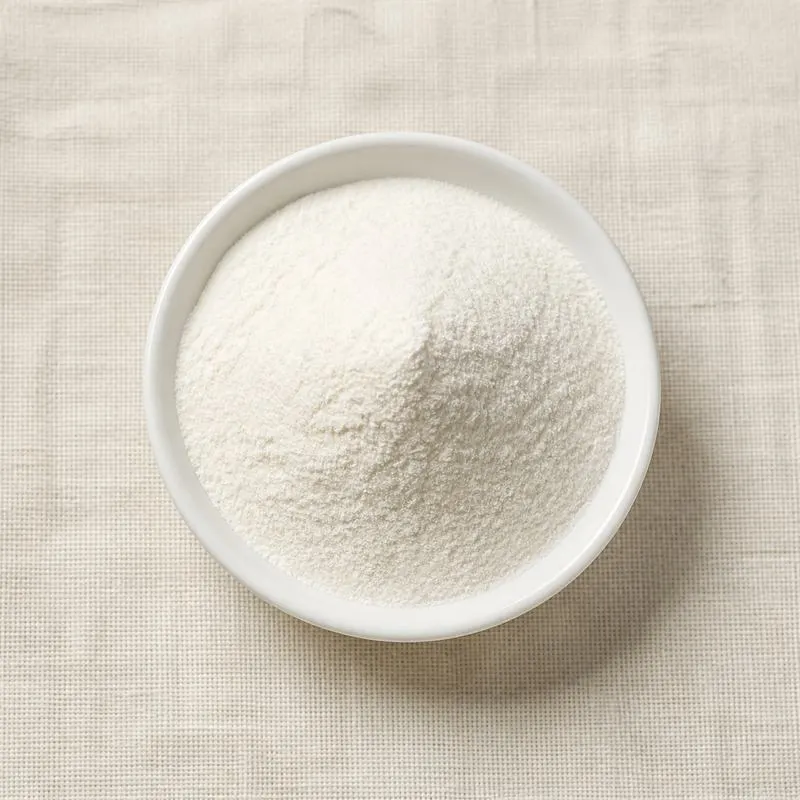
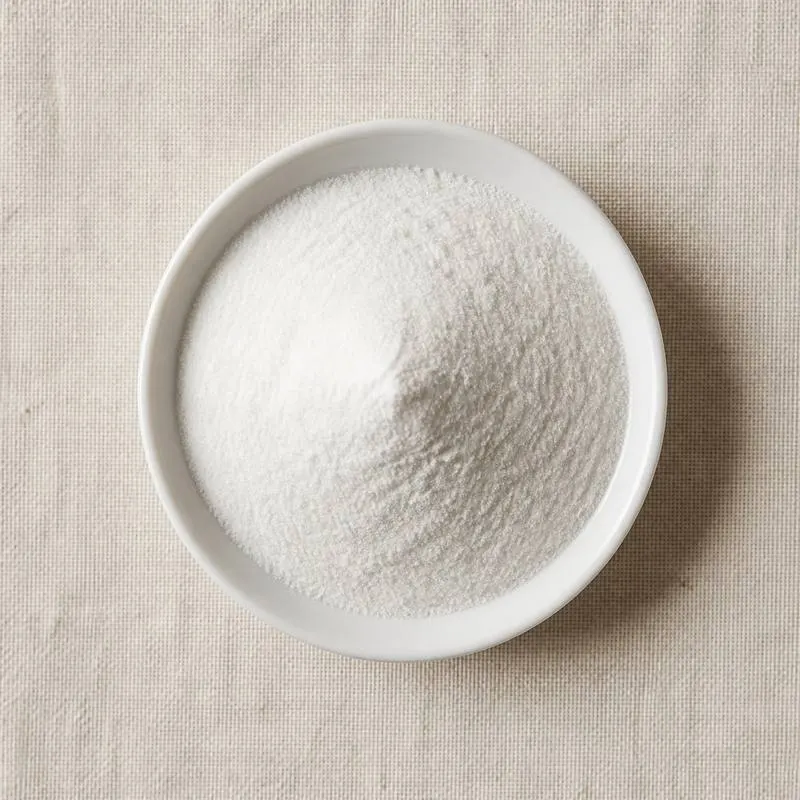
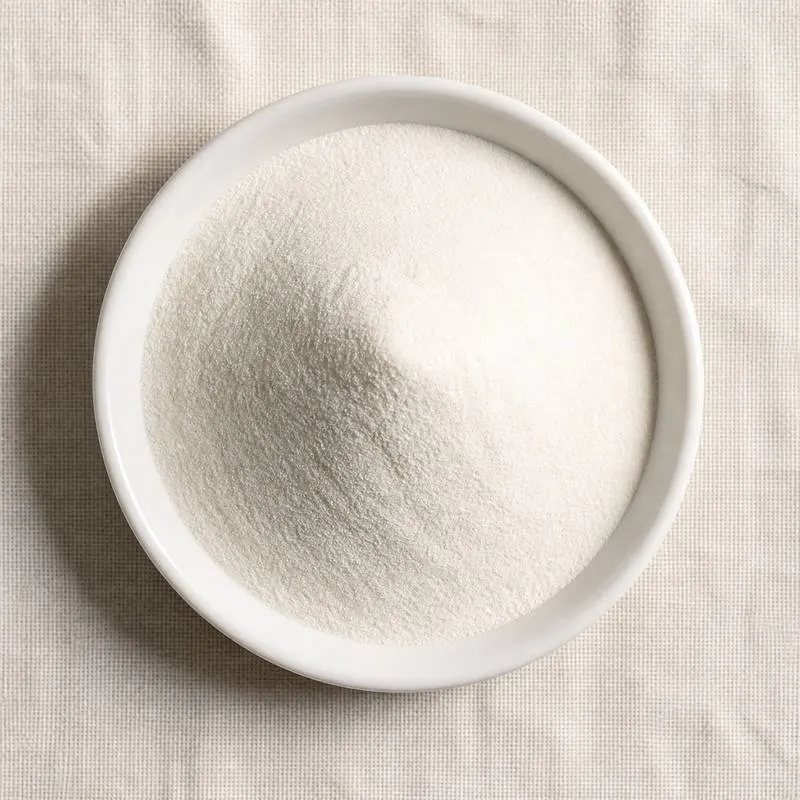
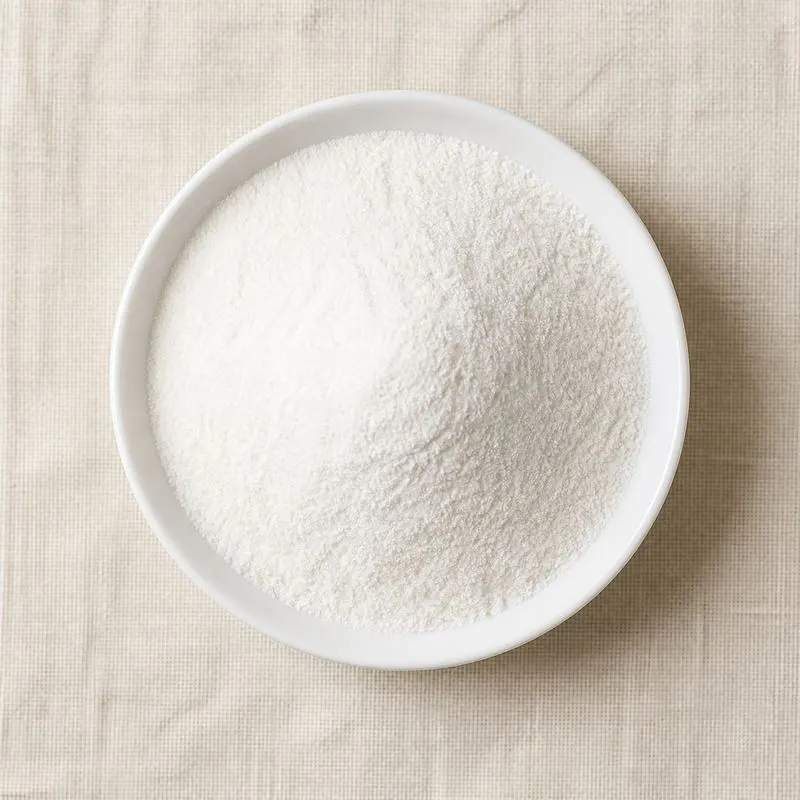
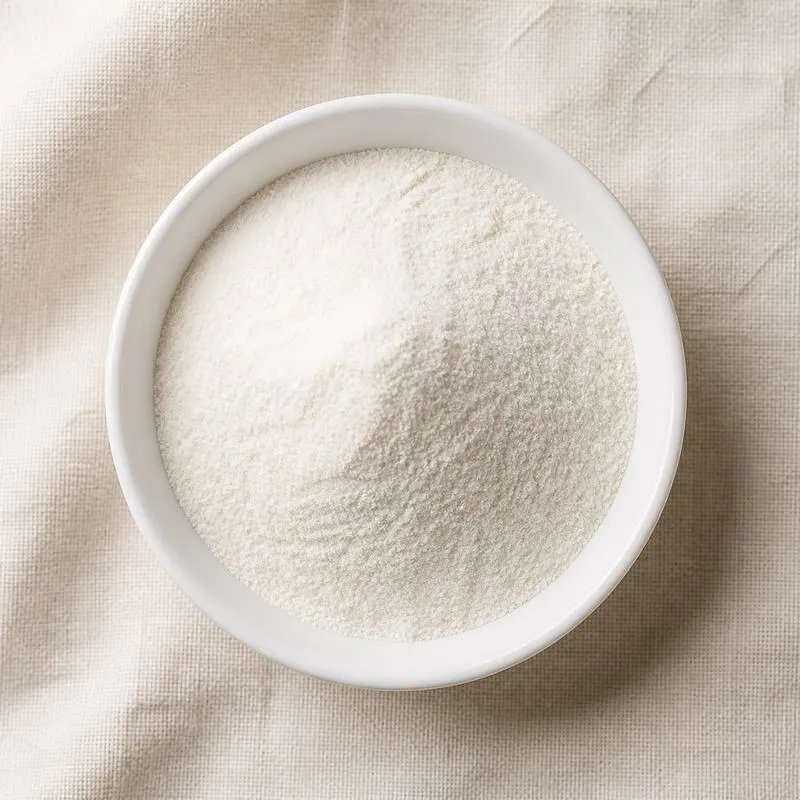
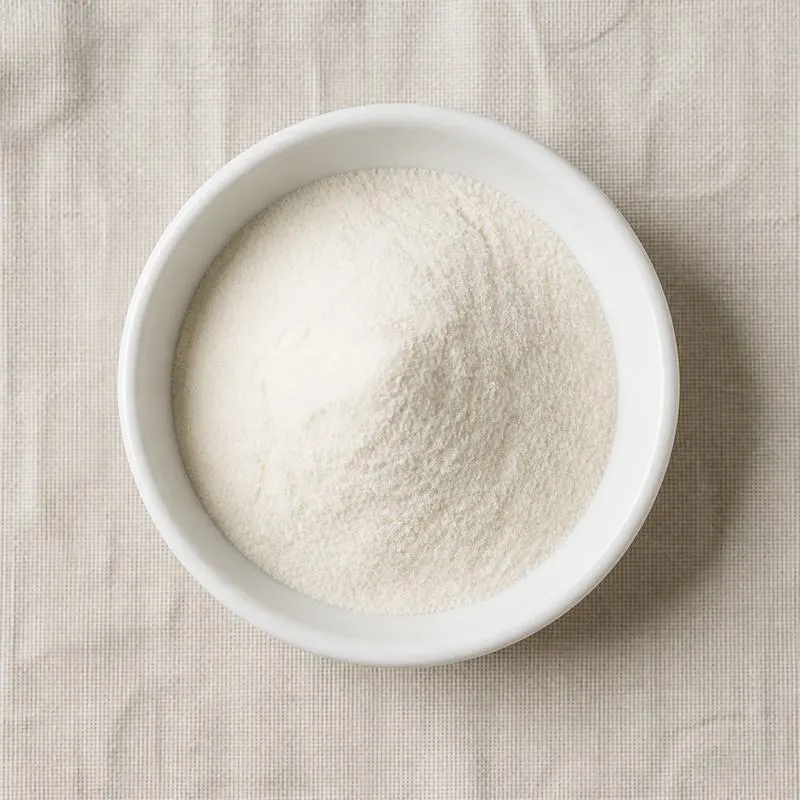
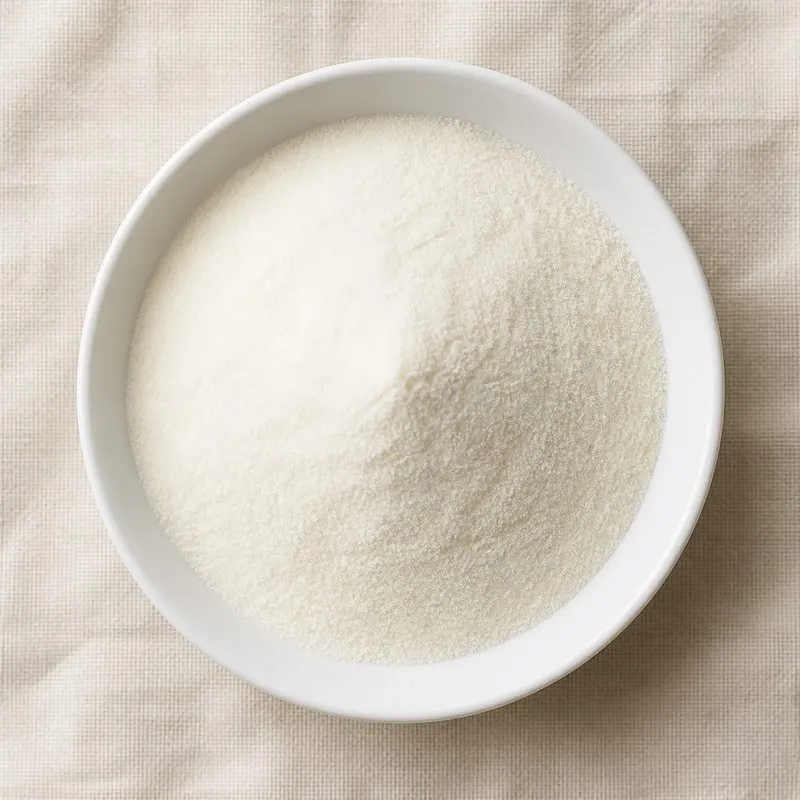
Type A gelatin sets and melts thermoreversibly, forming triple helical junction zones on cooling below about 35 degrees Celsius and melting again just below body temperature. Compared with type B it tends to set faster and to give a slightly clearer solution. It comes as pale yellow to nearly colourless granules, powder or sheet, swelling in cold water and dissolving above about 40 degrees Celsius.
We source bulk Gelatin Type A from top China manufacturers for our partners. The manufacturer is in Gansu. A smaller requirement can ship in a combined container with other ingredients.
Please send the grade you need, the volume and your destination port, and we will come back with a solution and a price.
or call +86-21-6858 0751
- Function
- Thickener / Hydrocolloid
Specifications
| Item | Specification |
|---|---|
| Appearance | Pale yellow to almost colourless granules or powder |
| Odour and Taste | Bland, free of foreign odour |
| Type | Type A, acid processed, porcine origin |
| Bloom Strength | 240 to 260 g |
| Viscosity, 6.67% at 60 degrees Celsius | 3.0 to 4.5 mPa s |
| Isoelectric Point | pH 7.0 to 9.0 |
| Protein, dry basis | Not less than 87.0% |
| Moisture | Not more than 12.0% |
| Ash | Not more than 2.0% |
| pH, 1% solution | 4.5 to 6.0 |
| Transmittance at 620 nm | Not less than 85% |
| Sulphur Dioxide | Not more than 50 mg/kg |
| Lead | Not more than 1.5 mg/kg |
| Arsenic | Not more than 1.0 mg/kg |
| Total Plate Count | Not more than 1,000 CFU/g |
| E. coli | Absent in 1 g |
| Salmonella | Absent in 25 g |
Common Markets Grades
The primary specification is Bloom, the gel strength measured on a standard 6.67 percent gel, traded from about 80 Bloom for soft set applications to 300 Bloom for firm confectionery and capsule use. Viscosity, measured on a hot solution, is specified alongside because it controls depositing and film forming independently of set strength, and a high Bloom low viscosity gelatin behaves quite differently from a high Bloom high viscosity one.
Mesh is specified to control dissolution rate, with coarse granules chosen where slow controlled hydration avoids lumping and fine powder where speed matters. Beyond these, grades separate by end use: food grade, pharmaceutical grade complying with the pharmacopoeial monographs for hard and soft capsule manufacture, and photographic and technical grades. Porcine origin means type A material is unsuitable for halal and kosher markets and for consumers avoiding pork, so species of origin is always stated. Fish gelatin made by the acid route serves as an alternative and typically sets at a lower temperature because of its lower proline and hydroxyproline content.
Applications
- Gummy sweets and wine gums, where the elastic melt-in-mouth chew is the defining texture
- Soft gelatin capsule shells, the standard wall material for oil filled pharmaceutical and supplement capsules
- Hard capsule shells and tablet coatings in pharmaceutical manufacture
- Marshmallow and aerated confectionery, stabilising the foam as the whipped structure sets
- Table jellies and chilled desserts, giving a clear gel that melts at body temperature
- Yoghurt and fermented dairy, controlling body and preventing whey separation
- Micro-encapsulation by coacervation, where the high isoelectric point allows pairing with an anionic polymer such as gum arabic
- Fining of wine, beer and fruit juice, flocculating tannins and haze forming particles
- Meat products including aspic and canned hams, binding cook juices into a sliceable gel
- Photographic emulsion coatings in the technical grades
China Manufacturers of Gelatin Type A
Top Gelatin Type A manufacturers in China.
Company names and logos are the property of the manufacturers themselves. They are listed here because our own directory records them as producing this ingredient. A listing is not an endorsement by them, and we do not represent them or speak on their behalf.
Regulatory Status
Gelatin is treated as a food ingredient rather than a food additive in both the United States and the European Union, so type A gelatin carries no E number and is declared simply as gelatin.
In the United States it is an established food ingredient used under the general food framework, with pharmaceutical use governed by the United States Pharmacopeia monograph for gelatin. In the European Union gelatin for human consumption is regulated as a product of animal origin under the hygiene rules for food of animal origin, which set requirements for the raw materials that may be used, for approval of establishments and for the treatments applied, and porcine raw material must come from animals fit for human consumption. The European Pharmacopoeia carries a monograph for gelatin. Because type A is predominantly porcine, it cannot carry halal or kosher certification, and species of origin has to be declared for religious and dietary reasons even though gelatin is not one of the declarable allergens. Codex does not treat gelatin as an additive but covers it under the general principles of food hygiene.
Manufacturing Process
Fresh or frozen pig skin, usually a by-product of pork processing, is sorted, washed and cut, then degreased and chilled. It is held in dilute mineral acid, typically hydrochloric, phosphoric or sulphuric acid, for a few hours up to about a day, during which the fibres swell and the acid sensitive cross-links of the immature collagen are cleaved. Because this conditioning is short compared with the weeks of liming used in the alkaline route, plants running the acid process turn stock over quickly and hold much smaller inventories of conditioning material.
The swollen stock is washed thoroughly to remove acid and adjusted to the extraction pH, then extracted with hot water in a series of batches at rising temperature, typically starting near 55 degrees Celsius and finishing close to boiling. The first extract carries the highest Bloom and each successive one is weaker, so they are collected separately and blended later to hit the ordered specification. The dilute extract is filtered, deionised on ion exchange resins to strip salts, concentrated by evaporation and membrane filtration, sterilised by a short high temperature hold, then chilled to a gel. The gel is extruded into noodles and dried in filtered conditioned air on a belt dryer, after which it is ground, sieved and blended to the target Bloom, viscosity and particle size.