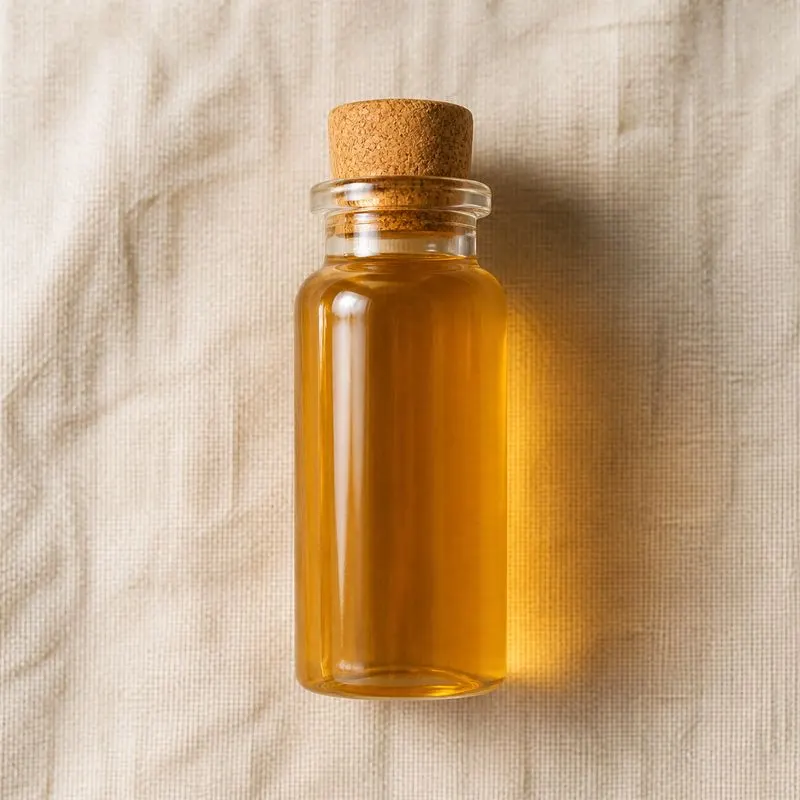
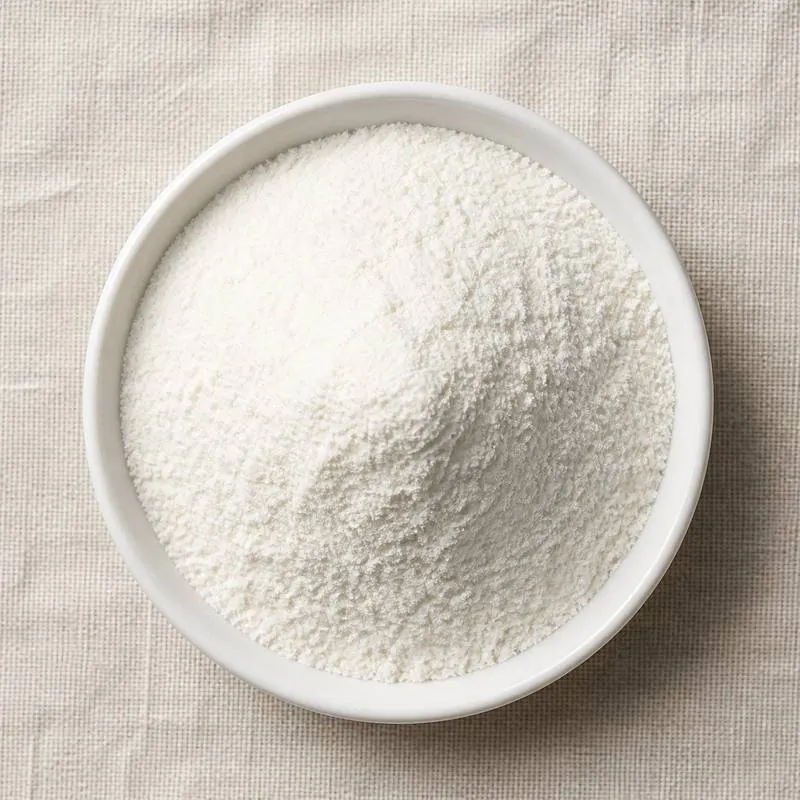
Granulated Lecithin
Granulated Lecithin is a dry, free-flowing form of phospholipid emulsifier sold as small irregular granules that pour and meter cleanly into dry-blend operations. The starting material is typically soy or sunflower fluid lecithin that has been deoiled and shaped into granules.
The granulated format carries phospholipid content above 95 percent on an oil-free basis, with phosphatidylcholine commonly between 22 and 28 percent. Particle size usually falls between 0.5 and 2 millimetres.
We source bulk Granulated Lecithin from top China manufacturers for our partners. The manufacturer is in Hebei. A smaller requirement can ship in a combined container with other ingredients.
Please send the grade you need, the volume and your destination port, and we will come back with a solution and a price.
or call +86-21-6858 0751
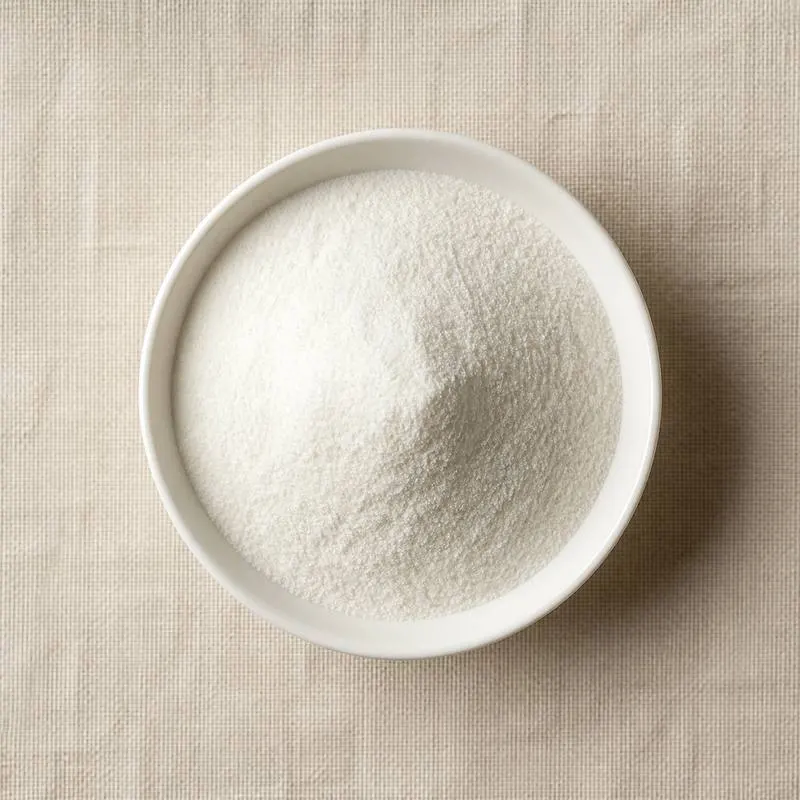
- Packaging
- 25 kg kraft paper bag with PE inner liner
- ISO 9001
- HACCP
- Halal
- Kosher
Specifications
| Item | Specification |
|---|---|
| Appearance | Light yellow free-flowing granules |
| Acetone Insolubles | ≥ 97% |
| Hexane Insolubles | ≤ 0.3% |
| Acid Value | ≤ 36 mg KOH/g |
| Peroxide Value | ≤ 10 meq/kg |
| Moisture | ≤ 2.0% |
| Particle Size | 16-40 mesh |
| Heavy Metals (as Pb) | ≤ 2 mg/kg |
Common Markets Grades
Granulated Lecithin is graded by source, phospholipid purity, and granule size distribution.
Standard soy granules carry phosphatidylcholine at 22 to 25 percent and acetone-insoluble values above 95 percent. Enriched granules with phosphatidylcholine above 30 percent are produced for nutraceutical supplement use.
Sunflower granules are produced for allergen-free and non-GMO segments and carry similar specifications to the soy version.
Granule size grades are tailored to the downstream application. Coarse granules of 1 to 2 millimetres are favored for direct consumption and shaker bottles. Fine granules of 0.3 to 0.8 millimetres are preferred for dry-blend tableting and capsule filling.
Applications
- Direct consumption as a phosphatidylcholine food supplement
- Dry beverage blends, smoothie powders, and meal-replacement mixes
- Tablet and capsule formulations as a phospholipid carrier
- Sports and clinical nutrition dry blends
- Infant cereal and follow-on nutrition powders
- Bakery premixes where liquid emulsifiers cannot be metered
- Functional food bars and granola toppings
- Dry sauce, gravy, and soup mixes for fat dispersion
- Cocoa and chocolate drink powders
- Animal feed premixes for piglet, poultry, and aquaculture nutrition
- Cosmetic powder formulations as a dry emulsifier carrier
- Protein and amino acid blend tableting
Brands Using Granulated Lecithin
Widely-distributed consumer products that list Granulated Lecithin on the ingredient label.
- NOW FoodsLecithin Granules ↗Product is granulated lecithin: 'NOW Non-GMO Lecithin Granules are derived entirely from non-genetically modified soybeans.' Single-ingredient soy lecithin granules.Label verified 2026-05-24
- NaturesPlusLecithin Granules ↗Product is granulated lecithin: 'provides a rich source of lecithin... easy-to-use granule form.'Label verified 2026-05-24
Brand names, product names and logos are the property of their owners. They appear here as published evidence that the ingredient is used, taken from the brand's own label or website. Their appearance is not an endorsement, and it does not mean the brand buys from us or from any manufacturer listed on this site.
China Manufacturers of Granulated Lecithin
Top Granulated Lecithin manufacturers in China.

Company names and logos are the property of the manufacturers themselves. They are listed here because our own directory records them as producing this ingredient. A listing is not an endorsement by them, and we do not represent them or speak on their behalf.
How We Help Source Granulated Lecithin
Direct Factory Sourcing
We run the whole process: selecting the manufacturer from the top Chinese food ingredient producers, negotiating the price, verifying quality, and coordinating the logistics. You deal with us instead of with several factories at once.
Original Packaging and Documents from the Manufacturer
The manufacturer sends your Granulated Lecithin out of its own factory in the original packing, through to your destination port. The COA, COO, MSDS, TDS and any certifications reach you from the manufacturer as well.
Free Samples and Lead Time
We send 100 to 500 g free for your own laboratory to test and you cover only the courier, usually within 2 to 3 working days. ETD is usually within 7 to 15 days once the order is confirmed, and we check that date against the factory's own manufacturing schedule before we give it to you.
Combined Shipment
We can load Granulated Lecithin together with other ingredients such as Polyglycerol Esters of Fatty Acids, Non-Dairy Creamer and Mono- and Diglycerides of Fatty Acids into one 20' FCL. If your quantity is small, we can also ship LCL.
Regulatory Status
Granulated Lecithin is covered by the same regulatory framework as the parent liquid lecithin.
The European Union approves it under the additive number E322 for general food use at quantum satis. The United States Food and Drug Administration treats it as Generally Recognized as Safe under 21 CFR 184.1400.
JECFA evaluated lecithins as a class without setting a numerical intake limit. The Food Chemicals Codex includes deoiled lecithin under its lecithin monograph with composition tests covering acetone-insoluble content and acid value.
Source allergen labelling applies. Soy-derived granules require a soy declaration in most markets, while sunflower-derived granules do not. Non-GMO Project Verified, Kosher, Halal, and organic certifications exist from most major producers.
Manufacturing Process
Granulated Lecithin is produced from fluid lecithin through a deoiling and granulation sequence.
Standard fluid lecithin is mixed with chilled acetone in a stirred reactor to dissolve the residual triglycerides. The phospholipid fraction precipitates as a sticky paste while the acetone-oil layer is decanted off and recycled.
The deoiled paste is dried under vacuum at low temperature and then mechanically processed into granules using a roller compactor, extruder, or granulating tray. The shaped granules are cooled, screened to size, and packaged under inert gas to limit oxidation.
Modern lines also use supercritical carbon dioxide as a cleaner alternative to acetone for the deoiling step, with comparable phospholipid yields and lower solvent residues.