Guaiacol
Guaiacol is 2-methoxyphenol, an aromatic compound of formula C7H8O2 and CAS number 90-05-1, in which a methoxy group sits ortho to a phenolic hydroxyl on the benzene ring. It is one of the defining odorants of wood smoke and of roasted foods, contributing the smoky, phenolic and faintly medicinal note found in smoked meat and fish, roasted coffee, whisky and roasted barley. Its odour threshold is very low, in the parts per billion range in water, so it is dosed at trace levels.
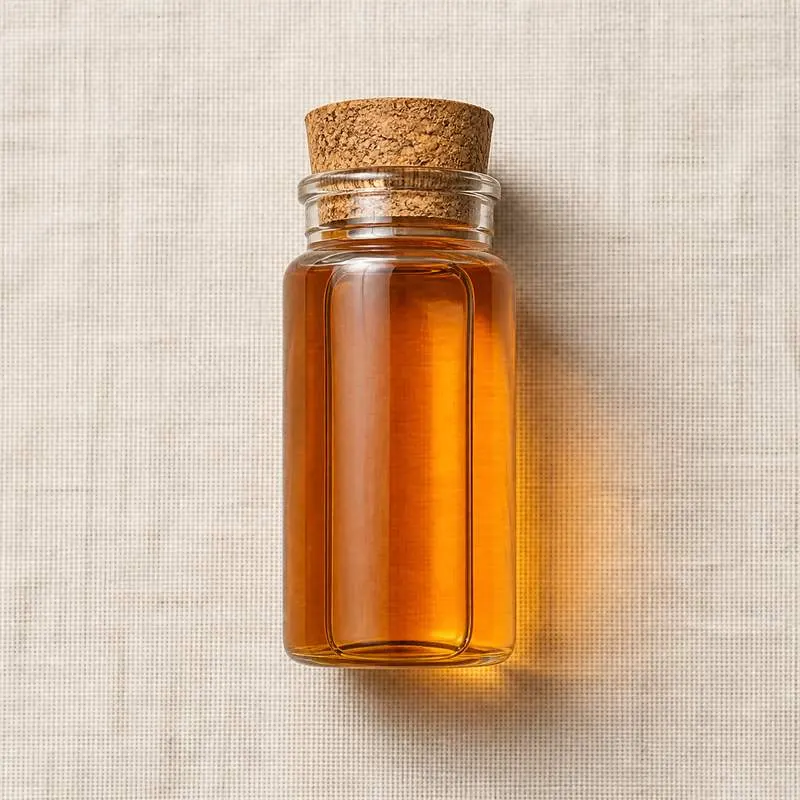
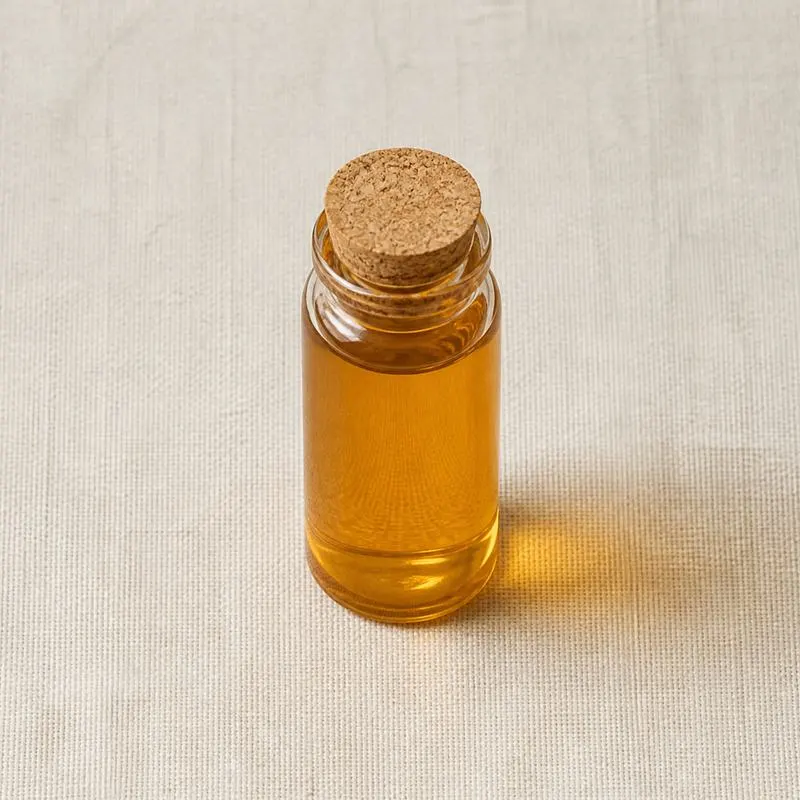
The pure substance melts near 28 degrees Celsius and boils around 205 degrees Celsius, so it arrives either as a colourless to pale yellow mobile liquid or as a low melting crystalline mass depending on ambient temperature, and drums are commonly warmed before decanting. It is sparingly soluble in water, freely soluble in ethanol, propylene glycol and edible oils, and is normally stocked as a dilution in propylene glycol or triacetin for flavour compounding. The phenolic hydroxyl makes it prone to oxidation, and material darkens to yellow or brown on exposure to air and light, which is why it is packed under nitrogen in light shielded containers.
We source bulk Guaiacol from top China manufacturers for our partners. The manufacturer is in Zhejiang. A smaller requirement can ship in a combined container with other ingredients.
Please send the grade you need, the volume and your destination port, and we will come back with a solution and a price.
or call +86-21-6858 0751
- Function
- Flavours and Aromas
Specifications
| Item | Specification |
|---|---|
| Appearance | Colourless to pale yellow liquid or crystalline mass |
| Odour | Characteristic smoky, phenolic and sweet woody |
| Assay by Gas Chromatography | Not less than 99.0 percent |
| Identification | Infrared spectrum conforms to reference |
| Melting Point | 26 to 30 degrees Celsius |
| Refractive Index at 20 degrees Celsius | 1.540 to 1.545 |
| Relative Density at 25 degrees Celsius | 1.125 to 1.135 |
| Solubility | Soluble in ethanol and propylene glycol, sparingly soluble in water |
| Catechol Content | Not more than 0.1 percent |
| Water Content | Not more than 0.2 percent |
| Residue on Ignition | Not more than 0.05 percent |
| Heavy Metals as Pb | Not more than 10 mg per kg |
| Lead | Not more than 1.0 mg per kg |
| Arsenic | Not more than 1.0 mg per kg |
Common Markets Grades
Two commercial forms cover most of the trade. Neat material at 99 percent minimum assay is the reference article, packed under nitrogen in lined steel or aluminium containers. Dilutions at 1 or 10 percent in propylene glycol or triacetin are stocked for liquid flavour compounding, since the weight of neat material a formula calls for is often too small to dispense accurately.
Beyond the physical form, the split is between synthetic material, which accounts for almost all commercial supply and is nature identical, and natural grades recovered from wood tar or from the pyrolysis condensate used to make smoke flavourings, which are considerably more expensive and are bought only where a natural declaration is required. Food grade material conforming to the Food Chemicals Codex monograph is the standard for food work, with technical grade sold separately for use as a chemical intermediate. Kosher and halal documentation is routinely available.
Applications
- Smoke flavourings, where it is one of the principal phenolic markers of the condensate
- Smoked meat and sausage, giving the smokehouse note without a smoking step
- Smoked fish and surimi products in smoked variants
- Coffee flavours, contributing the roasted phenolic layer of both ground and instant profiles
- Whisky, rum and other spirit flavours, reproducing the cask and peat character
- Barbecue sauces and marinades, where it carries the grilled note through a cooked system
- Savoury and meat flavours, as a top note over a Maillard reaction base
- Vanilla flavours, where a trace lifts the woody edge of vanillin
- Cheese flavours in smoked cheese applications
- As a chemical intermediate in the synthesis of vanillin and eugenol
China Manufacturers of Guaiacol
Top Guaiacol manufacturers in China.

Company names and logos are the property of the manufacturers themselves. They are listed here because our own directory records them as producing this ingredient. A listing is not an endorsement by them, and we do not represent them or speak on their behalf.
Regulatory Status
In the United States guaiacol carries FEMA GRAS number 2532 and is recognised as a synthetic flavouring substance permitted for use in food under 21 CFR 172.515. It also occurs as a constituent of smoke flavourings, which are separately regulated as flavourings. Material sold for food use is normally specified as conforming to the Food Chemicals Codex monograph.
In the European Union guaiacol appears in the Union list of authorised flavouring substances maintained under Regulation (EC) No 1334/2008, which permits it for general flavouring use subject to good manufacturing practice. Where it is present as a component of a smoke flavouring, the separate regulation governing smoke flavouring primary products applies, which requires authorisation of each primary product. The Council of Europe has listed it in its flavouring inventory, and JECFA has evaluated it within the group of phenol and phenol derivative flavouring agents and published a specification for it.
Manufacturing Process
Almost all commercial guaiacol is made by selective mono methylation of catechol. Catechol and methanol are fed over a solid acid or metal oxide catalyst in a fixed bed reactor at elevated temperature and pressure, and the reaction is run at partial catechol conversion so that the mono ether predominates over veratrole, the di methylated by product. An alternative liquid phase route uses dimethyl sulphate or methyl chloride with a base in a stirred reactor, which gives higher selectivity but generates a salt stream to treat.
The crude product is neutralised and washed to remove catalyst residue and unreacted catechol, then separated by fractional distillation under vacuum, since distillation at atmospheric pressure promotes oxidation of the phenol. Unconverted catechol is recovered from the heavies and recycled to the reactor. The purified fraction is polish filtered, checked for assay by gas chromatography and for colour, and filled under nitrogen. A minor volume of natural material is instead isolated from the phenolic fraction of hardwood pyrolysis condensate by extraction and fractional distillation.