Hydroxyethyl Methyl Thiazole
Hydroxyethyl Methyl Thiazole, more precisely 4-methyl-5-(2-hydroxyethyl)thiazole and widely known by the trade name sulfurol, is a sulphur and nitrogen containing heterocycle of formula C6H9NOS and CAS number 137-00-8. It is the thiazole half of the thiamine molecule, and it appears in cooked foods both as a thermal degradation product of vitamin B1 and as a Maillard reaction product. Its odour is nutty and meaty with a cocoa and roasted note, and at higher concentration it takes on a distinctly sulphurous, brothy character.
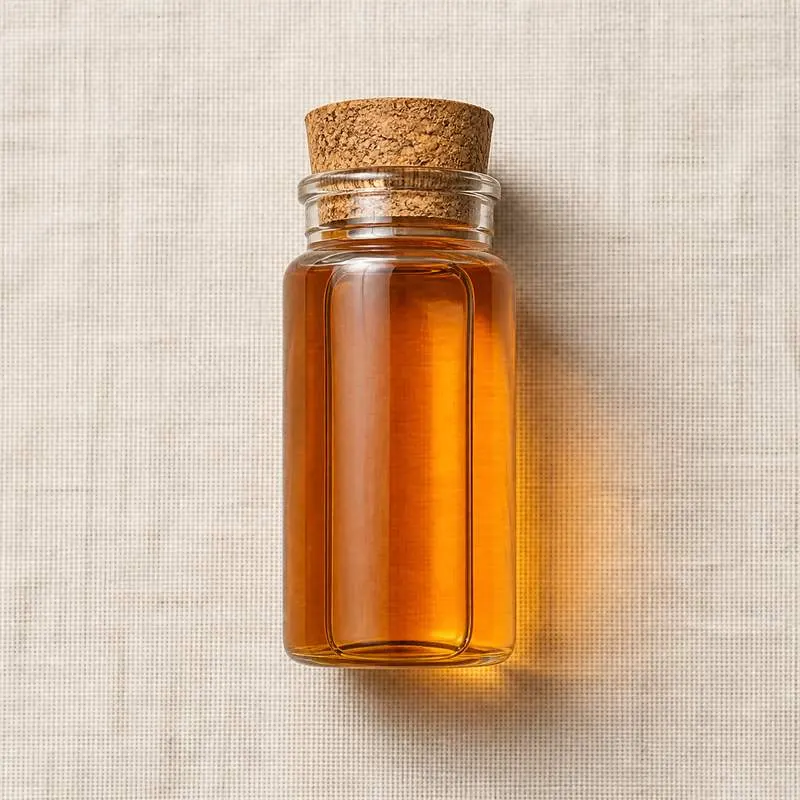
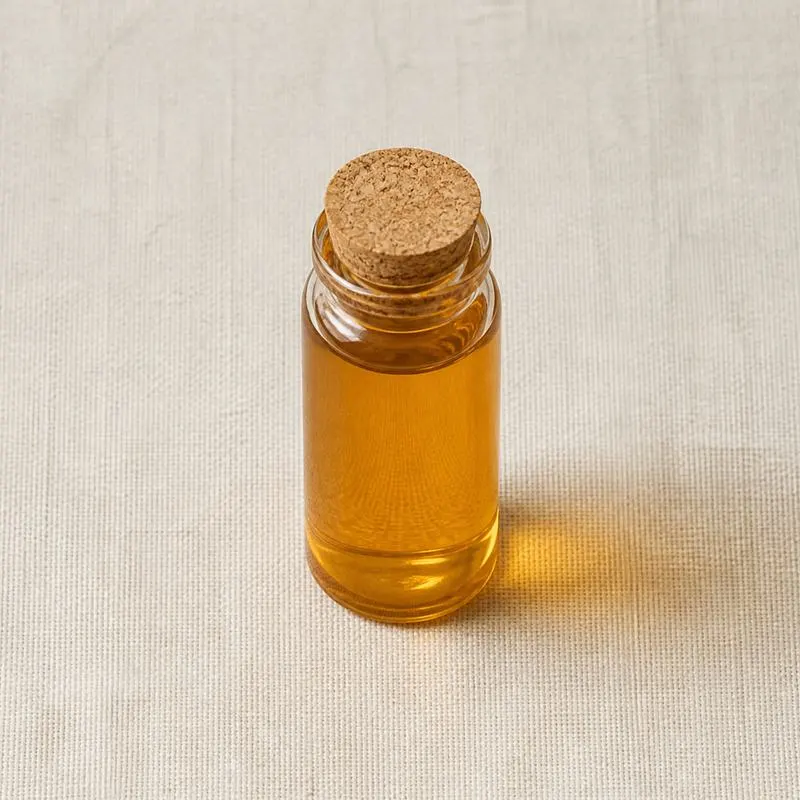
It is a colourless to pale yellow viscous liquid that boils near 130 degrees Celsius under reduced pressure and is not distilled at atmospheric pressure because it degrades. The free hydroxyl group makes it unusual among thiazole flavour materials in being miscible with water as well as with ethanol, propylene glycol and edible oils, which allows it to be dosed directly into aqueous savoury systems without a solubiliser. It is comparatively heat stable and survives retort and extrusion, and it darkens slowly on exposure to air and light, so it is filled under nitrogen into light shielded containers.
We source bulk Hydroxyethyl Methyl Thiazole from top China manufacturers for our partners. The manufacturer is in Shandong. A smaller requirement can ship in a combined container with other ingredients.
Please send the grade you need, the volume and your destination port, and we will come back with a solution and a price.
or call +86-21-6858 0751
- Function
- Flavours and Aromas
Specifications
| Item | Specification |
|---|---|
| Appearance | Colourless to pale yellow viscous liquid |
| Odour | Characteristic nutty meaty with a roasted sulphurous note |
| Assay by Gas Chromatography | Not less than 98.0 percent |
| Identification | Infrared spectrum conforms to reference |
| Relative Density at 25 degrees Celsius | 1.180 to 1.200 |
| Refractive Index at 20 degrees Celsius | 1.540 to 1.560 |
| Solubility | Miscible with water, ethanol and propylene glycol |
| Water Content | Not more than 0.5 percent |
| Acid Value | Not more than 2.0 mg KOH per gram |
| Residue on Ignition | Not more than 0.05 percent |
| Heavy Metals as Pb | Not more than 10 mg per kg |
| Lead | Not more than 1.0 mg per kg |
| Arsenic | Not more than 1.0 mg per kg |
| Residual Solvent | Not more than 100 mg per kg |
Common Markets Grades
The material is traded essentially as a single specification, neat liquid at 98 percent minimum assay conforming to a Food Chemicals Codex style monograph and to the FEMA GRAS listing. There is no natural grade in commercial supply, since isolating it from a food source is not economic at the volumes used.
The practical grade choice is concentration rather than purity. Neat material is packed under nitrogen in lined drums, and 1 or 10 percent dilutions in propylene glycol, triacetin or water are stocked so that a formula calling for a small weight can be dispensed accurately. A separate technical grade of the same compound is produced in much larger volume as the intermediate for thiamine synthesis, and that material is not interchangeable with flavour grade because it is not made or documented to a food monograph. Kosher and halal documentation is available on the flavour grade.
Applications
- Meat and savoury reaction flavours, as a top note over a Maillard base for beef, chicken and pork
- Bouillon and soup powders, contributing the brothy cooked note
- Instant noodle seasoning sachets in meat variants
- Snack seasoning dusts for crisps and extruded corn snacks
- Processed meat such as sausage and luncheon meat, deepening the cooked character
- Retort ready meals, where its heat stability is the reason for choosing it
- Cocoa and chocolate flavours, where a trace lifts the roasted note
- Coffee flavours, reinforcing the roasted sulphurous layer
- Nut flavours such as peanut and hazelnut, adding a roasted edge
- As a chemical intermediate in the industrial synthesis of thiamine
China Manufacturers of Hydroxyethyl Methyl Thiazole
Top Hydroxyethyl Methyl Thiazole manufacturers in China.

Company names and logos are the property of the manufacturers themselves. They are listed here because our own directory records them as producing this ingredient. A listing is not an endorsement by them, and we do not represent them or speak on their behalf.
Regulatory Status
In the United States the substance carries FEMA GRAS number 3204 and is recognised as a synthetic flavouring substance permitted for use in food under 21 CFR 172.515. Food grade material is normally specified against a Food Chemicals Codex style monograph covering assay, refractive index, relative density and heavy metals.
In the European Union it appears in the Union list of authorised flavouring substances maintained under Regulation (EC) No 1334/2008, which permits it for general flavouring use subject to good manufacturing practice, identified by an FL number within the thiazole group. The Council of Europe has listed it in its flavouring inventory. JECFA has evaluated it within the group of thiazole, thiophene and related heterocyclic flavouring agents and published a specification for it. Dilutions must carry a solvent that is itself an authorised food ingredient in the jurisdiction of use.
Manufacturing Process
Industrial production follows a Hantzsch thiazole synthesis, in which an alpha halo ketone and a thioamide condense and cyclise to form the thiazole ring. The ketone component is a chlorinated hydroxy pentanone, prepared by chlorinating the corresponding hydroxy ketone, and the sulphur and nitrogen come from thioformamide, which is generated in situ from formamide and a sulphurising agent such as phosphorus pentasulphide. The two are combined in a solvent under controlled temperature, and the ring closes with elimination of hydrogen chloride and water.
The crude reaction mass is neutralised and washed to remove salts and unreacted reagents, then the product is separated by fractional distillation under high vacuum, since the compound decomposes at its atmospheric boiling point. The distilled cut is polish filtered, assayed by gas chromatography, checked for colour and water content, and filled under nitrogen into light shielded drums. Flavour grade material is then optionally diluted into propylene glycol or triacetin at a fixed strength and released against a reference chromatogram and a sensory panel.