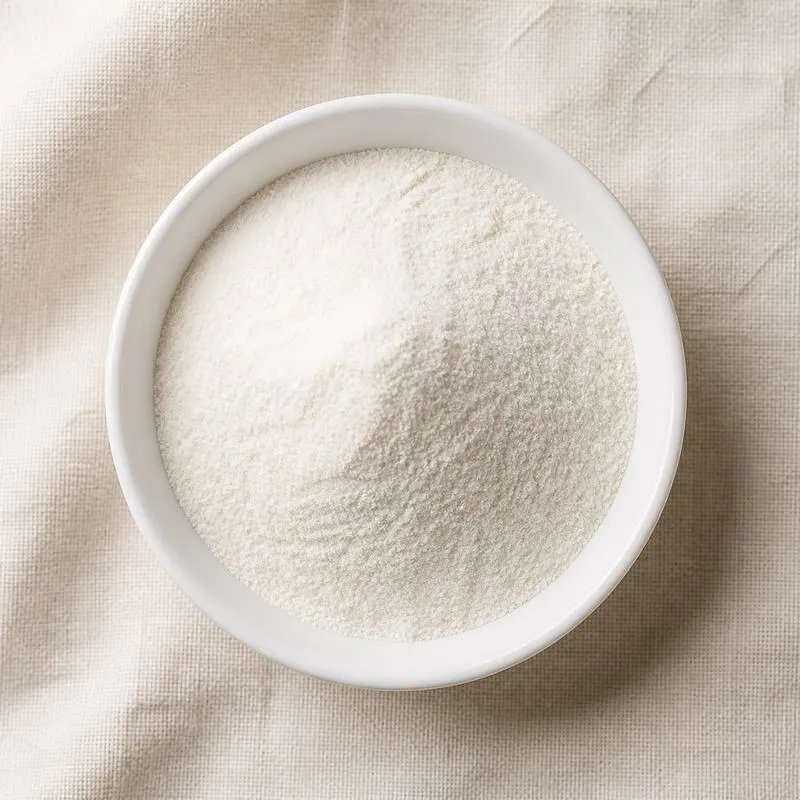
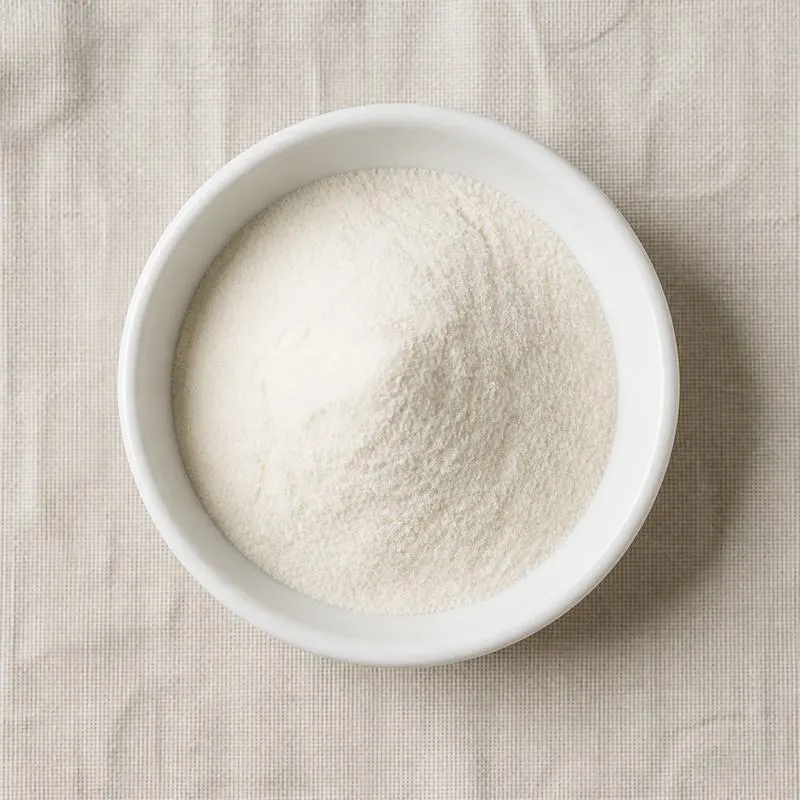
Instant Agar
Instant agar is agar that has been processed so that it disperses and dissolves at a lower temperature and in a shorter time than conventional agar, removing the need to hold a batch at a rolling boil before the gel will form.
Ordinary agar has to reach 85 to 95 degrees Celsius before it goes fully into solution, and any material that has not dissolved contributes nothing to the gel while showing up as specks in the finished product. Instant grades address this by reducing the effective particle size and by lowering the average molecular weight of the polymer, usually through a controlled partial hydrolysis or a heat and moisture treatment applied after extraction. The result is a powder that wets out without lumping and reaches full solution around 70 to 85 degrees Celsius, which allows it to be used in equipment that cannot reach boiling and in short-hold continuous processes.
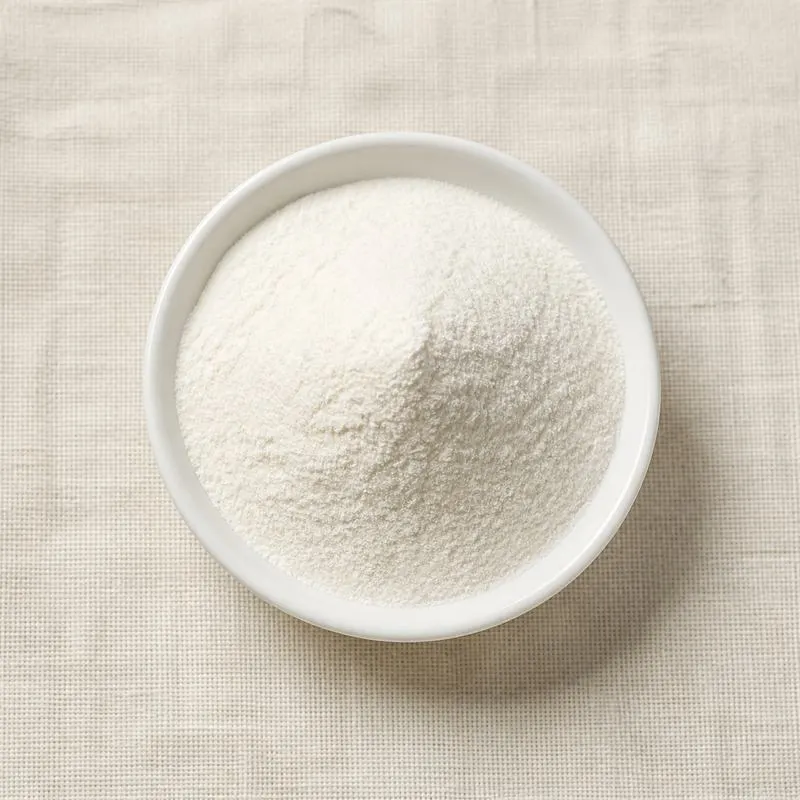
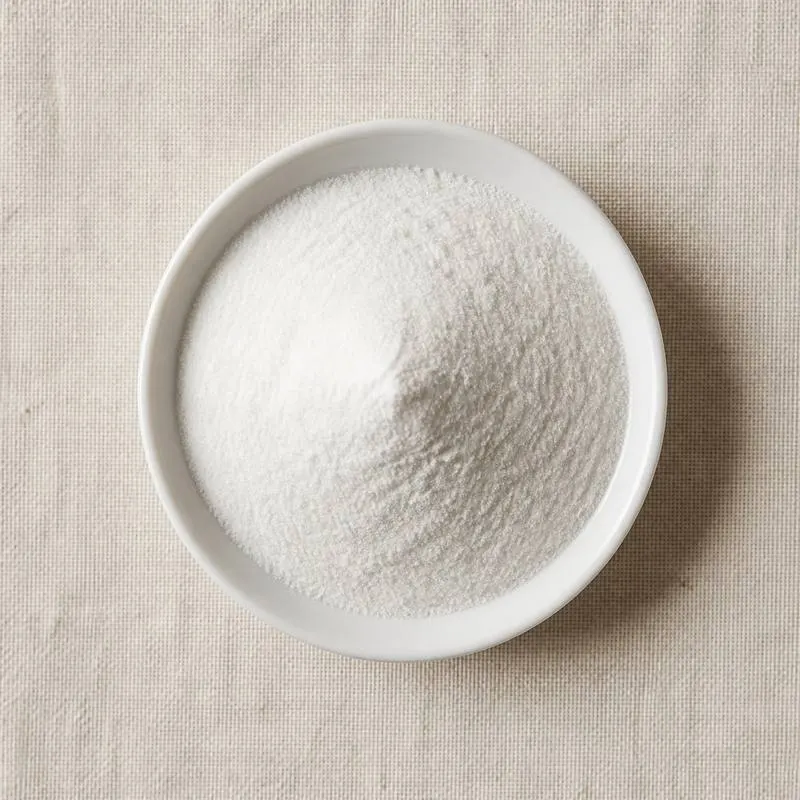
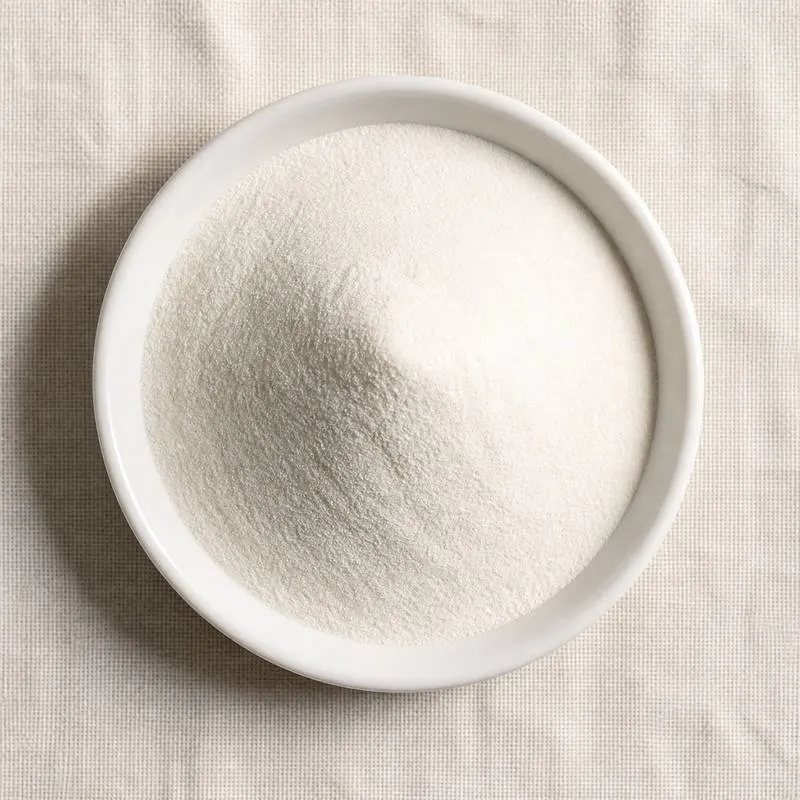
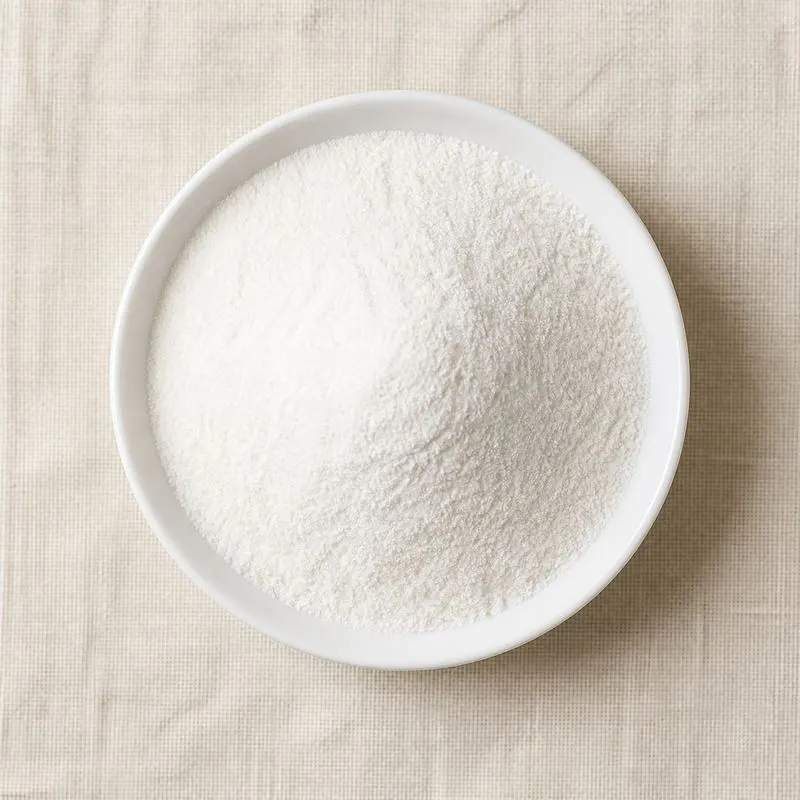
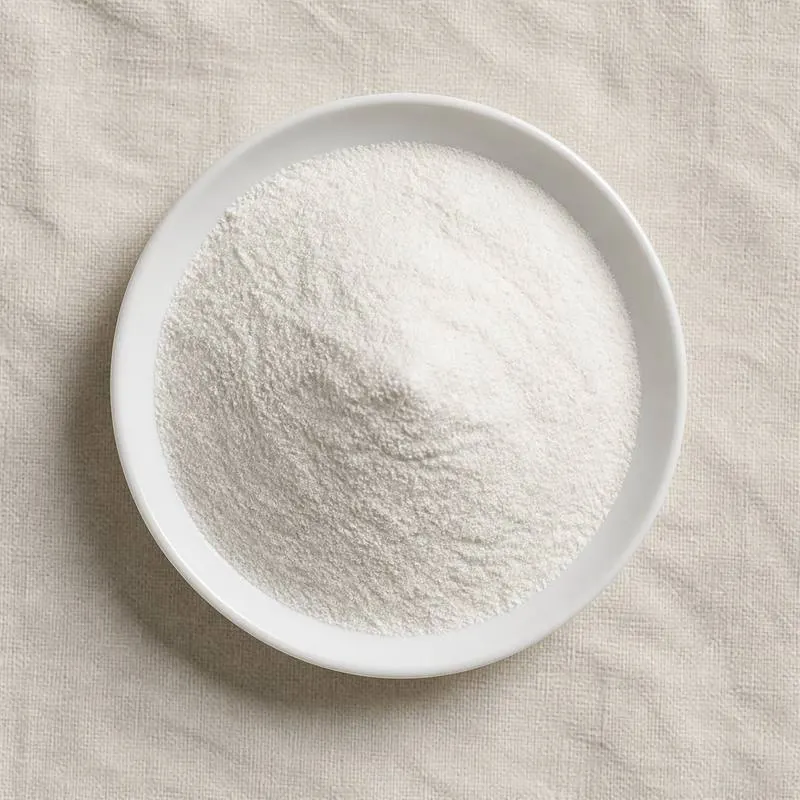
The trade-off is gel strength. Shortening the chains that give agar its network necessarily lowers the strength of the gel per unit of agar, so an instant grade is dosed higher than a conventional grade for the same firmness, and its setting and melting temperatures are usually a few degrees lower. It is a fine white to pale cream powder, still insoluble in cold water, and still gives the brittle short gel and the wide melting to setting hysteresis characteristic of agar.
We source bulk Instant Agar from top China manufacturers for our partners. The manufacturers are in Guangdong and Shandong. A smaller requirement can ship in a combined container with other ingredients.
Please send the grade you need, the volume and your destination port, and we will come back with a solution and a price.
or call +86-21-6858 0751
- Function
- Thickener / Hydrocolloid
Specifications
| Item | Specification |
|---|---|
| Appearance | Fine white to pale cream powder, free of foreign matter |
| Odour and Taste | Almost odourless, bland |
| Identification | Positive gel formation and iodine reaction |
| Gel Strength, 1.5% gel at 20 degrees Celsius | Not less than 500 g per square centimetre |
| Dissolution Temperature | 70 to 85 degrees Celsius |
| Gelling Temperature | 30 to 38 degrees Celsius |
| Loss on Drying | Not more than 20.0% |
| Total Ash, dry basis | Not more than 6.5% |
| Acid Insoluble Ash | Not more than 0.5% |
| Starch and Gelatin | Absent |
| Particle Size | Not less than 98% through 100 mesh |
| Lead | Not more than 2 mg/kg |
| Arsenic | Not more than 3 mg/kg |
| Total Plate Count | Not more than 5,000 CFU/g |
| Yeast and Mould | Not more than 500 CFU/g |
| Salmonella | Absent in 25 g |
Common Markets Grades
Instant agar is ordered by gel strength on a 1.5 percent gel and by dissolution temperature, the two figures that together define what it can replace. Grades are commonly offered in bands from around 400 up to 800 grams per square centimetre, below the range of conventional high strength agar, with the lower strength grades dissolving at the lowest temperature.
Particle size is specified alongside, since it is one of the levers used to achieve fast dissolution, and fine grades of 100 to 200 mesh are usual. Some producers supply an agglomerated version, in which fine particles are lightly wetted and re-dried into porous clusters that sink and wet rather than floating and lumping. Blends of instant agar with carrageenan, konjac gum or locust bean gum are sold under separate compound names where a less brittle texture is required. Buyers should confirm both the dissolution temperature and the gel strength on enquiry, because the two are traded together and cannot both be maximised.
Applications
- Jelly and dessert manufacture on lines that cannot hold product at boiling temperature
- Bakery glazes and fillings prepared in short cycle continuous mixers
- Dairy desserts and flans, dissolving within the pasteurisation hold rather than requiring a separate boil
- Confectionery jellies where a heat-stable ambient set is needed but a long cook would darken the syrup
- Instant and retail dessert mix powders reconstituted with hot water by the consumer
- Canned and retorted products, dissolving during the heat process itself
- Beverage jellies and drinkable dessert products requiring rapid hydration
- Plant based dairy alternatives, giving a vegetarian set without a prolonged cook
- Laboratory and culture media preparation where fast dissolution shortens the batch cycle
China Manufacturers of Instant Agar
Top Instant Agar manufacturers in China.
 Kevin Food Co., Ltd.7 ingredients in the directory
 Shandong Action Biotech Co., Ltd.6 ingredients in the directory
Company names and logos are the property of the manufacturers themselves. They are listed here because our own directory records them as producing this ingredient. A listing is not an endorsement by them, and we do not represent them or speak on their behalf.
Regulatory Status
Instant agar is agar in regulatory terms; the instantising treatment is a physical and mild hydrolytic processing step rather than a chemical modification producing a new substance, so it is covered by the same authorisations as conventional agar.
In the United States it falls under the affirmation of agar-agar as generally recognised as safe at 21 CFR 184.1115, subject to the conditions of use given there and to good manufacturing practice. In the European Union it is covered by E406 agar under the food additives regulation, and material sold as instant agar must still meet the identity and purity criteria laid down for E406, including limits on loss on drying, ash, acid insoluble ash and heavy metals, and the requirement that starch and gelatin be absent. It is generally permitted at quantum satis in the categories where agar is allowed and is declared on the finished label as agar or E406, not as instant agar. Codex and JECFA recognise agar as INS 406 with published specifications. Because gel strength for instant grades falls below the range of conventional agar, buyers should confirm that the material still meets the water absorption and identification requirements of the additive specification.
Manufacturing Process
Production starts from conventional agar made by the standard route: red seaweed of the Gelidium or Gracilaria type is washed, alkali treated to raise gel strength, extracted with hot water, filtered hot, cooled to a gel and dewatered by freeze and thaw or by hydraulic pressing, then dried.
The instantising step follows. The dried agar is subjected to a controlled treatment that shortens the polymer chains just enough to lower the dissolution temperature without destroying the gelling network, typically a mild acid hydrolysis under closely held time, temperature and pH, or a hydrothermal treatment in a pressurised vessel. Because the reaction is a compromise between dissolution speed and gel strength, the endpoint is determined by testing gel strength and dissolution behaviour on samples drawn during the run rather than by a fixed time. The treated agar is neutralised where acid has been used, washed to remove salts, dried, and then finely milled, often in a jet or pin mill, to the small particle size that is the second contributor to fast dissolution. Some producers agglomerate the milled powder in a fluid bed to improve wetting. The finished material is sieved, checked for gel strength and dissolution temperature, and blended across production runs to hold the specification.