Instant Rice Flour
Instant rice flour is rice flour whose starch has been gelatinised before milling, so that it thickens and binds in cold or warm water without a cooking step. It is produced by cooking rice flour or a rice slurry and drying it, on a heated drum or through an extruder, then grinding the dried material back to a flour.
Rice starch has the smallest granules of any commercial starch, typically 3 to 8 micrometres, and that fineness is what gives rice flour its characteristically smooth, creamy, non gritty mouthfeel. Pregelatinising it preserves that quality while removing the need to heat. In raw flour the starch will not hydrate below its gelatinisation range of about 65 to 80 degrees Celsius; once cooked and dried in an amorphous state, it swells on contact with water at ambient temperature and builds viscosity immediately.
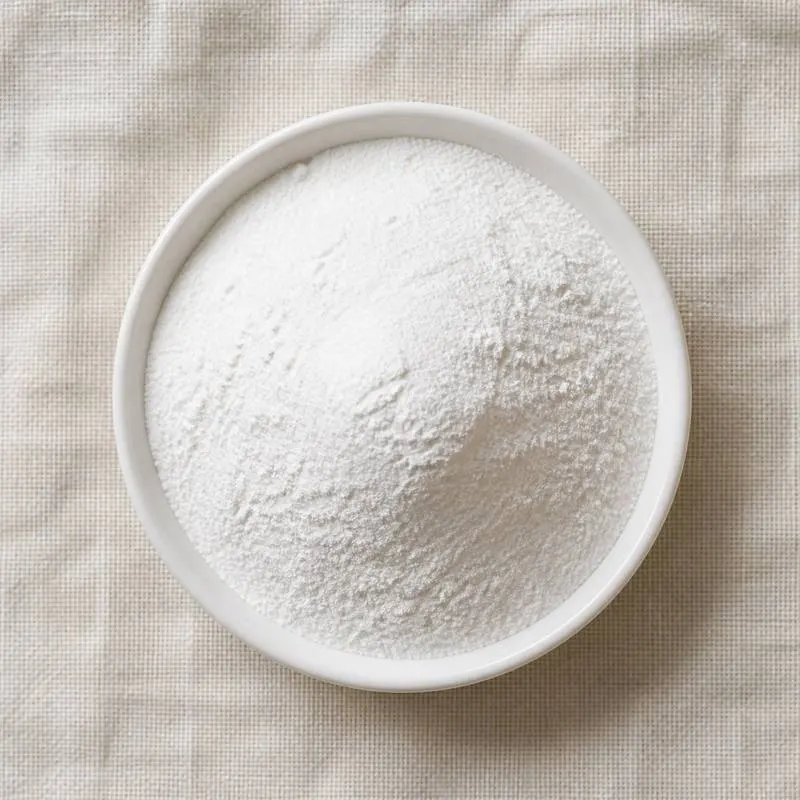
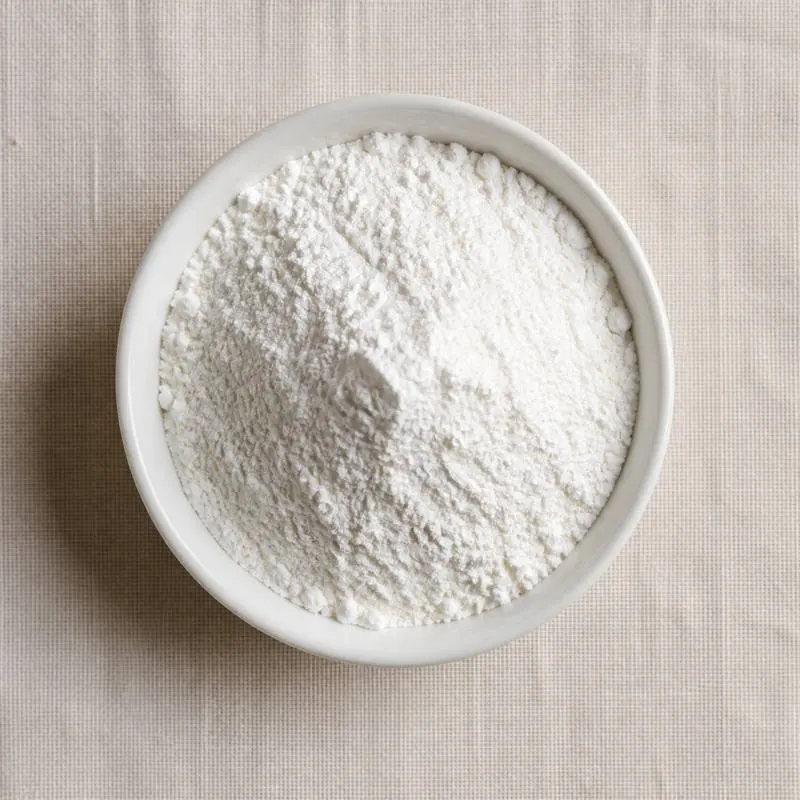
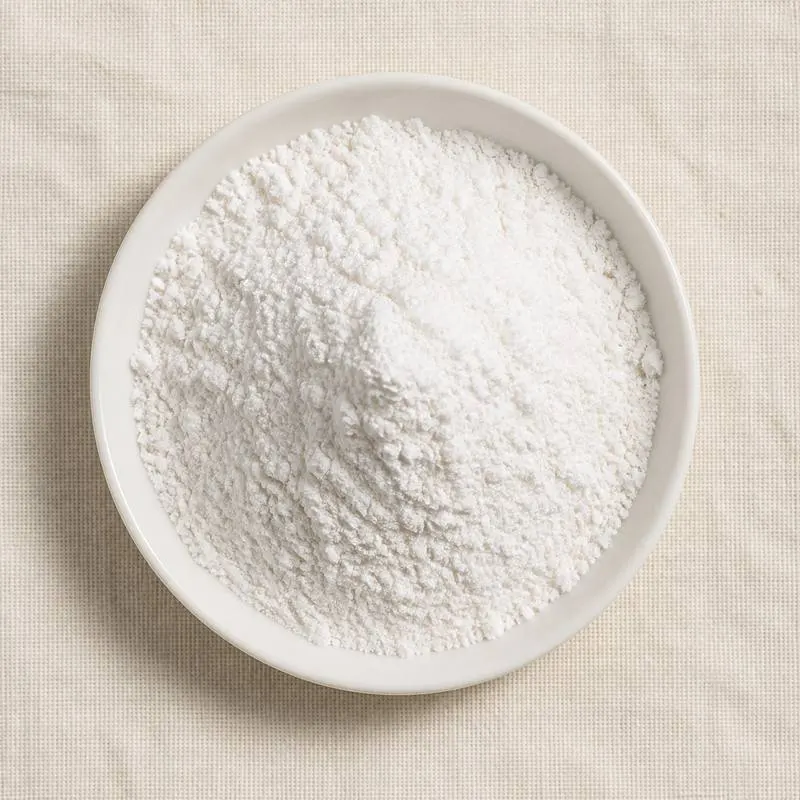
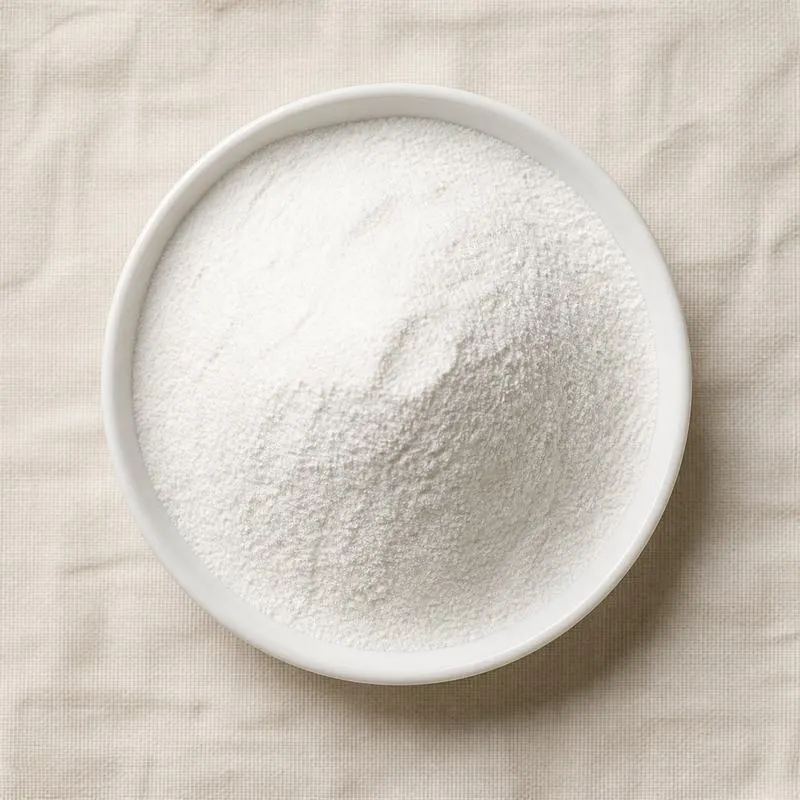
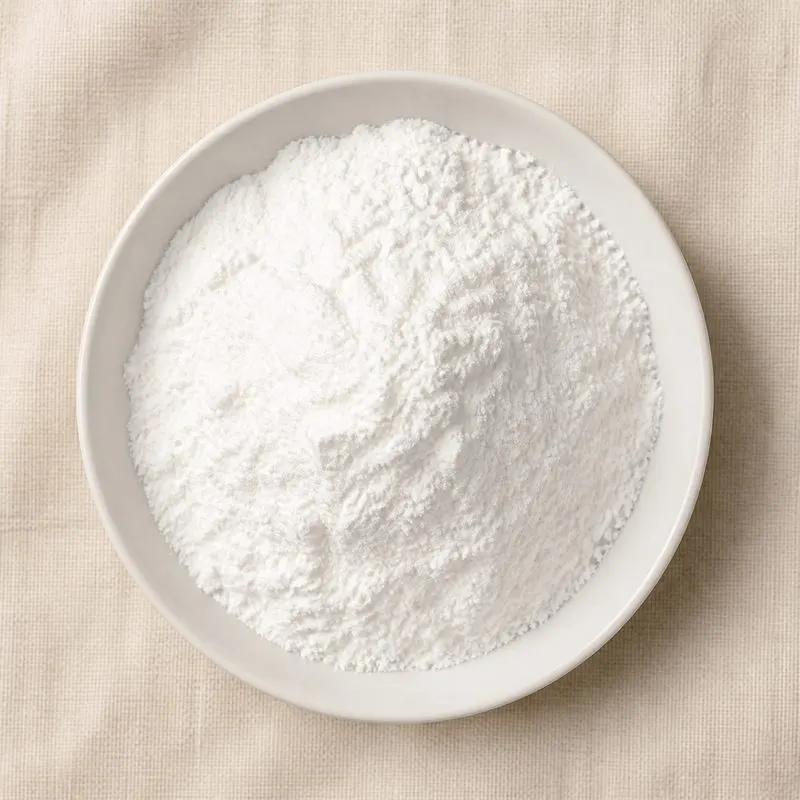
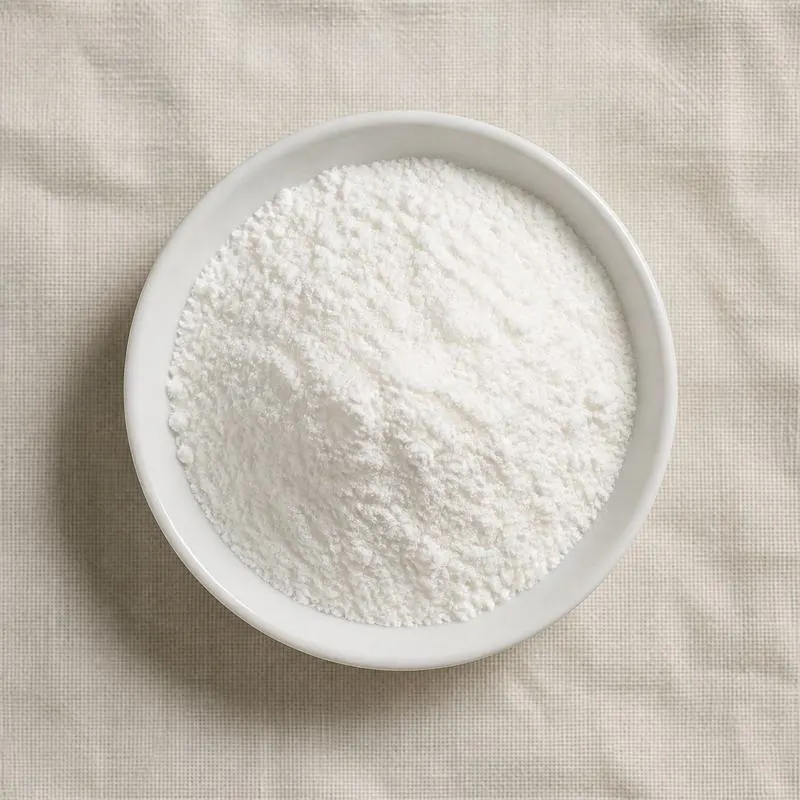
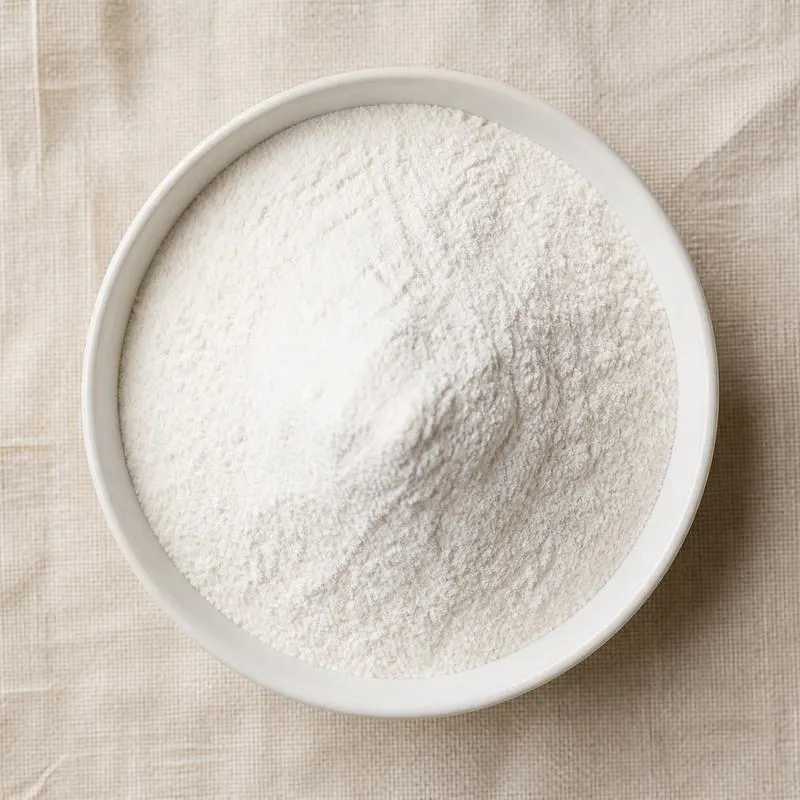
The variety of rice used sets the behaviour. Regular long, medium and short grain rice contains 15 to 30 percent amylose and gives a flour that sets firmly on standing; waxy or glutinous rice contains almost none and gives a cohesive, sticky, non setting paste with good freeze thaw tolerance. Both are pregelatinised commercially and are not interchangeable. Instant rice flour is a white free flowing powder, deliberately ground open enough to disperse without lumping, and it is bland, naturally gluten free and hypoallergenic, which is why it appears so often in infant food.
We source bulk Instant Rice Flour from top China manufacturers for our partners. The manufacturer is in Guangdong. A smaller requirement can ship in a combined container with other ingredients.
Please send the grade you need, the volume and your destination port, and we will come back with a solution and a price.
or call +86-21-6858 0751
- Function
- Texturisers
Specifications
| Item | Specification |
|---|---|
| Appearance | White free flowing powder, free of foreign matter |
| Odour and taste | Bland, characteristic cooked rice, no musty or rancid note |
| Degree of gelatinisation | 90 percent minimum |
| Cold water viscosity | Conforms to agreed grade range |
| Particle size, through 80 mesh | 95 percent minimum |
| Moisture | 10.0 percent maximum |
| Protein, nitrogen times 5.95, dry basis | 6.0 percent minimum |
| Fat | 1.0 percent maximum |
| Ash, dry basis | 0.8 percent maximum |
| Crude fibre | 0.5 percent maximum |
| Inorganic arsenic | 0.10 mg/kg maximum, infant food grade |
| Cadmium | 0.1 mg/kg maximum |
| Lead | 0.2 mg/kg maximum |
| Total plate count | 10000 cfu/g maximum |
| Yeast and mould | 500 cfu/g maximum |
| E. coli | Absent in 1 g |
| Salmonella | Absent in 25 g |
Common Markets Grades
The first variable is the rice. Regular rice flour grades are graded by amylose content, which determines set strength, while waxy rice flour grades are bought for cohesion and freeze thaw stability. Broken rice from the milling stream is the usual feedstock in both cases, since head rice sells for more as a table product.
The second is the cooking route. Drum dried flour is fully gelatinised, hydrates rapidly and gives high cold viscosity, and is the grade used where thickening power matters. Extrusion cooked flour is usually less completely gelatinised, disperses more easily and gives a lower, smoother viscosity, and is cheaper at volume. Beyond these, grades are set by particle size, with fine grinds for smooth beverages and desserts and coarser grinds for dispersibility in dry mixes, and by degree of gelatinisation, which is measured and stated. Brown or wholegrain instant rice flour, retaining the bran, is made for nutritional positioning but has a much shorter shelf life because of the bran oil. Organic certified and low arsenic grades are traded separately.
Applications
- Infant cereals and weaning foods, as an easily digested, bland, hypoallergenic carbohydrate needing no cooking
- Instant porridge, congee and rice gruel reconstituted with hot water
- Gluten free baking, supplying structure and a fine crumb without a gluten network
- Soups, sauces and gravy mixes, thickening on rehydration with a smooth creamy body
- Rice cakes, mochi and glutinous rice confectionery, in the waxy grades, where cohesion is the defining property
- Batters and coatings for fried foods, giving a pale, crisp, low absorbing crust
- Dairy and non dairy desserts, contributing a smooth mouthfeel that masks the graininess of other starches
- Meat and surimi products, binding water in a cold worked mix
- Extruded snacks and pellets, as a pregelatinised feed that hydrates quickly in the barrel
- Pharmaceutical and nutraceutical tabletting, as a bland binder and diluent
China Manufacturers of Instant Rice Flour
Top Instant Rice Flour manufacturers in China.

Company names and logos are the property of the manufacturers themselves. They are listed here because our own directory records them as producing this ingredient. A listing is not an endorsement by them, and we do not represent them or speak on their behalf.
Regulatory Status
Instant rice flour is a food, not a food additive. Gelatinisation is a purely physical treatment, so the flour is not a modified starch in the regulatory sense and carries no E number and no food additive citation. In the United States it is a common food ingredient labelled as rice flour and is subject to the general food safety and preventive controls framework rather than to a standard of identity or an additive regulation.
The dominant regulatory issue for rice based ingredients is inorganic arsenic. Rice takes up arsenic from soil and irrigation water far more efficiently than other cereals, and both the European Union and the Food and Drug Administration have set limits or action levels for inorganic arsenic in rice and rice products, with the strictest applying to rice destined for foods for infants and young children, which is precisely where instant rice flour is most used. Suppliers therefore test each lot and origin selection is part of the specification. Beyond arsenic, cadmium and aflatoxin limits apply under the contaminants legislation. Codex maintains a standard for rice and has adopted maximum levels for inorganic arsenic in polished and husked rice. Rice is not a declarable allergen and rice flour is naturally free of gluten, although shared milling lines require cross contact controls where a gluten free claim is made.
Manufacturing Process
Broken rice from the milling stream is cleaned, washed and either wet or dry milled to flour. Wet milling, in which the rice is soaked and ground with water, gives a finer and less damaged flour and is preferred where a smooth mouthfeel matters; dry milling is cheaper and gives a coarser product with more damaged starch. The flour is slurried with water to the working solids, or is moistened and steam conditioned where an extruder will be used.
Cooking follows by one of two routes. In drum drying the slurry is applied as a thin film to a steam heated rotating drum, gelatinises and dries within a single revolution, and is scraped off by a doctor blade as a brittle sheet. In extrusion cooking the moistened flour is fed to a twin screw extruder, where barrel heat and mechanical shear gelatinise the starch under pressure, and the melt is discharged through a die, cut and dried. The dried sheet or pellet is then milled and screened to the target granulation, with the grind kept open enough that the flour wets and disperses instead of forming lumps. Degree of gelatinisation is measured on the finished powder, since it is what the customer buys against, along with cold water viscosity. The flour is passed over a magnet and metal detector and packed in moisture barrier bags, because a pregelatinised flour picks up atmospheric water readily and cakes.