L-Malic Acid
L-Malic Acid is the naturally occurring single-enantiomer form of malic acid, the alpha-hydroxy dicarboxylic acid that gives apples, grapes, and many other fruits their characteristic tartness.
The molecule shares the formula C₄H₆O₅ with its racemic counterpart but consists exclusively of the (S)-2-hydroxybutanedioic acid configuration. This is the isomer that organisms metabolize through the citric acid cycle, which is why L-malic acid is positioned as the higher value, biologically active grade.
Its flavour profile is rounder and more apple-like than the racemate, and it is the form of choice for clean-label fruit beverages, quality wines, and nutritional applications where natural identity matters.
We source bulk L-Malic Acid from top China manufacturers for our partners. The manufacturers are in Jiangsu and Hebei. For this ingredient the minimum order is 1,000 kg and a 20-foot container takes 13.5 MT, and a smaller requirement can ship in a combined container with other ingredients.
Please send the grade you need, the volume and your destination port, and we will come back with a solution and a price.
or call +86-21-6858 0751
- Minimum order
- 1,000 kg
- Qty in 20' FCL
- 13.5 MT
- Packaging
- 25 kg kraft paper bag with PE inner liner
- ISO 9001
- HACCP
- Halal
- Kosher
Specifications
| Item | Specification |
|---|---|
| Appearance | White crystals or crystalline powder |
| Assay (dry basis) | ≥ 99.0% |
| Specific rotation | −2.3° to −2.7° |
| Loss on drying | ≤ 0.5% |
| Residue on ignition | ≤ 0.1% |
| Heavy metals (as Pb) | ≤ 10 mg/kg |
| Arsenic | ≤ 3 mg/kg |
| Fumaric acid | ≤ 1.0% |
| Particle size | Per customer specification |
Common Markets Grades
L-Malic Acid is graded at 99.0 to 100.5 percent assay and is differentiated from DL-malic acid by its specific optical rotation, which measures between minus 1.8 and minus 2.8 degrees at the sodium D line.
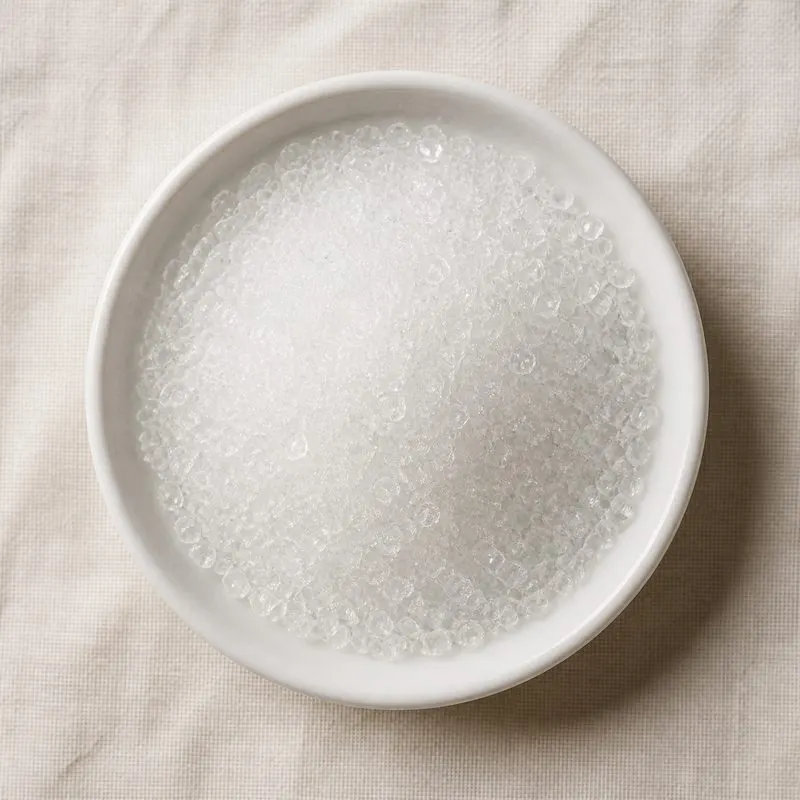
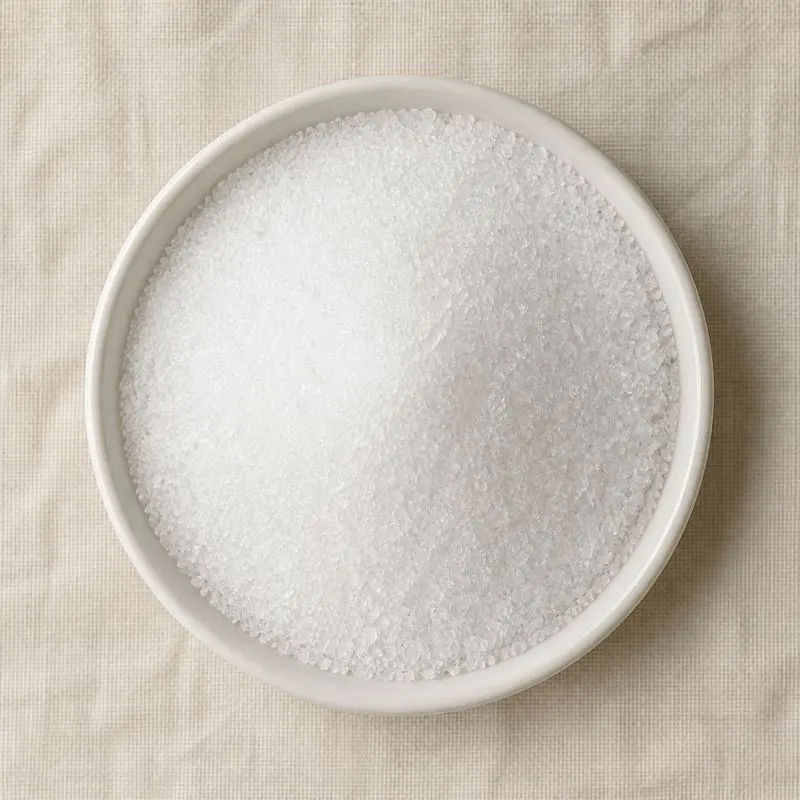
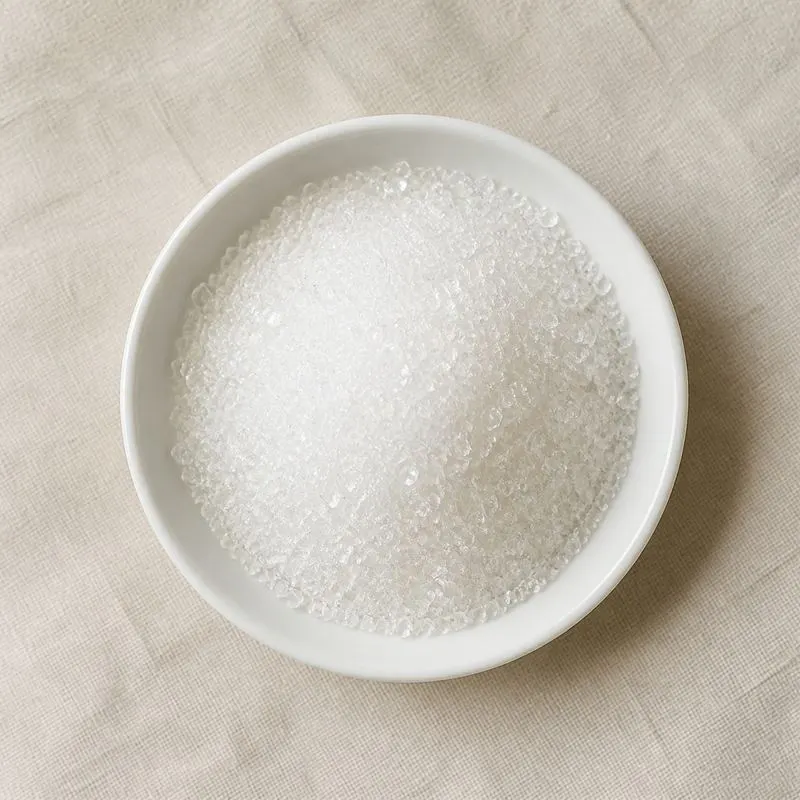
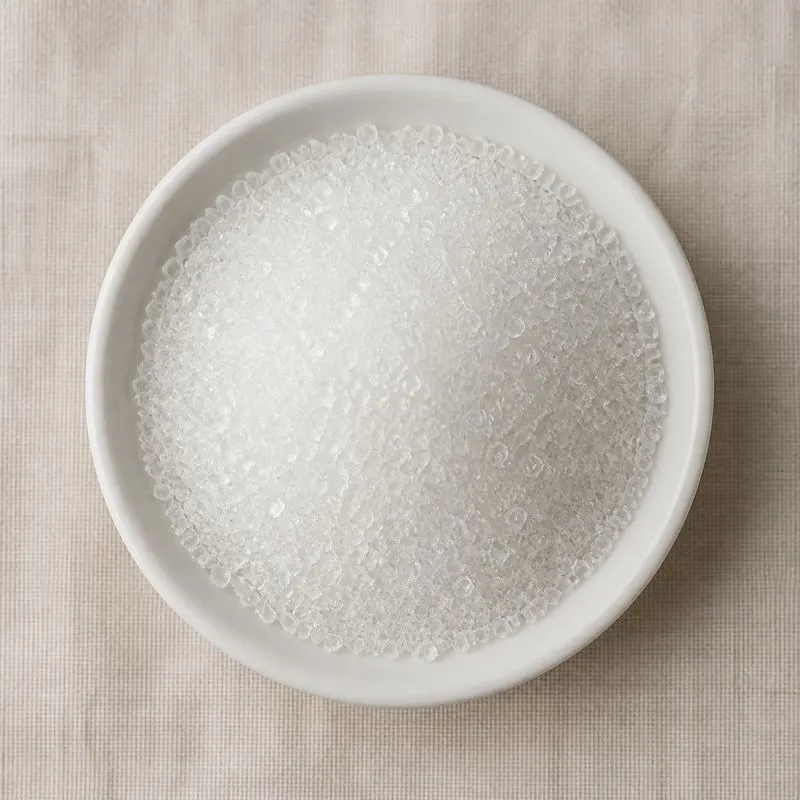
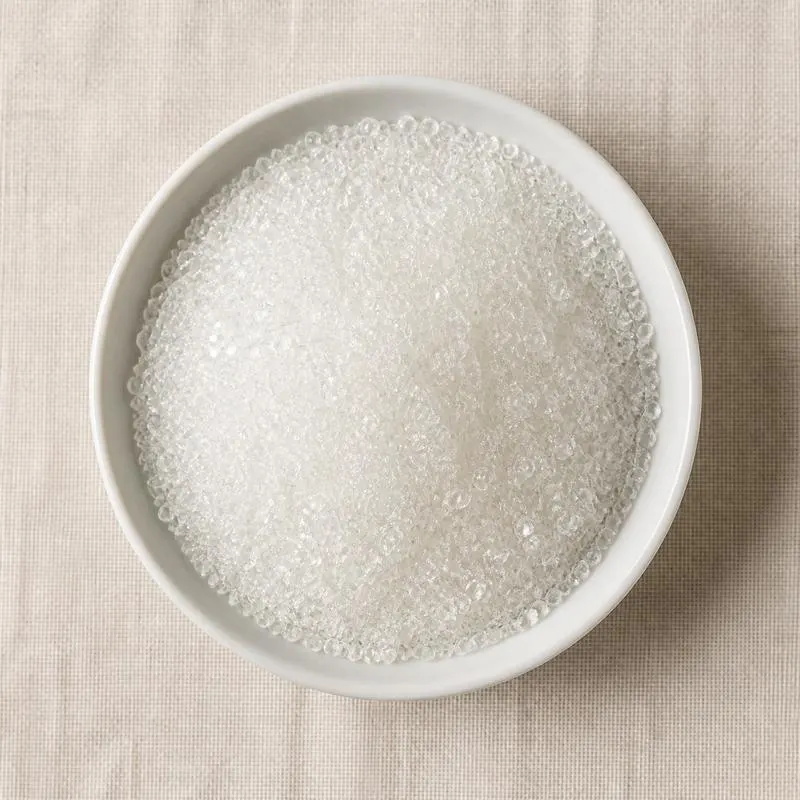
The standard food grade is a white crystalline powder with a typical particle size between 0.2 mm and 1.2 mm. It is fully water-soluble and is the standard grade for beverages, confectionery, and clean-label reformulation.
A fine powder grade, milled below 100 mesh, is used in instant drink sticks, effervescent tablets, and dry blends where rapid dissolution is required.
A pharmaceutical and nutraceutical grade is made to USP, Ph. Eur., and JP malic acid specifications, with tightened heavy-metal and residual-solvent limits for use in chewable supplements and oral electrolyte products.
A high-purity biotechnology grade, derived from fermentation rather than enzymatic conversion of fumarate, carries a non-GMO and natural-origin claim and supports clean-label formulations and those positioned close to organic.
Applications
- Higher grade fruit juices, nectars, and not-from-concentrate beverages
- Still and sparkling wines for acidity correction and malolactic baseline setting
- Cider, fruit wines, and craft hard seltzers as the dominant acid character
- Apple-flavoured and pear-flavoured confectionery for authentic taste
- Sports drinks, electrolyte powders, and recovery beverages
- Functional shots and energy supplements paired with magnesium malate
- Infant fruit purees and toddler beverages where permitted by regional regulation
- Yogurt drinks, fruit-on-the-bottom yogurts, and dairy desserts
- Clean-label gummies, jellies, and pectin-based confectionery
- Pharmaceutical syrups, lozenges, and oral electrolyte solutions
- Cosmetic alpha-hydroxy-acid peels and exfoliating serums
- Magnesium malate, calcium malate, and zinc malate mineral chelates for supplements
Brands Using L-Malic Acid
Widely-distributed consumer products that list L-Malic Acid on the ingredient label.
- Welch'sWelch's Light Concord Grape ↗Brand label declares 'Malic Acid (For Tartness)', regulatory designation covers DL and L formsLabel verified 2026-05-24
- YoplaitYoplait Greek 100 Strawberry ↗Listed in fruit blend with citric acidLabel verified 2026-05-24
- Coca-Cola (Fanta GB)Fanta Orange (UK) ↗Listed under 'Acids (Citric Acid, Malic Acid)'Label verified 2026-05-24
- Coca-Cola (Fanta GB)Fanta Lemon (UK) ↗Listed under 'Acids (Citric Acid, Malic Acid)'Label verified 2026-05-24
- HariboHaribo Sour Sparks (UK) ↗Listed: 'acids: citric acid, tartaric acid, malic acid'Label verified 2026-05-24
- HariboHaribo Z!NG Sour Kicks (CA) ↗Listed: '...tartaric acid, citric acid, malic acid...'Label verified 2026-05-24
Brand names, product names and logos are the property of their owners. They appear here as published evidence that the ingredient is used, taken from the brand's own label or website. Their appearance is not an endorsement, and it does not mean the brand buys from us or from any manufacturer listed on this site.
China Manufacturers of L-Malic Acid
Top L-Malic Acid manufacturers in China.
 Changmao Biochemical Engineering Co., Ltd.8 ingredients in the directory
 The Greatwall Bio-chemical Engineering Co., Ltd.5 ingredients in the directory
Company names and logos are the property of the manufacturers themselves. They are listed here because our own directory records them as producing this ingredient. A listing is not an endorsement by them, and we do not represent them or speak on their behalf.
How We Help Source L-Malic Acid
Direct Factory Sourcing
We run the whole process: selecting the manufacturer from the top Chinese food ingredient producers, negotiating the price, verifying quality, and coordinating the logistics. You deal with us instead of with several factories at once.
Original Packaging and Documents from the Manufacturer
The manufacturer sends your L-Malic Acid out of its own factory in the original packing, through to your destination port. The COA, COO, MSDS, TDS and any certifications reach you from the manufacturer as well.
Free Samples and Lead Time
We send 100 to 500 g free for your own laboratory to test and you cover only the courier, usually within 2 to 3 working days. ETD is usually within 7 to 15 days once the order is confirmed, and we check that date against the factory's own manufacturing schedule before we give it to you.
Combined Shipment
We can load L-Malic Acid together with other ingredients such as Calcium Acetate, Citric Acid and Glucono-Delta-Lactone into one 20' FCL. If your quantity is small, we can also ship LCL.
Regulatory Status
L-Malic Acid is approved as a food additive across all major regulated markets and shares the E number E296 with the racemic and D forms.
In the European Union it is permitted at quantum satis in most food categories, with the additional advantage that the L-form is the only isomer allowed in foods for infants and young children where malic acid use is approved.
The U.S. Food and Drug Administration recognises malic acid as Generally Recognized as Safe under 21 CFR 184.1069, with broad permitted use at levels consistent with good manufacturing practice.
JECFA evaluated malic acid and concluded that no numerical acceptable daily intake is required, citing the long history of dietary exposure through fruits and the body's own metabolism of the L-isomer.
Pharmacopoeial monographs appear in the USP, Ph. Eur., BP, and JP. The enzymatic and fermentation-derived material qualifies for natural-flavour and clean-label positioning in many jurisdictions, and Halal and Kosher certifications are routinely available.
Manufacturing Process
L-Malic Acid is produced commercially by enzymatic hydration of fumaric acid using the enzyme fumarase.
Purified fumaric acid is dissolved in water and contacted with immobilized fumarase, typically derived from Brevibacterium ammoniagenes or Escherichia coli. The enzyme stereospecifically adds water across the double bond of fumarate to give exclusively the L-enantiomer.
The reactor is operated at moderate temperature (around 35 to 45 degrees Celsius) and near-neutral pH. Conversion routinely exceeds 90 percent, and the immobilized biocatalyst can be reused for hundreds of cycles before replacement.
The product stream is decolorised with activated carbon, concentrated under vacuum, and crystallised to yield optically pure L-malic acid. A direct fermentation route using engineered Aspergillus strains is now in commercial production and is the basis for the natural-origin grade.