L-Sodium Malate
L-Sodium Malate is the sodium salt of natural L-malic acid, the same stereoisomer found in apples, grapes, and most other plant tissues. It functions in food systems as a mild acidity regulator, buffering agent, and flavour enhancer.
The compound carries the formula C₄H₅NaO₅ for the mono-sodium form and C₄H₄Na₂O₅ for the di-sodium form, with CAS 138-09-0 referring to the di-sodium variant. It is assigned the European food additive code E350(i) and is fully water-soluble.
We source bulk L-Sodium Malate from top China manufacturers for our partners. The manufacturer is in Hebei. A smaller requirement can ship in a combined container with other ingredients.
Please send the grade you need, the volume and your destination port, and we will come back with a solution and a price.
or call +86-21-6858 0751
- Packaging
- 25 kg kraft paper bag with PE inner liner
- ISO 9001
- HACCP
- Halal
- Kosher
Specifications
Grades / Types Available: Food Grade, Feed Grade
| Item | Specification |
|---|---|
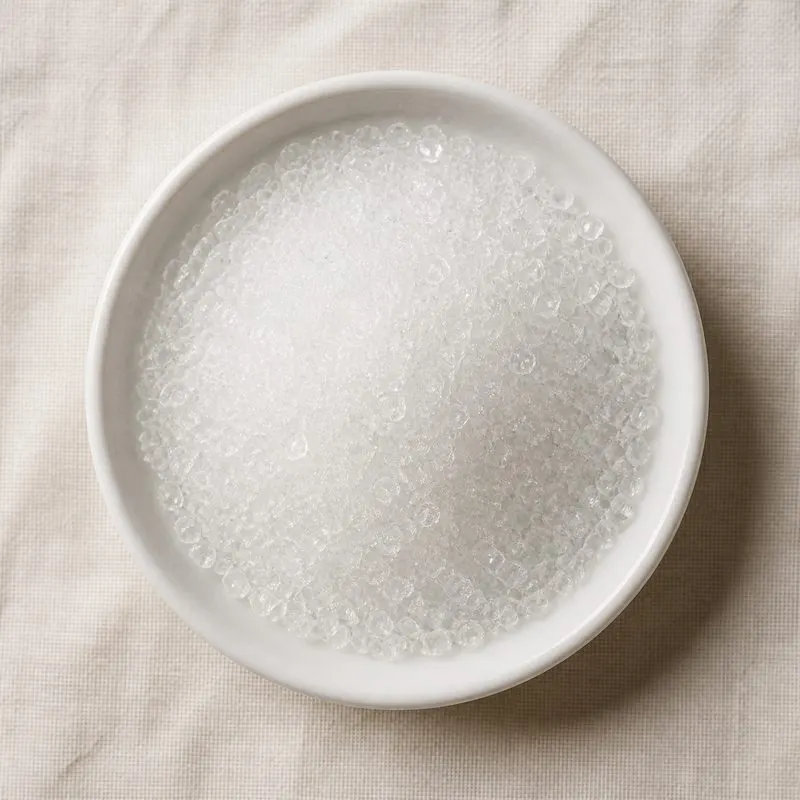
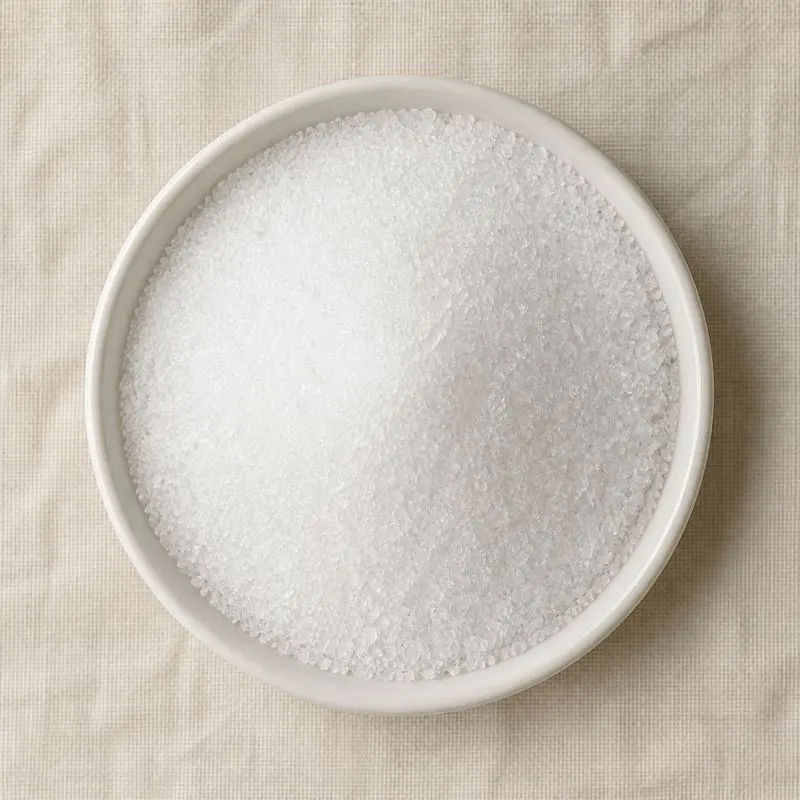
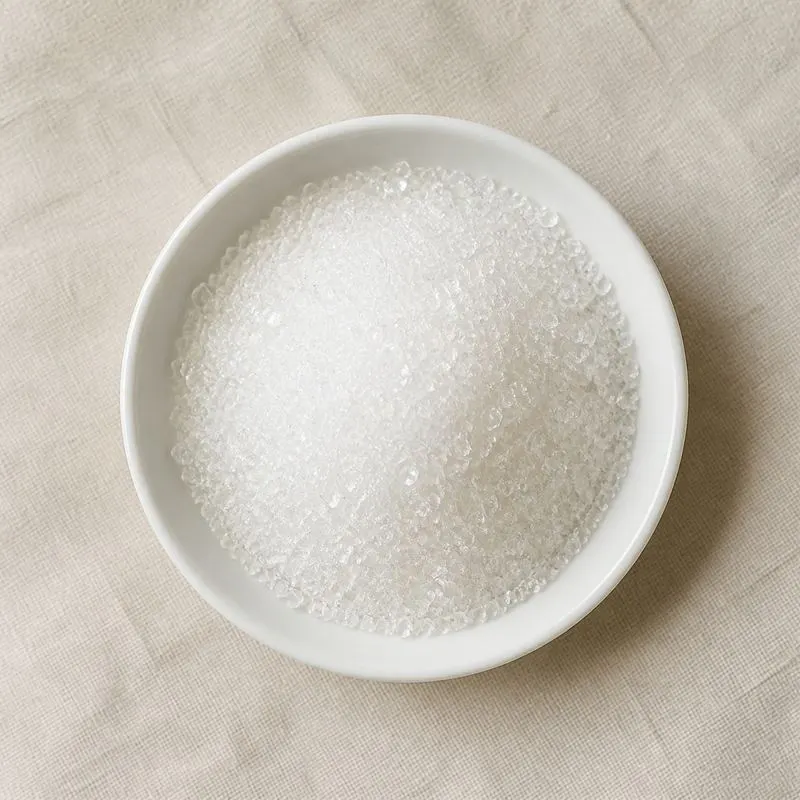
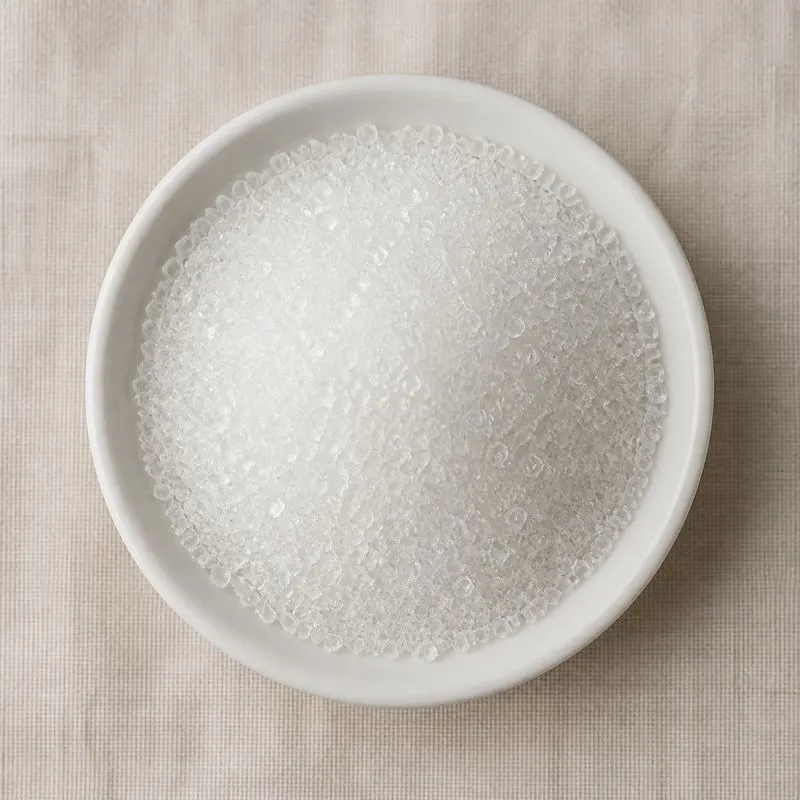
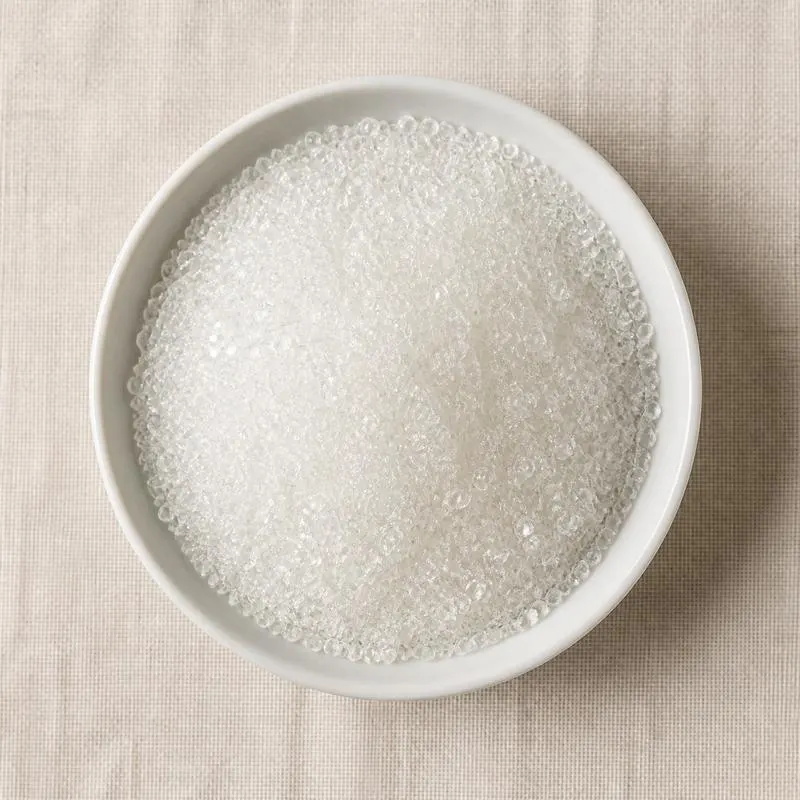
| Appearance | White crystalline powder |
| Assay | ≥ 98.0% |
| Specific Rotation [α]D²⁰ | +8.0° to +11.0° |
| pH (10% solution) | 6.0-8.5 |
| Loss on Drying | ≤ 2.0% |
| Chloride | ≤ 0.04% |
| Heavy Metals (as Pb) | ≤ 10 mg/kg |
| Arsenic | ≤ 3 mg/kg |
| Purity (Food Grade) | ≥ 99.0% |
| Moisture/Loss on Drying | ≤ 5.0% |
| Lead | ≤ 2 mg/kg |
Common Markets Grades
L-Sodium Malate is produced primarily as the mono-sodium salt for food and beverage use, with the di-sodium salt offered for buffering systems where a higher pH set-point is required.
Food-grade mono-sodium L-malate is a white crystalline powder with a typical assay of 99.0 percent or higher. Particle size sits in the 40 to 80 mesh range, with a finer 100 to 200 mesh option for direct-compression tablets and instant beverage powders.
The di-sodium variant carries a slightly higher pH in solution (around 7.5 to 8.5 at 1 percent concentration) and is preferred for low-sodium salt replacers and isotonic drink bases. Bulk density and hygroscopicity are higher than the mono-sodium form, so packaging uses moisture-barrier liners.
Pharmaceutical-grade material is graded at 99.5 percent purity with tighter limits on heavy metals and residual solvents. It is used in parenteral nutrition concentrates, dialysis solutions, and electrolyte replacement preparations.
Applications
- Buffering agent in soft drinks, sports drinks, and flavoured waters
- pH control in canned vegetables and fruit preparations
- Acidity regulator in jams, jellies, and fruit fillings
- Component of low-sodium salt replacement blends
- Flavour enhancer in confectionery, especially sour candy systems
- Buffering agent in effervescent tablet bases and powdered beverage mixes
- Electrolyte source in oral rehydration solutions
- Mineral fortification carrier in functional beverages and supplements
- Texture and pH stabiliser in processed cheese and analogue cheese
- Buffering aid in meat marinades and brine injection systems
- Component of parenteral nutrition and dialysis formulations
- Cosmetic pH adjuster in toners, masks, and serums
Brands Using L-Sodium Malate
Widely-distributed consumer products that list L-Sodium Malate on the ingredient label.
Brand names, product names and logos are the property of their owners. They appear here as published evidence that the ingredient is used, taken from the brand's own label or website. Their appearance is not an endorsement, and it does not mean the brand buys from us or from any manufacturer listed on this site.
China Manufacturers of L-Sodium Malate
Top L-Sodium Malate manufacturers in China.

Company names and logos are the property of the manufacturers themselves. They are listed here because our own directory records them as producing this ingredient. A listing is not an endorsement by them, and we do not represent them or speak on their behalf.
How We Help Source L-Sodium Malate
Direct Factory Sourcing
We run the whole process: selecting the manufacturer from the top Chinese food ingredient producers, negotiating the price, verifying quality, and coordinating the logistics. You deal with us instead of with several factories at once.
Original Packaging and Documents from the Manufacturer
The manufacturer sends your L-Sodium Malate out of its own factory in the original packing, through to your destination port. The COA, COO, MSDS, TDS and any certifications reach you from the manufacturer as well.
Free Samples and Lead Time
We send 100 to 500 g free for your own laboratory to test and you cover only the courier, usually within 2 to 3 working days. ETD is usually within 7 to 15 days once the order is confirmed, and we check that date against the factory's own manufacturing schedule before we give it to you.
Combined Shipment
We can load L-Sodium Malate together with other ingredients such as Calcium Acetate, Citric Acid and Glucono-Delta-Lactone into one 20' FCL. If your quantity is small, we can also ship LCL.
Regulatory Status
L-Sodium Malate is approved as a food additive in essentially every regulated market under the general malate family.
In the European Union it carries the E number E350(i) for sodium malate, covering both the mono-sodium and di-sodium forms. It is permitted in many food categories under the quantum satis principle.
The U.S. Food and Drug Administration lists sodium malate as generally recognized as safe (GRAS) under 21 CFR 184.1069, with use levels limited only by good manufacturing practice. It is also recognised as a direct food substance for use as a flavour enhancer, pH control agent, and processing aid.
JECFA has reviewed the malate family and concluded that the salts are acceptable for use, with metabolism following the normal tricarboxylic acid cycle. Pharmacopoeial monographs for sodium malate appear in the United States Pharmacopeia (USP), the European Pharmacopoeia (Ph. Eur.), and the Japanese Pharmacopoeia (JP).
Halal and Kosher certifications are routinely available, since the typical fermentation feedstock and the neutralising alkali are both of non-animal origin. Non-GMO declarations exist where the fermentation organism and substrate are non-GMO.
Manufacturing Process
Industrial manufacture starts with L-malic acid, which is produced either by enzymatic conversion of fumaric acid or by direct microbial fermentation.
The enzymatic route uses immobilized fumarase to hydrate fumaric acid to L-malic acid in a continuous packed-bed reactor. The reaction is stereospecific and yields only the L-isomer, which gives the resulting sodium salt its natural-identical status.
The L-malic acid solution is neutralised with food-grade sodium hydroxide or sodium carbonate under controlled temperature and pH. For the mono-sodium salt the neutralisation end-point is around pH 3.5, and for the di-sodium salt it is around pH 8.0.
The neutralised solution is concentrated by evaporation, then crystallised by cooling or by addition of an antisolvent such as ethanol. Crystals are recovered by centrifugation, washed, dried in a fluidized-bed dryer, and milled to the target particle size before packing.