Sodium Malate
Sodium malate is the sodium salt of malic acid, a four carbon hydroxy dicarboxylic acid, sold to the food trade as either the monosodium salt, sodium hydrogen malate, or the disodium salt. It acts as an acidity regulator, a buffer and a mild flavour modifier rather than as a straight souring agent.
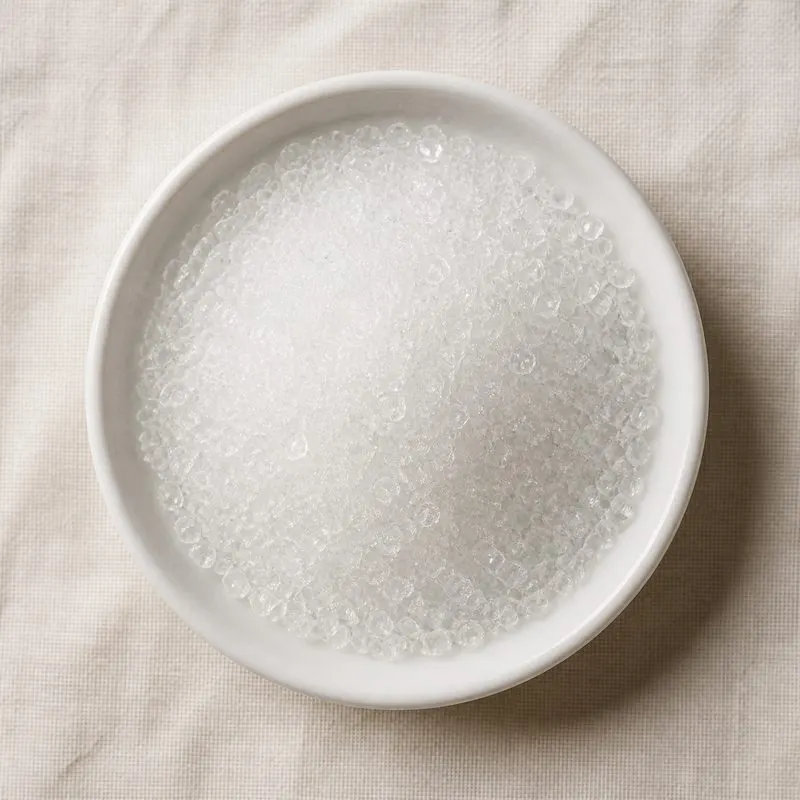
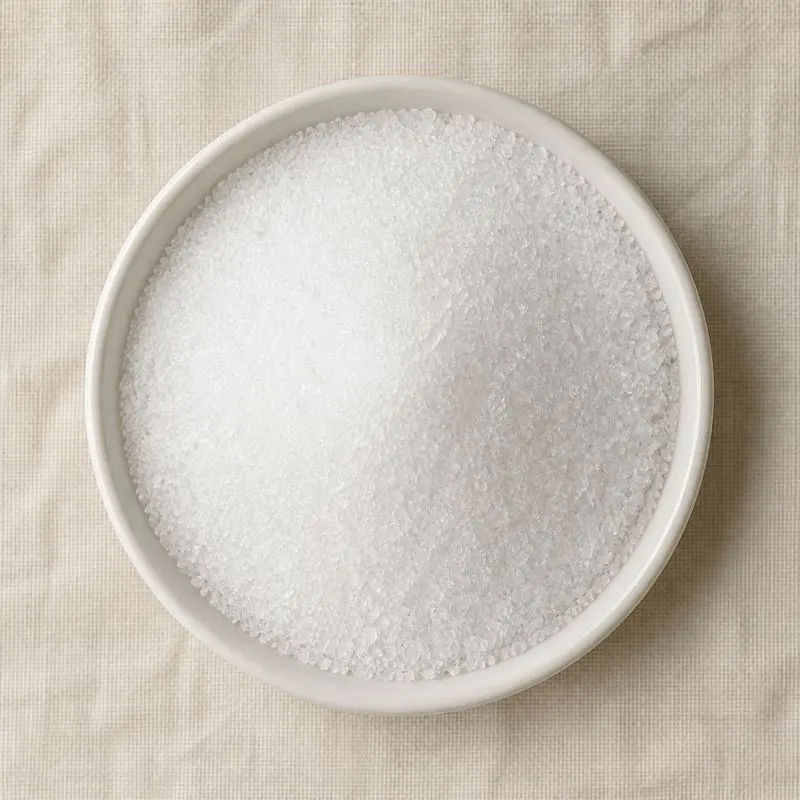
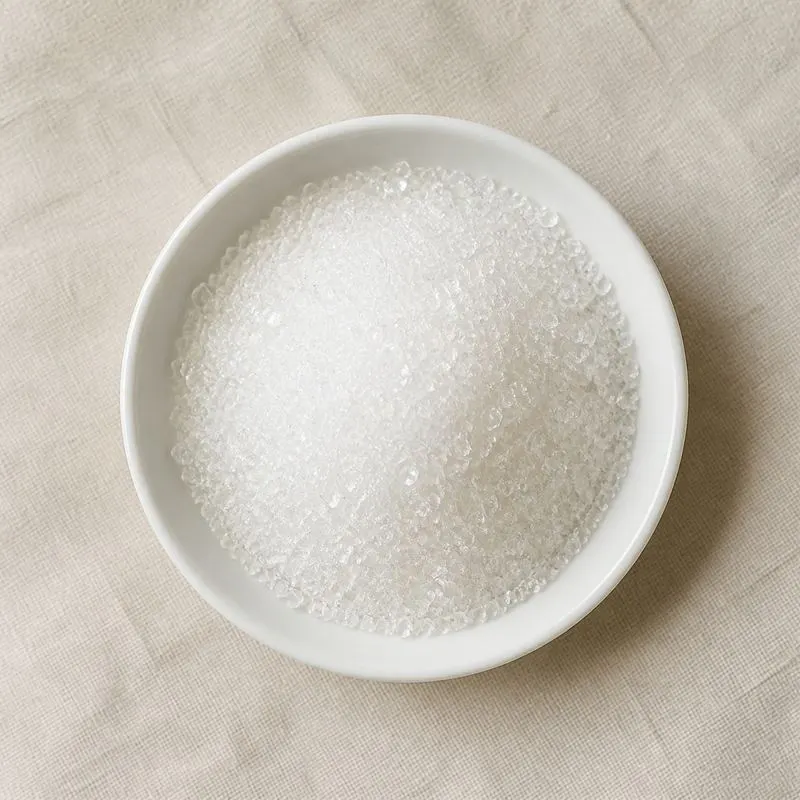
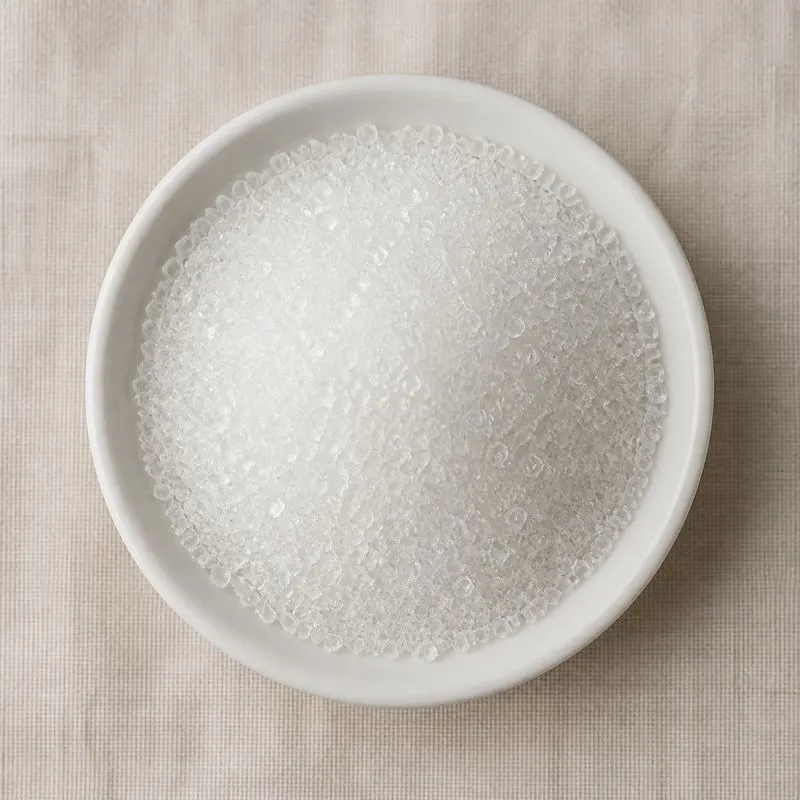
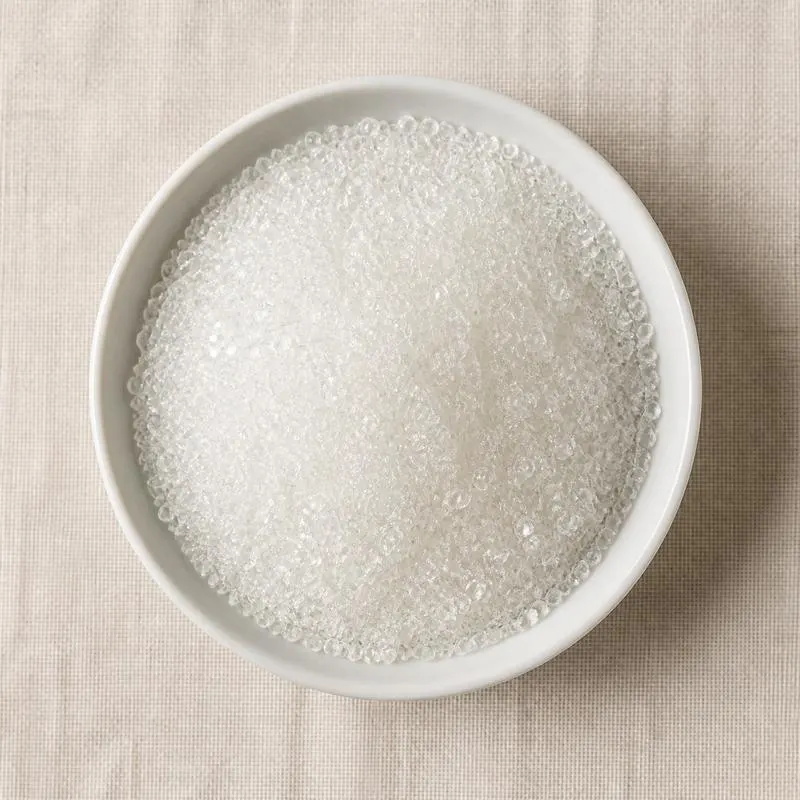
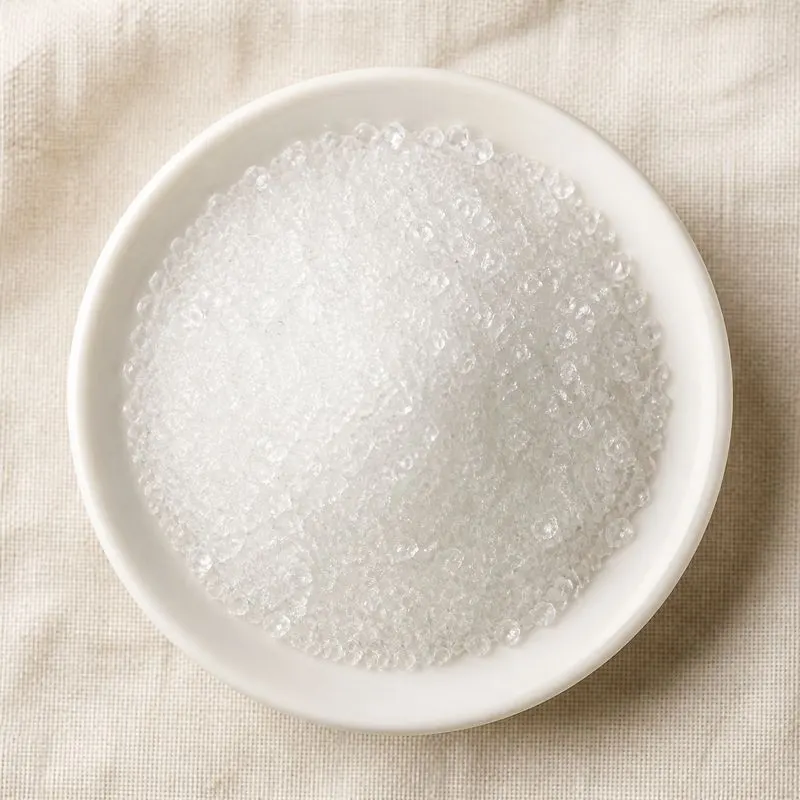
The commercial material is a white to off white crystalline powder or granule, hygroscopic, freely soluble in water and only sparingly soluble in ethanol. Solutions are close to neutral for the disodium form and mildly acidic for the monosodium form, which is why the two are often used together to hold a product within a narrow pH band. The salt carries the clean, lingering sourness associated with malic acid without contributing the sharp initial acid impact, and it tolerates pasteurisation and retort conditions without degrading.
Most trade material is made from synthetic DL malic acid. An L malic acid derived grade is also sold where a fermentation origin or a naturally occurring stereochemistry is required, and it is specified by the optical rotation of the parent acid rather than by any difference in appearance.
We source bulk Sodium Malate from top China manufacturers for our partners. The manufacturer is in Shandong. A smaller requirement can ship in a combined container with other ingredients.
Please send the grade you need, the volume and your destination port, and we will come back with a solution and a price.
or call +86-21-6858 0751
- Function
- Acidulant
Specifications
| Item | Specification |
|---|---|
| Appearance | White to off white crystalline powder, odourless |
| Assay, anhydrous basis | 98.0 to 102.0 percent |
| Identification | Positive for sodium and for malate |
| pH, 1 percent aqueous solution | 3.0 to 4.5 monosodium, 6.5 to 8.5 disodium |
| Loss on Drying, 105 degrees Celsius | Not more than 2.0 percent |
| Water insoluble matter | Not more than 0.1 percent |
| Fumaric acid | Not more than 1.0 percent |
| Maleic acid | Not more than 0.05 percent |
| Sulphate as SO4 | Not more than 0.05 percent |
| Heavy metals as Pb | Not more than 10 mg/kg |
| Lead | Not more than 2 mg/kg |
| Arsenic | Not more than 1 mg/kg |
| Mercury | Not more than 0.5 mg/kg |
| Particle size | Per grade, standard 95 percent through 80 mesh |
Common Markets Grades
Sodium malate is traded as food grade at 98 to 102 percent assay on the anhydrous basis, and buyers specify which salt they mean, since sodium hydrogen malate and disodium malate behave differently in a buffer system. A pharmaceutical or supplement grade is also offered, with tighter limits on residual solvents, fumaric acid and maleic acid carried over from the parent acid. Feed grade material is sold to a looser heavy metals and assay specification.
Physical options are limited to particle size and hydration state. A fine powder of roughly 80 to 100 mesh is standard for dry beverage powders and seasoning blends, while a granular grade of 20 to 40 mesh is chosen where dust control and free flow matter more than dissolution speed. Because the salt picks up moisture readily, it is packed with a desiccant liner and is sometimes sold as an anticaking treated grade for dry mix applications.
Applications
- Still and carbonated fruit drinks, where it buffers the acid system so the pH holds steady through the shelf life rather than drifting with the fruit load
- Sports and electrolyte beverages, supplying sodium alongside a malate anion that is metabolised rather than excreted as a chloride load
- Low sodium and reduced salt seasonings, contributing a rounded savoury acidity that partly offsets the flavour loss when sodium chloride is cut
- Confectionery and fruit chews, moderating the sharpness of added malic or citric acid so the sour hit does not overwhelm the fruit note
- Sugar free and high intensity sweetener systems, where it lengthens the sweetness and reduces the metallic tail of acesulfame and saccharin blends
- Processed cheese and cheese analogues, acting as part of the emulsifying salt system that controls pH and protein hydration
- Canned vegetables and retorted ready meals, holding pH within the range that protects colour and texture through heat processing
- Bakery fillings and fruit preparations, buffering the acid so pectin sets reproducibly
- Dietary supplements and effervescent tablets, as a soluble sodium source and a buffering component
China Manufacturers of Sodium Malate
Top Sodium Malate manufacturers in China.

Company names and logos are the property of the manufacturers themselves. They are listed here because our own directory records them as producing this ingredient. A listing is not an endorsement by them, and we do not represent them or speak on their behalf.
Regulatory Status
In the United States malic acid is affirmed as generally recognised as safe under 21 CFR 184.1069 for use as a flavour enhancer, flavouring agent and pH control agent, and its sodium salts are used in the same pH control and buffering roles under good manufacturing practice. Sodium malate also appears as a permitted ingredient in the Food Chemicals Codex, and it is used in dietary supplements as a sodium source under the dietary supplement framework.
In the European Union Regulation (EC) No 1333/2008 authorises the malates as E350, covering sodium hydrogen malate as E350(i) and sodium malate as E350(ii), and Regulation (EU) No 231/2012 sets the identity and purity criteria. Use is permitted as an acidity regulator and humectant, generally at quantum satis in the categories where the malates are listed. The Joint FAO/WHO Expert Committee on Food Additives has evaluated the malates as a group, and the Codex General Standard for Food Additives lists sodium malate as an acidity regulator.
Manufacturing Process
Sodium malate is made by neutralising malic acid with a sodium base in aqueous solution. The feed acid is normally DL malic acid produced by the catalytic hydration of maleic anhydride, or L malic acid produced by the enzymatic hydration of fumaric acid with immobilised fumarase. The acid is dissolved in demineralised water and dosed with sodium hydroxide or sodium carbonate under pH control, to one equivalent for the monosodium salt or two equivalents for the disodium salt, with the exotherm removed through a jacketed reactor.
The neutralised liquor is polished by carbon treatment and filtration to remove colour bodies and any unreacted fumaric acid, then concentrated under vacuum. Product is recovered either by cooling crystallisation followed by centrifugation and fluid bed drying, or by spray drying the concentrate directly where an amorphous free flowing powder is wanted. The dried solid is milled or granulated to the ordered particle size, screened, and packed immediately under controlled humidity because of its hygroscopicity.