Litsea Cubeba Oil
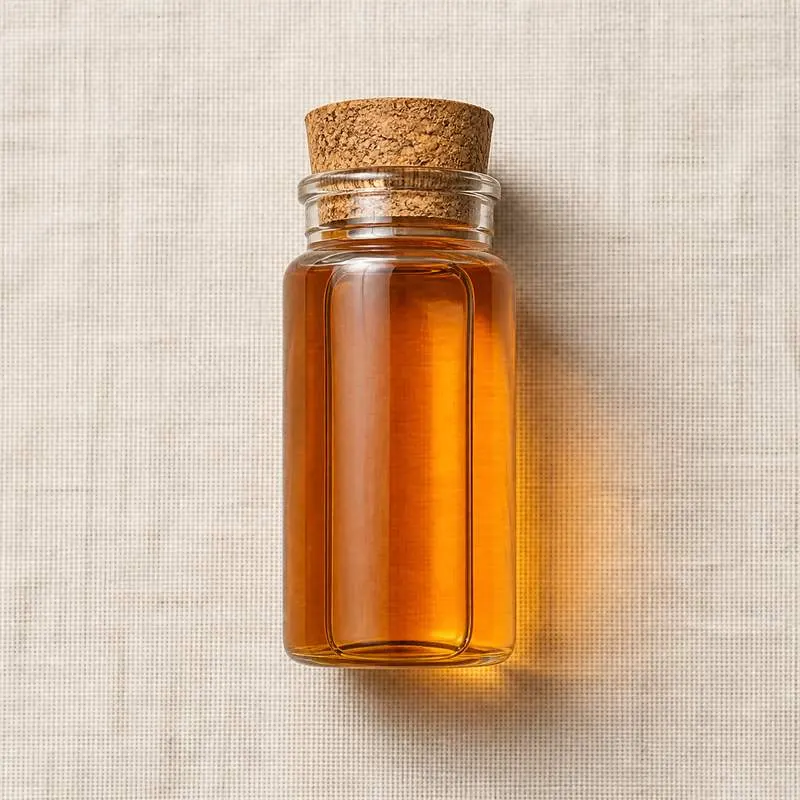
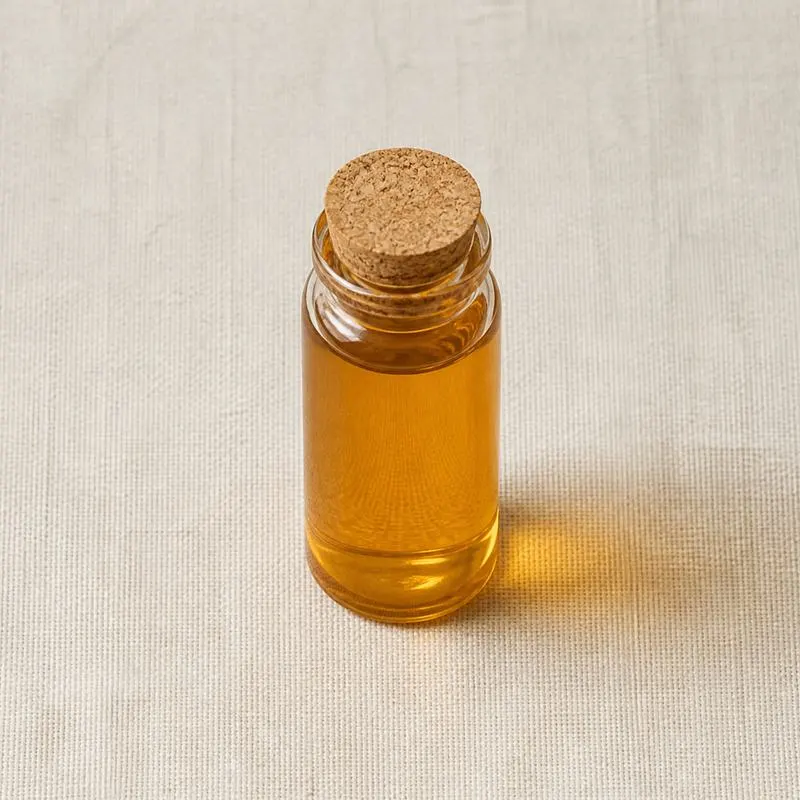
Litsea cubeba oil is the steam-distilled essential oil of the small pepper-like fruit of Litsea cubeba, a deciduous tree of the laurel family known in the trade as may chang and grown almost entirely in southern China. It is a pale yellow mobile liquid with an intense fresh lemon aroma, cleaner and less waxy than lemongrass and without the peel character of citrus oils.
The aroma rests on citral, a mixture of the two geometric isomers geranial and neral, which normally accounts for seventy to eighty-five percent of the oil. Limonene, 6-methyl-5-hepten-2-one, linalool and citronellal make up most of the remainder. The oil is soluble in ethanol and edible oils and insoluble in water.
The reactivity of citral decides how it behaves in use. Under acid conditions citral cyclises and oxidises, producing p-cresol and p-methylacetophenone, which read as stale and plastic, so acidic beverages need the oil protected by an antioxidant, encapsulated, or replaced by a stabilised citral derivative. The oil also darkens and thickens on air exposure and is stored cold under nitrogen.
We source bulk Litsea Cubeba Oil from top China manufacturers for our partners, working with several of them. The manufacturers are in Jiangxi, Hunan and Yunnan. A smaller requirement can ship in a combined container with other ingredients.
Please send the grade you need, the volume and your destination port, and we will come back with a solution and a price.
or call +86-21-6858 0751
- Function
- Flavours and Aromas
Specifications
| Item | Specification |
|---|---|
| Appearance | Clear pale yellow mobile liquid |
| Odour | Fresh, intense lemon, characteristic |
| Total Citral | Not less than 70.0 percent by GC |
| Geranial to Neral Ratio | Approximately 1.3 to 1.7 |
| Limonene | 2.0 to 12.0 percent by GC |
| Relative Density (20°C) | 0.880 to 0.895 |
| Refractive Index (20°C) | 1.480 to 1.489 |
| Optical Rotation (20°C) | -6° to +2° |
| Solubility | Clearly soluble in 3 volumes of 70 percent ethanol |
| Acid Value | Not more than 2.0 mg KOH/g |
| Heavy Metals (as Pb) | Not more than 10 mg/kg |
| Lead | Not more than 2 mg/kg |
| Arsenic | Not more than 1 mg/kg |
Common Markets Grades
Grades are set principally by citral content, with a standard natural oil specified at not less than seventy percent and rectified grades at seventy-five to eighty-five percent, produced by vacuum fractional distillation to remove the light hydrocarbon head and the resinous tail. Colourless rectified oil is used where the pale yellow of the crude material would tint a finished product.
The oil is also traded as a chemical feedstock rather than as a flavour, since it is the dominant natural source of citral for the aroma industry. Isolated natural citral, and the natural ionones, vitamin A intermediates and menthol derived from it downstream, all begin as this oil, and feedstock grades are specified on citral assay and on the isomer ratio rather than on odour. For flavour work, standardised dilutions in propylene glycol or triethyl citrate and encapsulated spray-dried powders are used so that the citral is protected from acid and oxygen.
Applications
- Soft drinks and flavoured waters in the lemon and lime category, usually as an encapsulated or antioxidant-protected form
- Confectionery, particularly hard candy and citrus pastilles
- Bakery fillings, icings and lemon flavoured creams
- Dairy desserts, yoghurt and ice cream in citrus profiles
- Tea and herbal infusion blends, where the fresh lemon note lifts the base
- Savoury seasoning for fish and poultry, providing citrus lift without added acidity
- Feedstock for the isolation of natural citral and its downstream aroma chemicals
- Soap, detergent and household cleaner perfuming
- Personal care and aromatherapy blends at low dilution
- Insect repellent formulations, where citral is one of the active constituents
Brands Using Litsea Cubeba Oil
Widely-distributed consumer products that list Litsea Cubeba Oil on the ingredient label.
Brand names, product names and logos are the property of their owners. They appear here as published evidence that the ingredient is used, taken from the brand's own label or website. Their appearance is not an endorsement, and it does not mean the brand buys from us or from any manufacturer listed on this site.
China Manufacturers of Litsea Cubeba Oil
Top Litsea Cubeba Oil manufacturers in China.
- Jiangxi Zhongxiang Biotechnology Co., Ltd.4 ingredients in the directory
- Yongzhou Samshiang Flavours & Fragrances Corporation7 ingredients in the directory
- Yunnan Varitaste Flavoring Co., Ltd.3 ingredients in the directory
Company names and logos are the property of the manufacturers themselves. They are listed here because our own directory records them as producing this ingredient. A listing is not an endorsement by them, and we do not represent them or speak on their behalf.
Regulatory Status
In the United States litsea cubeba oil is used as a natural flavouring substance under the FEMA GRAS programme, and citral itself is a long-established flavouring substance with its own listing. The material is not the subject of a separate food additive regulation, and use levels in food are self-limiting because of the intensity of the aroma.
In the European Union the oil is a natural flavouring preparation under Regulation (EC) No 1334/2008 and carries no E number. Cosmetic and household use falls under the IFRA standards, which set restrictions for citral-rich materials on sensitisation grounds and require them to be used with quenching agents in certain product types, and under the EU Cosmetics Regulation, which requires declaration of citral, limonene and linalool above the set thresholds. JECFA has evaluated citral within its flavouring agent programme. Because the oil is also a chemical feedstock, feedstock lots move under the industrial chemical framework rather than the food one, and food grade material is segregated accordingly.
Manufacturing Process
Fruit is picked when it has reached full size but is still green, since citral content falls as the berry ripens and darkens. The harvested fruit is delivered to the still within a day, coarsely crushed to rupture the oil cells, and charged into stainless steel vessels. Distillation is carried out with low pressure steam over three to six hours, and the yield on fresh fruit is high for an essential oil, typically three to five percent.
The vapour is condensed and the oil separates from the distillation water in a Florentine flask, floating above the aqueous layer. The water is normally cohobated back through the charge to recover dissolved citral, which is appreciably water soluble and would otherwise be lost. Crude oil is dried over anhydrous sodium sulphate, settled and polish filtered, then analysed by gas chromatography for citral assay and for the geranial to neral ratio. Rectified grades pass through a vacuum fractional distillation column operating at low temperature, since citral degrades under prolonged heat, and the heart cut is collected and immediately stabilised. Finished oil is packed in filled, lined drums under nitrogen.