Nootkatone
Nootkatone is a bicyclic sesquiterpene ketone of the eremophilane class, systematically 4,4a,5,6,7,8-hexahydro-6-isopropenyl-4,4a-dimethylnaphthalen-2(3H)-one, with formula C15H22O, molar mass 218.34 and CAS number 4674-50-4. It is the defining aroma compound of grapefruit and is also found in the heartwood of Alaska yellow cedar and in vetiver.
Only the naturally occurring stereoisomer carries the grapefruit odour, and the compound is exceptionally potent, perceptible at around one part per billion in water. In a flavour it functions as a character impact material rather than a bulk contributor, adding the bitter, slightly sulphurous woody facet that distinguishes grapefruit from orange or lemon, and at trace level it rounds and extends other citrus notes.
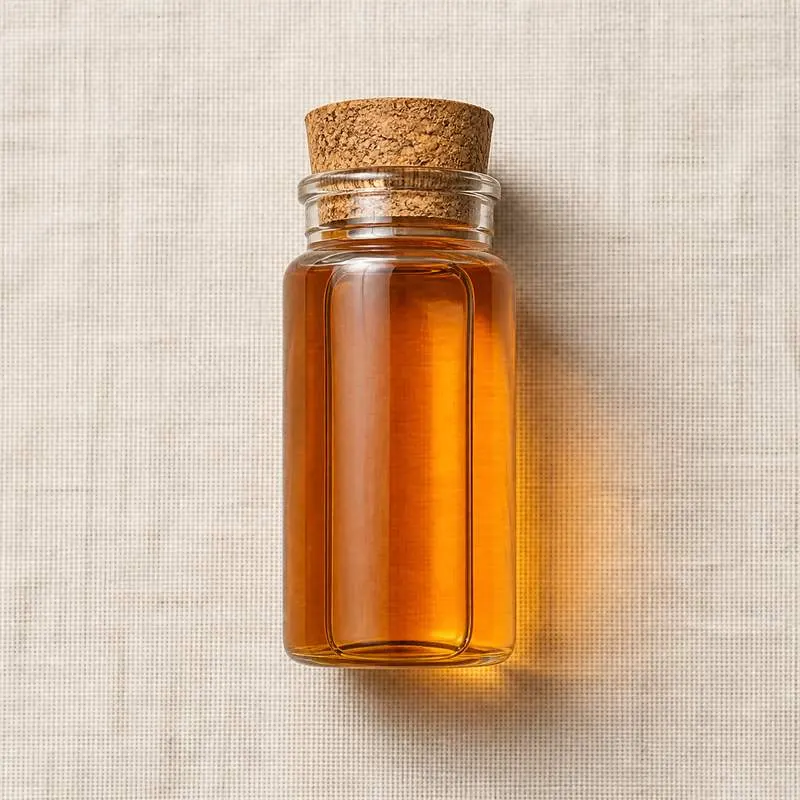
The material melts at approximately 36 degrees Celsius, so it is handled as a low melting white to pale yellow crystalline solid or as a warm viscous liquid, and is frequently traded in solution for that reason. It is insoluble in water, freely soluble in ethanol, oils and terpene solvents, stable to normal food processing at neutral pH, and slowly oxidised on long exposure to air. Its second commercial identity is as an insect repellent and acaricide, a use quite separate from flavour.
We source bulk Nootkatone from top China manufacturers for our partners. The manufacturer is in Jiangsu. A smaller requirement can ship in a combined container with other ingredients.
Please send the grade you need, the volume and your destination port, and we will come back with a solution and a price.
or call +86-21-6858 0751
- Function
- Flavours and Aromas
Specifications
| Item | Specification |
|---|---|
| Appearance | Low melting crystalline solid or viscous liquid |
| Colour | White to pale yellow |
| Odour | Characteristic grapefruit and woody, true to reference sample |
| Assay by gas chromatography | 97.0 percent minimum |
| Identification by infrared spectrum | Conforms to reference spectrum |
| Residual valencene | 1.5 percent maximum |
| Melting range | 32 to 38 degrees Celsius |
| Optical rotation at 20 degrees Celsius | plus 165 to plus 200 degrees |
| Refractive index at 40 degrees Celsius | 1.5000 to 1.5100 |
| Loss on drying | 0.5 percent maximum |
| Residue on ignition | 0.1 percent maximum |
| Residual catalyst metals | 10 mg/kg maximum, total |
| Lead | 1.0 mg/kg maximum |
| Arsenic | 1.0 mg/kg maximum |
Common Markets Grades
The principal division is by origin rather than by purity. Synthetic nootkatone, made by chemical oxidation of valencene, is the lower cost position and is used wherever a natural declaration is not required, typically at 95 to 98 percent assay. Natural nootkatone, obtained by biotransformation of valencene or by fractionation of grapefruit oil, is a separate and more expensive item traded on documentation of its origin as much as on its assay.
Physical form gives the second set of grades. Neat crystalline material at 97 percent and above is the reference position, while solutions at 10, 20 or 50 percent in ethanol, triacetin, propylene glycol, medium chain triglyceride or orange terpenes exist because the neat solid is awkward to weigh and dissolve. Spray dried and encapsulated powders on modified starch or gum acacia are used for dry beverage and seasoning mixes. Material intended for pesticide formulation is specified against a different set of requirements and is not interchangeable with flavour grade.
Applications
- Grapefruit and pomelo flavours for carbonated drinks, juices and flavoured waters
- General citrus flavour compounds, dosed at trace level to add depth and a bitter edge
- Bitters, tonic waters and aperitifs, where the woody bitter facet supports quinine character
- Alcoholic drinks including gin, seltzer and ready to drink cocktails
- Confectionery and chewing gum with a citrus profile, usually in encapsulated form
- Fine fragrance, as a woody grapefruit note in fresh and aromatic accords
- Personal care and household fragrance in citrus directions
- Insect repellents and acaricides, registered as a biopesticide active against ticks and mosquitoes
- Aroma reference standard for citrus authenticity and quality testing
- Functional and protein beverages, where a grapefruit signal helps cover off notes
China Manufacturers of Nootkatone
Top Nootkatone manufacturers in China.

Company names and logos are the property of the manufacturers themselves. They are listed here because our own directory records them as producing this ingredient. A listing is not an endorsement by them, and we do not represent them or speak on their behalf.
Regulatory Status
In the United States nootkatone holds FEMA GRAS status as a flavouring substance under FEMA number 3166, which is the basis for its use in food and beverage. The United States Environmental Protection Agency has also registered nootkatone as a biochemical pesticide active ingredient for use against ticks, mosquitoes and other biting arthropods, and products in that category are regulated under pesticide law rather than food law even though the molecule is the same.
In the European Union nootkatone is an authorised flavouring substance on the Union list established under Regulation (EC) No 1334/2008, identified by a FLAVIS number in the ketone group. Flavourings are not assigned E numbers, so none applies. Grades produced by fermentation or enzymatic oxidation must additionally satisfy the general requirements applying to flavourings obtained by biotechnological processes. The Joint FAO and WHO Expert Committee on Food Additives has evaluated nootkatone as part of the alicyclic ketone flavouring group, and Codex flavouring guidance applies in jurisdictions that have adopted it.
Manufacturing Process
Almost all production runs through valencene, the sesquiterpene hydrocarbon that shares nootkatone's carbon skeleton. Valencene is recovered by vacuum fractionation from the terpene fractions of orange oil, a by-product stream of juice production, or is made by fermentation with an engineered yeast on a sugar substrate. The transformation to nootkatone is a selective allylic oxidation of a single position on the ring.
The synthetic route carries out that oxidation chemically, typically with tert-butyl hydroperoxide over a copper, cobalt or chromium based catalyst in a solvent at controlled temperature, with careful management of the heat released and of over oxidation to diketones. The reaction mass is quenched, the catalyst removed by washing or filtration, and the solvent stripped under vacuum. Crude nootkatone is then purified by short path or wiped film vacuum distillation, since prolonged heating degrades it, and is finished by crystallisation from a hydrocarbon or alcohol at low temperature. The crystals are centrifuged, washed, vacuum dried and either packed as solid or dissolved to a declared strength. The natural route replaces the chemical oxidant with a whole cell or enzymatic biocatalyst and is otherwise worked up in the same way.