Valencene
Valencene is a bicyclic sesquiterpene hydrocarbon of formula C15H24, the dominant sesquiterpene of Valencia orange oil, used as a flavour and fragrance ingredient and as the industrial precursor to nootkatone.
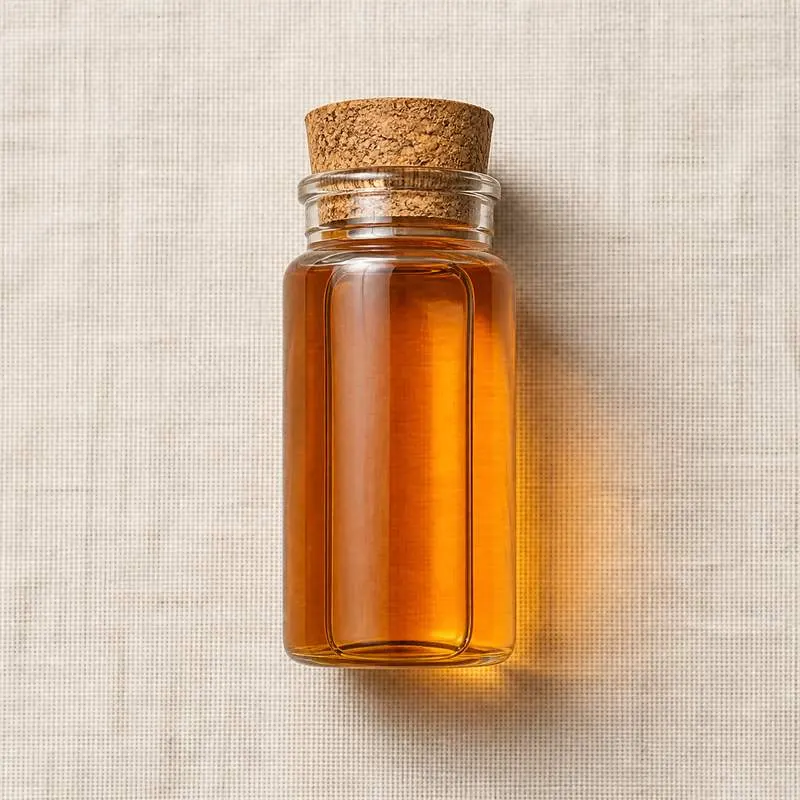
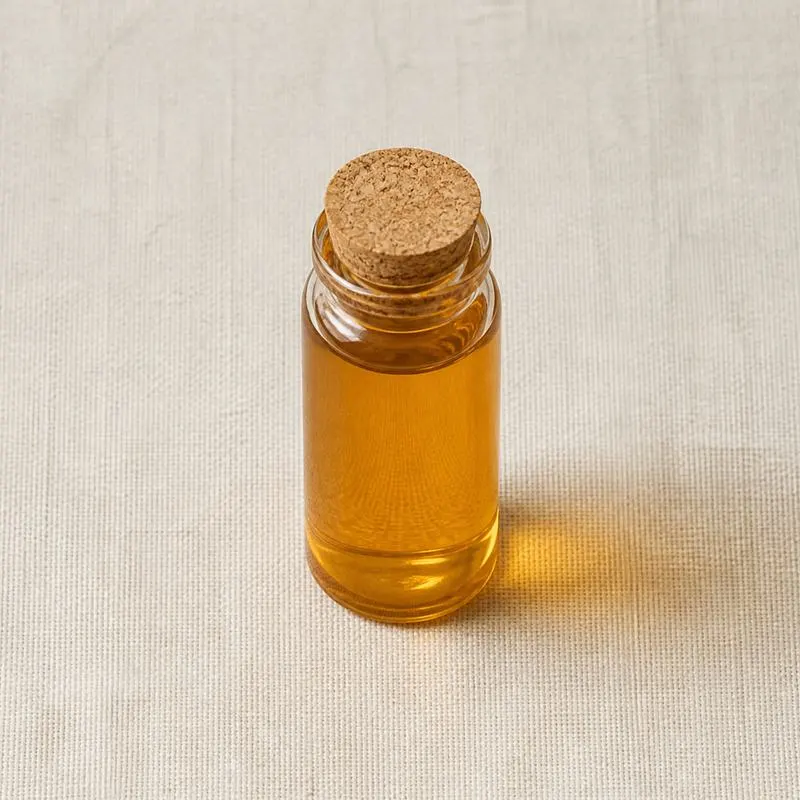
It is a colourless to pale yellow oily liquid with a sweet, fresh citrus aroma carrying woody and slightly green facets, lighter and less sharp than the monoterpene limonene that makes up the bulk of orange oil. As a pure hydrocarbon it is practically insoluble in water and freely miscible with ethanol, vegetable oils and other flavour solvents, so it is dosed into oil phases or delivered through an emulsion. Its boiling point is high enough that it is separated from citrus oil under vacuum rather than at atmospheric pressure.
Chemically it is an unsaturated hydrocarbon and therefore oxidises on exposure to air and light, which both dulls the aroma and generates nootkatone and other oxidation products that shift the profile towards grapefruit. Nootkatone manufacture puts that reactivity to work deliberately, but flavour use has to suppress it, so the material is stored cold in filled, nitrogen blanketed containers, frequently with an added antioxidant.
We source bulk Valencene from top China manufacturers for our partners. The manufacturer is in Jiangsu. A smaller requirement can ship in a combined container with other ingredients.
Please send the grade you need, the volume and your destination port, and we will come back with a solution and a price.
or call +86-21-6858 0751
- Function
- Flavours and Aromas
Specifications
| Item | Specification |
|---|---|
| Appearance | Colourless to pale yellow clear oily liquid |
| Odour | Sweet fresh citrus with woody green facets |
| Identification | Conforms by infrared spectrum and gas chromatography retention time |
| Assay by gas chromatography | Not less than 90.0% |
| Relative density at 25 degrees Celsius | 0.913 to 0.925 |
| Refractive index at 20 degrees Celsius | 1.5030 to 1.5100 |
| Optical rotation at 20 degrees Celsius | Plus 60 to plus 80 degrees |
| Acid value | Not more than 1.0 mg KOH/g |
| Nootkatone content | Not more than 1.0% |
| Water content | Not more than 0.2% |
| Heavy metals as lead | Not more than 10 mg/kg |
| Lead | Not more than 1.0 mg/kg |
| Arsenic | Not more than 1.0 mg/kg |
| Solubility | Practically insoluble in water, miscible with ethanol and vegetable oils |
Common Markets Grades
Valencene is traded across a wide purity band because the natural feedstock delivers it as part of a sesquiterpene mixture. The lowest cost grades are enriched orange oil fractions at roughly sixty to seventy percent valencene, with the balance made up of other citrus sesquiterpenes, and these serve fragrance and technical applications. Redistilled flavour grades run at eighty to ninety percent, while purities above ninety five percent are used for nootkatone production and for flavour work where the accompanying sesquiterpenes would interfere.
Origin is the second commercial distinction. Material recovered from citrus oil can be declared as natural in most markets, and organic certified versions exist where the feedstock oil is certified. Valencene produced by fermentation from sugar using an engineered yeast is also treated as natural under the usual definitions, reaches higher purity more easily and is free of the pesticide residues that citrus derived material has to be tested for, but requires a genetically modified organism declaration in some markets. Both routes reach the buyer as neat liquid and as dilutions in ethanol, propylene glycol or triacetin for ease of dosing.
Applications
- Citrus soft drinks and flavoured waters, where it adds the fresh peel top note that a limonene based flavour lacks
- Orange and grapefruit flavour compounds, as the sesquiterpene body behind the aldehyde and ester top notes
- Nootkatone manufacture, where it is the substrate for chemical or biocatalytic oxidation to the grapefruit ketone
- Confectionery and chewing gum citrus flavours, dosed in an encapsulated or oil carried form to survive processing
- Bakery and dairy citrus flavours such as orange cake, sorbet and yoghurt
- Alcoholic drinks, particularly citrus liqueurs, hard seltzers and flavoured spirits
- Fine fragrance and personal care, contributing a clean citrus woody note with better substantivity than monoterpenes
- Household cleaning and air care products where a citrus signature is wanted
- Insect repellent and pest control formulations, in which the valencene to nootkatone chemistry is the active route
China Manufacturers of Valencene
Top Valencene manufacturers in China.

Company names and logos are the property of the manufacturers themselves. They are listed here because our own directory records them as producing this ingredient. A listing is not an endorsement by them, and we do not represent them or speak on their behalf.
Regulatory Status
In the United States valencene is used as a flavouring substance, and 21 CFR 172.515 lists it among the synthetic flavouring substances and adjuvants permitted in food. It also holds generally recognised as safe status from the expert panel of the Flavour and Extract Manufacturers Association, which assigns it a FEMA number, and it is declared in an ingredient statement as natural or artificial flavour according to whether the material used was derived from a botanical source or produced synthetically, following the definitions in 21 CFR 101.22.
In the European Union valencene appears on the Union list of flavouring substances authorised for use in food, maintained under Regulation (EC) No 1334/2008 and its implementing regulation, and it is used according to good manufacturing practice rather than under a numerical limit for most food categories. It carries no E number, since flavourings are regulated separately from additives. Where the material is recovered from citrus oil, the pesticide residue limits set for citrus fruit carry through to the extract. The Joint FAO WHO Expert Committee on Food Additives has evaluated valencene within its group assessment of aliphatic and aromatic hydrocarbons used as flavouring agents and raised no safety concern at the levels at which it is used.
Manufacturing Process
The citrus route starts from cold pressed orange oil, itself a by product of juice extraction. The oil is first stripped of its monoterpene fraction, mainly limonene, by vacuum fractional distillation, leaving a sesquiterpene rich residue in which valencene is concentrated. That residue is redistilled on a packed or structured column under high vacuum at a low overhead temperature, since the sesquiterpene boils well above the practical limit at atmospheric pressure and degrades if it is heated harder. Successive passes raise the valencene content, and a final polish removes oxidised material and colour. The product is filtered, blanketed with nitrogen and filled into lined drums.
The fermentation route builds the molecule from sugar. A yeast strain carrying a valencene synthase gene and an upregulated mevalonate pathway is grown in a fed batch fermenter on glucose or sucrose, with the terpene it secretes captured in an added organic overlay because it is both insoluble in water and inhibitory to the cells. At harvest the overlay is separated by centrifugation, the biomass is removed, and the crude terpene is purified by the same vacuum fractionation used for the citrus route before nitrogen packing.