Organic Aloe Vera Gel
Organic aloe vera gel is the clear mucilaginous inner leaf parenchyma of Aloe barbadensis Miller, harvested from certified organic plantations and processed into a liquid, concentrate or powder. Its solids are dominated by the polysaccharide acemannan, a partially acetylated beta-1,4 linked mannan, together with glucomannans, organic acids, free amino acids, minerals and traces of sterols and enzymes. Water accounts for roughly 99 percent of the fresh fillet.
The functional properties follow from the polysaccharide fraction. In drinks it contributes a light body and a clean slightly vegetal taste, and it is used for the label claim it carries rather than as a thickener. In topical formulations it forms a hydrating film and is valued for its skin feel after sun exposure.
Trade forms are single strength liquid at around 0.5 percent solids, concentrates at 10:1, 40:1 and 200:1, and spray dried or freeze dried powder standardised on polysaccharide content. Aloin, the bitter anthraquinone of the outer leaf rind, is a critical quality point: food grade material is decolourised and must meet a low aloin limit. The polysaccharide breaks down under heat, so pasteurisation is short and low temperature and the material is stabilised and held cold.
We source bulk Organic Aloe Vera Gel from top China manufacturers for our partners. The manufacturer is in Hainan. A smaller requirement can ship in a combined container with other ingredients.
Please send the grade you need, the volume and your destination port, and we will come back with a solution and a price.
or call +86-21-6858 0751
- Function
- Plant extract
Specifications
| Item | Specification |
|---|---|
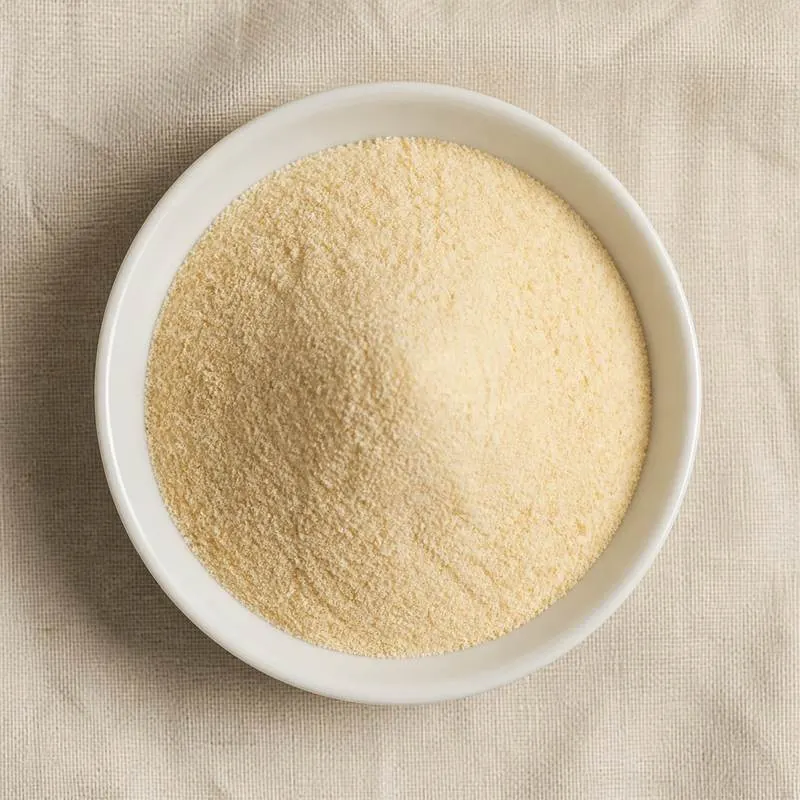
| Appearance | Off white to pale cream fine powder |
| Odour and Taste | Mild characteristic aloe, not bitter |
| Total Polysaccharides | ≥ 10.0% |
| Identification | Conforms by HPLC and by malic acid marker test |
| Aloin | ≤ 10 mg/kg |
| Loss on Drying | ≤ 8.0% |
| Total Ash | ≤ 25.0% |
| pH of 1% solution | 3.5 to 5.5 |
| Particle Size | 100% through 80 mesh |
| Lead | ≤ 1.0 mg/kg |
| Arsenic | ≤ 1.0 mg/kg |
| Total Plate Count | ≤ 1,000 cfu/g |
| Yeast and Mould | ≤ 100 cfu/g |
| E. coli | Negative |
| Salmonella | Absent in 25 g |
Common Markets Grades
The main commercial distinction is between inner leaf fillet gel, which is cut away from the rind, and whole leaf material, which is processed from the entire leaf and then treated with activated carbon to remove aloin. Inner leaf grades carry a cleaner taste and a lower aloin figure, and organic certification is available for both routes. Concentration grades are quoted as a fold value, most commonly single strength, 10:1, 40:1 and 200:1, with solids content stated alongside.
Powder grades are spray dried, usually onto a maltodextrin carrier, or freeze dried where the higher molecular weight polysaccharide is to be preserved. Standardisation is on total polysaccharide or on acemannan by an enzymatic or NMR method, commonly at 10 or 20 percent. Preservative free versions with a stated short shelf life are traded alongside stabilised liquids that carry a permitted preservative system. Certification against the International Aloe Science Council programme is routinely requested.
Applications
- Aloe vera drinks and juices, including the Asian style products carrying suspended gel cubes
- Functional and wellness beverages, where aloe concentrate is the label ingredient in a hydration positioning
- Dietary supplements in capsule, tablet and powder stick form standardised on polysaccharide content
- Yoghurt and dairy desserts, where diced gel provides texture as well as a label claim
- Jellies, gummies and confectionery in the natural and botanical category
- Skin care lotions, gels and serums, where the polysaccharide fraction gives a hydrating film
- After sun and soothing preparations, the historic and largest topical outlet
- Hair care conditioners and scalp treatments, used for slip and moisture retention
- Wet wipes and cleansing products, added for skin feel
- Pet care shampoos and topical products, formulated on the same soothing basis
Brands Using Organic Aloe Vera Gel
Widely-distributed consumer products that list Organic Aloe Vera Gel on the ingredient label.
- Lily of the DesertOrganic Aloe Gel ↗A drinkable organic aloe vera gel blending whole leaf and inner fillet aloe vera juice, with no preservatives.Label verified 2026-08-31
- Seven MineralsAloe Vera Gel 99% Organic ↗A topical aloe vera gel made from freshly harvested organic aloe with seaweed extract used in place of xanthan gum.Label verified 2026-08-31
Brand names, product names and logos are the property of their owners. They appear here as published evidence that the ingredient is used, taken from the brand's own label or website. Their appearance is not an endorsement, and it does not mean the brand buys from us or from any manufacturer listed on this site.
China Manufacturers of Organic Aloe Vera Gel
Top Organic Aloe Vera Gel manufacturers in China.

Company names and logos are the property of the manufacturers themselves. They are listed here because our own directory records them as producing this ingredient. A listing is not an endorsement by them, and we do not represent them or speak on their behalf.
Regulatory Status
In the United States aloe vera inner leaf gel is used in foods and beverages as a conventional food ingredient and is also long established in dietary supplements. Aloe vera gel and extract appear in the Food and Drug Administration listings of natural flavouring and substances used in foods, while the aloe latex or drug aloe, which is the anthraquinone bearing yellow exudate, is a separate material: the agency removed aloe from over the counter laxative drug products for lack of demonstrated effectiveness. Food grade gel is required to be substantially free of aloin. Organic status is certified under the National Organic Program.
In the European Union aloe vera gel is a food ingredient with no E number. Preparations from Aloe species containing hydroxyanthracene derivatives, which include aloe-emodin and aloin, have been prohibited in food supplements under Regulation 2021/468, so decolourised gel with aloin below the limit is the only form marketable for food use. Regulation 1223/2009 governs cosmetic use. Codex has no commodity standard for aloe gel, and JECFA has not established one, so contaminant expectations follow the general Codex standard for contaminants in foods.
Manufacturing Process
Mature leaves are cut by hand from organically certified plants and moved to the processing hall within a few hours, since the cut leaf begins to degrade quickly. Leaves are washed and sanitised, and the base, tip and lateral spines are trimmed. In the fillet route the rind is cut away by hand or by mechanical filleting so that only the clear inner parenchyma is taken forward, and the yellow latex at the rind interface, which carries the aloin, is washed away. In the whole leaf route the entire leaf is ground and the resulting slurry is depulped.
The gel is milled and treated with cellulase to break the fibre network into a pourable liquid, then filtered and passed over activated carbon to remove aloin and colour. Whole leaf material always receives this treatment and is tested against a defined aloin limit. The clarified liquid is flash pasteurised at short hold time to protect the polysaccharide, then concentrated by low temperature vacuum evaporation or by membrane filtration to the required fold. Powder is produced by spray drying the concentrate with maltodextrin, or by freeze drying where the native polysaccharide profile is to be retained, and the finished material is assayed and packed under nitrogen.