Organic Matcha
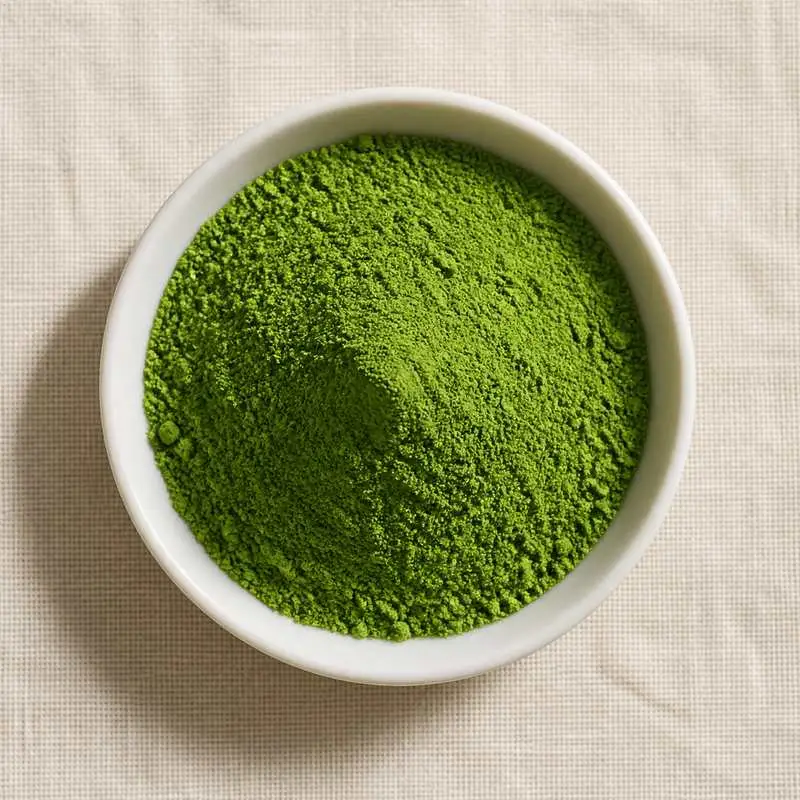
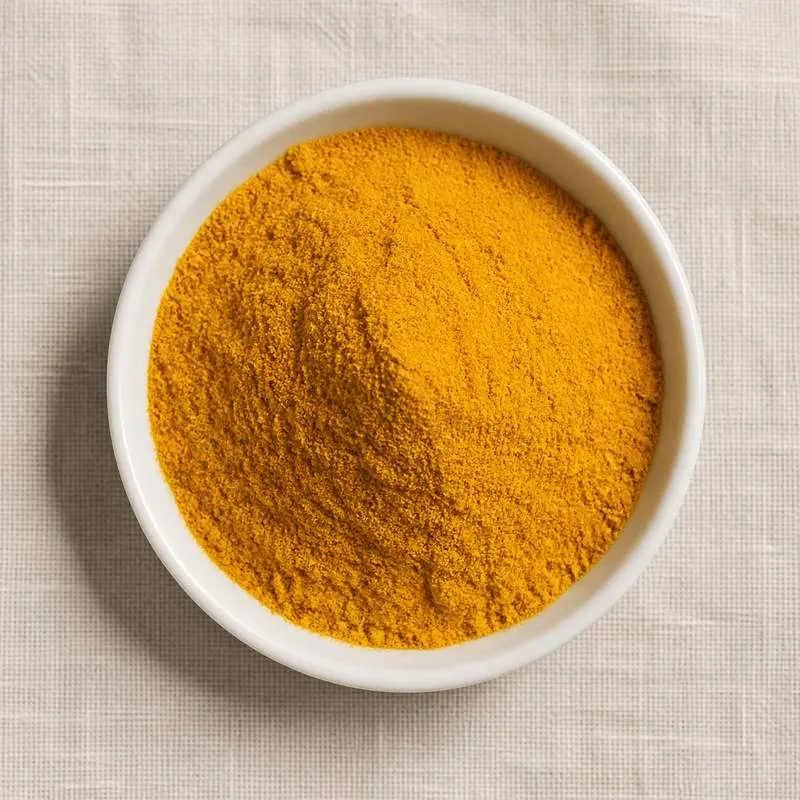
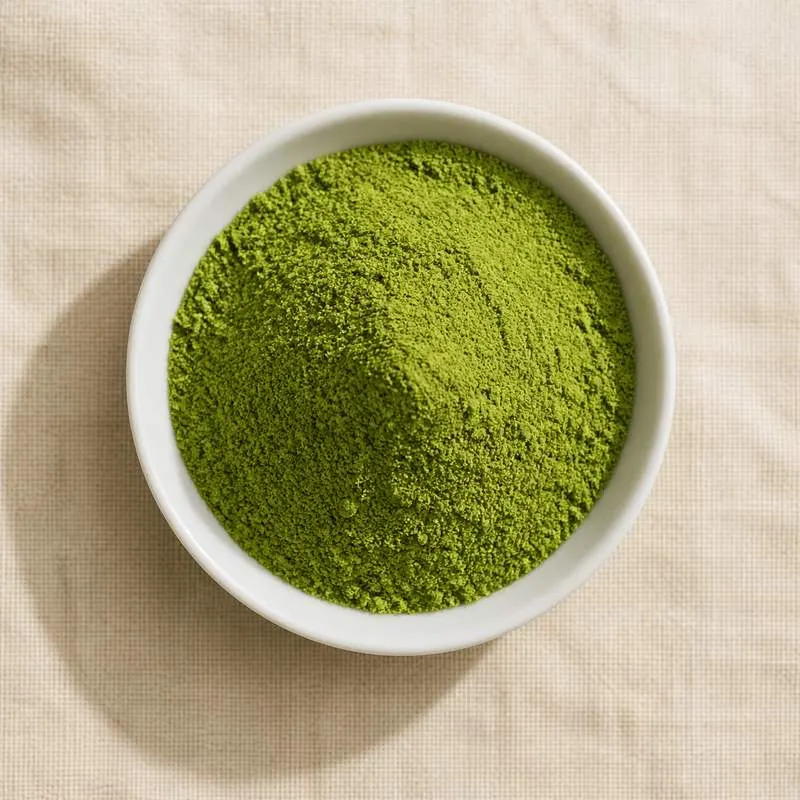
Organic Matcha is a certified-organic finely milled green tea powder produced from shade-grown leaves of Camellia sinensis (L.) Kuntze, stone-ground to a particle size below 20 microns.
The leaves are cultivated without synthetic pesticides, herbicides, or fertilizers under USDA NOP and EU 2018/848 standards. The finished powder is vivid green, with the dense umami flavour and natural sweetness characteristic of properly shaded tencha.
We source bulk Organic Matcha from top China manufacturers for our partners. The manufacturers are in Anhui and Shanghai. For this ingredient the minimum order is 50 kg and a 20-foot container takes 4.8 MT, and a smaller requirement can ship in a combined container with other ingredients.
Please send the grade you need, the volume and your destination port, and we will come back with a solution and a price.
or call +86-21-6858 0751
- Minimum order
- 50 kg
- Qty in 20' FCL
- 4.8 MT
- Packaging
- 25 kg kraft paper bag with PE inner liner
- ISO 9001
- HACCP
- Halal
- Kosher
Specifications
| Item | Specification |
|---|---|
| Appearance | Vivid bright green ultra-fine powder |
| Mesh Size | ≥ 1000 mesh (≤ 15 μm) |
| Moisture | ≤ 5.0% |
| Total Catechins | ≥ 10% |
| L-Theanine | ≥ 1.5% |
| Ash | ≤ 7.0% |
| Organic Certification | EU / USDA NOP |
| Total Plate Count | ≤ 10,000 cfu/g |
Common Markets Grades
Organic Matcha is graded across three commercial tiers.
Ceremonial grade is milled from the first-flush spring harvest of young top leaves. Colour is the brightest green, flavour is sweet and creamy, and bitterness is minimal. This grade is intended for traditional preparation whisked with water.
Premium grade is drawn from the same harvest window but includes slightly older leaves. It balances cost and quality for high-end latte and dessert applications.
Culinary grade is produced from later-flush leaves and is intended for baking, ice cream, smoothies, and other applications where the powder is masked by sugar or fat. Colour is a darker green and flavour carries more vegetal notes.
All grades carry USDA NOP and EU 2018/848 organic certification. Particle size, colour (a/b values), and total catechin content are released on every lot certificate.
Applications
- Traditional whisked matcha preparations
- Matcha lattes (hot and iced)
- Ready-to-drink bottled matcha beverages
- Ice cream, gelato, and frozen yogurt
- Bakery: cakes, cookies, mochi, and macarons
- Confectionery: chocolate bars, truffles, and gummies
- Smoothies and protein-shake blends
- Energy bars and breakfast products
- Skincare masks and cleansers for antioxidant claims
- Yogurt and plant-based dairy alternatives
- Sauces and dressings in Japanese-inspired cuisine
Brands Using Organic Matcha
Widely-distributed consumer products that list Organic Matcha on the ingredient label.
- EnchaEncha Organic Ceremonial Grade Matcha (First Harvest, Uji) ↗Certified organic first-harvest ceremonial matcha from Uji, Japan; single ingredient organic Japanese matcha green tea.Label verified 2026-05-24
- EnchaEncha Organic Latte Grade Matcha ↗Organic latte-grade matcha from the same Uji farm network; formulated for matcha lattes and culinary use.Label verified 2026-05-24
- Jade Leaf MatchaJade Leaf Organic Ceremonial Matcha - Teahouse Edition ↗USDA Organic ceremonial first-harvest matcha sourced from partner farms in Uji and Kagoshima, Japan; single ingredient.Label verified 2026-05-24
- Mizuba Tea Co.Yorokobi Ceremonial Organic Matcha (Uji) ↗JAS-certified organic ceremonial matcha from Uji, Japan; direct-trade, stone-milled, single-cultivar option.Label verified 2026-05-24
Brand names, product names and logos are the property of their owners. They appear here as published evidence that the ingredient is used, taken from the brand's own label or website. Their appearance is not an endorsement, and it does not mean the brand buys from us or from any manufacturer listed on this site.
China Manufacturers of Organic Matcha
Top Organic Matcha manufacturers in China.
 Yuzhi Forest Matcha (Chizhou) Co., Ltd.3 ingredients in the directory
 Yuzhi Senbanyuan (Shanghai) Tea Co., Ltd.3 ingredients in the directory
Company names and logos are the property of the manufacturers themselves. They are listed here because our own directory records them as producing this ingredient. A listing is not an endorsement by them, and we do not represent them or speak on their behalf.
How We Help Source Organic Matcha
Direct Factory Sourcing
We run the whole process: selecting the manufacturer from the top Chinese food ingredient producers, negotiating the price, verifying quality, and coordinating the logistics. You deal with us instead of with several factories at once.
Original Packaging and Documents from the Manufacturer
The manufacturer sends your Organic Matcha out of its own factory in the original packing, through to your destination port. The COA, COO, MSDS, TDS and any certifications reach you from the manufacturer as well.
Free Samples and Lead Time
We send 100 to 500 g free for your own laboratory to test and you cover only the courier, usually within 2 to 3 working days. ETD is usually within 7 to 15 days once the order is confirmed, and we check that date against the factory's own manufacturing schedule before we give it to you.
Combined Shipment
We can load Organic Matcha together with other ingredients such as Astaxanthin, Dehydrated Garlic and Lutein into one 20' FCL. If your quantity is small, we can also ship LCL.
Regulatory Status
Matcha is a conventional food across all regulated markets, with no novel-food classification.
USDA NOP and EU 2018/848 organic certifications are issued by accredited bodies covering the full chain from tea garden to packer.
The U.S. Food and Drug Administration permits use of green tea powder in food, beverage, and supplement formats. The Japanese Agricultural Standard (JAS) recognises matcha under defined production criteria for traditional and culinary grades.
Caffeine content is naturally present, typically 25 to 40 mg per gram of powder, and is not subject to separate labelling requirements outside specific energy-drink regulations.
Halal, Kosher, and Non-GMO Project verifications are routinely available.
Manufacturing Process
Tea plants are shaded with reed screens or shade cloth for three to four weeks before harvest. Shading reduces direct sunlight by 70 to 90 percent, which drives the leaf to accumulate chlorophyll and theanine while limiting catechin production.
Leaves are hand-picked or selectively machine-harvested, steamed within hours to halt enzymatic browning, then air-dried without rolling. The resulting flat dried leaf is called tencha.
Tencha is destemmed and deveined, leaving only the soft leaf flesh. This material is then stone-ground in granite mills at a rate of approximately 30 to 40 grams per hour per mill, slow enough to keep the powder cool and protect colour and aroma.
The finished powder is packed under nitrogen in light-blocking pouches or cans, with a target shelf life of 12 to 18 months refrigerated.
Organic certification covers the field, the processing site, and the packing operation, with annual third-party audits.