Powdered Chicken Flavoring
Powdered chicken flavouring is a dry savoury flavour that reproduces the taste and aroma of cooked chicken, sold as a free flowing powder for use in dry blends. It is a compounded product combining a chicken reaction flavour, chicken extract or chicken fat, savoury components such as salt, monosodium glutamate and nucleotides, and a carrier of maltodextrin, modified starch or salt.
The flavour chemistry has two layers. A Maillard reaction between cysteine and reducing sugars generates the furanthiols, thiophenes and pyrazines that give the general cooked meat backbone, and chicken fat or its degradation products supply the aldehydes and lactones that identify the result as poultry. Nucleotides and glutamate contribute the savoury taste rather than the aroma, and the two effects are formulated independently.
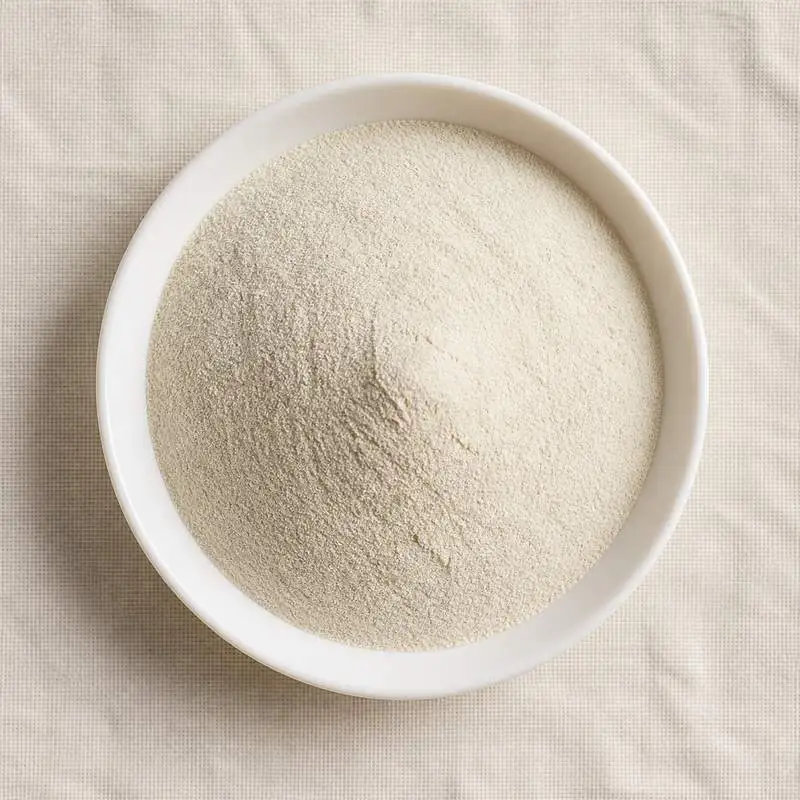
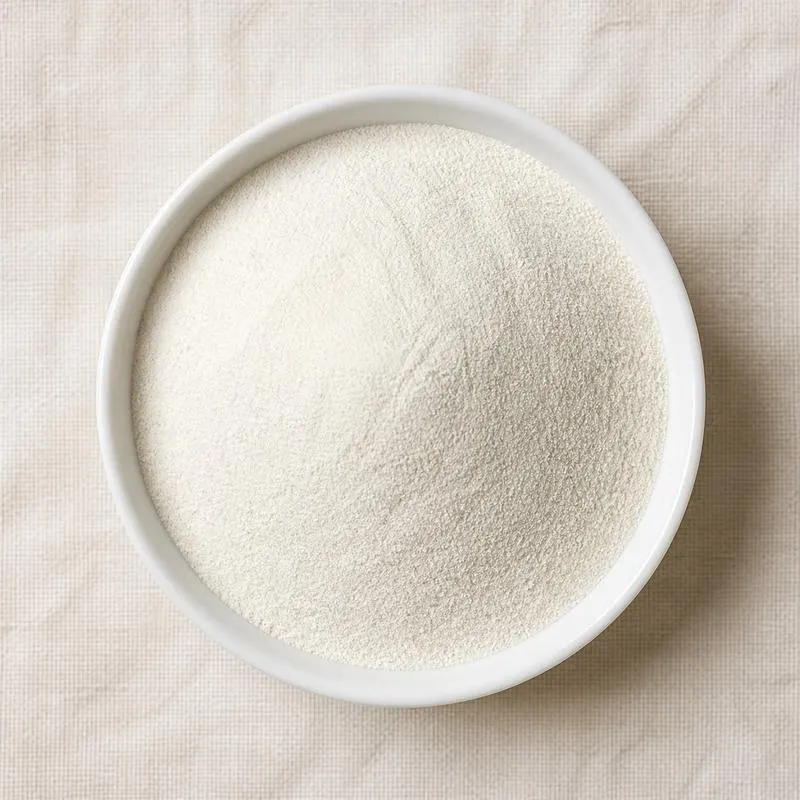
The powder is off white to light brown, free flowing, and dissolves or disperses in hot water to give a broth. Drying is the constraint on the category, because the most volatile aroma compounds are lost in the drier, so powders are either dried at low outlet temperature, encapsulated to protect the volatiles, or topped up with an added aroma package after drying. Hygroscopicity from the salt and maltodextrin fraction decides packaging, and barrier laminate is standard.
We source bulk Powdered Chicken Flavoring from top China manufacturers for our partners. The manufacturer is in Sichuan. A smaller requirement can ship in a combined container with other ingredients.
Please send the grade you need, the volume and your destination port, and we will come back with a solution and a price.
or call +86-21-6858 0751
- Function
- Flavours and Aromas
Specifications
| Item | Specification |
|---|---|
| Appearance | Free flowing powder, free from lumps and foreign matter |
| Colour | Off white to light brown |
| Odour and flavour | Characteristic cooked chicken, true to reference sample |
| Moisture | 5.0 percent maximum |
| Sodium chloride | Declared per formula, tolerance plus or minus 2 percent |
| Fat content | Declared per formula, tolerance plus or minus 2 percent |
| Particle size | 95 percent through 40 mesh |
| Bulk density | 0.45 to 0.75 g/ml |
| pH of 1 percent solution | 5.0 to 7.0 |
| Solubility in hot water | Disperses completely at 5 percent without lumping |
| Lead | 1.0 mg/kg maximum |
| Total plate count | 10,000 cfu/g maximum |
| Yeast and mould | 100 cfu/g maximum |
| E. coli | Absent in 1 g |
| Salmonella | Absent in 25 g |
Common Markets Grades
Grades separate by strength and by what is actually in them. Extract rich grades built on genuine chicken extract and chicken fat give the fullest character and carry a higher price, while grades built mainly on hydrolysed vegetable protein and aroma chemicals reach a comparable intensity at lower cost. Strength is stated as a recommended dose rate on the finished food rather than as an assay.
Profile is the second axis, with boiled or clear soup, roast chicken and fried chicken versions produced under different reaction conditions. The third is drying route: spray dried powders are the general purpose position, vacuum dried and milled grades hold more volatile character, and spray dried encapsulates with a high carrier level are used where the flavour must survive a further heat step or a long shelf life. Clean label grades avoiding monosodium glutamate, halal certified lines and grades free of the major allergens are separate products.
Applications
- Instant noodle seasoning sachets, the largest outlet for chicken flavour powders
- Bouillon cubes, stock powders and seasoning granules
- Dry soup, sauce and gravy mixes
- Savoury snack seasonings applied topically to crisps and extruded products
- Coatings, breadings and batter mixes for fried chicken products
- Rice and noodle side dish mixes
- Dehydrated ready meals and camping foods
- Meat products including sausage and reformed poultry items
- Plant based analogues aiming at a poultry profile
- Pet food palatants applied in a dry coating system
China Manufacturers of Powdered Chicken Flavoring
Top Powdered Chicken Flavoring manufacturers in China.

Company names and logos are the property of the manufacturers themselves. They are listed here because our own directory records them as producing this ingredient. A listing is not an endorsement by them, and we do not represent them or speak on their behalf.
Regulatory Status
In the United States the product is a compounded flavouring built from food ingredients. Its aroma components rely on FEMA GRAS status and on the synthetic flavouring substances permitted under 21 CFR 172.515, with natural extractives covered by 21 CFR 182.20, and the finished blend is declared as natural flavour or artificial flavour according to what was used. Where genuine chicken extract or chicken fat is included, the poultry derived material brings the ingredient within the inspection and labelling authority of the Food Safety and Inspection Service. Hydrolysed protein, yeast extract, salt, monosodium glutamate and nucleotides are declared as separate ingredients.
In the European Union the product is a thermal process flavouring combined with flavouring substances and carriers, handled under Regulation (EC) No 1334/2008, which prescribes the heating conditions a thermal process flavouring must meet and requires discrete flavouring substances to appear on the Union list. Flavourings take no E number, while flavour enhancers, anticaking agents and modified starch carriers are additives regulated and labelled in their own right. Poultry derived components fall under the animal products hygiene and import control framework. The Joint FAO and WHO Expert Committee on Food Additives has evaluated the sulphur substituted furan, thiophene and pyrazine flavouring groups central to this category.
Manufacturing Process
The flavour base is made first. Hydrolysed vegetable protein, yeast extract or chicken extract is charged to a jacketed pressure reactor with a reducing sugar such as xylose, a sulphur bearing amino acid such as cysteine, and chicken fat, and cooked under controlled pH, temperature and time, generally in the range of 100 to 130 degrees Celsius. That step generates the cooked meat aroma, and the conditions chosen determine whether the profile reads as boiled, braised or roasted. The reaction is stopped by rapid cooling.
The reaction mass is then blended with the carrier system, salt, flavour enhancers and any further extract, and the mixture is emulsified and homogenised at high pressure so that the fat is finely dispersed and can be encapsulated during drying. Spray drying follows in a co-current tower with a hot inlet and a deliberately low outlet temperature. Powder is collected from the chamber and cyclones, cooled and often agglomerated in a fluid bed to improve dispersion, and a top note aroma package is sprayed or plated onto the cooled powder to restore volatiles lost in the drier. The product is sieved, metal checked and packed into foil laminate under nitrogen. Where a vacuum dried grade is required, the compounded base is dried on a belt or shelf drier under vacuum and then milled.