Pregelatinized Starch
Pregelatinised starch is native starch that has been cooked and dried so that it hydrates in cold water without further heating. In native starch the amylose and amylopectin are packed into semi-crystalline granules that resist water at ambient temperature and only swell and burst when heated above the gelatinisation temperature. Pregelatinisation does that cooking in the factory and then dries the gelatinised paste, so the granular order is destroyed and the polymer is immediately available to water.
The base can be maize, waxy maize, potato, tapioca, wheat or rice, and the choice decides the finished texture. Waxy starches, nearly all amylopectin, give a clear, cohesive, non-setting paste; normal maize and wheat, with 25 percent or so amylose, give an opaque paste that firms and sets on standing. The starch may be native or chemically modified before pregelatinisation, and modification is usual where freeze thaw or acid stability is needed.
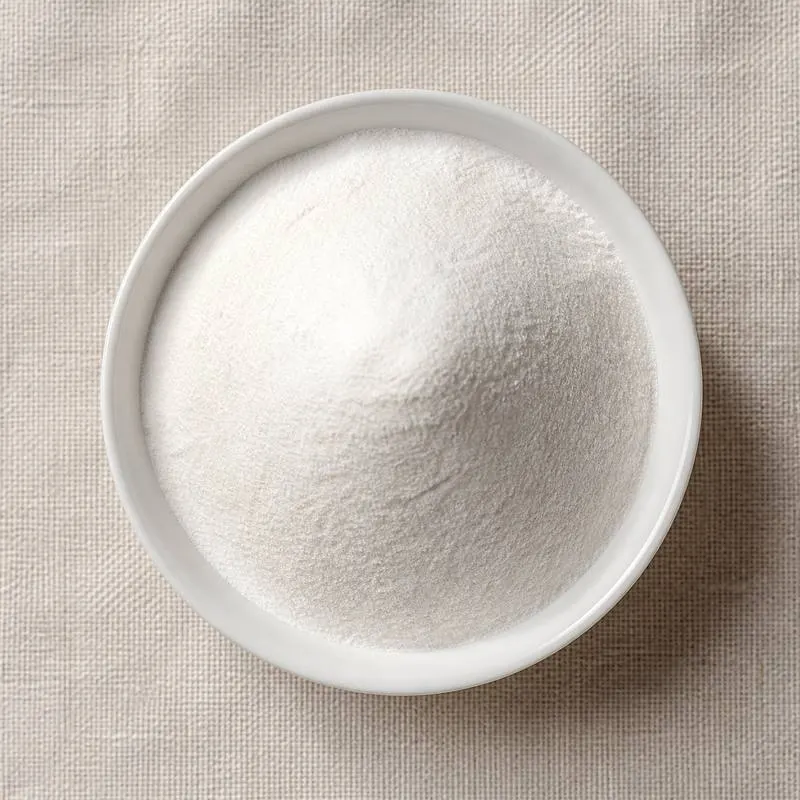
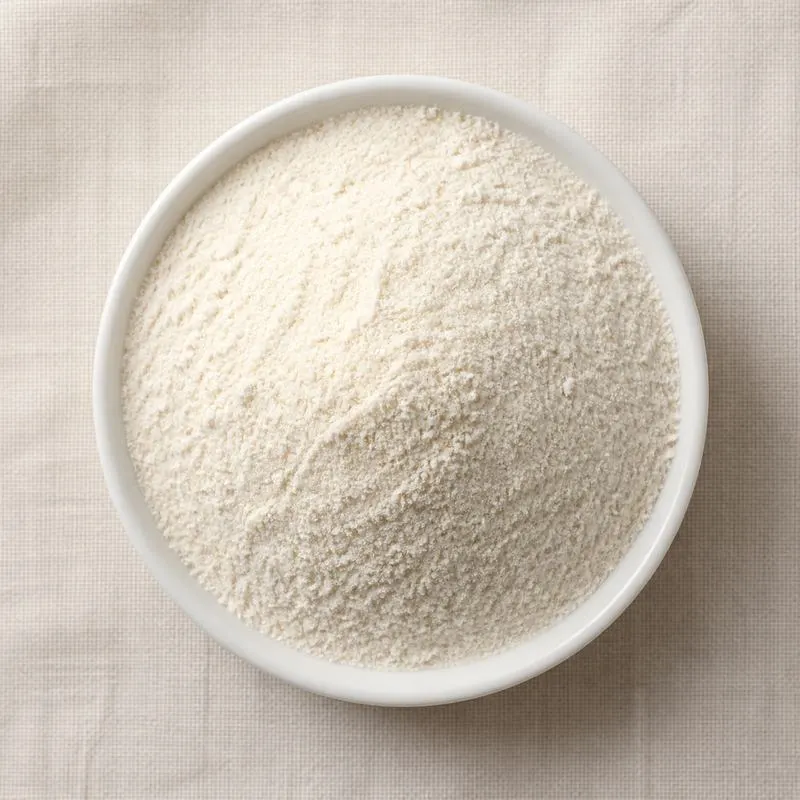
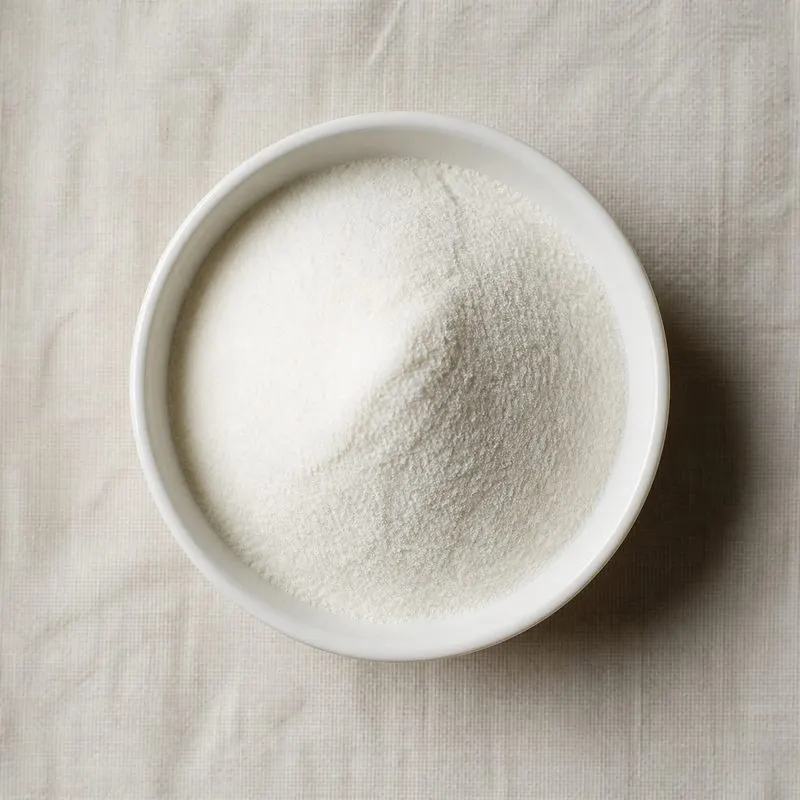
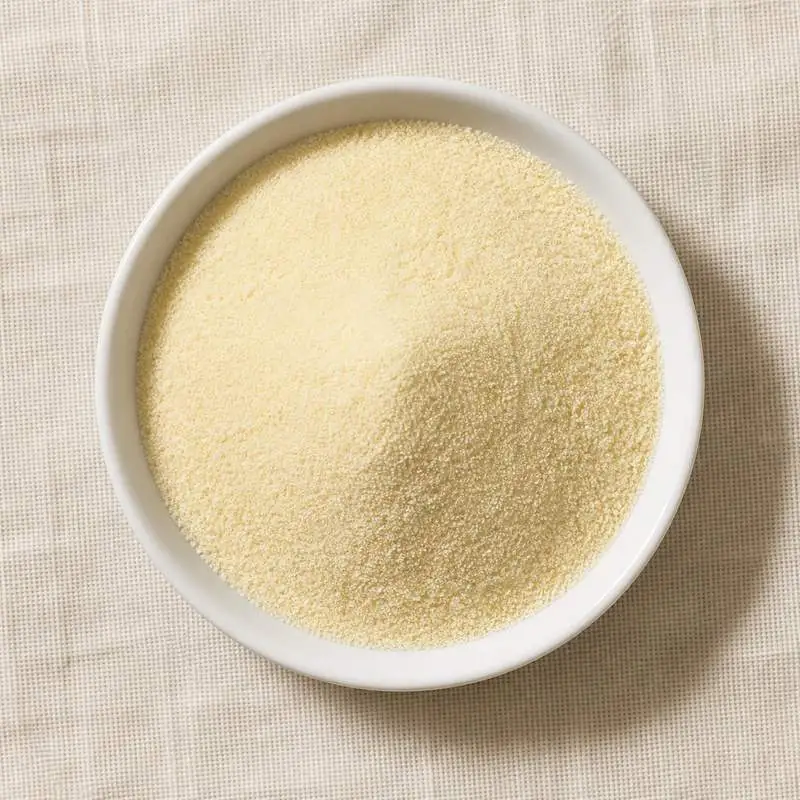
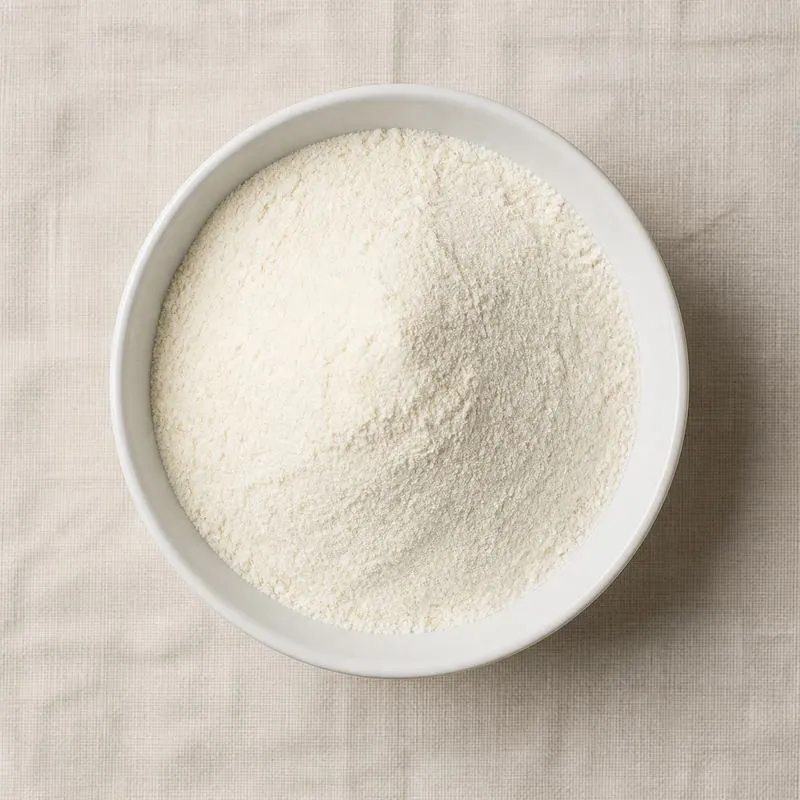
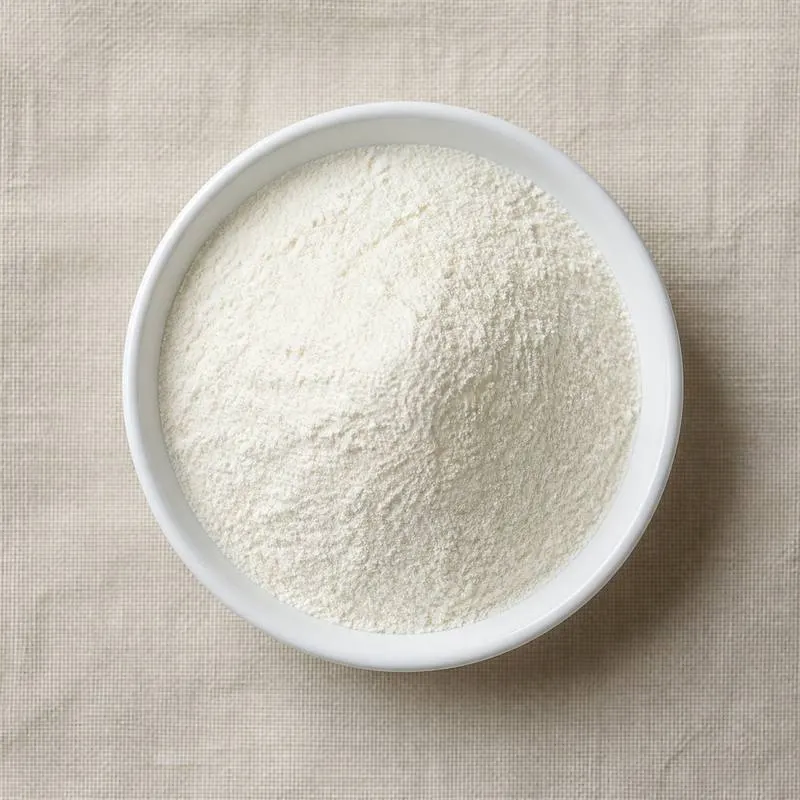
Two presentations are common, a white to off white powder and coarse flakes ground to a specified mesh, both at 5 to 8 percent moisture. Cold water viscosity develops within seconds to minutes, which makes lump formation the practical handling problem: the powder hydrates so fast that undispersed agglomerates form a skin and hold dry material inside, so it is either dry blended with sugar or added through a high shear disperser. Pastes are generally weaker and less elastic than the equivalent cooked native starch, because the process fragments the polymer and destroys the granule that would otherwise carry the structure.
We source bulk Pregelatinized Starch from top China manufacturers for our partners, working with several of them. The manufacturers are in Zhejiang and Jiangsu. A smaller requirement can ship in a combined container with other ingredients.
Please send the grade you need, the volume and your destination port, and we will come back with a solution and a price.
or call +86-21-6858 0751
- Function
- Protein
Specifications
| Item | Specification |
|---|---|
| Appearance | White to off white powder or milled flake |
| Odour and Taste | Bland, characteristic of starch, free from off notes |
| Identification | Positive starch reaction with iodine |
| Cold Water Viscosity | Per declared grade and agreed method |
| Cold Water Solubility | ≥ 80%, per grade |
| Moisture | ≤ 8.0% |
| Ash | ≤ 0.5% |
| Protein | ≤ 0.5% |
| Fat | ≤ 0.2% |
| pH, 10% suspension | 4.5 to 7.0 |
| Particle Size | ≥ 95% through 100 mesh, per grade |
| Sulphur Dioxide | ≤ 50 mg/kg |
| Lead | ≤ 0.5 mg/kg |
| Arsenic | ≤ 0.5 mg/kg |
| Total Plate Count | ≤ 10,000 CFU/g |
| Yeast and Mould | ≤ 100 CFU/g |
| Salmonella | Absent in 25 g |
Common Markets Grades
Grades are set first by botanical source and by whether the starch was modified before drying. Native pregelatinised starches carry a simple starch declaration, while pregelatinised modified starches, most often hydroxypropylated, acetylated or phosphate cross-linked before cooking, are declared as modified starch and give better freeze thaw, acid and shear stability.
The second variable is the drying route, which determines particle structure. Drum dried material is milled from a dried film, gives high cold viscosity and hydrates very fast, and is the cheapest route. Extruded pregelatinised starch is more mechanically degraded, giving lower viscosity and a more soluble product. Spray cooked and agglomerated grades are the most expensive and are chosen where dispersibility without lumping is critical, since the porous agglomerate wets out before it gels.
Beyond that, particle size is a specified property in its own right, coarse grades dispersing more easily and fine grades hydrating faster, and grades are further distinguished by cold water viscosity, by clarity of paste and by whether they carry an organic or non-GMO declaration.
Applications
- Instant desserts, puddings and custards, where the mix must set with cold milk and no cooking
- Instant soups, sauces and gravy mixes, providing viscosity as soon as hot water is added
- Bakery fillings and cold process creams, giving body without a separate cook step
- Bakery dough and batter, where it binds water, improves handling and slows staling
- Extruded and coated snacks, acting as a binder and adhesive for surface seasoning
- Pharmaceutical and supplement tableting, as a binder and disintegrant in direct compression
- Meat products, binding water and fat in emulsified and injected systems
- Batters and breadings, improving pickup and adhesion to the substrate
- Pet food and feed, as a binder in extruded and pelleted products
- Industrial applications such as paper coating, gypsum board and oil well drilling fluids
China Manufacturers of Pregelatinized Starch
Top Pregelatinized Starch manufacturers in China.
- Hangzhou Starpro Starch Co., Ltd.6 ingredients in the directory
 Jiaxing Xinxin Food Technology Co., Ltd.2 ingredients in the directory
 Suzhou Gaofeng Biotechnology Co., Ltd.11 ingredients in the directory
Company names and logos are the property of the manufacturers themselves. They are listed here because our own directory records them as producing this ingredient. A listing is not an endorsement by them, and we do not represent them or speak on their behalf.
Regulatory Status
In the United States pregelatinised starch made from native starch without chemical treatment is simply starch and is labelled as such, generally recognised as safe as a food ingredient, since physical pregelatinisation is not a chemical modification. Where the starch was chemically modified before pregelatinisation, the resulting ingredient falls under the food starch modified regulation in the Code of Federal Regulations, which lists the permitted treatments and reagents and the residue limits that apply, and it must be declared as modified food starch. Pharmaceutical grade pregelatinised starch has a monograph in the United States Pharmacopoeia and National Formulary.
In the European Union physically pregelatinised starch is a food ingredient rather than a food additive and carries no E number, being declared simply as starch with its botanical source stated where an allergen such as wheat is involved. Chemically modified starches are authorised food additives with their own E numbers in the E 1400 series, and pregelatinising a modified starch does not change that classification, so the modified starch E number continues to apply. Codex Alimentarius addresses modified starches in its General Standard for Food Additives and in the specifications maintained through JECFA, which has evaluated the modified starch group.
Manufacturing Process
The starting material is a native or previously modified starch slurry at around 35 to 40 percent solids. Where modification is part of the specification, it is carried out first in the slurry phase with the appropriate reagent, then the starch is washed and reslurried, since the chemical reactions require intact granules.
The dominant industrial route is drum drying. The slurry is fed onto a pair of counter-rotating steam heated drums running at surface temperatures well above the gelatinisation point. The starch gelatinises and dries in a single pass in a few seconds as a thin film on the drum surface, and a doctor blade scrapes the dried film off as flakes. Nip gap, drum speed and steam pressure together determine the degree of cook and the extent of polymer damage, and they are the main process controls. The flakes are then milled and sieved to the specified particle size.
Two alternatives serve different specifications. Extrusion cooking passes the moistened starch through a heated twin screw extruder, where heat and mechanical shear gelatinise it, and the extrudate is dried and milled; the shear degrades the polymer further, giving lower viscosity and higher solubility. Spray cooking injects steam into a starch slurry to gelatinise it and atomises the paste directly into a spray drier, producing hollow spherical particles that are then agglomerated into a readily dispersible powder. Every route is released against cold water viscosity and dispersibility rather than against a chemical assay.