Seabuckthorn Concrete
Seabuckthorn concrete is the waxy, semi-solid lipid extract obtained when sea buckthorn berries (Hippophae rhamnoides) are extracted with a non-polar solvent, containing the fruit's oil together with the natural waxes, carotenoids and sterols that a refined oil would leave behind.
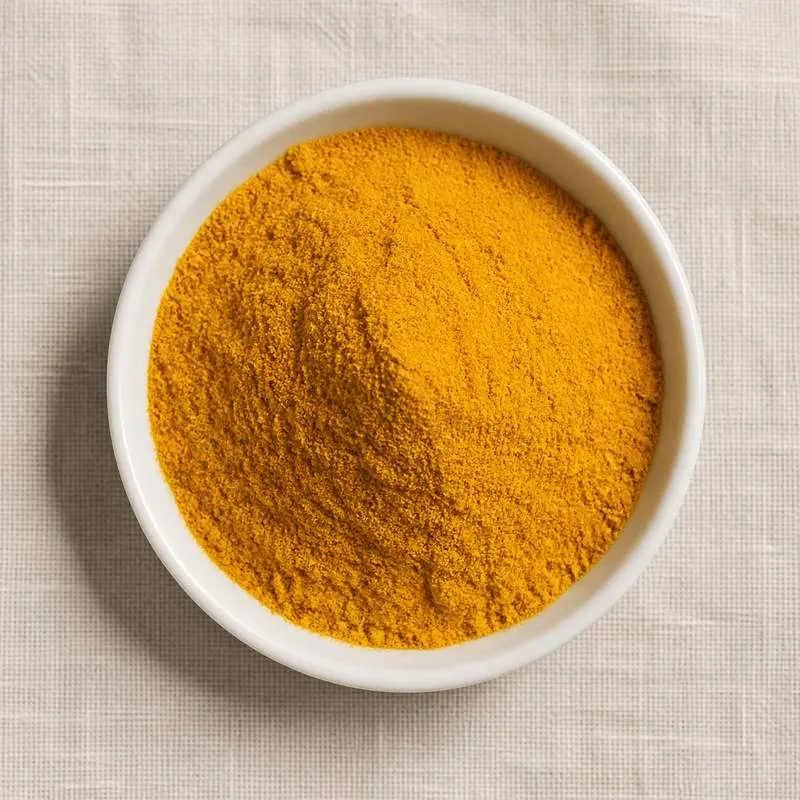
A concrete differs from a pressed or supercritical oil in that nothing is separated out after extraction. The material therefore carries the whole lipophilic fraction of the fruit: palmitoleic and palmitic acids from the pulp, linoleic and alpha-linolenic acids from the seed where seed is included in the charge, plus carotenoids, tocopherols, tocotrienols, phytosterols and long-chain fruit-cuticle waxes. Carotenoid content gives the material its deep orange to red colour, and the wax fraction gives it a paste-like consistency at ambient temperature.
The concrete is insoluble in water and melts to a pourable orange oil at roughly 35 to 45 degrees Celsius depending on wax content. It dissolves in vegetable oils, in ethanol at warm temperature and in the ester solvents used in cosmetic formulation. The carotenoids oxidise readily, so the material is packed under nitrogen and held cold and dark.
We source bulk Seabuckthorn Concrete from top China manufacturers for our partners. The manufacturer is in Inner Mongolia. A smaller requirement can ship in a combined container with other ingredients.
Please send the grade you need, the volume and your destination port, and we will come back with a solution and a price.
or call +86-21-6858 0751
- Function
- Plant extract
Specifications
| Item | Specification |
|---|---|
| Appearance | Deep orange to red waxy paste at 20 degrees Celsius |
| Botanical source | Hippophae rhamnoides, fruit |
| Total carotenoids | 200 mg per 100 g minimum |
| Total tocopherols and tocotrienols | 80 mg per 100 g minimum |
| Palmitoleic acid | 20.0 percent of total fatty acids minimum |
| Unsaponifiable matter | 2.0 to 8.0 percent |
| Identification | Conforms by gas chromatography fatty acid profile |
| Moisture and volatiles | 0.5 percent maximum |
| Acid value | 10 mg KOH per g maximum |
| Peroxide value | 10 meq per kg maximum |
| Residual hexane | 10 ppm maximum |
| Lead | 0.1 ppm maximum |
| Arsenic | 0.1 ppm maximum |
| Total plate count | 1,000 cfu per gram maximum |
Common Markets Grades
Concrete is graded first by the fruit fraction extracted. Pulp concrete carries the higher carotenoid and palmitoleic acid load and is the deeper coloured material. Seed concrete is paler and richer in linoleic and alpha-linolenic acids. Whole-berry concrete sits between the two and is the commonest trade item. A second distinction is solvent: hexane concrete is the standard, while a food-grade ethanol concrete carries more polar co-extractives and a softer consistency.
Assay is usually declared as total carotenoids in milligrams per hundred grams, commonly 200 to 800 for pulp material, alongside a fatty acid profile and an unsaponifiable matter figure. A dewaxed grade, in which the concrete has been winterised to drop the harder waxes and give a liquid oil, is offered where a pourable product is needed. Cosmetic-grade and food-grade material differ mainly in the residual solvent and microbiological limits applied, not in composition.
Applications
- Skin-care balms, lip products and salves, where the wax fraction sets the body of the stick and the carotenoids give natural colour
- Nutritional softgels, after warming and blending into a carrier oil to make it fillable
- Natural colouring of confectionery fats and compound coatings, where an orange lipid-soluble colour is wanted without a separate carotenoid addition
- Massage and after-sun oil bases, blended with lighter vegetable oils to reduce the tack of the waxes
- Feedstock for further refining into dewaxed sea buckthorn oil and into isolated carotenoid concentrates
- Fortified spreads and margarine trials, where it is used at low percentages as a source of palmitoleic acid
- Encapsulated powder production, as the oil phase of a spray-dried or emulsified carrier system
- Veterinary and equine skin preparations, where the whole unrefined lipid fraction is preferred
China Manufacturers of Seabuckthorn Concrete
Top Seabuckthorn Concrete manufacturers in China.

Company names and logos are the property of the manufacturers themselves. They are listed here because our own directory records them as producing this ingredient. A listing is not an endorsement by them, and we do not represent them or speak on their behalf.
Regulatory Status
In the United States sea buckthorn berry and seed lipids are marketed as dietary ingredients under the Dietary Supplement Health and Education Act, and are also used in cosmetics, which are regulated for safety and labelling rather than by pre-market approval. There is no food additive regulation specific to the concrete, and use in conventional food rests on a self-affirmed determination made by the user. Hexane-extracted material must meet the residual solvent expectations that apply to extraction solvents in food processing.
In the European Union the concrete has no E number, being a food ingredient rather than an additive. Sea buckthorn fruit and its oil have a documented history of consumption in the Union before May 1997 and are not treated as novel foods in their conventional forms, although a preparation made by a new process or from a new plant part can fall under the novel food rules and should be assessed on its own facts. Cosmetic use falls under the EU Cosmetic Products Regulation and requires a safety assessment for the finished product. Hexane is a permitted extraction solvent under EU rules on extraction solvents, with a residue limit applying to the finished ingredient. No Codex standard or JECFA specification covers the material.
Manufacturing Process
Berries are harvested from cultivated and wild Hippophae stands, frozen on the branch in the case of mechanically shaken crops, then thawed, cleaned and separated. Where a pulp concrete is wanted, the fruit is pressed or decanted to split pulp from seed; where a whole-berry concrete is wanted, the entire fruit goes forward. The chosen fraction is dried to low moisture, since water in the bed reduces the solvency of a non-polar extractant, and is then flaked or coarsely milled.
The prepared solids are percolated with hexane in a countercurrent extractor, or held in a batch extractor with repeated solvent washes, until the lipid is exhausted. The miscella is filtered clear of fines and the solvent stripped in a falling-film evaporator, finishing in a stripping column under vacuum with steam sparging to bring residual solvent within specification. What leaves the stripper is the concrete: a warm orange liquid that stiffens to a paste as it cools. It is deodorised only lightly, if at all, because heavy deodorisation destroys carotenoids, then filtered, blanketed with nitrogen and drummed cold. Ethanol-route plants substitute food-grade ethanol at the extraction stage and recover it by vacuum distillation.