Sweet Potato Colour
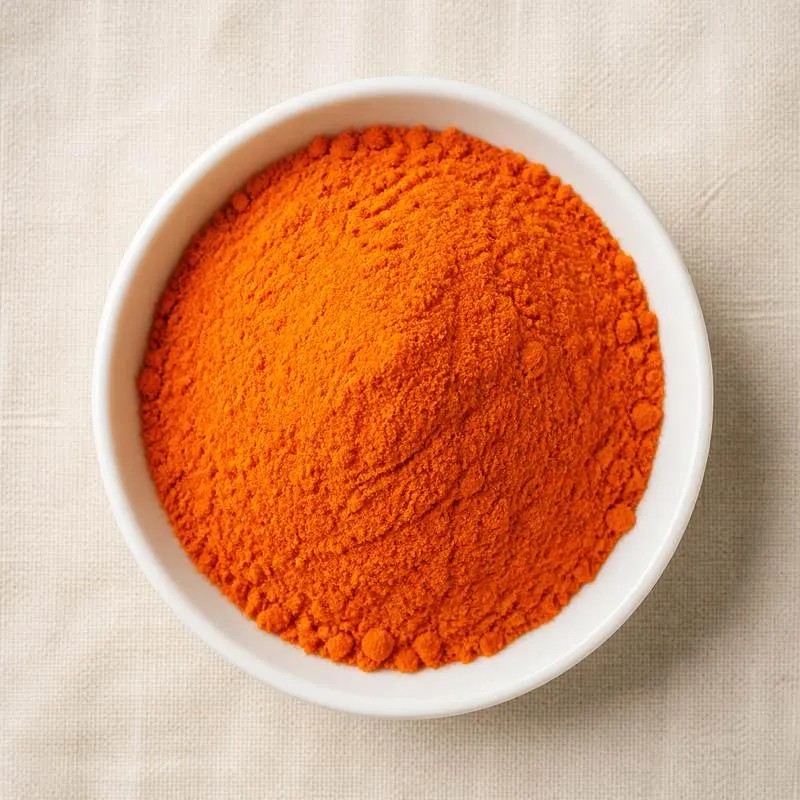
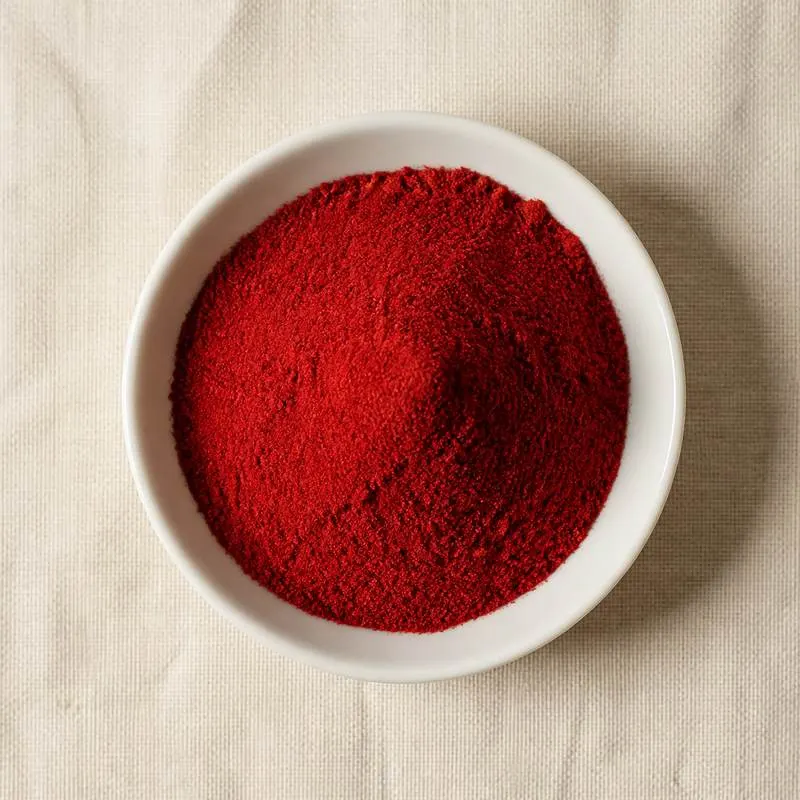
Sweet potato colour is the family of natural food colourants obtained from the storage root of Ipomoea batatas. Two chemically distinct types are traded under the name. The purple type, by far the larger in volume, carries acylated anthocyanins based on cyanidin and peonidin and gives red to purple shades. The orange type carries beta-carotene and related carotenoids and gives yellow to orange shades. Which one a specification refers to is set by the cultivar the extract is made from, so the root colour is the first thing to establish on any enquiry.
The anthocyanin type is water soluble and sells as a liquid concentrate in acidified water or as a spray-dried powder on maltodextrin. The carotenoid type is oil soluble and comes as an oil suspension or as a water-dispersible emulsion or beadlet. Both are sold on colour value rather than on a single-component assay.
The acyl groups attached to the sugars of the purple type, mostly caffeic, ferulic and para-coumaric acid, are the reason sweet potato colour holds up better than most anthocyanin colours. Acylation stabilises the pigment against heat and light and widens the pH range over which a usable red is obtained, though the hue still moves from red at low pH towards purple and blue as pH rises.
We source bulk Sweet Potato Colour from top China manufacturers for our partners. The manufacturer is in Liaoning. A smaller requirement can ship in a combined container with other ingredients.
Please send the grade you need, the volume and your destination port, and we will come back with a solution and a price.
or call +86-21-6858 0751
- Function
- Colorant
Specifications
| Item | Specification |
|---|---|
| Appearance | Purple-red liquid or powder (anthocyanin type) |
| Colour Value E1%/1cm at 530 nm | 30 to 200 (powder), 10 to 60 (liquid) |
| Identification | Absorption maximum at 520 to 535 nm in acidified solution |
| Loss on Drying | Not more than 8.0 per cent (powder) |
| Ash | Not more than 6.0 per cent |
| pH of 1 per cent solution | 3.0 to 5.0 |
| Residual Ethanol | Not more than 0.5 per cent |
| Sulphur Dioxide | Not more than 30 mg/kg |
| Lead | Not more than 2 mg/kg |
| Arsenic | Not more than 1 mg/kg |
| Total Plate Count | Not more than 1000 cfu/g |
| Yeast and Mould | Not more than 100 cfu/g |
| Escherichia coli | Absent in 5 g |
| Salmonella | Absent in 25 g |
Common Markets Grades
The purple anthocyanin grades are the standard article. Liquid grades run colour value 10 to 60 measured at about 530 nm, and powder grades run 30 to 200 on a maltodextrin carrier, with resin-purified concentrates above that where sugars and organic acids from the root juice are unwanted. The orange carotenoid grades are specified instead on total carotenoid content, commonly 1 to 30 per cent as beta-carotene, in oil suspension or as cold water dispersible powder.
All grades are food grade. Options set at order level cover carrier type, an ethanol-free water-extracted version for markets restricting solvent residues, an organic-certified grade where the roots and the process qualify, and a deodorised grade passed over adsorption resin to strip the earthy root note before use in delicate flavour systems.
Applications
- Soft drinks, juice drinks and flavoured waters at acid pH, where the acylated pigment resists fading better than grape or berry colour
- Yoghurt, fermented milk drinks and ice cream in berry and taro shades
- Jellies, gummies and hard candy, in pink through purple depending on the pH of the mass
- Bakery fillings, icings and decorative glazes
- Steamed buns, noodles and dumpling wrappers, a large use in Asian markets
- Jams, fruit preparations and sauces, restoring colour lost during cooking
- Alcoholic mixers and low-alcohol cocktails needing a stable red
- Snack coatings and cereal pieces, using the powder grade
- Dietary supplements and instant drink powders positioned on natural colour
China Manufacturers of Sweet Potato Colour
Top Sweet Potato Colour manufacturers in China.

Company names and logos are the property of the manufacturers themselves. They are listed here because our own directory records them as producing this ingredient. A listing is not an endorsement by them, and we do not represent them or speak on their behalf.
Regulatory Status
The purple type falls within the anthocyanin colour class. In the European Union anthocyanins are authorised as E163, with the permitted source plants set out in the specifications regulation, and purple sweet potato is among the sources recognised for that listing. In the United States, vegetable juice colour and specific listings in 21 CFR Part 73 cover colour obtained from edible vegetables including sweet potato, used within the conditions of the relevant listing. JECFA has evaluated anthocyanin extracts and Codex includes anthocyanins among the permitted colours in the General Standard for Food Additives.
The orange type is handled as a carotene or carotenoid colour, corresponding to the E160a family in the European Union and to the vegetable-derived carotene listings in the United States, again subject to the conditions of the applicable listing. Because the two types sit under different regulatory headings, labelling and permitted use levels differ, and the cultivar type is confirmed before a product is assigned to either heading.
Manufacturing Process
Roots are washed, inspected and either rasped into a mash or dried into chips depending on how far the extraction plant sits from the growing area. For the purple anthocyanin type the mash is extracted with acidified water or aqueous ethanol at moderate temperature, with acid needed to hold the pigment in its stable coloured form and to limit enzymatic browning. The extract is separated from the pomace by pressing and filtration, and the pomace is often recovered separately as a dietary fibre.
Clarified extract is passed over a macroporous adsorption resin that retains the anthocyanins while starch, sugars, minerals and part of the earthy flavour pass through. The pigment is eluted with ethanol, the solvent recovered under vacuum, and the concentrate standardised as a liquid or blended with maltodextrin and spray dried. The orange carotenoid type follows a different route: the dried root is extracted with edible oil or with supercritical carbon dioxide, since the carotenoids are lipid soluble, and the extract is standardised in oil or emulsified into a dispersible form.