Tartrazine
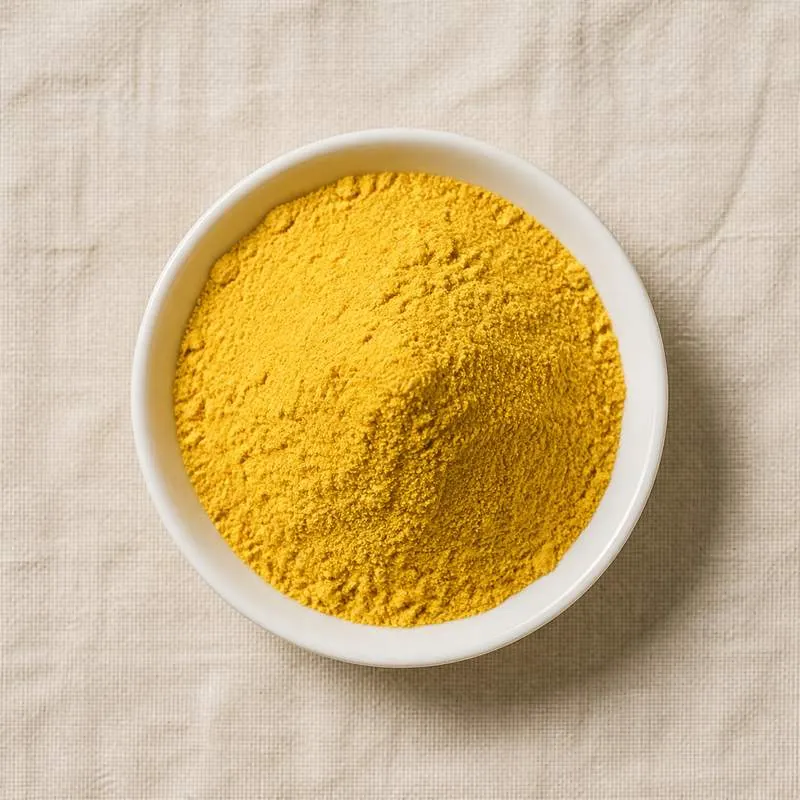
Tartrazine is a synthetic monoazo dye that produces a bright lemon-yellow shade in food, beverage, pharmaceutical, and cosmetic applications. It carries CAS number 1934-21-0 and is registered as E102 in the European Union and as FD&C Yellow No. 5 in the United States.
The molecule is a pyrazolone sulphonate, fully water-soluble, with a molar absorptivity that allows striking colour at use levels of 10 to 100 milligrams per kilogram. Its low cost, high tinctorial strength, and broad processing stability have kept it in mainstream use for more than a century.
We source bulk Tartrazine from top China manufacturers for our partners, working with several of them. The manufacturers are in Shanghai, Tianjin and Zhejiang. A smaller requirement can ship in a combined container with other ingredients.
Please send the grade you need, the volume and your destination port, and we will come back with a solution and a price.
or call +86-21-6858 0751
- Packaging
- 25 kg kraft paper bag with PE inner liner
- ISO 9001
- HACCP
- Halal
- Kosher
Specifications
| Item | Specification |
|---|---|
| Appearance | Yellow to orange-yellow powder or granules |
| Total Colouring Matter | ≥ 85.0% |
| Absorption Maximum (aqueous solution) | 426 ± 2 nm |
| Solubility | Freely soluble in water, sparingly soluble in ethanol |
| Loss on Drying with Chlorides and Sulfates (as sodium salts) | ≤ 13.0% (135°C) |
| Water-Insoluble Matter | ≤ 0.2% |
| Subsidiary Colouring Matters | ≤ 1.0% |
| Organic Compounds Other Than Colouring Matters | ≤ 0.5% in total |
| Unsulfonated Primary Aromatic Amines (as aniline) | ≤ 0.01% |
| Ether-Extractable Matter | ≤ 0.2% |
| Lead | ≤ 2 mg/kg |
| Arsenic (as As) | ≤ 3 mg/kg |
| Mercury | ≤ 1 mg/kg |
| Heavy Metals (as Pb) | ≤ 10 mg/kg |
Common Markets Grades
Tartrazine is graded by dye content on an anhydrous basis. The principal commercial grade is the powder at 85 percent minimum total colour, conforming to the JECFA and FCC monograph specifications.
Granular and micronized variants of the same assay are produced for dust control and for faster dissolution in cold water.
Aluminium lake grades at 10 to 40 percent dye load are produced for fat-based and water-restricted applications such as coated tablets, hard-shell candy, and lipstick. The lake form is dispersed rather than dissolved and gives an opaque, more bleed-resistant finish.
Pharmaceutical grades meeting USP, BP, Ph. Eur., and JP monographs carry tighter limits on subsidiary dyes, unsulfonated aromatic amines, and heavy metals than food grade.
Liquid solutions at 5 to 20 percent in water or in propylene-glycol-water blends are common for high-throughput beverage lines where dust-free handling is preferred.
Applications
- Soft drinks, energy drinks, and powdered beverage mixes in lemon, orange, and lime flavours
- Hard candies, jellies, gummies, and chewing gum in yellow and green shades (often blended with brilliant blue)
- Bakery: cake mixes, frostings, custard fillings, and decorative icings
- Dairy: yogurt, ice cream, and flavoured milks in lemon and banana profiles
- Snack seasonings, cheese-flavoured coatings, and savory powder blends
- Pickles, mustards, sauces, and condiment bases
- Cereals, instant puddings, and dessert mixes
- Pharmaceuticals: tablet coatings, capsule shells, syrups, and chewable formulations
- Cosmetics and personal care: shampoos, soaps, mouthwashes, and bath products
- Pet food and treats for colour stability and visual contrast
Brands Using Tartrazine
Widely-distributed consumer products that list Tartrazine on the ingredient label.
- Mountain Dew (PepsiCo)Mountain Dew Original ↗Ingredient panel lists: 'Carbonated Water, High Fructose Corn Syrup, Concentrated Orange Juice, Citric Acid, Natural Flavor, Sodium Benzoate, Caffeine, Sodium Citrate, Gum Arabic, Erythorbic Acid, Calcium Disodium EDTA, Yellow 5.'Label verified 2026-05-24
- Doritos (Frito-Lay)Doritos Flamin' Hot Cool Ranch Tortilla Chips ↗Ingredient list includes artificial colour additives: Red 40 Lake, Yellow 6 Lake, Yellow 6, Yellow 5, Blue 1, Red 40.Label verified 2026-05-24
- Doritos (Frito-Lay)Doritos Tapatio Flavored Tortilla Chips ↗Ingredient panel lists Yellow 5 among artificial colour additives.Label verified 2026-05-24
- Lucky Charms (General Mills)Lucky Charms Rainbow Sprinkles Cereal ↗Ingredient panel lists Yellow 5 & 6 along with other colour additives.Label verified 2026-05-24
- Lucky Charms (General Mills)Lucky Charms Berry Swirl Cereal ↗Contains Yellow 5 & 6 and Red 40 among ingredients.Label verified 2026-05-24
- Skittles (Mars Wrigley)Skittles Sour Candy ↗Ingredient panel lists Yellow 5 Lake and Yellow 5 among colour additives.Label verified 2026-05-24
- Skittles (Mars Wrigley)Skittles Sour Gummies ↗Ingredient panel includes Yellow 5 among artificial colours.Label verified 2026-05-24
Brand names, product names and logos are the property of their owners. They appear here as published evidence that the ingredient is used, taken from the brand's own label or website. Their appearance is not an endorsement, and it does not mean the brand buys from us or from any manufacturer listed on this site.
China Manufacturers of Tartrazine
Top Tartrazine manufacturers in China.
- Shanghai Dyestuffs Research Institute Co., Ltd.1 ingredient in the directory
- Tianjin Duofuyuan Industrial Co., Ltd.1 ingredient in the directory
- Zhejiang Dragoni Colour Technology Co., Ltd.2 ingredients in the directory
Company names and logos are the property of the manufacturers themselves. They are listed here because our own directory records them as producing this ingredient. A listing is not an endorsement by them, and we do not represent them or speak on their behalf.
How We Help Source Tartrazine
Direct Factory Sourcing
We run the whole process: selecting the manufacturer from the top Chinese food ingredient producers, negotiating the price, verifying quality, and coordinating the logistics. You deal with us instead of with several factories at once.
Original Packaging and Documents from the Manufacturer
The manufacturer sends your Tartrazine out of its own factory in the original packing, through to your destination port. The COA, COO, MSDS, TDS and any certifications reach you from the manufacturer as well.
Free Samples and Lead Time
We send 100 to 500 g free for your own laboratory to test and you cover only the courier, usually within 2 to 3 working days. ETD is usually within 7 to 15 days once the order is confirmed, and we check that date against the factory's own manufacturing schedule before we give it to you.
Combined Shipment
We can load Tartrazine together with other ingredients such as Beta Carotene, Caramel Colour and Lycopene into one 20' FCL. If your quantity is small, we can also ship LCL.
Regulatory Status
Tartrazine is among the most heavily regulated of the synthetic food colours and is approved for use in the great majority of regulated markets, subject to defined purity criteria and labelling rules.
In the United States, the Food and Drug Administration lists tartrazine under 21 CFR 74.705 as FD&C Yellow No. 5. Every batch sold for food, drug, or cosmetic use must be submitted to FDA batch certification. Federal regulation also requires that the presence of FD&C Yellow No. 5 be declared explicitly by name on the ingredient line of any food, drug, or cosmetic that contains it, rather than the generic phrase colour added, because of documented hypersensitivity reactions in a small subset of consumers.
In the European Union, Regulation (EC) No 1333/2008 lists tartrazine as E102 in Annex II. Foods that contain E102 must additionally bear the statement may have an adverse effect on activity and attention in children, the warning introduced after the Southampton Six study and codified by Regulation 1333/2008 for the AAA azo colours (sunset yellow FCF, quinoline yellow, carmoisine, allura red, tartrazine, ponceau 4R).
JECFA has evaluated tartrazine and concluded that current use levels are consistent with safe consumption for the general population, while flagging the same hypersensitivity caveat. Pharmacopoeial monographs are published in the USP, BP, Ph. Eur., and JP.
Manufacturing Process
Tartrazine is produced by classical azo-coupling chemistry. The synthesis condenses 4-amino-benzenesulfonic acid (sulfanilic acid) with sodium nitrite under acidic conditions to form the corresponding diazonium salt.
The diazonium intermediate is then coupled with the sodium salt of 4,5-dihydro-5-oxo-1-(4-sulfophenyl)-1H-pyrazole-3-carboxylic acid in alkaline solution. The coupling reaction is run at low temperature to maximise regioselectivity and colour yield.
The crude reaction mass is salted out with sodium chloride, filtered, washed, and re-dissolved for purification. Recrystallisation and carbon treatment reduce subsidiary dye content and unreacted aromatic amines to within monograph limits.
The final dye is spray- or drum-dried, milled, and standardised to assay. Aluminium lakes are produced by substrating the soluble dye onto a freshly precipitated alumina hydrate carrier in a separate finishing step.