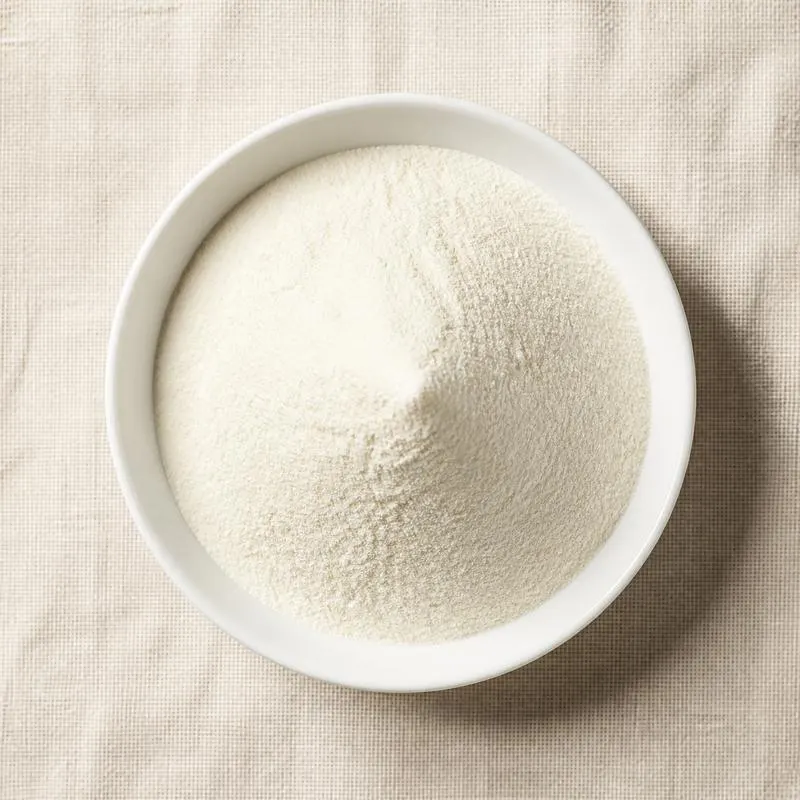
Vitamin B2
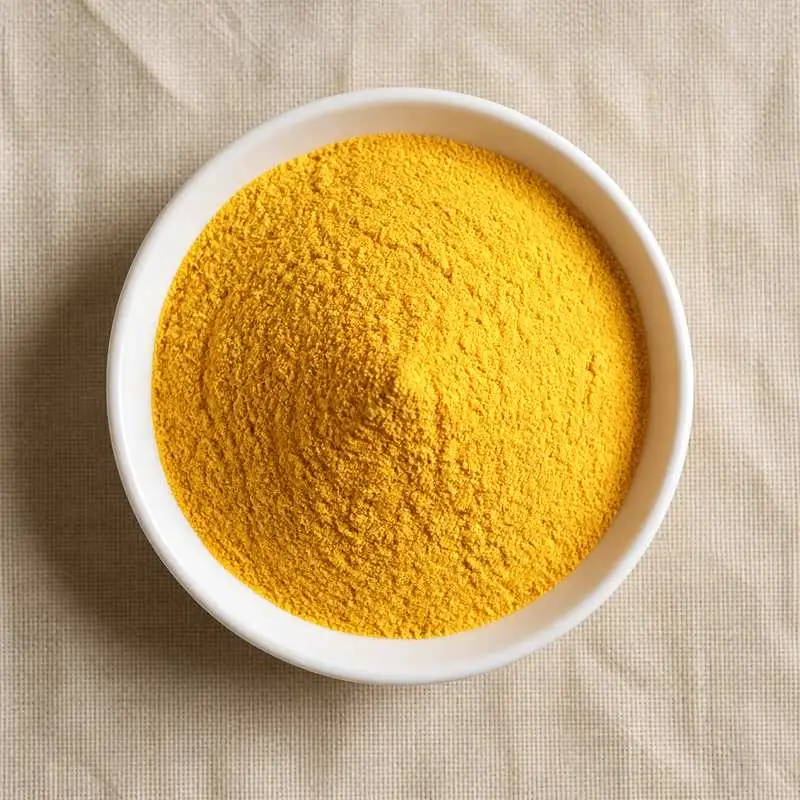
Vitamin B2 is riboflavin (CAS 83-88-5), a yellow-orange crystalline nutrient and food colour carrying the European colour number E101.
The molecule is an isoalloxazine ring fused to a ribitol side chain, giving the formula C₁₇H₂₀N₄O₆. In aqueous solution it shows the characteristic greenish-yellow fluorescence used in both analytical detection and natural-colour marketing claims.
We source bulk Vitamin B2 from top China manufacturers for our partners. The manufacturers are in Jiangxi and Shandong. For this ingredient the minimum order is 200 kg and a 20-foot container takes 8 MT, and a smaller requirement can ship in a combined container with other ingredients.
Please send the grade you need, the volume and your destination port, and we will come back with a solution and a price.
or call +86-21-6858 0751
- Minimum order
- 200 kg
- Qty in 20' FCL
- 8 MT
- Packaging
- 25 kg kraft paper bag with PE inner liner
- ISO 9001
- HACCP
- Halal
- Kosher
Specifications
| Item | Specification |
|---|---|
| Appearance | Yellow to orange crystalline powder |
| Assay (dry basis) | 98.0% to 102.0% |
| Specific rotation | −115° to −135° |
| Loss on drying | ≤ 1.5% |
| Residue on ignition | ≤ 0.3% |
| Heavy metals (as Pb) | ≤ 10 mg/kg |
| Arsenic | ≤ 3 mg/kg |
| Lumiflavin | Passes test |
| Particle size | Per customer specification |
Common Markets Grades
Riboflavin grades differ by purity, particle size, and dispersion behaviour.
Crystalline riboflavin at 98 percent minimum assay is the pharmacopoeial grade, used for tablets, capsules, oral solutions, and pharmaceutical reference work under USP, Ph. Eur., and JP monographs.
Food-grade riboflavin 96 percent and feed-grade riboflavin 80 percent cover dry premix fortification of flour, cereals, infant formula, and animal feed. Spray-dried granulations at 80 percent assay improve flow and reduce dust in tableting and premix operations.
Riboflavin-5-phosphate sodium (FMN sodium) assays at 73 to 79 percent on a riboflavin basis. Its higher water solubility makes it the preferred form for clear beverages, liquid supplements, and where yellow colour performance in solution is required.
Both standard riboflavin and FMN sodium are sold under the food colour identity E101, with E101(i) covering riboflavin and E101(ii) covering the phosphate form.
Applications
- Yellow colouring of pasta, instant noodles, ice cream, dairy desserts, and sauces under E101
- Soft drinks, sports drinks, and vitamin waters where FMN sodium provides clear-solution yellow tinting
- Cereal, flour, and pasta enrichment programs in mandatory fortification countries
- Infant formula and follow-on formula to meet Codex and regional compositional standards
- Multivitamin tablets, capsules, and gummies as a B-complex component
- Energy drinks and effervescent supplements marketed on the bright yellow visual cue
- Confectionery, jellies, and panned coatings for yellow-to-greenish shades
- Pharmaceutical preparations for treatment of ariboflavinosis and migraine prophylaxis
- Clinical and enteral nutrition formulas for hospital and tube feeding
- Animal feed premixes for poultry, swine, dairy, and aquaculture
- Pet food fortification and laying-hen diets where yolk colour is reinforced
- Diagnostic and analytical reagents that use the native fluorescence at 525 nm
Brands Using Vitamin B2
Widely-distributed consumer products that list Vitamin B2 on the ingredient label.
- Nature MadeSuper B-Complex with Vitamin C Tablets ↗Provides Riboflavin (vitamin B2) 20 mg per serving as one of 8 essential B vitamins.Label verified 2026-05-24
- Nature MadeB-Complex with Vitamin C Caplets ↗Contains Riboflavin (vitamin B2) 10.2 mg per serving.Label verified 2026-05-24
- Kellogg'sFrosted Flakes Cereal ↗Fortified cereal; ingredient list includes Vitamin B2 (riboflavin).Label verified 2026-05-24
- General MillsTotal Whole Grain Cereal ↗Fortified cereal includes Vitamin B2 (riboflavin) among 11 added vitamins/minerals.Label verified 2026-05-24
- General MillsLucky Charms Cereal ↗Ingredient list includes Vitamin B2 (riboflavin).Label verified 2026-05-24
- Monster EnergyOriginal Energy Drink ↗Energy drink ingredient list includes riboflavin (1.7 mg / can).Label verified 2026-05-24
- CentrumSilver Women 50+ Multivitamin ↗Ingredient panel includes Riboflavin (Vitamin B2).Label verified 2026-05-24
Brand names, product names and logos are the property of their owners. They appear here as published evidence that the ingredient is used, taken from the brand's own label or website. Their appearance is not an endorsement, and it does not mean the brand buys from us or from any manufacturer listed on this site.
China Manufacturers of Vitamin B2
Top Vitamin B2 manufacturers in China.
- Jiangxi Dexing PARCHN Sodium Isovitamin C Co., Ltd.4 ingredients in the directory
 Xintai Jiahe Biotech Co., Ltd.(新泰市佳禾生物科技有限公司)10 ingredients in the directory
Company names and logos are the property of the manufacturers themselves. They are listed here because our own directory records them as producing this ingredient. A listing is not an endorsement by them, and we do not represent them or speak on their behalf.
How We Help Source Vitamin B2
Direct Factory Sourcing
We run the whole process: selecting the manufacturer from the top Chinese food ingredient producers, negotiating the price, verifying quality, and coordinating the logistics. You deal with us instead of with several factories at once.
Original Packaging and Documents from the Manufacturer
The manufacturer sends your Vitamin B2 out of its own factory in the original packing, through to your destination port. The COA, COO, MSDS, TDS and any certifications reach you from the manufacturer as well.
Free Samples and Lead Time
We send 100 to 500 g free for your own laboratory to test and you cover only the courier, usually within 2 to 3 working days. ETD is usually within 7 to 15 days once the order is confirmed, and we check that date against the factory's own manufacturing schedule before we give it to you.
Combined Shipment
We can load Vitamin B2 together with other ingredients such as Vitamin C, Vitamin D3 and Vitamin E into one 20' FCL. If your quantity is small, we can also ship LCL.
Regulatory Status
Riboflavin holds full nutrient and colour status across major jurisdictions.
In the European Union Regulation (EC) No 1333/2008 authorises it as food colour E101, covering riboflavin E101(i) and riboflavin-5-phosphate sodium E101(ii). Use levels follow the quantum satis principle in most food categories.
The U.S. Food and Drug Administration recognises riboflavin as GRAS under 21 CFR 184.1695 and approves it as a colour additive exempt from certification under 21 CFR 73.450. Enrichment levels for flour and cereal products are set in 21 CFR 137.
JECFA has reviewed riboflavin and assigned an ADI not specified, reflecting its safety as a nutrient. EFSA has confirmed no upper intake level, citing the absence of identified adverse effects from oral intake.
Pharmacopoeial monographs appear in the USP, Ph. Eur., JP, and BP. Halal and Kosher certifications are widely available since the fermentation organisms and substrates are non-animal.
Manufacturing Process
Almost all commercial riboflavin is now produced by microbial fermentation, having displaced chemical synthesis between the 1990s and early 2000s.
The two dominant production organisms are the fungus Ashbya gossypii and the bacterium Bacillus subtilis, both engineered for high flux through the purine and riboflavin pathways. Glucose or plant-oil carbon feeds are fermented under aerobic conditions for 4 to 7 days, accumulating crystalline riboflavin in the broth at titers above 20 g/L.
The yellow crystals are separated by acidification and centrifugation, washed, and dried. Pharmacopoeial grades are recrystallised from dilute acid or aqueous acetone to remove residual fermentation pigments and proteins.
For FMN sodium, purified riboflavin is phosphorylated chemically with phosphorus oxychloride, neutralised with sodium hydroxide, and spray-dried. The earlier chemical synthesis from ribose and 3,4-xylidine via the Karrer route persists only at small scale for reference material.