Acid Stable High Transparency Konjac Gum
Acid stable high transparency konjac gum is a purified konjac glucomannan made to two specifications that ordinary konjac flour does not meet: it holds viscosity in acidic systems, and it gives a solution clear enough to use in transparent products. Konjac glucomannan itself is the storage polysaccharide of the corm of Amorphophallus konjac, a chain of beta-1,4-linked glucose and mannose units in a roughly two to three ratio, carrying acetyl groups on about one residue in twenty.
Those acetyl groups are the key to both properties. They keep the chains apart and hold the polymer in solution, and they are also the group that alkali removes to make konjac form its thermally irreversible gel. Standard konjac flour contains starch, protein, cell debris and alkaloid bitter principles that cloud the solution and, in acid, promote hydrolysis of the glucomannan backbone with a rapid loss of viscosity. Purification strips those impurities, giving a solution of high light transmittance that retains viscosity through the pH range of fruit flavoured products.
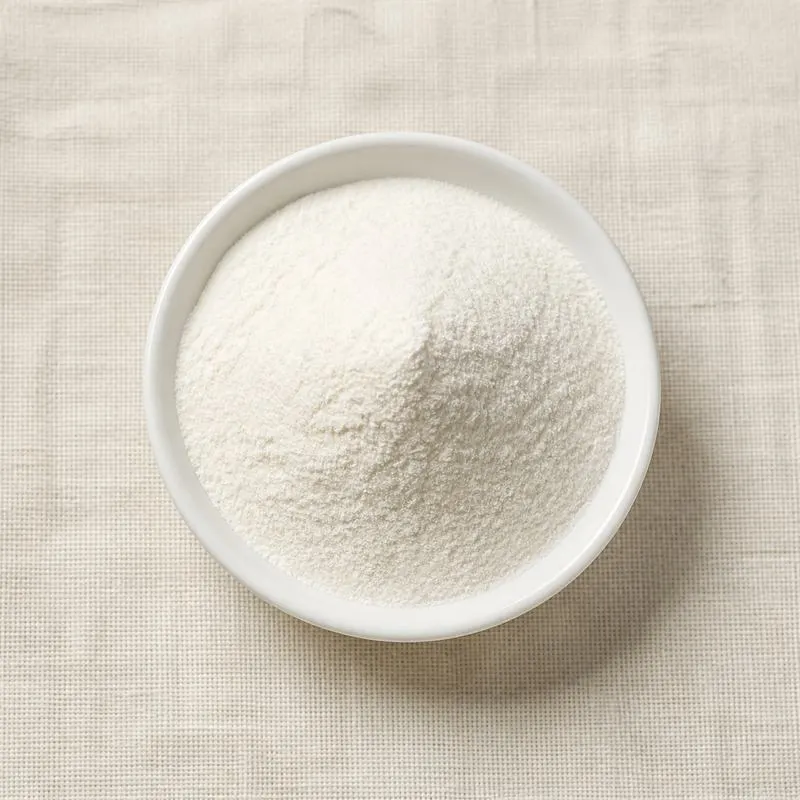
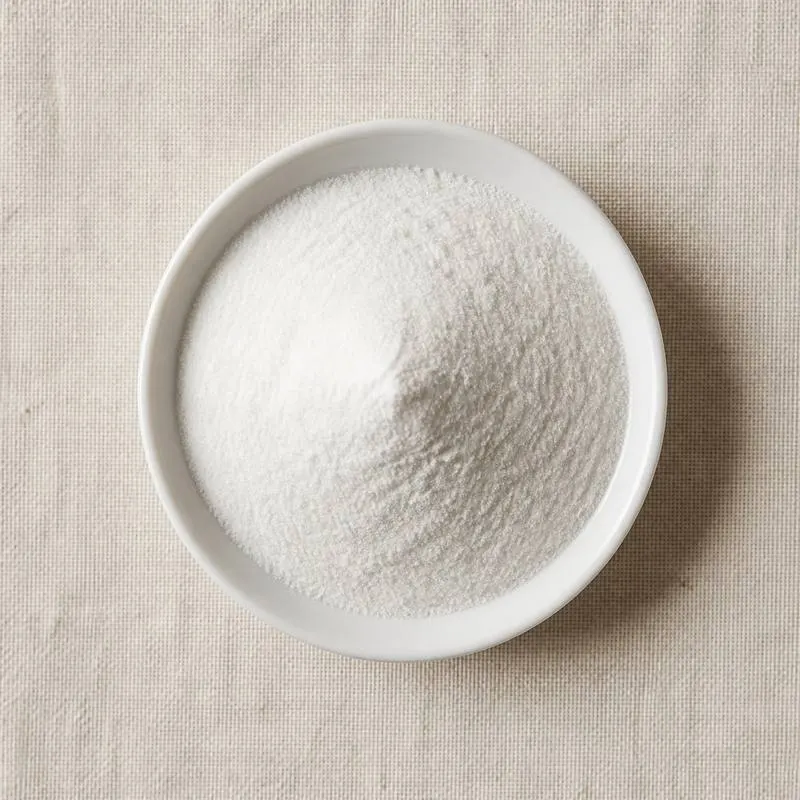
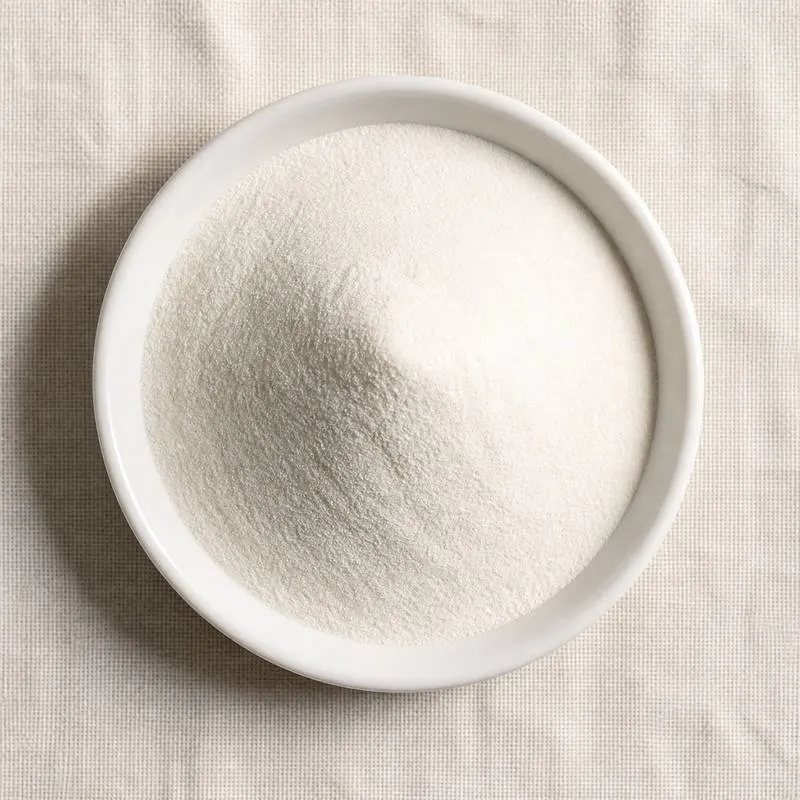
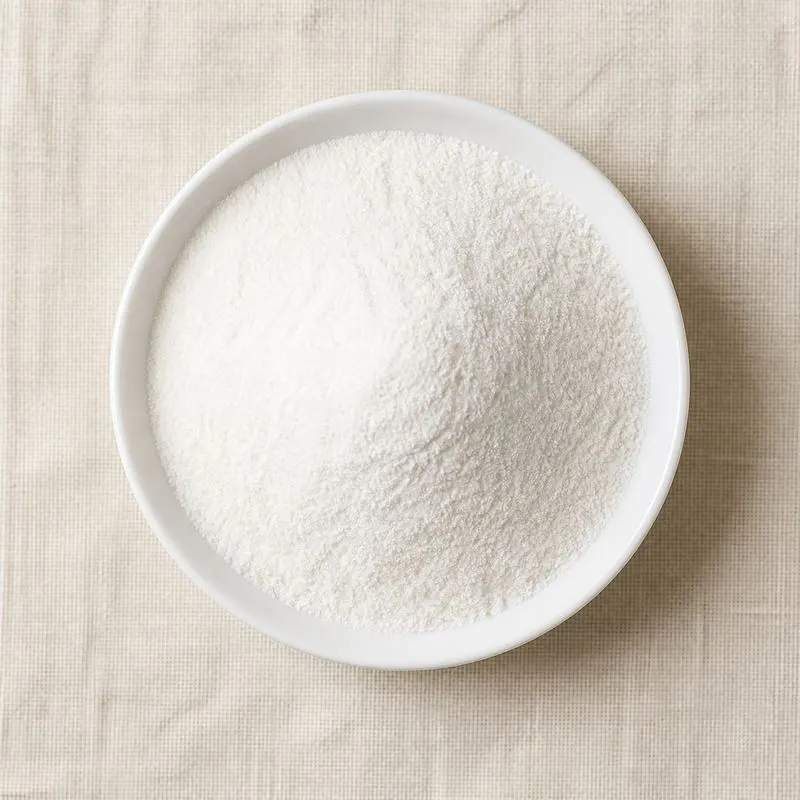
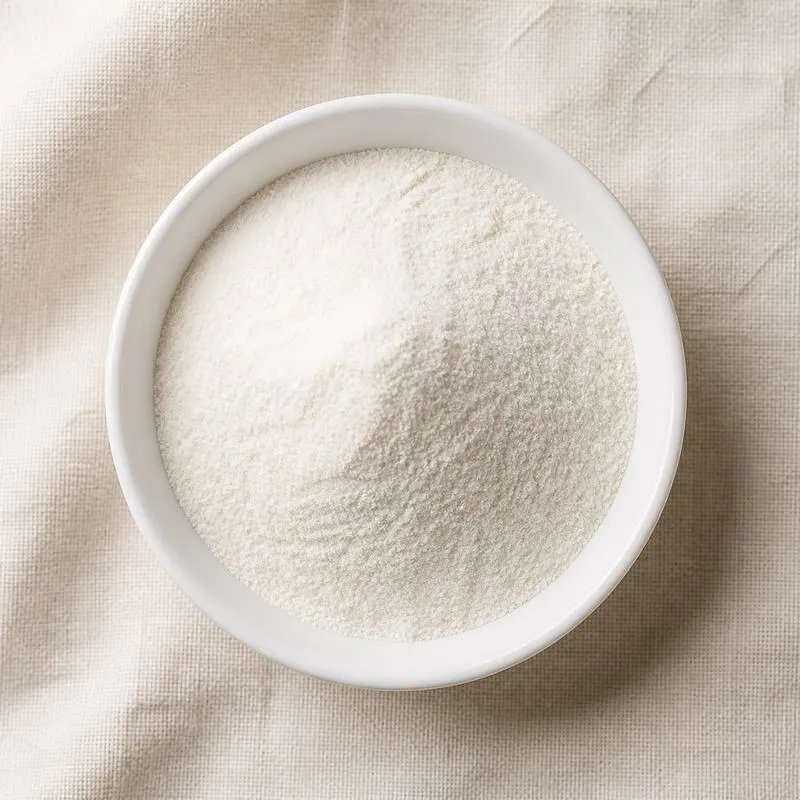
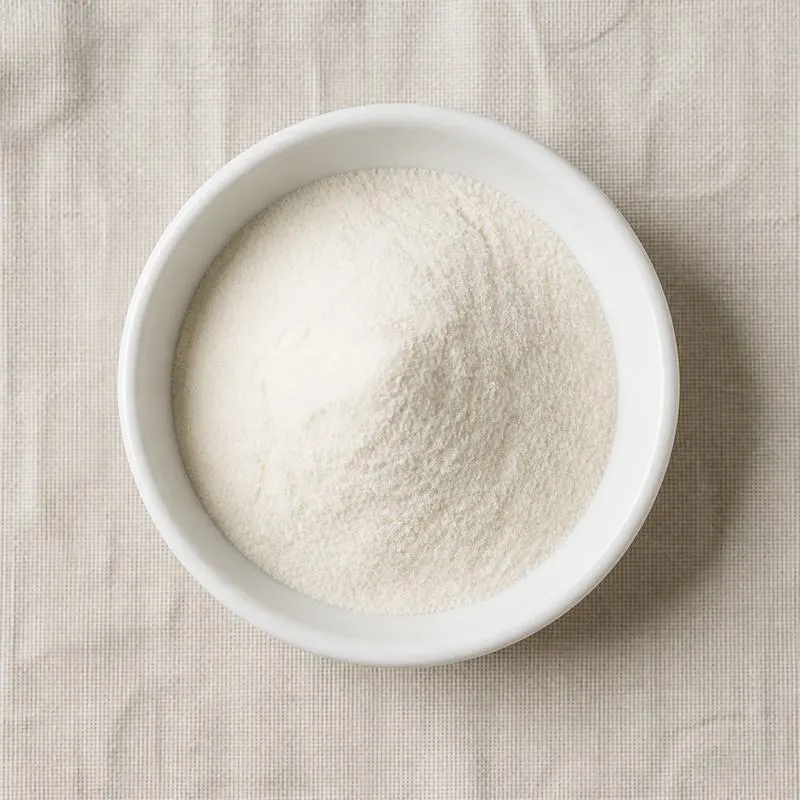
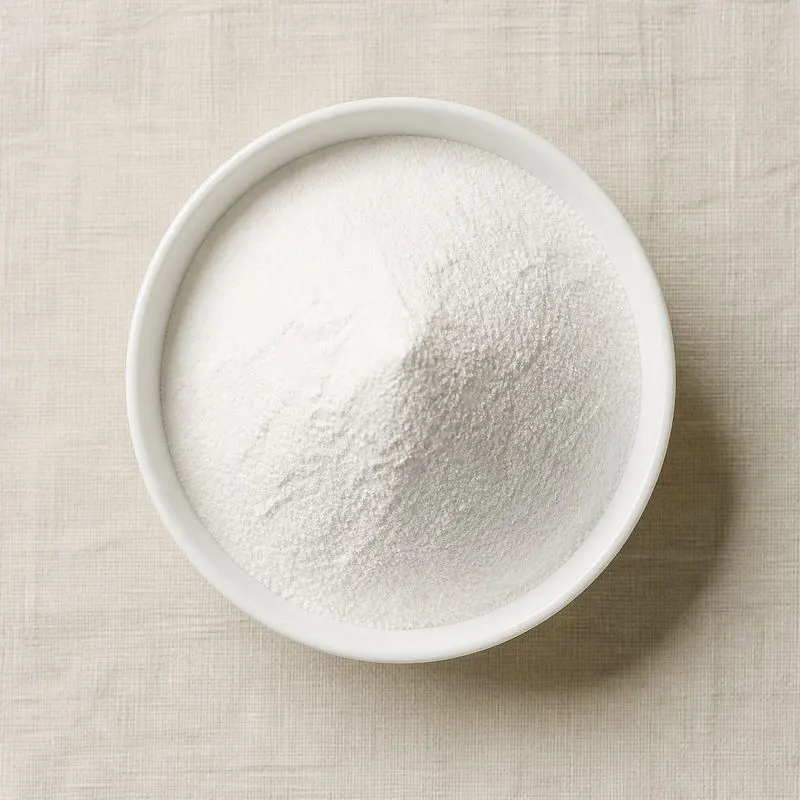
The material is a white to off-white fine powder that swells strongly in cold water and develops very high viscosity at low concentration, higher per unit weight than almost any other food hydrocolloid. Solutions are pseudoplastic, and the gum works synergistically with xanthan gum and with kappa carrageenan, forming gels with either that neither produces alone.
We source bulk Acid Stable High Transparency Konjac Gum from top China manufacturers for our partners. The manufacturer is in Hubei. A smaller requirement can ship in a combined container with other ingredients.
Please send the grade you need, the volume and your destination port, and we will come back with a solution and a price.
or call +86-21-6858 0751
- Function
- Thickener / Hydrocolloid
Specifications
| Item | Specification |
|---|---|
| Appearance | White to off-white fine powder, free of foreign matter |
| Odour and Taste | Odourless, bland, free of the fishy note of crude konjac |
| Identification | Positive for glucomannan on hydrolysis |
| Glucomannan, dry basis | Not less than 90.0% |
| Viscosity, 1% solution at 25 degrees Celsius | Not less than 30,000 mPa s |
| Light Transmittance, 1% solution at 660 nm | Not less than 90% |
| Viscosity Retention after acid hold at pH 3.5 | Not less than 85% |
| Loss on Drying | Not more than 10.0% |
| Total Ash, dry basis | Not more than 2.0% |
| Starch | Not more than 1.0% |
| Protein | Not more than 1.0% |
| Residual Ethanol | Not more than 0.1% |
| pH, 1% solution | 5.0 to 7.0 |
| Particle Size | Not less than 98% through 120 mesh |
| Sulphur Dioxide | Not more than 30 mg/kg |
| Lead | Not more than 1 mg/kg |
| Arsenic | Not more than 2 mg/kg |
| Total Plate Count | Not more than 5,000 CFU/g |
| Yeast and Mould | Not more than 500 CFU/g |
| Salmonella | Absent in 25 g |
Common Markets Grades
The two ordering specifications are viscosity, measured on a 1 percent solution and commonly running from 20,000 to 36,000 mPa s for purified grades, and light transmittance of a dilute solution, which is what the high transparency designation refers to. Acid stability is verified by a viscosity retention test after holding at a defined low pH and temperature, and is quoted as a percentage retained rather than as an assay.
Beyond these, grades are separated by glucomannan content, by particle size, with fine 120 to 200 mesh material used where fast hydration matters, and by whether the powder is instantised to prevent the lumping that neat konjac readily causes given how fast it swells. Ordinary konjac flour and refined konjac powder are lower purity products with lower transmittance and poorer acid tolerance and are traded separately at a lower price. Deacetylated and pre-gelled konjac, used to make the thermally irreversible gel directly, is a different product again.
Applications
- Acidified fruit jelly and dessert gels, holding viscosity where ordinary konjac flour would hydrolyse and thin
- Transparent jelly drinks and beverage jellies, where solution clarity is the whole point of the grade
- Acidic beverages and fruit juices, suspending pulp and particles at very low dose
- Konjac jelly sticks and cup jellies, giving the elastic chewy bite characteristic of the format
- Dressings, sauces and acidic condiments requiring stable viscosity over shelf life
- Ice cream and frozen desserts, controlling ice crystal growth and improving meltdown
- Meat and surimi products, binding water and firming the cooked gel
- Gel systems combined with xanthan gum or kappa carrageenan, using the synergy to build texture at low total gum
- Reduced calorie and satiety positioned products, using the very high water binding of glucomannan
- Plant based dairy and meat analogues, providing viscosity and bite from a single low dose ingredient
China Manufacturers of Acid Stable High Transparency Konjac Gum
Top Acid Stable High Transparency Konjac Gum manufacturers in China.
Company names and logos are the property of the manufacturers themselves. They are listed here because our own directory records them as producing this ingredient. A listing is not an endorsement by them, and we do not represent them or speak on their behalf.
Regulatory Status
In the United States konjac flour is used as a food ingredient under generally recognised as safe determinations covering its use as a thickener and stabiliser, and its status is documented in supplier notifications rather than by a single named regulation, so the specific determination relied upon should be confirmed on the supplier's certificate.
In the European Union konjac is authorised under the food additives regulation as E425, which covers konjac gum at E425 i and konjac glucomannan at E425 ii, with identity and purity criteria covering glucomannan content, loss on drying, ash, starch, protein and heavy metals. An important restriction applies: konjac is prohibited in the manufacture of jelly confectionery presented in mini-cup form and in jelly mini-cups generally, a measure introduced after choking incidents, and it may not be used in foods that could give rise to the same risk. Its use in foods for infants and young children is likewise restricted. Codex and JECFA recognise konjac flour as INS 425 with published specifications. Several markets outside the EU have adopted their own controls on konjac jelly piece size and firmness, so a formulator using this ingredient in a gel confectionery format should verify the rules of each market of sale.
Manufacturing Process
Harvested konjac corms are washed, sliced and dried, then milled so that the glucomannan-bearing storage cells, which are large and tough, separate from the starch and cell wall fragments, which are fine and friable. Air classification and screening recover the coarse glucomannan particles as crude konjac flour and reject the fine starch and fibre. That crude flour is the starting point for purification.
Purification is carried out by washing the flour in aqueous ethanol or isopropanol at a concentration high enough that the glucomannan swells but does not dissolve, so the polymer stays as a solid while starch, soluble protein, pigment, alkaloids and the bitter and odourous compounds dissolve and are washed away. Several successive wash stages are used, with agitation and separation on a centrifuge or filter between each, and the number of stages determines the transmittance and the acid stability of the finished product, since it is the residual protein and cell debris that both cloud the solution and catalyse hydrolysis. The washed cake is desolventised under vacuum at low temperature to avoid removing the acetyl groups, dried, and then milled in a pin or jet mill to the specified mesh. Solvent is recovered by distillation and recycled. Finished powder is sieved, tested for viscosity, transmittance and acid stability, and blended across batches to hold the specification.