African Mango Seed Extract
African mango seed extract is prepared from the kernel of Irvingia gabonensis, a West and Central African tree whose fruit resembles a mango but is unrelated to it botanically. The kernel, known locally as dika nut or ogbono, has a long history as a food thickener in West African cooking, and it is that thickening property that also explains its behaviour as a supplement ingredient.
The kernel is roughly 60 to 70 percent fat, dominated by myristic and lauric acid, with a substantial soluble fibre fraction of mucilaginous polysaccharide. Commercial extracts are made from defatted kernel and are essentially concentrated in that soluble fibre, which forms a viscous gel in water and slows gastric emptying, and it is on this basis that the ingredient is sold into weight management. There is no single marker compound, so extracts are specified on ratio, protein and fibre rather than on an assay.
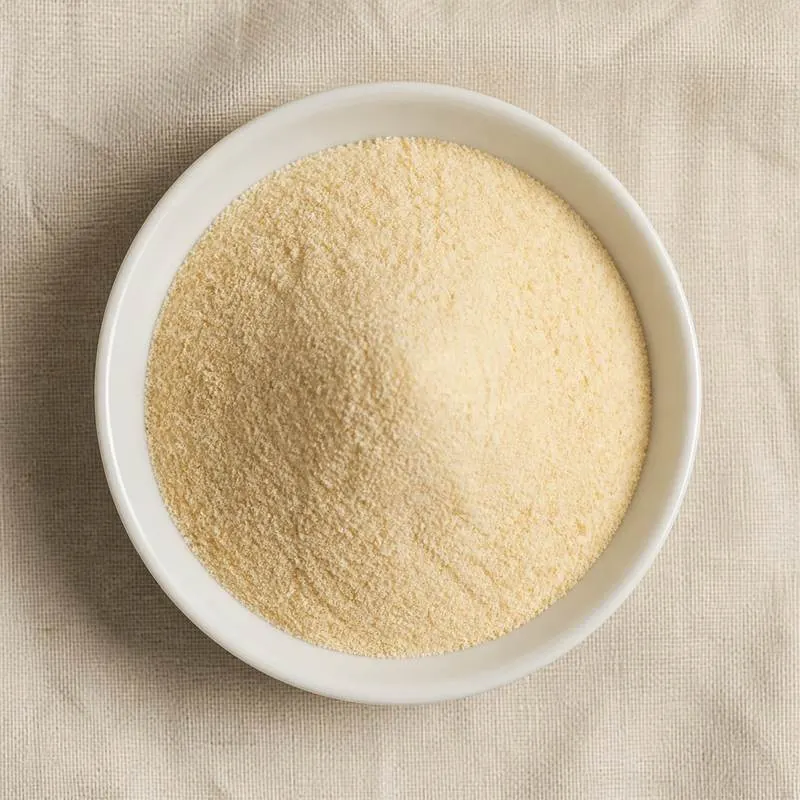
The powder is off-white to light beige with a faint nutty odour. It disperses in water rather than dissolving, forming a viscous mucilage at low concentration, and that viscosity is the practical formulation constraint: it limits how much can go into a drink before the texture becomes unacceptable.
We source bulk African Mango Seed Extract from top China manufacturers for our partners. The manufacturer is in Fujian. A smaller requirement can ship in a combined container with other ingredients.
Please send the grade you need, the volume and your destination port, and we will come back with a solution and a price.
or call +86-21-6858 0751
- Function
- Plant extract
Specifications
| Item | Specification |
|---|---|
| Appearance | Off-white to light beige powder with faint nutty odour |
| Botanical source | Defatted kernel of Irvingia gabonensis |
| Identification | Microscopic and chromatographic profile conform to reference material |
| Extract ratio | 10 to 1, water extracted |
| Soluble dietary fibre | 40.0 percent minimum |
| Protein (N x 6.25) | 10.0 percent minimum |
| Residual fat | 5.0 percent maximum |
| Loss on drying | 7.0 percent maximum |
| Total ash | 8.0 percent maximum |
| Total aflatoxins | 4.0 micrograms/kg maximum |
| Lead | 1.0 mg/kg maximum |
| Arsenic | 1.0 mg/kg maximum |
| Total plate count | 10000 cfu/g maximum |
| Salmonella | Absent in 25 g |
Common Markets Grades
The material is traded mainly as ratio extracts, commonly 10 to 1 and 4 to 1, made from defatted kernel by water or aqueous alcohol extraction. There is no accepted marker assay, so buyers should specify soluble dietary fibre content, protein, residual fat and viscosity in a standard test rather than relying on the ratio alone, which conveys little. Some suppliers quote a total polyphenol or ellagitannin figure, which is present but is not the functional basis of the ingredient.
Plain milled kernel flour is a separate and much cheaper product traded for food use, and it should not be confused with the defatted extract. Because Irvingia gabonensis is collected largely from wild and semi-wild trees, species authenticity is a real issue: adulteration with the related Irvingia wombolu and with unrelated starches and fillers has been documented, so a botanical identity test is worth requiring. Organic and fair trade certified lots are produced in modest volume.
Applications
- Weight management supplements in capsule and tablet form
- Appetite and satiety powders taken before meals
- Fibre blends combined with glucomannan, psyllium and inulin
- Meal replacement and shake formulations, dosed low to control viscosity
- Metabolic support formulas alongside chromium and green coffee
- Functional gummies and chews in the weight management category
- Traditional West African soups and stews, where milled kernel is the thickener
- Bakery and snack applications using kernel flour for texture
Brands Using African Mango Seed Extract
Widely-distributed consumer products that list African Mango Seed Extract on the ingredient label.
- Emerald LabsAfrican Mango ↗A vegetable capsule built on the Irvingia gabonensis seed extract IGOB131, the standardised African mango extract used in clinical work.Label verified 2026-08-31
- Hawaii PharmAfrican Mango (Irvingia Gabonensis) Extract, Seed ↗An alcohol free liquid extract whose ingredient list names African Mango (Irvingia gabonensis) dry seed with vegetable glycerin and water.Label verified 2026-08-31
Brand names, product names and logos are the property of their owners. They appear here as published evidence that the ingredient is used, taken from the brand's own label or website. Their appearance is not an endorsement, and it does not mean the brand buys from us or from any manufacturer listed on this site.
China Manufacturers of African Mango Seed Extract
Top African Mango Seed Extract manufacturers in China.
Company names and logos are the property of the manufacturers themselves. They are listed here because our own directory records them as producing this ingredient. A listing is not an endorsement by them, and we do not represent them or speak on their behalf.
Regulatory Status
In the United States Irvingia gabonensis seed extract is sold as a dietary ingredient in supplements. It has no food additive regulation and no general GRAS listing, and a supplier should be able to document the basis on which the extract qualifies, distinguishing the traditional food use of the whole kernel from a concentrated extract. The practical regulatory exposure in this category is claims rather than composition: the Federal Trade Commission and the FDA have both taken action against unsubstantiated weight loss marketing, and structure and function claims must be substantiated and carry the standard disclaimer.
In the European Union the kernel does not have an established history of significant consumption before May 1997, so Irvingia gabonensis preparations would be expected to require authorisation under the novel food framework before being placed on the market as food or food supplement ingredients. There is no E number, and health claims relating to body weight are not authorised. Codex has not adopted a specification for this material; the general Codex provisions on contaminants and hygiene for oilseeds and tree nuts apply, and aflatoxin control on the dried kernel is the main concern given the tropical origin and the oil content.
Manufacturing Process
Fruit is collected and the pulp removed to recover the stone, which is cracked to release the kernel. Kernels are cleaned, sorted and dried in warm air to a low moisture content, since the high fat content makes damp kernel prone to rancidity and mould. Dried kernel is milled and then defatted, either by screw pressing, which leaves a residual fat of around 8 to 12 percent, or by solvent extraction with a light hydrocarbon, which takes it below 2 percent, and the recovered dika fat is sold separately into food and cosmetic use.
The defatted meal is the extraction feedstock. It is extracted with water or dilute aqueous ethanol at moderate temperature, which takes the soluble mucilaginous polysaccharide and the soluble protein into solution while the insoluble fibre and residual solids remain. The slurry is separated by decanter centrifuge and filtration, and the liquor is concentrated under vacuum at low temperature, since prolonged heat degrades the polysaccharide and reduces the viscosity that gives the extract its function. The concentrate is spray dried at a controlled outlet temperature, milled to the specified particle size, sieved and packed in moisture barrier bags, because the powder is hygroscopic and will cake.