Lauric Acid
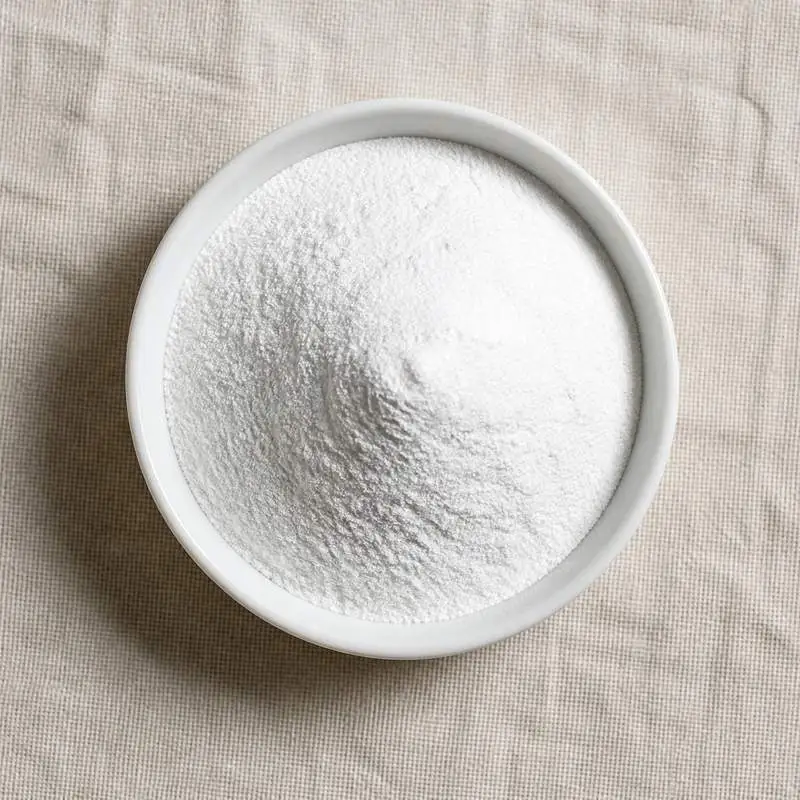
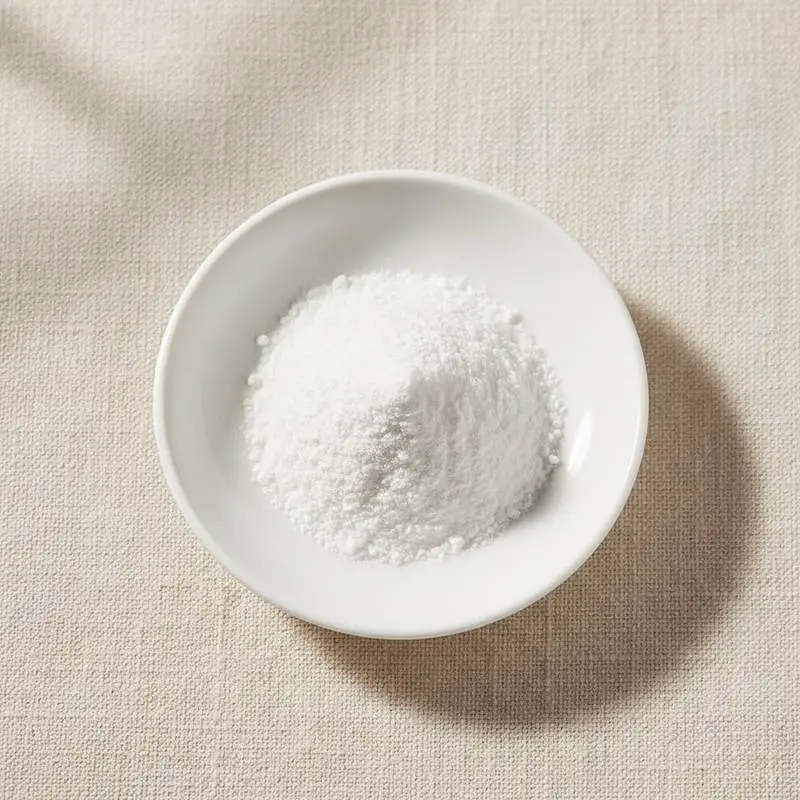
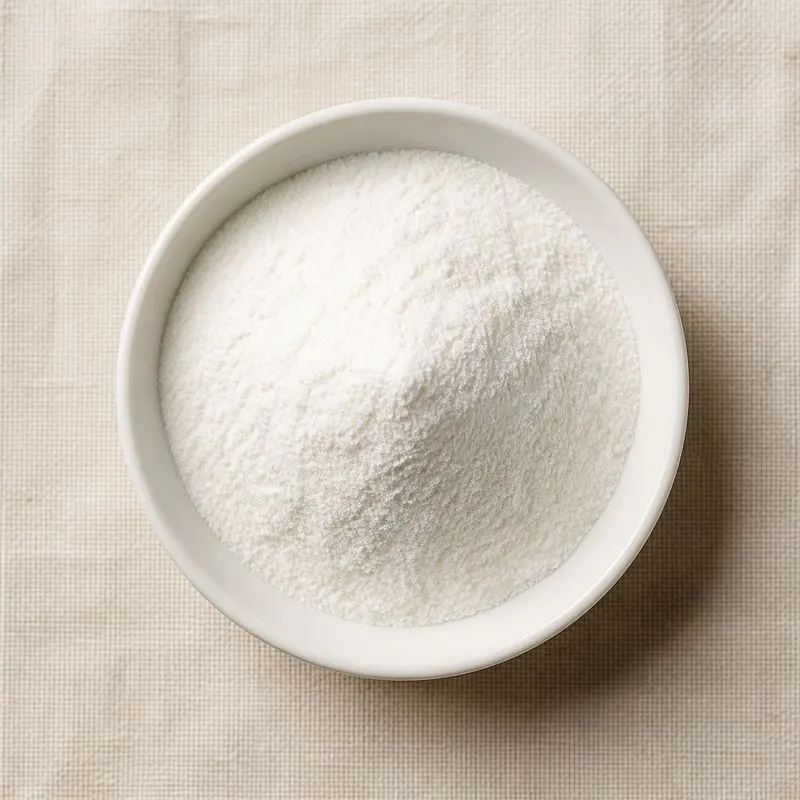
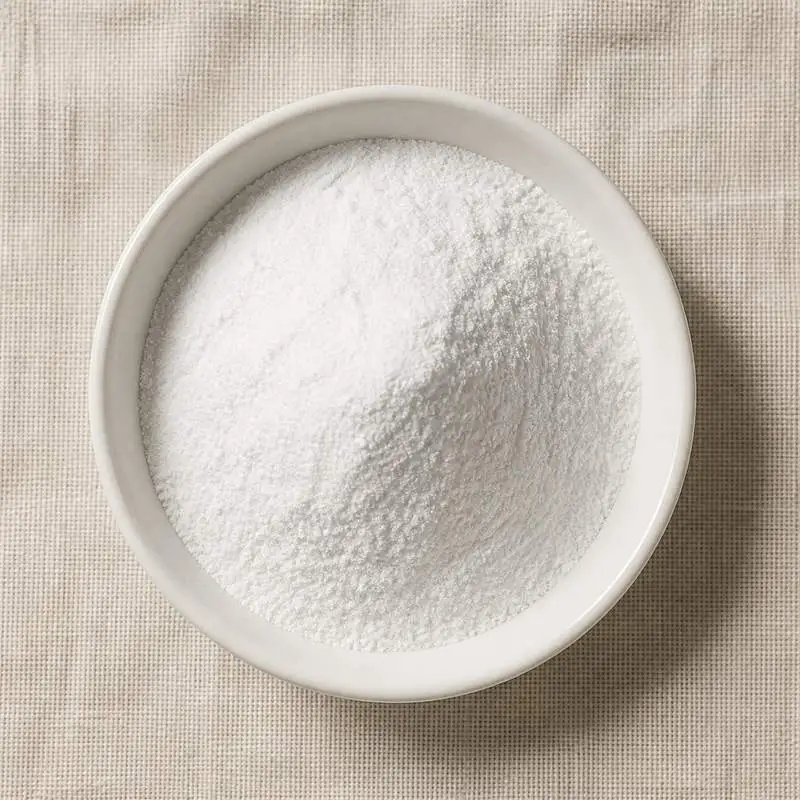
Lauric acid is dodecanoic acid, a saturated straight-chain fatty acid of twelve carbon atoms, and it is the principal fatty acid of coconut oil and palm kernel oil, where it makes up roughly half of the total fatty acids. It arrives as white waxy flakes, beads or powder with a faint fatty odour, melting at about 44 degrees Celsius, which places it between the liquid short chain acids and the hard solid stearic and palmitic acids.
In food and nutraceutical use it functions in two distinct ways. As a raw material it is the feedstock for lauric esters, monolaurin, sorbitan and polyglycerol emulsifiers and for the sodium and calcium laurates, and as an ingredient in its own right it contributes to melting behaviour in fat blends and provides a medium chain saturated fatty acid in nutritional lipids. Monolaurin, its glycerol monoester, is the form used for antimicrobial effect against Gram positive bacteria and lipid-enveloped viruses.
The acid is practically insoluble in water and freely soluble in ethanol, chloroform and hot oils and fats. It is chemically stable, resistant to oxidation because it is fully saturated, and it sublimes slowly at elevated temperature under vacuum, which is what makes fractional distillation the standard purification. In contact with alkali it forms laurate soaps readily, and in the presence of moisture and base it will saponify triglycerides in a blend, so it is kept away from strongly alkaline materials.
We source bulk Lauric Acid from top China manufacturers for our partners. The manufacturer is in Shanghai. A smaller requirement can ship in a combined container with other ingredients.
Please send the grade you need, the volume and your destination port, and we will come back with a solution and a price.
or call +86-21-6858 0751
- Function
- Nutraceutical
Specifications
| Item | Specification |
|---|---|
| Appearance | White waxy flakes, beads or powder |
| Odour | Faint characteristic fatty odour, free from rancidity |
| Assay, C12 content by gas chromatography | Not less than 98.0 percent |
| Identification | Gas chromatographic profile corresponds to reference standard |
| Acid value | 274 to 281 mg KOH/g |
| Saponification value | 275 to 283 mg KOH/g |
| Iodine value | Not more than 0.5 g iodine per 100 g |
| Titre, solidification point | 42.0 to 44.5 degrees Celsius |
| Colour, platinum-cobalt on melted sample | Not more than 50 |
| Moisture | Not more than 0.2 percent |
| Heavy metals | Not more than 10 mg/kg |
| Lead | Not more than 2.0 mg/kg |
| Arsenic | Not more than 1.0 mg/kg |
| Nickel, residual from processing | Not more than 1.0 mg/kg |
Common Markets Grades
Grades are defined chiefly by chain length purity. Technical lauric acid at 90 to 92 percent C12 is the bulk article for soap, surfactant and chemical use, while food and pharmaceutical grades run at 98 to 99 percent C12 with the rest mostly C10 and C14 homologues. Higher fractionated grades above 99 percent are made for ester synthesis where residual chain length affects the properties of the finished emulsifier. Iodine value, acid value, saponification value and colour on the Lovibond or platinum-cobalt scale are the routine specification points, together with titre, the solidification temperature, which reflects the chain length distribution.
Physical form is offered as flake, bead or prill, powder, and as a molten bulk liquid delivered in heated road tankers for large ester plants. Origin is a specification point in its own right, coconut versus palm kernel, with segregated and certified sustainable palm kernel material sold where the buyer requires a chain of custody claim. Kosher and halal certification is routinely available, and a vegetable-only declaration matters because lauric acid can in principle be produced from non-vegetable fats.
Applications
- Feedstock for monolaurin and glycerol monolaurate, used as an antimicrobial in beverages, sauces and cosmetics
- Manufacture of sorbitan and polysorbate emulsifiers, where the laurate chain gives the higher hydrophilic-lipophilic balance grades
- Production of polyglycerol esters and sucrose esters for bakery and beverage emulsification
- Calcium and magnesium laurate manufacture, used as release agents and anticaking aids
- Confectionery coating fats, lauric hardstock giving the sharp melting profile of compound coatings
- Medium chain nutritional lipid blends and structured triglycerides for clinical and sports nutrition
- Defoaming agents for fermentation, sugar processing and yeast production
- Lubricant and release agent in tablet and capsule manufacture, mainly as its metallic salts
- Flavour ester synthesis, ethyl and methyl laurate contributing creamy and waxy notes
- Animal feed additive blends, where lauric acid and its monoglyceride are used for gut microbial control
Brands Using Lauric Acid
Widely-distributed consumer products that list Lauric Acid on the ingredient label.
- MedicubeZero Foam Cleanser ↗A foaming facial cleanser whose ingredient list names lauric acid alongside myristic, palmitic and stearic acid as the saponified fatty acid base.Label verified 2026-08-31
- Carrington FarmsOrganic MCT Oil ↗A coconut derived MCT oil whose product copy states it is high in lauric, caprylic and capric acid.Label verified 2026-08-31
Brand names, product names and logos are the property of their owners. They appear here as published evidence that the ingredient is used, taken from the brand's own label or website. Their appearance is not an endorsement, and it does not mean the brand buys from us or from any manufacturer listed on this site.
China Manufacturers of Lauric Acid
Top Lauric Acid manufacturers in China.
Company names and logos are the property of the manufacturers themselves. They are listed here because our own directory records them as producing this ingredient. A listing is not an endorsement by them, and we do not represent them or speak on their behalf.
Regulatory Status
In the United States 21 CFR 182.60 lists lauric acid as a substance generally recognised as safe for use as a synthetic flavouring substance and adjuvant, and a number of indirect additive regulations permit fatty acids including lauric acid as components of food-contact and food-processing materials. It also appears as a permitted component in the regulations covering ingredients such as defoaming agents. Its principal derivatives, including sorbitan monolaurate and polysorbate 20, are separately regulated as direct food additives with their own use conditions and limits.
In the European Union fatty acids hold authorisation as a food additive under the number E 570, covering lauric acid among the other members of the group, and Regulation (EC) No 1333/2008 sets their conditions of use with purity criteria in Regulation (EU) No 231/2012, where the specification addresses acid value, iodine value, residue on ignition and heavy metals. E 570 is used chiefly as an anticaking agent, glazing agent and defoamer. Codex Alimentarius includes fatty acids in the General Standard for Food Additives under the same functional classes, and JECFA has evaluated fatty acids as a group and established specifications for them in the Compendium of Food Additive Specifications.
Manufacturing Process
Manufacture begins with crude coconut or palm kernel oil, which is refined and then split. In continuous high pressure hydrolysis, the oil is contacted with water in counter current flow in a splitting column at around 250 degrees Celsius and 50 bar, which cleaves the triglycerides into a mixed fatty acid stream and a sweetwater glycerine stream. The glycerine is drawn off for separate refining, and the crude mixed acids are flashed to remove water.
The mixed acids then pass to fractional distillation, the step that actually defines the product. A train of vacuum distillation columns operating at a few millibar separates the acids by chain length: the C8 and C10 fraction goes overhead, the C12 lauric cut is taken as a side or overhead stream at its own boiling range, and the C14 to C18 fraction stays behind as bottoms. The lauric cut is redistilled where a 99 percent grade is required, and it may be bleached with acid-activated earth and deodorised under steam to meet colour and odour specification. Finished acid is either held molten in heated tanks or crystallised and shaped on a flaker drum, prilling tower or pastillator, then screened and packed in multiwall bags or bulk sacks.