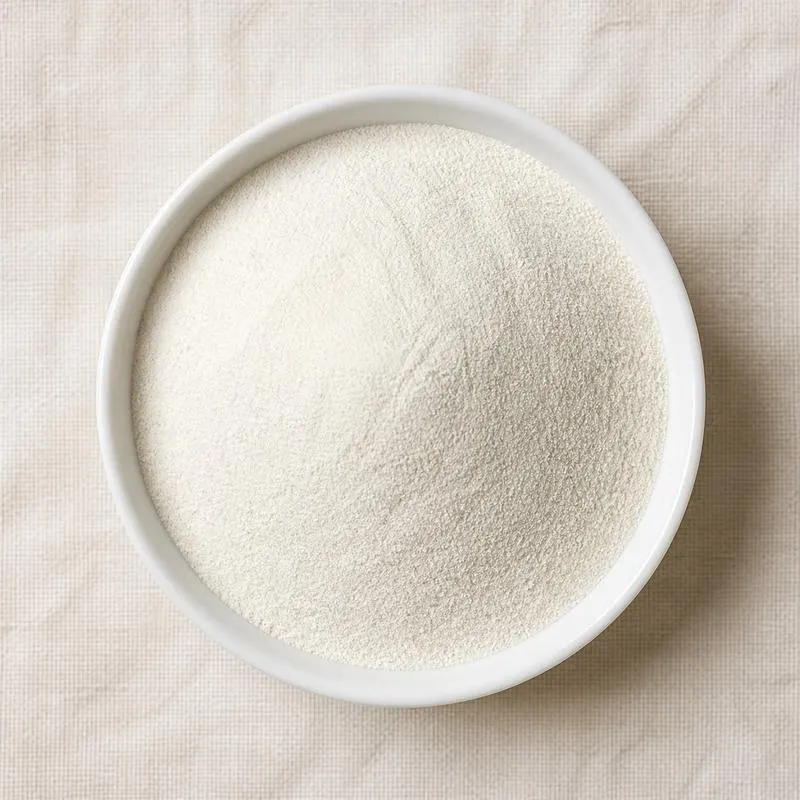
Beef Flavoring
Beef flavouring is a compounded flavour built to reproduce the aroma of cooked beef. Most commercial material is a thermal process or reaction flavour rather than a simple blend: the manufacturer reruns, under controlled conditions, the same Maillard chemistry that occurs when meat is roasted or stewed, using hydrolysed protein, reducing sugars, sulphur bearing amino acids and beef fat as the starting materials.
The character rests on a small group of sulphur compounds. 2 methyl 3 furanthiol and its disulphide give the boiled and roast meat core, methional supplies a savoury potato note, and pyrazines contribute the roasted top. Long chain aldehydes from the fat, notably 12 methyltridecanal, are what make the profile recognisably beef rather than generic meat, and the lipid fraction is therefore as important to species identity as the reaction fraction. Glutamate and ribonucleotides are frequently present to carry the taste side alongside the aroma.
Supply forms are viscous paste, liquid in propylene glycol, water or oil, and spray dried powder. Paste and powder are the industrial norm. The sulphur compounds are potent at parts per billion but oxidise readily, so material is packed with minimal headspace and held cool.
We source bulk Beef Flavoring from top China manufacturers for our partners. The manufacturer is in Guangdong. A smaller requirement can ship in a combined container with other ingredients.
Please send the grade you need, the volume and your destination port, and we will come back with a solution and a price.
or call +86-21-6858 0751
- Function
- Flavours and Aromas
Specifications
| Item | Specification |
|---|---|
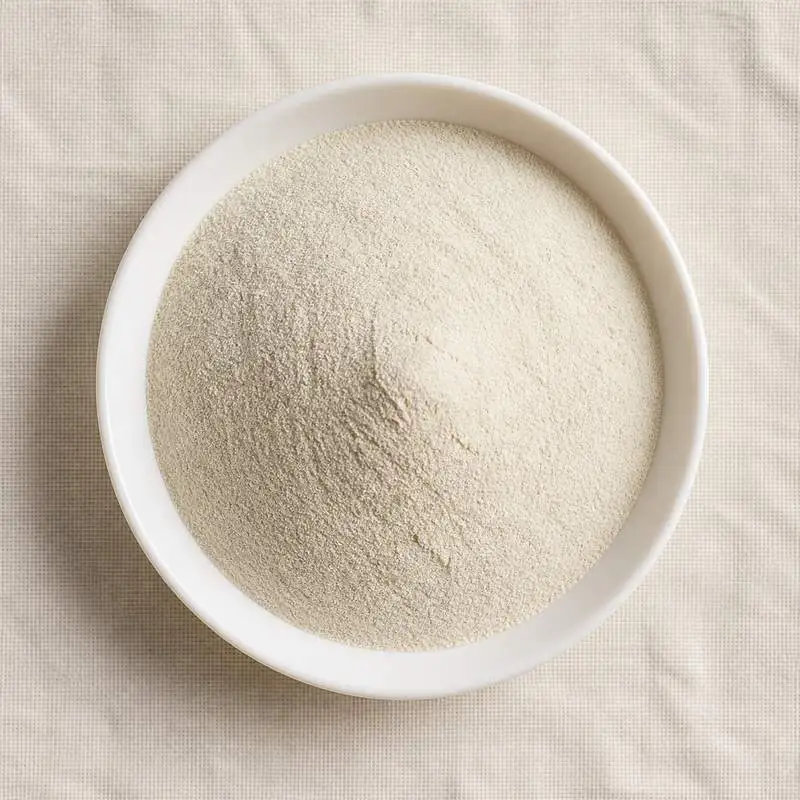
| Appearance | Brown viscous paste or free flowing tan powder as declared |
| Odour and flavour | Characteristic cooked beef, conforms to retained standard |
| Identification | Gas chromatographic profile matches reference batch |
| Moisture, powder grades | Not more than 5.0 percent |
| Moisture, paste grades | Not more than 25.0 percent |
| Total nitrogen | To formula, reported on every batch |
| Salt, as sodium chloride | To formula, within plus or minus 2.0 percent absolute |
| pH, 1 percent aqueous solution | 5.0 to 6.5 |
| Lead | Not more than 1.0 mg per kg |
| Arsenic | Not more than 1.0 mg per kg |
| Total plate count | Not more than 10000 cfu per g |
| Yeast and mould | Not more than 100 cfu per g |
| Escherichia coli | Absent in 1 g |
| Salmonella | Absent in 25 g |
Common Markets Grades
Grades split first by how the flavour is made and therefore how it can be labelled. Reaction flavours produced from natural substrates under the conditions permitted for thermal process flavourings can generally be described as natural in most markets. Compounded versions built from individually synthesised aroma chemicals are stronger and more reproducible but carry an artificial or nature identical declaration. Halal, kosher and vegetarian versions replace the beef fat and meat extract with plant derived lipid and yeast or vegetable protein hydrolysate, and are traded as a separate line.
Physically the market divides into paste, at high solids and typically the most authentic profile, liquid, chosen for wet dosing into a brine or a soup kettle, and spray dried powder on a maltodextrin or modified starch carrier, chosen for dry blends and dusting. Strength is quoted as a recommended dosage, commonly 0.2 to 2 percent in a finished soup or seasoning, rather than as an assay, and top note grades intended to be added late are sold alongside body grades intended to go in before cooking.
Applications
- Instant noodle soup sachets and seasoning oils, where a beef profile has to survive both drying and reconstitution
- Bouillon cubes, stock powders and liquid stocks
- Retorted soups, sauces and ready meals, where a heat stable body grade is dosed before sterilisation
- Meat products such as sausage, burgers and reformed steaks, where it standardises flavour across variable raw material
- Marinades and injection brines for cooked and roast beef
- Savoury snack seasonings applied by tumble drum to crisps and extruded products
- Meat analogues based on soya, pea or wheat protein, where the flavour supplies the species identity the protein lacks
- Gravy mixes, hot pot bases and dipping sauces
- Pet food palatants and coatings, formulated to the acceptance profile of dogs and cats
- Frozen and chilled convenience products where cooking time is too short to develop meat aroma naturally
China Manufacturers of Beef Flavoring
Top Beef Flavoring manufacturers in China.
Company names and logos are the property of the manufacturers themselves. They are listed here because our own directory records them as producing this ingredient. A listing is not an endorsement by them, and we do not represent them or speak on their behalf.
Regulatory Status
In the United States a beef reaction flavour is treated as a flavouring rather than as a food additive with its own listing, and each component must be a permitted flavouring ingredient: a synthetic flavouring substance under 21 CFR 172.515, a GRAS flavouring under 21 CFR 182.60, a spice or natural extractive under 21 CFR 182.10 and 182.20, or an independently determined GRAS substance such as those on the FEMA GRAS list. Hydrolysed protein, yeast extract and monosodium glutamate each have their own status and must be declared by name. Where the flavour contains meat derived material, the finished product may fall under USDA Food Safety and Inspection Service labelling jurisdiction rather than FDA. Declaration as natural or artificial flavour follows 21 CFR 101.22.
In the European Union thermal process flavourings are a defined category within Regulation (EC) No 1334/2008, which sets out the production conditions they must meet, including limits on reaction temperature and time, and specifies the substances that must not exceed stated levels in the finished flavouring. Flavourings produced within those conditions from food materials may be described as natural. Additives such as glutamate, ribonucleotides and anticaking agents must be authorised under Regulation (EC) No 1333/2008, and allergenic components including soya, wheat, milk and celery must be declared under Regulation (EU) No 1169/2011. Codex Alimentarius sets general principles for the use of flavourings rather than a compositional standard for reaction flavours.
Manufacturing Process
Manufacture centres on a reaction step. Hydrolysed vegetable or animal protein, yeast extract, a reducing sugar such as xylose or glucose, cysteine or cystine, thiamine and rendered beef fat are weighed into a jacketed pressure reactor with water. The batch is brought to a controlled pH, usually mildly acidic, and heated to roughly 100 to 130 degrees Celsius for between thirty minutes and several hours under agitation. Time, temperature and pH are the levers that shift the profile between boiled, stewed and roasted character, and the reaction is stopped by rapid cooling once the target sensory endpoint is reached.
The cooled reaction mass is standardised by blending in salt, glutamate, ribonucleotides and top note aroma chemicals that would not survive the cook. Paste grades are homogenised, pasteurised and filled hot into pails or drums. Powder grades are diluted to a spray dryable solids level, emulsified with the fat fraction, homogenised at high pressure and spray dried in a co current tower, giving an encapsulated granule that is sieved, agglomerated where a wetting powder is needed, and packed in a foil laminate. Every batch is released against a retained sensory standard as well as against the instrumental specification.