Black Cocoa
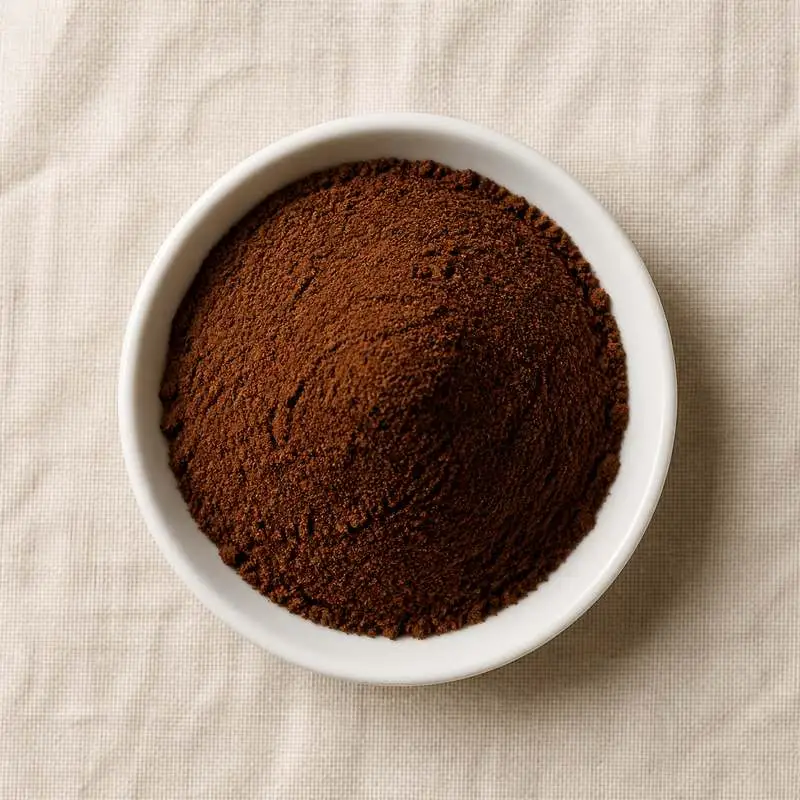
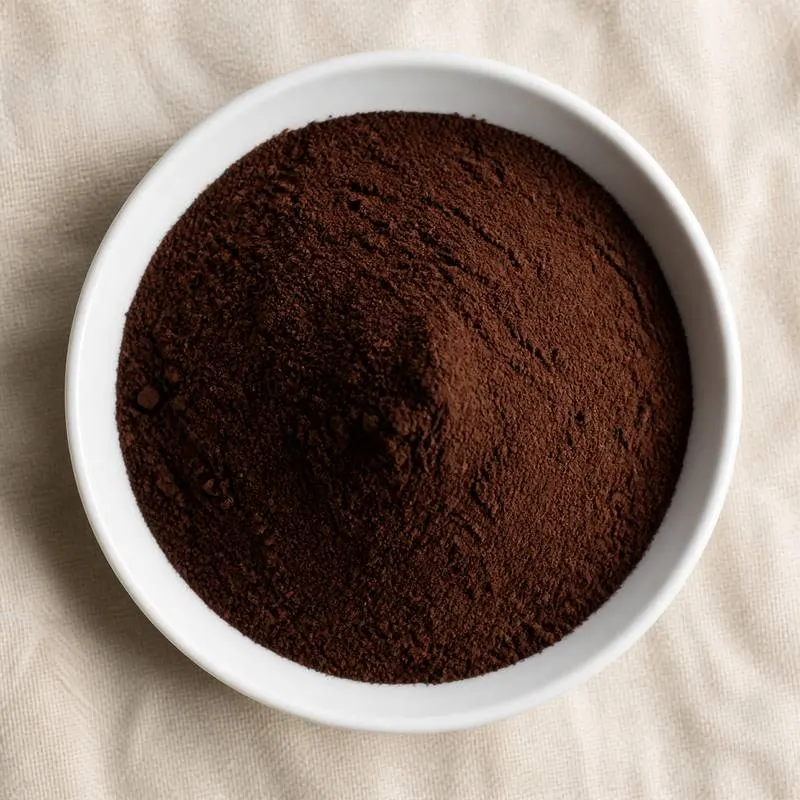
Black cocoa is a cocoa powder taken through an unusually heavy alkalisation, so that its colour shifts from red brown to a near black and its pH rises well above that of natural cocoa.
Chemically the process is the same Dutch treatment used for ordinary alkalised cocoa, pushed much further. Potassium carbonate reacts with the polyphenols and flavanols of the cocoa solids, and the oxidation and condensation of those phenolics is what produces the intense dark pigment. The finished powder normally sits between pH 7.5 and 8.5 and contains 10 to 12 percent cocoa butter, at the low end of the fat range for cocoa powders. Flavour moves in the opposite direction to colour: the acidity, fruitiness and bitterness of natural cocoa are largely stripped out, leaving a smooth, faintly ashy, distinctly biscuit like character.
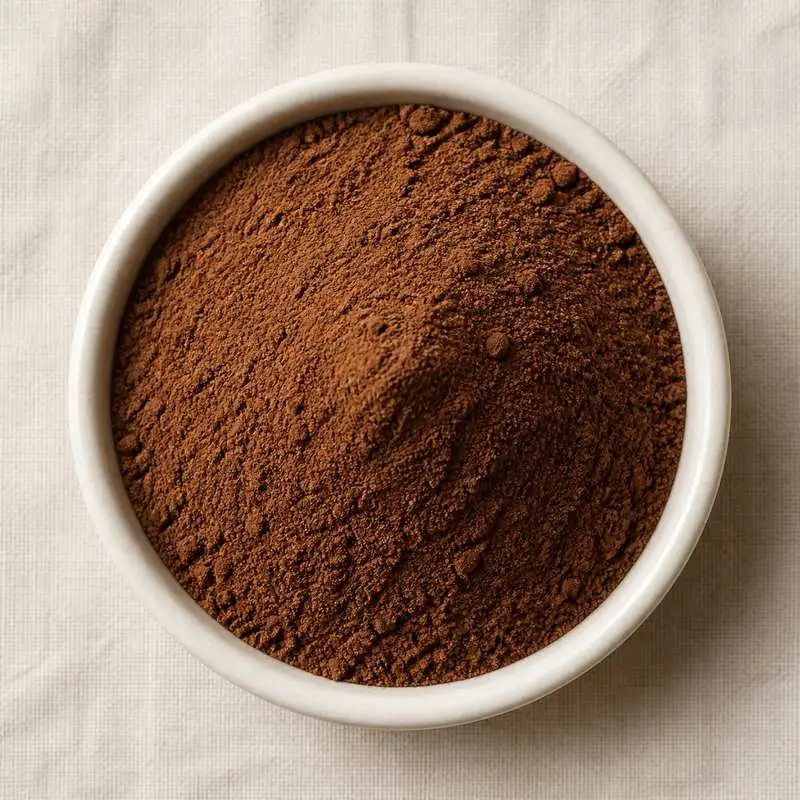
It is a fine free flowing powder that disperses easily in water at neutral or alkaline pH and has better suspension stability than natural cocoa. Because most of the acid has been neutralised, black cocoa contributes almost nothing to chemical leavening reactions, so formulas relying on cocoa acidity have to be rebalanced.
We source bulk Black Cocoa from top China manufacturers for our partners. The manufacturers are in Jiangsu. A smaller requirement can ship in a combined container with other ingredients.
Please send the grade you need, the volume and your destination port, and we will come back with a solution and a price.
or call +86-21-6858 0751
- Function
- Beverage ingredient
Specifications
| Item | Specification |
|---|---|
| Appearance | Fine free flowing powder, free from lumps and foreign matter |
| Colour | Black to very dark brown, matching approved reference |
| Flavour and odour | Smooth alkalised cocoa, no burnt, smoky or mouldy note |
| Cocoa butter | 10.0 to 12.0 percent |
| pH, 10 percent suspension | 7.5 to 8.5 |
| Moisture | 5.0 percent maximum |
| Ash | 12.0 percent maximum |
| Fineness | 99 percent through 200 mesh |
| Shell content | 1.75 percent maximum on fat free basis |
| Lead | 0.5 mg/kg maximum |
| Cadmium | 0.6 mg/kg maximum |
| Total plate count | 5,000 cfu/g maximum |
| Yeast and mould | 50 cfu/g maximum |
| Salmonella | Negative in 25 g |
Common Markets Grades
Black cocoa is traded chiefly on fat content and on colour depth. The standard grade is a low fat powder at 10 to 12 percent cocoa butter, with a reduced fat version at 8 to 10 percent used where the formula supplies fat from elsewhere. Colour is specified either by a supplier colour standard or by instrumental measurement, with L values typically below 20, and buyers usually approve against a retained physical reference rather than a number alone.
Alkalisation level itself is a grade parameter, expressed as the pH of a water suspension. Powders at the higher end of the range are blacker but flatter in flavour, so many bakeries buy a blend of black cocoa and a medium alkalised cocoa to recover chocolate character while keeping the colour. Fineness is usually specified as 99 percent through 200 mesh. Colour stabilised and free flowing agglomerated versions are available for dry mix dosing.
Applications
- Sandwich cookies of the dark wafer type, where black cocoa supplies the colour that defines the product
- Cookie crumb bases for cheesecakes and ice cream, where a deep colour is needed without added colouring
- Chocolate cake and cupcake bases, blended with natural cocoa to keep chocolate flavour
- Ice cream and frozen dessert bases requiring a black or very dark brown appearance
- Cookies and cream style inclusions and variegates, as the dark particulate
- Bakery coatings and compound glazes, where the powder darkens the coating without extra fat
- Extruded cereals and snacks, where the alkaline pH survives the extruder without colour loss
- Beverage powders and chocolate drink mixes needing a dark cup colour
- Colour adjustment in blended cocoa systems, dosed at low levels to deepen shade
Brands Using Black Cocoa
Widely-distributed consumer products that list Black Cocoa on the ingredient label.
Brand names, product names and logos are the property of their owners. They appear here as published evidence that the ingredient is used, taken from the brand's own label or website. Their appearance is not an endorsement, and it does not mean the brand buys from us or from any manufacturer listed on this site.
China Manufacturers of Black Cocoa
Top Black Cocoa manufacturers in China.
- Wuxi Goldenhoo Food Co., Ltd.2 ingredients in the directory
 Wuxi Xinjingyuan Food Technology Co., Ltd.4 ingredients in the directory
Company names and logos are the property of the manufacturers themselves. They are listed here because our own directory records them as producing this ingredient. A listing is not an endorsement by them, and we do not represent them or speak on their behalf.
Regulatory Status
Cocoa powder including alkalised and heavily alkalised grades is a food ingredient rather than an additive and carries no E number. In the United States the standards of identity at 21 CFR Part 163 cover cocoa products, define breakfast cocoa, cocoa and low fat cocoa by cocoa butter content and expressly allow treatment with a permitted alkali under a defined maximum. The label must state that the cocoa has been processed with alkali.
In the European Union Directive 2000/36/EC governs cocoa and chocolate products, and Regulation 1333/2008 permits the alkalising agents used as processing aids and additives. Codex maintains a standard for cocoa powders and dry cocoa sugar mixtures that similarly sets fat categories and permits alkalisation. Contaminant limits that matter in practice are cadmium, which the European Union regulates specifically for cocoa powder sold to the final consumer, and polycyclic aromatic hydrocarbons arising from roasting. Ochratoxin A monitoring is routine on incoming beans.
Manufacturing Process
Cleaned and sorted cocoa beans are roasted, cracked and winnowed to separate the nib from the shell. The nib is alkalised at this stage in most black cocoa production, treated with a potassium carbonate solution in a heated reactor under controlled moisture, temperature and time, and the severity of that treatment is what distinguishes black cocoa from standard Dutch cocoa. The nib is then dried back and ground into cocoa liquor by a series of mills.
Liquor is fed to hydraulic presses, where cocoa butter is expressed through fine screens under high pressure and the remaining solids leave as a hard press cake. The cake is broken, pulverised, and classified in an air mill, then stabilised through a controlled cooling and tempering step so that the residual butter crystallises in a stable form and the powder does not lump in storage. Where alkalisation is carried out on the cake or on the liquor rather than the nib, the sequence changes but the chemistry is the same. The finished powder is sifted, passed through magnets and a metal detector, and packed in lined multiwall bags.