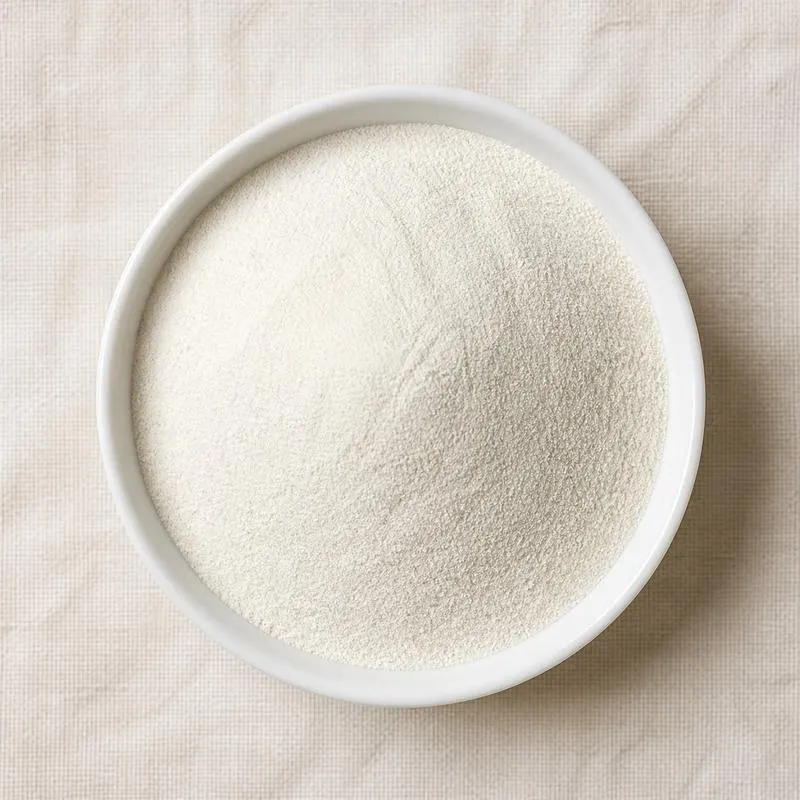
Chicken Powder Seasoning
Chicken powder seasoning is a dry savoury blend that reconstitutes into a chicken stock or seasons a dish directly, built around spray dried chicken broth or chicken meat powder together with salt, chicken fat, dried vegetables, spice and flavour enhancers. It is the powder equivalent of a bouillon cube, made without the compression and fat binding steps that the cube format requires.
Its savoury character comes from three layers that behave differently. The dried broth and meat powder carry peptides, free amino acids and nucleotides that give body and depth, the added flavour enhancers multiply that intensity, and the chicken fat and compounded flavour supply the volatile aroma that dried broth loses during spray drying. Because the aroma layer is the fragile one, powders are formulated with more of it than the finished taste would suggest, to allow for losses in storage and in cooking.
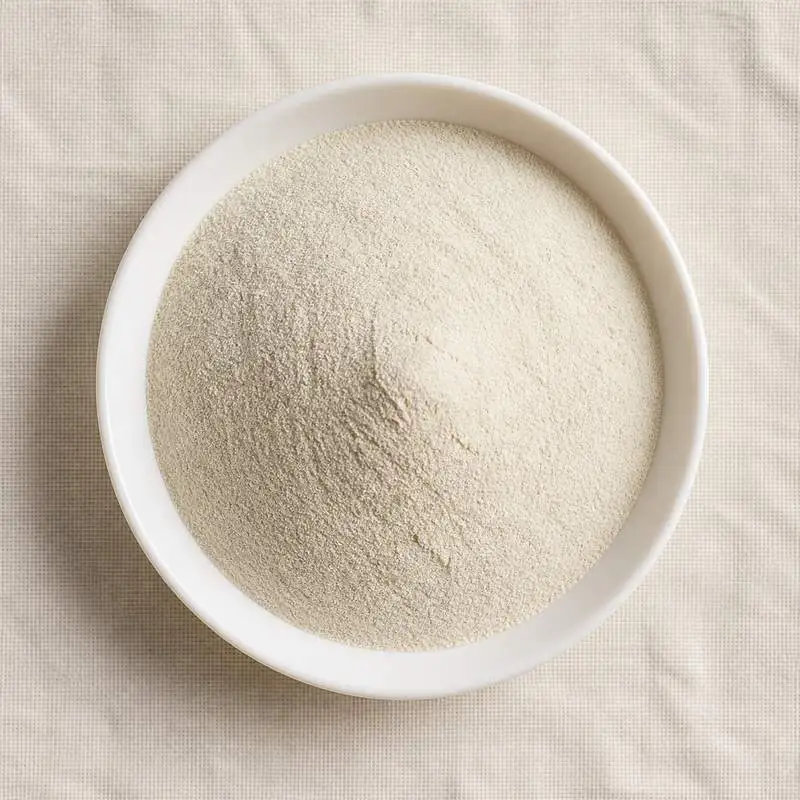
The product is a free flowing pale yellow to light tan powder, hygroscopic, and containing enough fat to make it prone to caking if it warms in storage. It disperses in hot water within a minute or two with stirring and only slowly in cold water, since the fat has to melt before the powder wets fully. Particle size and bulk density are specified because they decide both dissolution and how the powder behaves in a filling machine.
We source bulk Chicken Powder Seasoning from top China manufacturers for our partners. The manufacturer is in Shandong. A smaller requirement can ship in a combined container with other ingredients.
Please send the grade you need, the volume and your destination port, and we will come back with a solution and a price.
or call +86-21-6858 0751
- Function
- Flavours and Aromas
Specifications
| Item | Specification |
|---|---|
| Appearance | Free flowing pale yellow to light tan powder, free from lumps |
| Odour and taste on reconstitution | Characteristic chicken broth, matching retained standard |
| Moisture | 5.0 percent maximum |
| Salt as sodium chloride | To declared value, typically 40 to 60 percent |
| Total fat | To declared value, typically 3 to 12 percent |
| Total nitrogen, dry basis | 1.5 percent minimum |
| Particle size | 95 percent minimum through 40 mesh |
| Bulk density | Within agreed range for the grade |
| pH, 10 percent solution | 5.5 to 7.0 |
| Dissolution in water at 90 degrees Celsius | Complete within 2 minutes with stirring |
| Peroxide value of extracted fat | 5 milliequivalent oxygen per kg maximum |
| Lead | 1 mg per kg maximum |
| Arsenic | 0.5 mg per kg maximum |
| Total plate count | 10000 cfu per gram maximum |
| Yeast and mould | 100 cfu per gram maximum |
| Salmonella | Absent in 25 grams |
Common Markets Grades
Grades separate on chicken content and on the ratio of real broth solids to flavour enhancer. High chicken grades carry a substantial proportion of spray dried broth, meat powder and rendered fat and are sold on their meat content, while economy grades reach a comparable intensity from salt, monosodium glutamate, ribonucleotides and a compounded chicken flavour with only a token dose of poultry solids. Salt level is declared separately and is usually the largest single component.
Beyond composition, grades divide by application. Soup and stock grades are formulated to dissolve completely and give a clear or lightly clouded broth, while topical seasoning grades are milled finer, treated with a flow agent and formulated to adhere to a snack surface. Reduced sodium versions substitute potassium chloride and rebalance for its bitterness, clean label lines replace added enhancers with yeast extract and concentrated broth, and vegetarian chicken style seasonings rebuild the profile from plant protein and vegetable fat with no poultry component. Halal and kosher certified lines are produced on segregated equipment where the fat and broth supply allows.
Applications
- Reconstituted stock and broth in domestic, foodservice and institutional kitchens
- Soup and sauce manufacture, as the savoury base of dry mixes
- Instant noodle seasoning sachets, blended with dried vegetable, salt and flavour
- Gravy and roux based sauce powders, where the fat content also contributes body
- Savoury snack seasonings applied topically with an oil slurry in a tumble drum
- Rice, pasta and instant side dish seasonings
- Marinades, rubs and brines for poultry and meat
- Coating and breading systems, blended into the seasoned flour
- Ready meals and retort dishes, dosed into the sauce phase
- Dumpling, meatball and sausage fillings, seasoning the mince directly
Brands Using Chicken Powder Seasoning
Widely-distributed consumer products that list Chicken Powder Seasoning on the ingredient label.
Brand names, product names and logos are the property of their owners. They appear here as published evidence that the ingredient is used, taken from the brand's own label or website. Their appearance is not an endorsement, and it does not mean the brand buys from us or from any manufacturer listed on this site.
China Manufacturers of Chicken Powder Seasoning
Top Chicken Powder Seasoning manufacturers in China.
Company names and logos are the property of the manufacturers themselves. They are listed here because our own directory records them as producing this ingredient. A listing is not an endorsement by them, and we do not represent them or speak on their behalf.
Regulatory Status
Chicken powder seasoning is a formulated food rather than an additive, so it has no E number of its own and its compliance depends on its components. In the United States products containing chicken above the relevant threshold fall under the jurisdiction and labelling rules of the Food Safety and Inspection Service and must identify the species. Monosodium glutamate, disodium inosinate and disodium guanylate are generally recognised as safe but must each be declared by name rather than under a collective term. Soy and wheat present through hydrolysed protein or a starch carrier are major allergens requiring declaration.
In the European Union the seasoning is a mixture of ingredients, additives and flavourings. Flavour enhancers such as E 621 and E 635, anticaking agents and any antioxidant protecting the fat must be permitted for the food category and declared by function and E number, and flavourings must be authorised flavouring substances or preparations. Poultry derived broth, meat powder and fat must originate from establishments approved for products of animal origin, with health certification for consignments. Soybeans, cereals containing gluten, celery and milk are declarable allergens where present. Codex covers the product through its general standards on food additives, contaminants and labelling.
Manufacturing Process
The chicken components are prepared first. Bone, meat and trim are extracted with water under pressure to give a broth, which is screened, centrifuged to remove fat and fine solids, and concentrated under vacuum. The concentrate is blended with a carrier such as maltodextrin or salt, homogenised and spray dried in a tower, with the fat either separated out beforehand for a low fat powder or emulsified back in and encapsulated in the drying step for a fuller flavour. Chicken meat powder is produced on a parallel route by cooking, drying and milling deboned meat.
Blending follows. Dried broth and meat powder, salt, sugar, starch or maltodextrin, monosodium glutamate, ribonucleotides, dried onion and other vegetables, spice and anticaking agent are weighed to formula, with minor components premixed into a carrier so that they distribute evenly. The batch is mixed in a ribbon or plough shear blender, and chicken fat and liquid flavours are sprayed into the running mixer, which both distributes the aroma and slightly agglomerates the powder. Where a coarser and more free flowing product is wanted, the blend is passed through a fluid bed agglomerator with a water or binder spray and dried again. The finished powder is sieved, passed over a magnet and through a metal detector, and packed in laminated pouches, lined drums or moisture barrier bags. Lots are released against salt, moisture, fat, particle size, dissolution, sensory match and microbiology.