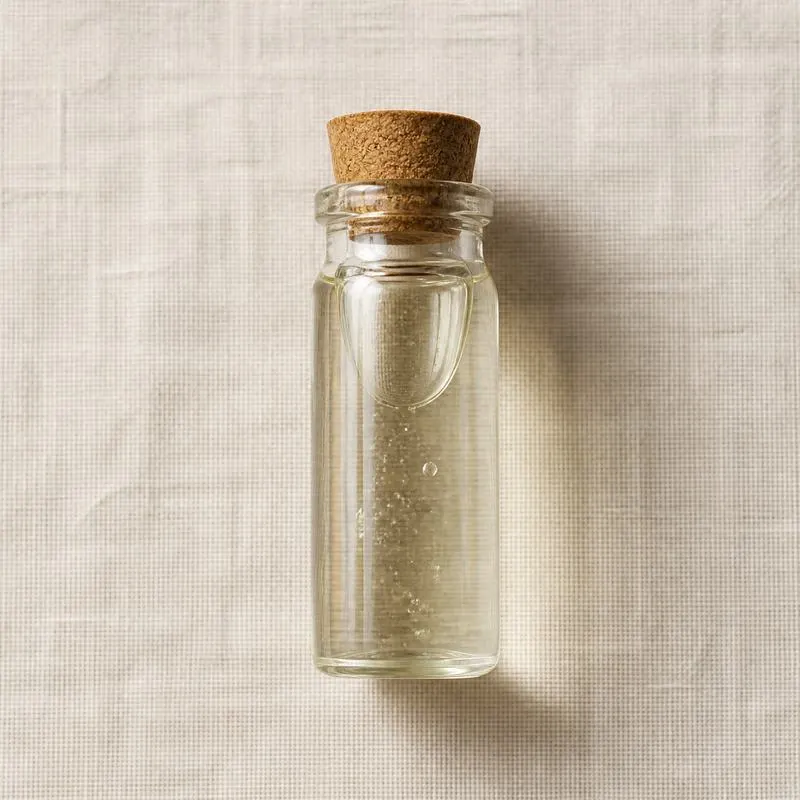
Clove Oil
Clove oil is the essential oil obtained by steam distillation of the dried flower buds, leaves or stems of Syzygium aromaticum, an evergreen tree of the myrtle family cultivated mainly in Indonesia, Madagascar, Tanzania and Sri Lanka. Its character is dominated by eugenol, a phenylpropanoid that typically accounts for 75 to 88 percent of bud oil and up to 95 percent of leaf and stem oil, with eugenyl acetate and beta caryophyllene making up most of the remainder.
In food the oil functions as a warm, sweet spicy flavouring with a numbing, medicinal edge and considerable antimicrobial and antioxidant activity coming from the phenolic eugenol. Its odour strength is high, so dosage in finished product is measured in parts per million.
The oil is a clear to pale yellow mobile liquid that darkens toward amber and thickens on ageing as eugenol oxidises and polymerises. It is heavier than water, with a specific gravity above 1.03, and it is soluble in ethanol at 70 percent and above, in vegetable oils and in propylene glycol, but essentially insoluble in water. Iron contact discolours it rapidly, so it is handled in glass, aluminium or lined steel and stored cool under nitrogen away from light.
We source bulk Clove Oil from top China manufacturers for our partners. The manufacturers are in Jiangxi. A smaller requirement can ship in a combined container with other ingredients.
Please send the grade you need, the volume and your destination port, and we will come back with a solution and a price.
or call +86-21-6858 0751

- Function
- Essential oil
Specifications
| Item | Specification |
|---|---|
| Appearance | Clear mobile liquid, free of suspended matter |
| Colour | Colourless to pale yellow, darkening to amber on storage |
| Odour and flavour | Characteristic warm spicy clove, phenolic |
| Total eugenol content | 75.0 to 88.0 percent for bud oil |
| Eugenyl acetate | 4.0 to 15.0 percent for bud oil |
| Beta caryophyllene | 5.0 to 14.0 percent |
| Specific gravity at 25 degrees Celsius | 1.030 to 1.060 |
| Refractive index at 20 degrees Celsius | 1.5280 to 1.5380 |
| Optical rotation at 20 degrees Celsius | 0 to minus 2 degrees |
| Solubility in 70 percent ethanol | Soluble in 2 volumes, clear solution |
| Heavy metals as Pb | Not more than 10 mg/kg |
| Lead | Not more than 2 mg/kg |
| Arsenic | Not more than 1 mg/kg |
| Non volatile residue | Not more than 2.0 percent |
Common Markets Grades
Clove oil trades in three botanical grades that are priced and specified separately. Clove bud oil is the highest priced flavour grade, distilled from the dried unopened buds, with eugenol usually specified at 75 to 85 percent and a rounder, fruitier top note carried by eugenyl acetate. Clove leaf oil and clove stem oil are distilled from the foliage and the peduncles, run higher in eugenol at 82 to 95 percent, and carry a harsher, more phenolic profile; both are used mainly as feedstock for eugenol isolation and in lower cost flavour and fragrance work.
Within each botanical type, food grade material conforms to the Food Chemicals Codex monograph and to the relevant ISO monograph, while technical and industrial grades are sold against eugenol content alone. Rectified and redistilled qualities are offered where a lighter colour and lower residue are needed, and eugenol depleted or terpene adjusted fractions are available for specific flavour work. Water soluble presentations exist as ethanol or propylene glycol dilutions and as emulsified or spray dried encapsulated powders on a modified starch carrier.
Applications
- Meat and savoury seasoning blends, where it supplies the warm phenolic backbone of five spice, curry and pickling spice profiles
- Bakery and confectionery flavours for gingerbread, spiced fruit cake and hard boiled spice sweets
- Mulled beverage and spiced tea compounds, where a few parts per million carry the clove signature through hot serve
- Pickles, sauces and marinades, where the oil replaces ground clove and avoids the sediment that whole spice leaves
- Oral care flavours for toothpaste, mouthwash and dental preparations, using the numbing character of eugenol
- Chewing gum and breath mint compounds as a warm counterpoint to mint
- Natural preservation systems in meat and bakery, where eugenol contributes antimicrobial and antioxidant activity
- Feedstock for the isolation of natural eugenol, which is in turn converted to vanillin and to iso eugenol derivatives
- Fragrance compounding in oriental, carnation and spicy accords for fine and functional perfumery
- Tobacco flavouring, where clove is a traditional casing note
Brands Using Clove Oil
Widely-distributed consumer products that list Clove Oil on the ingredient label.
- Aura CaciaOrganic Clove Bud Essential Oil 0.25 fl. oz. ↗The single declared ingredient is organic Syzygium aromaticum clove bud oil.Label verified 2026-08-31
- Aura CaciaClove Bud Essential Oil 0.5 fl. oz. ↗This bottle declares Syzygium aromaticum clove bud oil as its only ingredient.Label verified 2026-08-31
Brand names, product names and logos are the property of their owners. They appear here as published evidence that the ingredient is used, taken from the brand's own label or website. Their appearance is not an endorsement, and it does not mean the brand buys from us or from any manufacturer listed on this site.
China Manufacturers of Clove Oil
Top Clove Oil manufacturers in China.
- JiangXi HaiRui Natural Plant Co., Ltd.6 ingredients in the directory
- Jiangxi Hengcheng Natural Essential Oil5 ingredients in the directory
Company names and logos are the property of the manufacturers themselves. They are listed here because our own directory records them as producing this ingredient. A listing is not an endorsement by them, and we do not represent them or speak on their behalf.
Regulatory Status
In the United States, 21 CFR 182.20 lists clove bud, leaf and stem oils among the essential oils, oleoresins and natural extractives that are generally recognised as safe for their intended use in food, and eugenol is separately affirmed as a food substance. Clove oils carry Flavour and Extract Manufacturers Association GRAS status as flavouring substances, and the oil is the subject of a Food Chemicals Codex monograph setting identity, eugenol content and purity limits.
In the European Union clove oil is a natural flavouring preparation derived from a food source and is therefore permitted under Regulation (EC) No 1334/2008 without the need for individual authorisation, subject to the general safety requirements and to the maximum levels for biologically active principles set out in that Regulation. Eugenol is a declarable fragrance allergen in cosmetic use under the cosmetic products Regulation. The Joint FAO WHO Expert Committee on Food Additives has evaluated eugenol and related phenylpropanoid flavouring agents and raised no safety concern at the levels at which they are used as flavourings.
Manufacturing Process
Harvested clove buds are sun dried to a moisture level that stabilises them for storage, then coarsely crushed immediately before distillation to open the oil glands without allowing volatile loss. The charge is loaded into a stainless steel still and distilled with direct steam for eight to twenty four hours depending on the material, bud oil requiring the longest run because eugenol is high boiling and slow to strip. Leaf and stem material is distilled in the same way at shorter cycles and higher throughput.
Vapour passes to a shell and tube condenser and the condensate enters a heavy oil separator, since clove oil is denser than water and settles below the distillation water rather than above it. The separated oil is drawn off, and the aqueous phase is recycled to the still by cohobation to recover the dissolved eugenol that would otherwise be lost. Crude oil is dried over anhydrous sodium sulphate or by vacuum stripping, then polish filtered. Grades sold for flavour use are additionally rectified by fractional vacuum distillation to remove colour bodies, resinous residue and the heaviest sesquiterpene tail, and the finished oil is filled under nitrogen into lined drums.