Coated Fumaric Acid
Coated fumaric acid is food grade fumaric acid whose crystals have been enclosed in a shell of hydrogenated vegetable oil, so that the acid remains chemically isolated in a dry or high fat system until heat melts the barrier and releases it. The core is unchanged trans-butenedioic acid, and the coating is what determines when and how fast the acid becomes available.
Fumaric acid is the strongest of the common solid food acids on a weight for weight basis, giving roughly two and a half times the acidity of citric acid at equal dose, and it is also the least soluble, at under 0.7 g per 100 mL of cold water. That combination is why it is used in dry systems and in fat continuous ones, and why coating suits it: the acid is already slow to dissolve, and a lipid shell converts that natural slowness into a controllable, temperature triggered release.
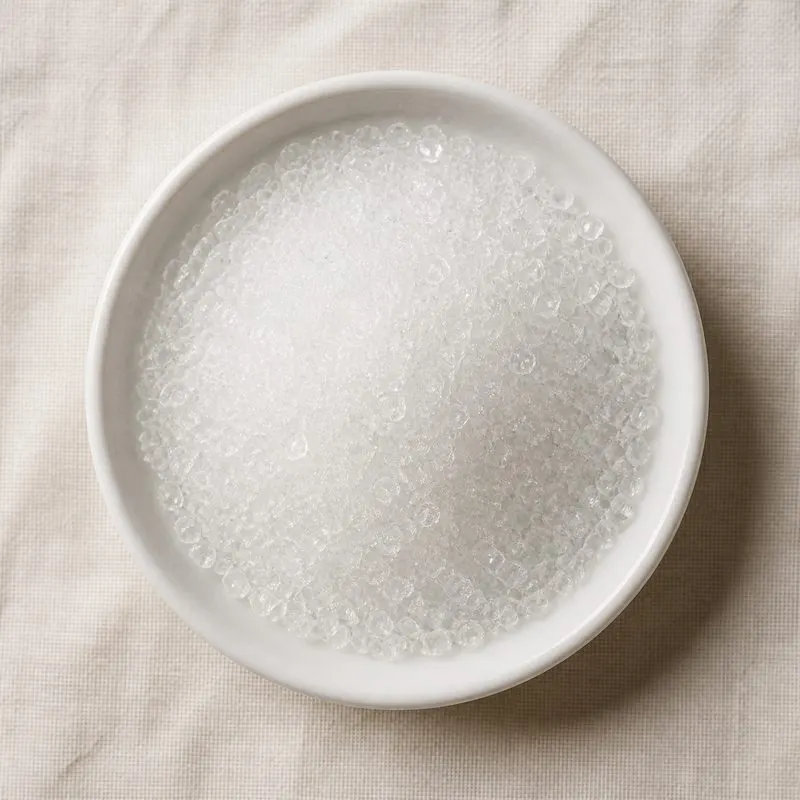
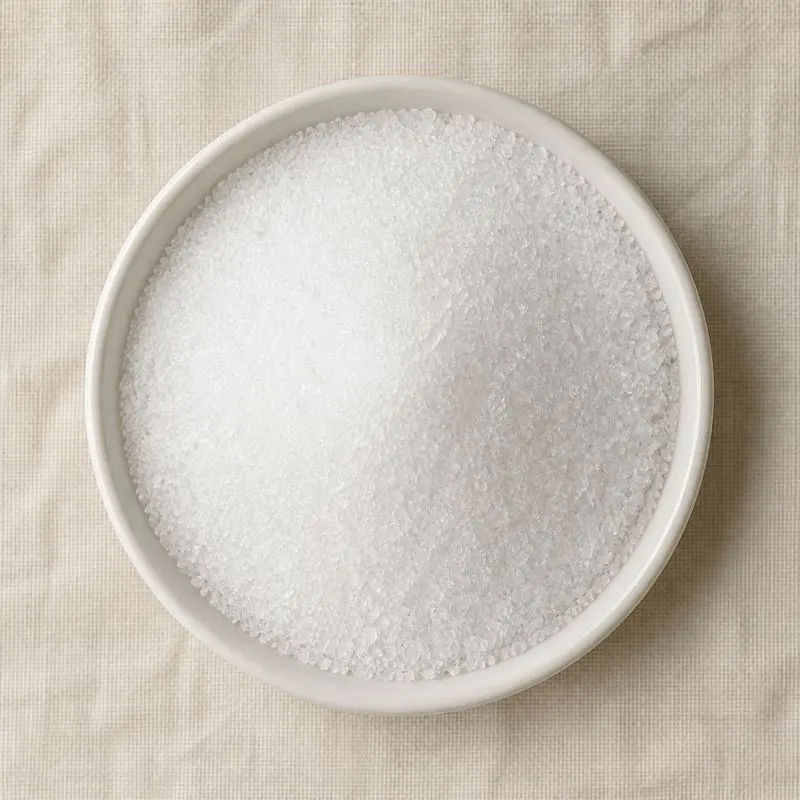
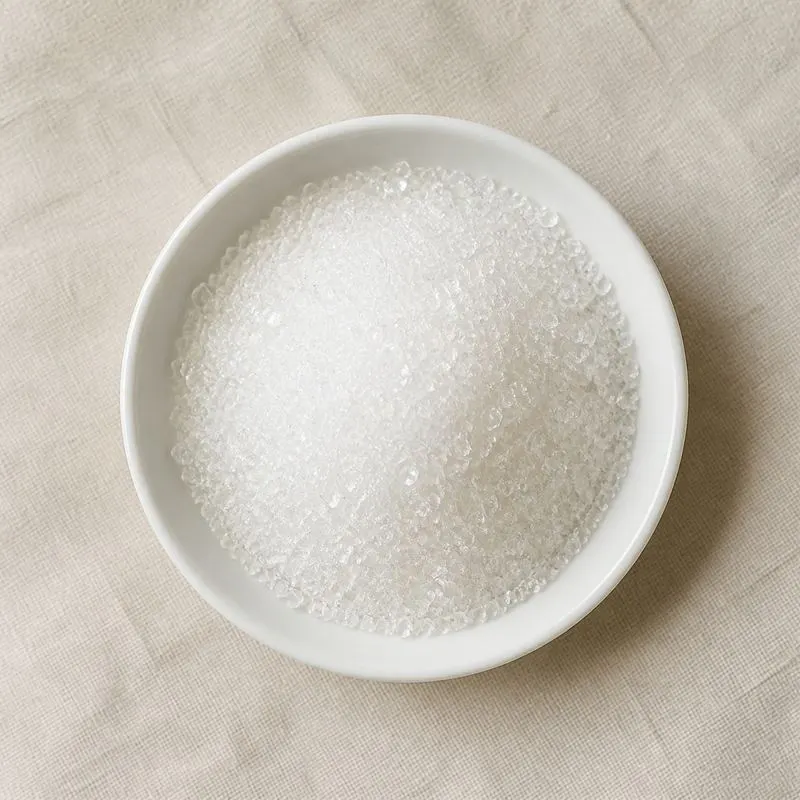
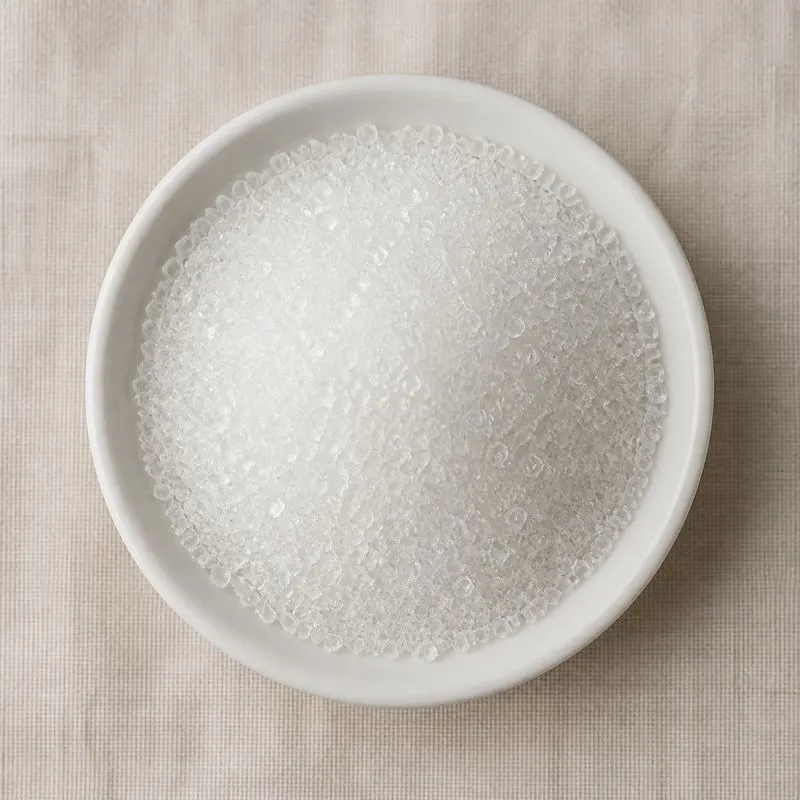
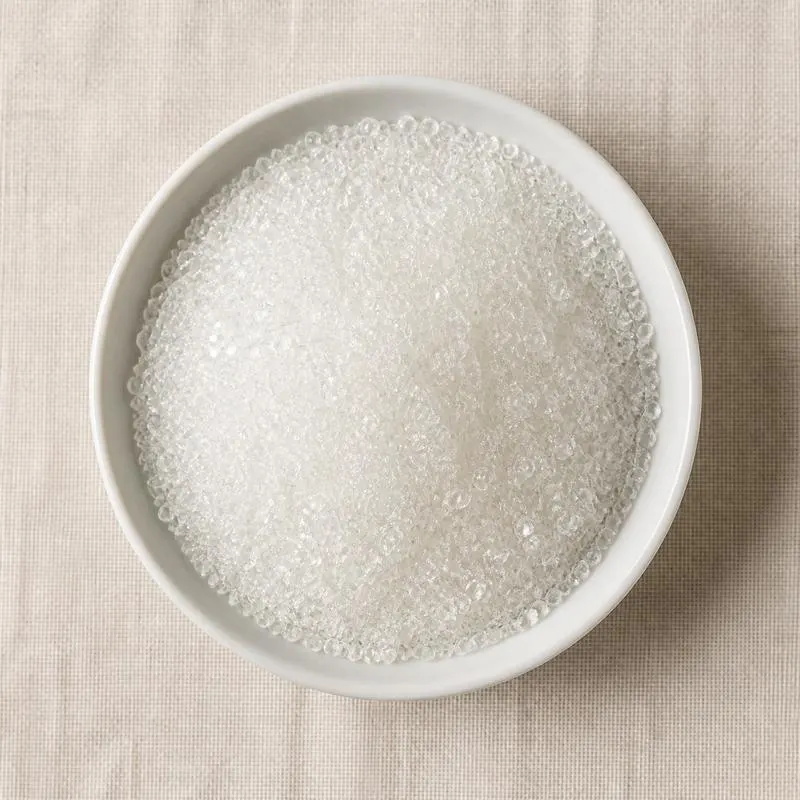
The product is a free flowing white to cream powder or granule with almost no perceptible sourness in the mouth, since the shell blocks contact and the underlying acid is barely soluble in saliva. Coating loads run from about 10 to 25 percent of a fully hydrogenated fat with a melting point selected between roughly 50 and 70 degrees Celsius. The coated particle is non-hygroscopic, mechanically robust in normal blending, and stable through long ambient storage.
We source bulk Coated Fumaric Acid from top China manufacturers for our partners. The manufacturer is in Hubei. A smaller requirement can ship in a combined container with other ingredients.
Please send the grade you need, the volume and your destination port, and we will come back with a solution and a price.
or call +86-21-6858 0751
- Function
- Acidulant
Specifications
| Item | Specification |
|---|---|
| Appearance | White to cream free flowing powder or granule |
| Fumaric Acid Content | 75 to 90 percent, grade dependent |
| Coating Content as Hydrogenated Fat | 10 to 25 percent |
| Release Temperature | 50 to 70 degrees Celsius, declared per grade |
| Free Surface Acid | Not more than 2.0 percent |
| Loss on Drying | Not more than 0.5 percent |
| Maleic Acid in Core | Not more than 0.1 percent |
| Residue on Ignition of Core | Not more than 0.1 percent |
| Particle Size | Not less than 90 percent through 30 mesh |
| Peroxide Value of Coating | Not more than 5 meq per kg |
| Lead | Not more than 1 mg per kg |
| Arsenic | Not more than 1 mg per kg |
| Total Plate Count | Not more than 1000 cfu per g |
| Yeast and Mould | Not more than 100 cfu per g |
Common Markets Grades
Grades are distinguished by coating melting point, coating load and particle size rather than by the purity of the acid, which is standard food grade material at 99.5 percent minimum. The release temperature is the primary selection criterion: lower melting shells are used where the trigger is a proof box or a warm mix, and higher melting ones where the acid must survive until the oven or the fryer.
Coating load sets the completeness of the barrier, with heavier loads protecting better while diluting the acid and slowing release once the shell opens. Particle size is matched to the rest of the formulation, typically 30 to 80 mesh, since segregation of a coated granule in a hopper produces uneven acidification across a production run. Uncoated fumaric acid grades sold alongside these are specified differently, on particle size and on whether a wetting agent has been added to overcome the low solubility, and the two families are not interchangeable.
Applications
- Tortillas and flat breads, as a delayed acidulant that controls pH for mould inhibition without acidifying the dough during mixing
- Chemically leavened bakery goods, as the acid partner to sodium bicarbonate that reacts in the oven rather than on the bench
- Refrigerated and frozen doughs, where the coating prevents premature gas release during cold storage
- Chewing gum, giving a slow release sourness without breaking down the gum base
- Sour confectionery, where the low solubility and delayed release together produce a long lasting acid note
- Fermented and dry sausage, holding acidification back until the cook step so the meat emulsion is not broken
- Dry beverage powders and instant desserts, protecting the acid from moisture and from reaction with colours and vitamins
- Extruded snacks and fried coatings, releasing sourness at the point of frying
- Animal feed and pet food, as an acidifier that survives pelleting and releases in the gut
China Manufacturers of Coated Fumaric Acid
Top Coated Fumaric Acid manufacturers in China.
Company names and logos are the property of the manufacturers themselves. They are listed here because our own directory records them as producing this ingredient. A listing is not an endorsement by them, and we do not represent them or speak on their behalf.
Regulatory Status
The status of the coated product is that of its components. In the United States fumaric acid is affirmed as generally recognised as safe under 21 CFR 184.1307, with functions given as flavour enhancer, flavouring agent and pH control agent, for use at levels consistent with good manufacturing practice within the limits stated in that section. Hydrogenated vegetable oils used as coatings are permitted food fats under their own clearances, so the coated material needs no separate listing and is declared on the label by its constituents.
In the European Union, Regulation (EC) No 1333/2008 authorises fumaric acid as food additive E 297 and restricts its use to defined categories at specified maximum levels rather than permitting it quantum satis, with identity and purity criteria set in Regulation (EU) No 231/2012. The coating fat is treated as a carrier under the general rules in Annex III of that Regulation. JECFA has evaluated fumaric acid and its salts, and fumaric acid is listed in the Codex General Standard for Food Additives as an acidity regulator and raising agent.
Manufacturing Process
The acid core is produced first. Industrial fumaric acid is made from maleic anhydride, itself obtained by vapour phase oxidation of butane over a vanadium phosphorus oxide catalyst. The anhydride is hydrolysed to maleic acid in water, then isomerised from the cis to the trans configuration by heating in the presence of a catalyst such as a thiourea or mineral acid system. Because fumaric acid is so much less soluble than maleic acid, it crystallises out of the hot liquor as it forms, and the crystals are recovered by centrifuge, washed to strip residual maleic acid, dried and milled.
Coating is a separate physical step. The dried acid is screened to a narrow particle size band, since a wide distribution coats unevenly. Fluid bed coating in a bottom spray configuration suspends the crystals in a warm air stream while molten hydrogenated fat is atomised onto them, the droplets spreading and solidifying to build a continuous shell over successive passes. The alternative is hot melt spray congealing, in which acid is dispersed in molten fat and the slurry atomised into a chilled tower, giving a matrix particle rather than a true core and shell. Either way the coated material is cooled to crystallise the fat fully, sieved to remove agglomerates and fines, tested for release temperature and free surface acid, and packed into moisture barrier bags.