Coated Sodium Bicarbonate
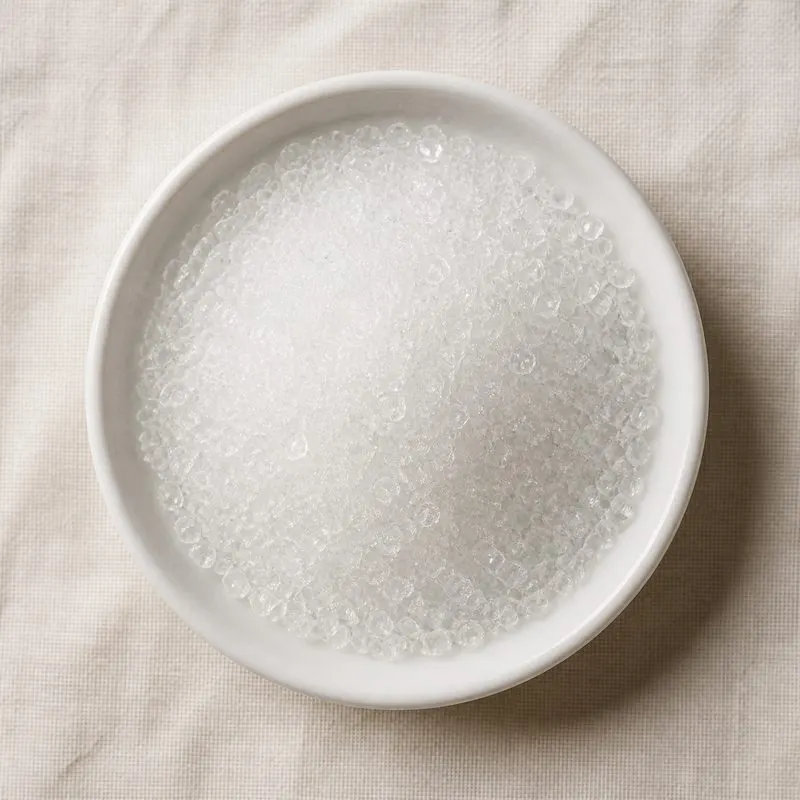
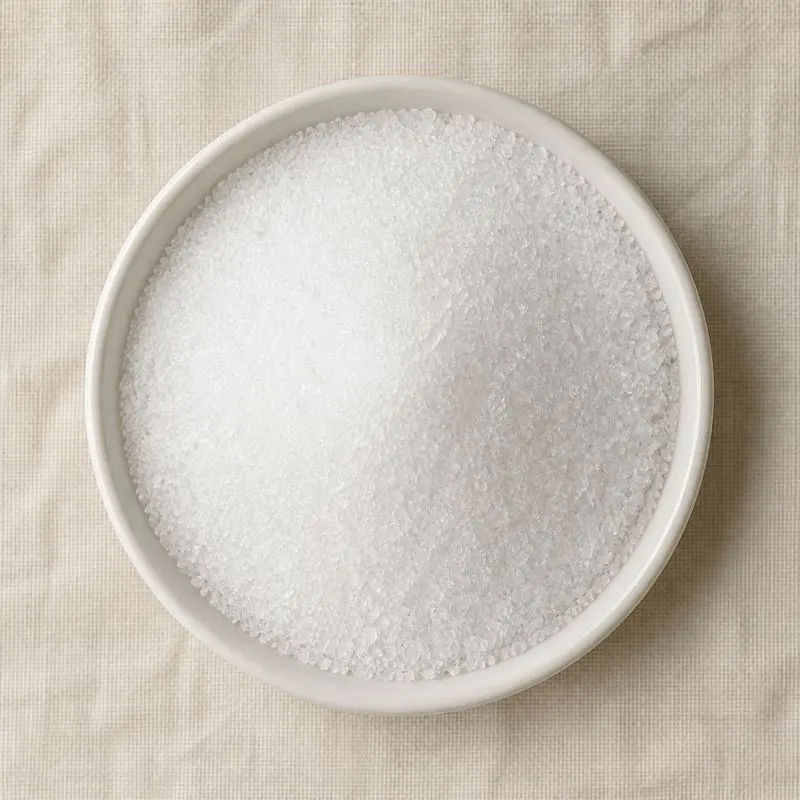
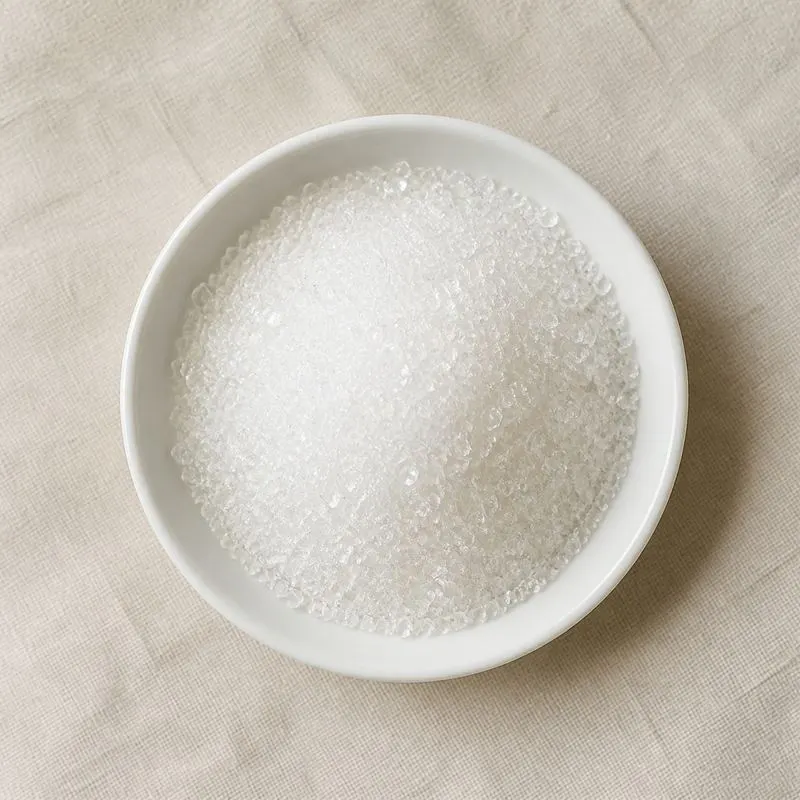
Coated sodium bicarbonate is food grade sodium bicarbonate whose particles have been enclosed in a shell of hydrogenated vegetable oil, so that the base cannot meet an acid or moisture until heat melts the barrier. The core is unchanged NaHCO3, and what is bought is the timing of carbon dioxide release rather than any change in the leavening chemistry itself.
The problem it solves is premature reaction. In a dough or batter that must stand, be chilled, be frozen or be stored as a dry mix, uncoated bicarbonate begins reacting with the leavening acid as soon as water is present, so the gas is generated and lost before the product reaches the oven. A lipid coating keeps the two apart until the shell melts, concentrating gas release into the bake and producing better volume, a finer crumb and a more even cell structure.
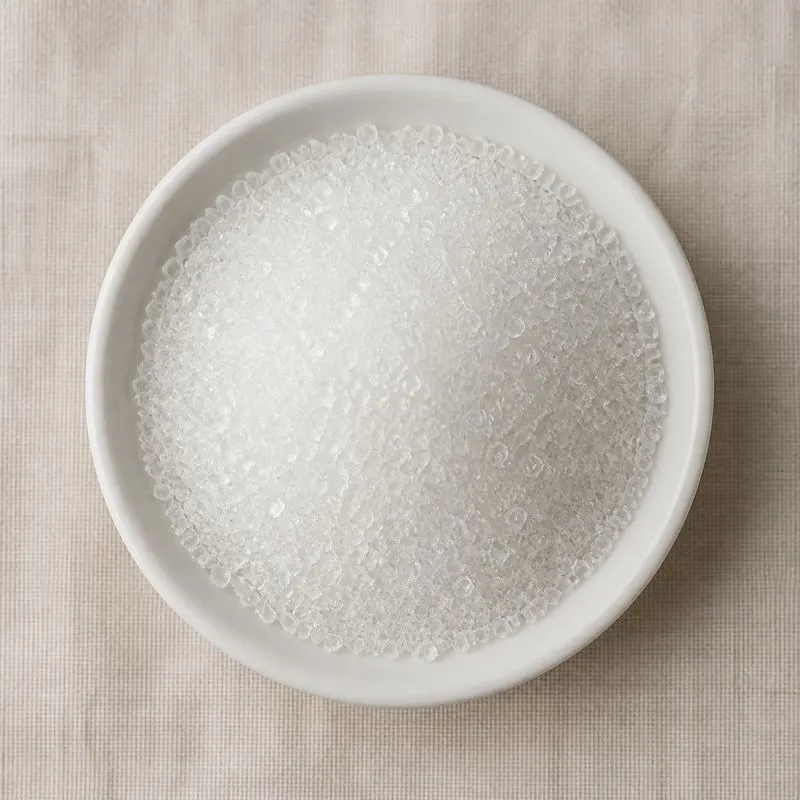
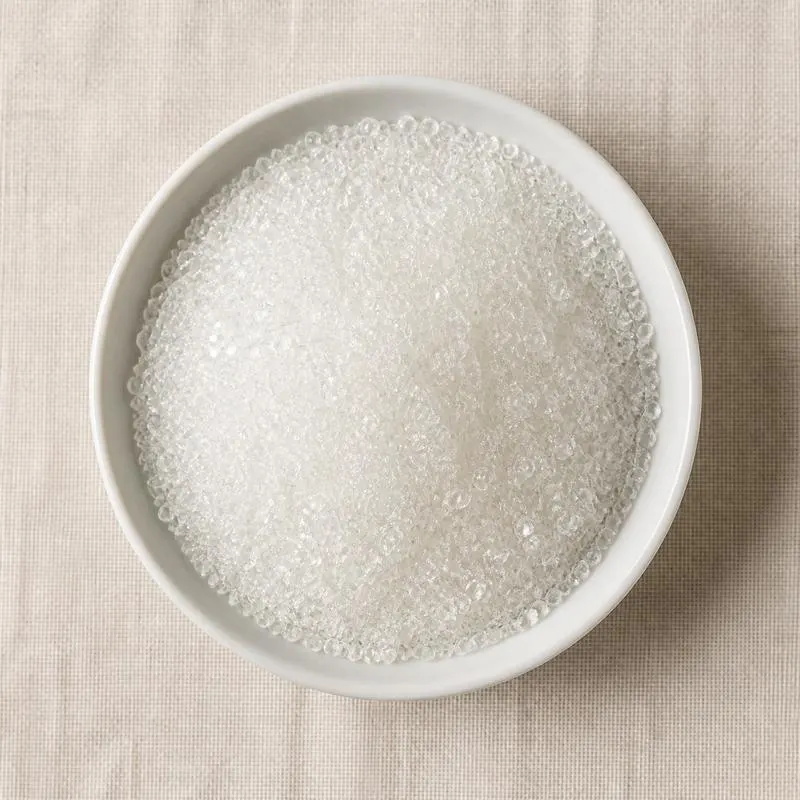
The product is a free flowing white to cream powder or granule, tasteless and odourless apart from a faint fatty note, and essentially non-hygroscopic where uncoated bicarbonate cakes readily. Coating loads run from about 10 to 30 percent of a fully hydrogenated fat with a melting point selected between roughly 45 and 70 degrees Celsius. Below that point the particle is inert in contact with acid and water; above it the shell fails and the bicarbonate reacts at once.
We source bulk Coated Sodium Bicarbonate from top China manufacturers for our partners. The manufacturer is in Hubei. A smaller requirement can ship in a combined container with other ingredients.
Please send the grade you need, the volume and your destination port, and we will come back with a solution and a price.
or call +86-21-6858 0751
- Function
- Acidulant
Specifications
| Item | Specification |
|---|---|
| Appearance | White to cream free flowing powder or granule |
| Sodium Bicarbonate Content | 70 to 90 percent, grade dependent |
| Coating Content as Hydrogenated Fat | 10 to 30 percent |
| Release Temperature | 45 to 70 degrees Celsius, declared per grade |
| Available Carbon Dioxide | Not less than 37 percent of the bicarbonate content |
| Free Surface Alkali | Not more than 2.0 percent |
| Loss on Drying | Not more than 0.5 percent |
| Sodium Carbonate in Core | Not more than 1.0 percent |
| Particle Size | Not less than 90 percent through 40 mesh |
| Peroxide Value of Coating | Not more than 5 meq per kg |
| Lead | Not more than 1 mg per kg |
| Arsenic | Not more than 1 mg per kg |
| Total Plate Count | Not more than 1000 cfu per g |
| Yeast and Mould | Not more than 100 cfu per g |
Common Markets Grades
Grades are defined by the coating, not by the bicarbonate, which is standard food grade material at 99 percent minimum throughout. Release temperature is the primary selection criterion and is matched to the process: a low melting shell for refrigerated and frozen dough that must activate early in a short bake, a higher melting one for products with a long oven time or a fryer step.
Coating load determines how complete the barrier is. Heavier loads survive wetter doughs and longer storage but dilute the active and add fat to the formulation. Particle size, typically in the 40 to 100 mesh range, is chosen to match the flour and the rest of the dry blend, since a coated granule that segregates in a hopper leaves parts of a batch under-leavened. Residual free bicarbonate on the particle surface is the standard quality marker, because it shows the shell is incomplete and predicts premature reaction. Matched systems are also traded in which coated bicarbonate is paired with a coated or slow acting acid such as sodium acid pyrophosphate or encapsulated fumaric acid.
Applications
- Refrigerated and frozen doughs, biscuits and canned dough products, preventing gas loss during cold storage so the lift is available at bake
- Tortillas and flat breads, giving controlled expansion during the short, hot bake
- Cake and muffin dry mixes, protecting the bicarbonate from moisture and from the acid during long ambient shelf life
- Pancake and waffle batters held on the line, where an uncoated system would exhaust before cooking
- Extruded and sheeted snacks, controlling expansion at the die and producing an even cell structure
- Fried dough products and doughnuts, releasing gas at frying temperature rather than during proof
- Effervescent tablets and drink powders, keeping the bicarbonate separated from the acid through tabletting and storage
- Meat and further processed products, as a delayed pH raising agent that improves water binding without early reaction
- Pet treats and baked animal feeds, as a leavening that survives the mixing and forming stages
China Manufacturers of Coated Sodium Bicarbonate
Top Coated Sodium Bicarbonate manufacturers in China.
Company names and logos are the property of the manufacturers themselves. They are listed here because our own directory records them as producing this ingredient. A listing is not an endorsement by them, and we do not represent them or speak on their behalf.
Regulatory Status
The regulatory position is that of the components. In the United States sodium bicarbonate is affirmed as generally recognised as safe under 21 CFR 184.1736, for use as a leavening agent, pH control agent and processing aid at levels consistent with good manufacturing practice, and it also carries a United States Pharmacopeia monograph. Hydrogenated vegetable oils used as coatings are permitted food fats under their own clearances, so the coated article requires no separate listing and is declared on the label by its constituents.
In the European Union, Regulation (EC) No 1333/2008 authorises sodium bicarbonate as food additive E 500(ii) and permits it quantum satis in the relevant bakery and beverage categories, with identity and purity criteria set in Regulation (EU) No 231/2012. The coating fat is treated as a carrier under the general rules in Annex III of that Regulation. JECFA has evaluated the sodium carbonates and concluded that no numerical limit is required, and sodium bicarbonate is listed in the Codex General Standard for Food Additives as a raising agent and acidity regulator.
Manufacturing Process
The core is made first. Sodium bicarbonate is produced by carbonating a sodium carbonate solution with carbon dioxide, either from soda ash in the trona based route or within an ammonia soda plant. The bicarbonate crystallises from the carbonated liquor and is separated by centrifuge, washed, and dried at a temperature held low enough to avoid decomposing it back to carbonate. The dried crystal is milled and classified to the target particle size.
Coating follows as a separate physical operation, run in a dry environment because moisture on the particle surface prevents the fat from wetting it evenly. The bicarbonate is screened to a narrow size band, then suspended in a warm air stream in a fluid bed of bottom spray design while molten hydrogenated fat is atomised onto it through a nozzle. The droplets spread and solidify on contact, and repeated passes build a continuous shell whose thickness is set by spray rate and time. Bed temperature is held above the coating melting point at the nozzle but comfortably below the point at which the bicarbonate would begin to decompose. Hot melt spray congealing is used as an alternative, dispersing bicarbonate in molten fat and atomising the slurry into a chilled tower to give a matrix particle. The coated material is cooled to crystallise the fat fully, sieved to remove agglomerates and fines, tested for release temperature, carbon dioxide yield and free surface alkali, and packed into moisture barrier bags.