Corn Flour
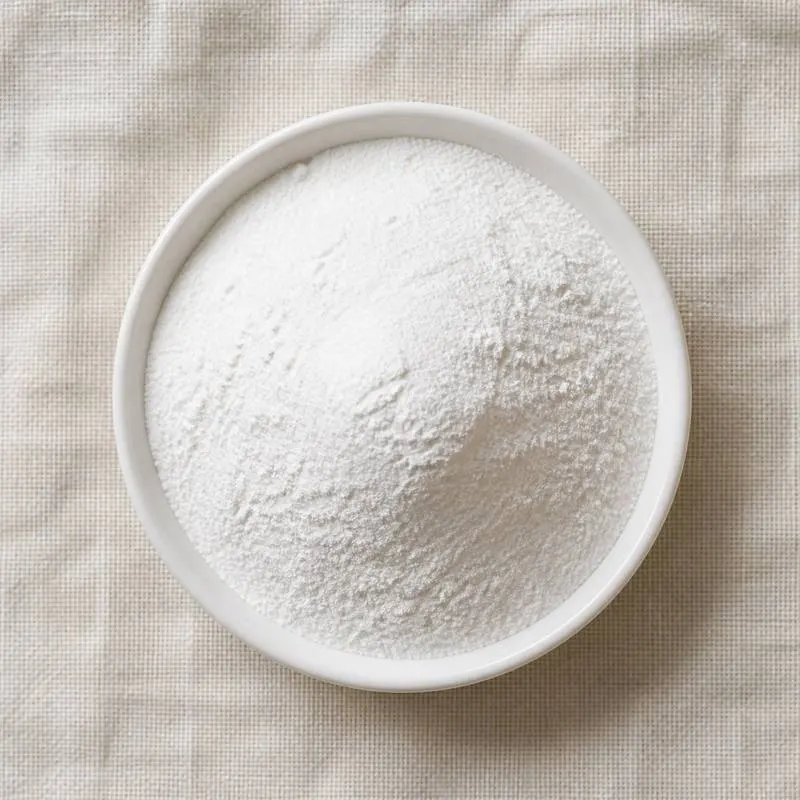
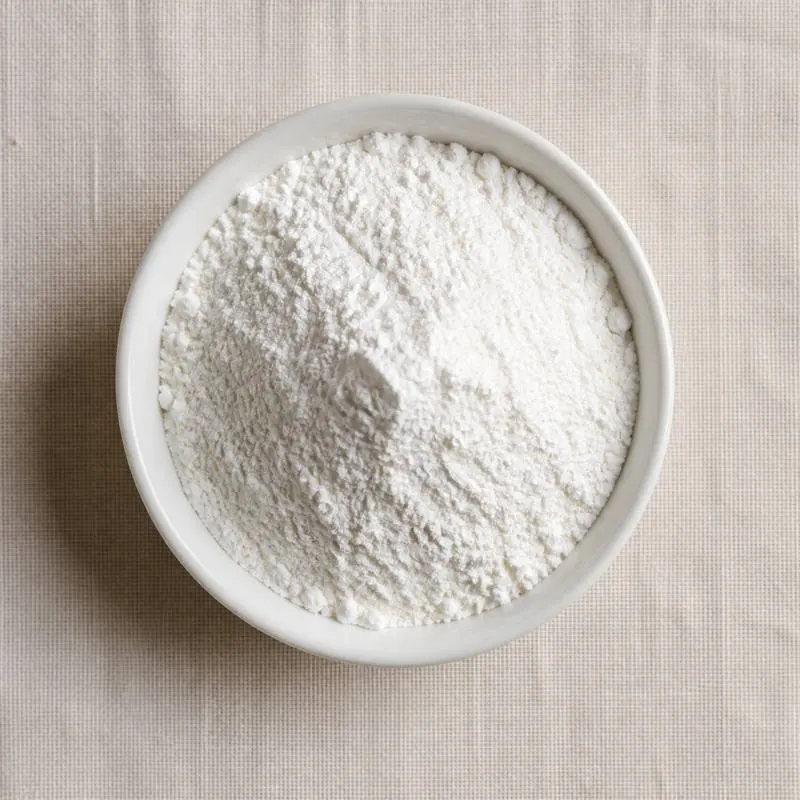
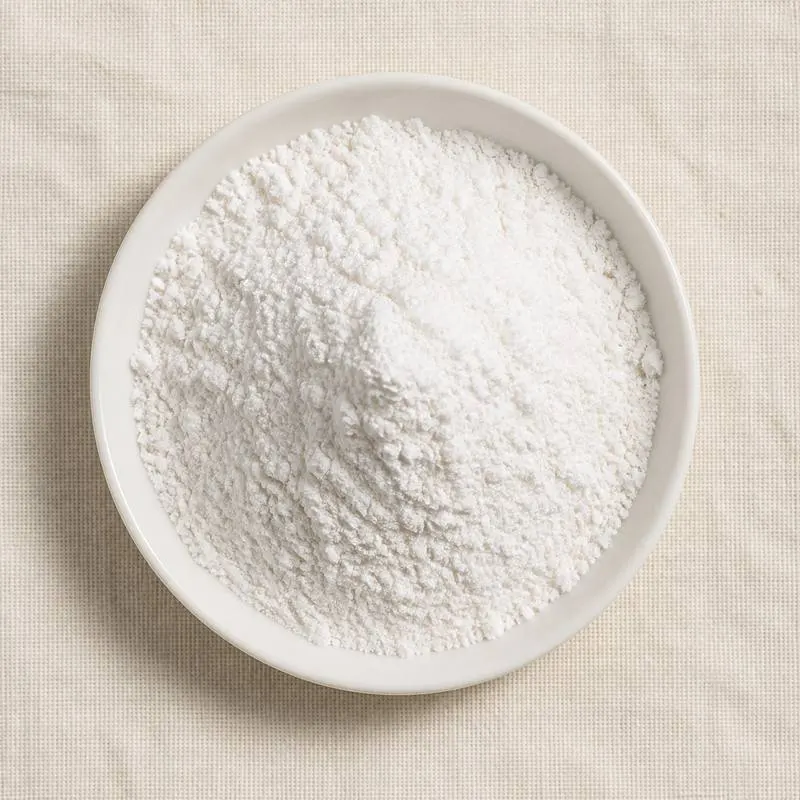
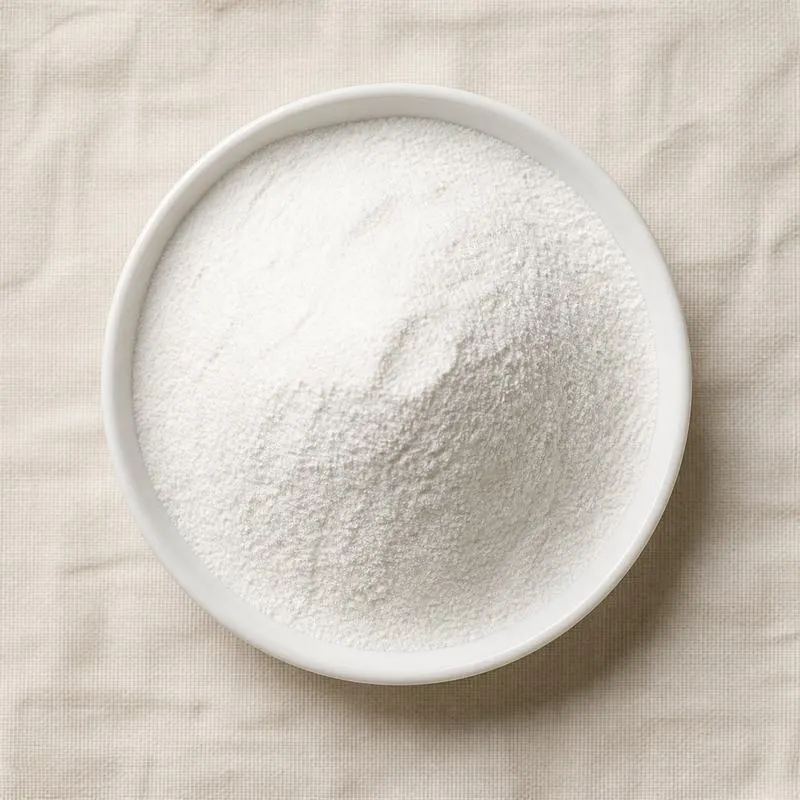
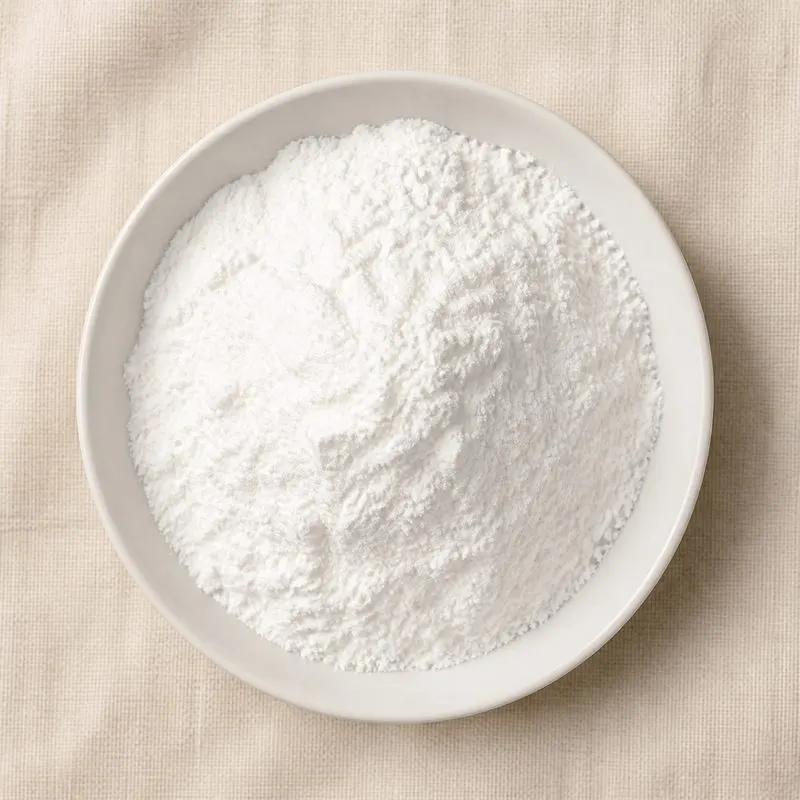
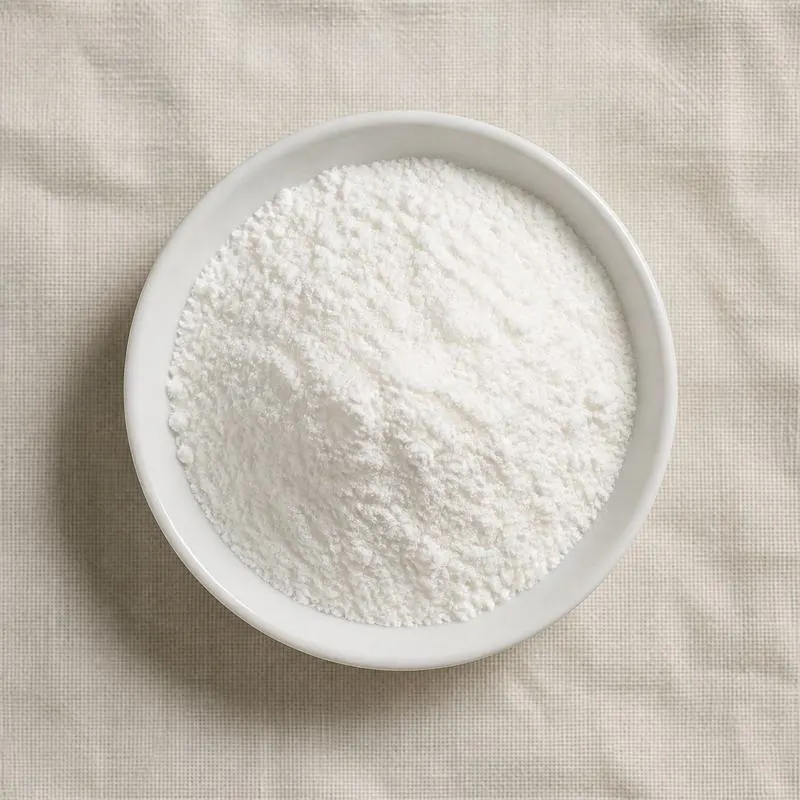
Corn flour is finely milled maize, produced by grinding the whole or degermed kernel of Zea mays to a flour fineness. It should be distinguished from corn starch, which is the purified starch fraction alone; in British usage the word cornflour refers to that starch, while in North American and international ingredient trade corn flour means the milled cereal, and specifications rather than names settle which product is being bought.
As a milled cereal it retains the composition of the grain it came from. Degermed corn flour runs at roughly 7 to 9 percent protein, under 1.5 percent fat and 1 percent ash, with starch making up most of the balance; whole grain corn flour keeps the germ and so carries 3 to 4 percent oil, a higher fibre content and a shorter shelf life, since the oil oxidises and the lipase in the germ releases free fatty acids.
Functionally it thickens on cooking as its starch gelatinises from about 62 to 75 degrees Celsius, but it never gives the clean, clear paste of isolated corn starch because the protein and fibre remain. It contributes a distinct maize flavour, an opaque body and a granular bite. It contains no gluten, so it forms no viscoelastic dough on its own. Colour depends on the maize variety, from white through yellow, and yellow flour carries carotenoid pigment that survives baking.
We source bulk Corn Flour from top China manufacturers for our partners. The manufacturers are in Sichuan and Jiangsu. A smaller requirement can ship in a combined container with other ingredients.
Please send the grade you need, the volume and your destination port, and we will come back with a solution and a price.
or call +86-21-6858 0751
- Function
- Texturisers
Specifications
| Item | Specification |
|---|---|
| Appearance | Free flowing powder, white to yellow according to variety, free of foreign matter |
| Odour and taste | Characteristic maize, no musty or rancid note |
| Particle size, through 60 mesh | 98 percent minimum |
| Moisture | 14.0 percent maximum |
| Protein, nitrogen times 6.25, dry basis | 7.0 percent minimum |
| Fat, degermed grade | 1.5 percent maximum |
| Crude fibre | 1.2 percent maximum |
| Ash, dry basis | 1.0 percent maximum |
| Free fatty acids, as oleic | 0.1 percent maximum |
| Aflatoxin B1 | 2 micrograms per kg maximum |
| Total fumonisins B1 and B2 | 1000 micrograms per kg maximum |
| Lead | 0.2 mg/kg maximum |
| Arsenic | 0.5 mg/kg maximum |
| Total plate count | 50000 cfu/g maximum |
| Yeast and mould | 1000 cfu/g maximum |
| E. coli | Absent in 1 g |
| Salmonella | Absent in 25 g |
Common Markets Grades
The first split is between whole grain and degermed flour. Degermed flour, made from the endosperm after the germ and bran have been removed in a dry milling system, is the standard commercial product because removing the oil bearing germ extends shelf life from weeks to many months. Whole grain flour retains the full kernel and is traded for nutritional labelling reasons, usually with a shorter declared shelf life or under refrigerated storage.
Particle size is the second variable and the flour sits at the fine end of a continuous range that runs, in dry milled maize, from grits through coarse and fine meal to flour, with corn flour normally defined as material passing a 60 to 100 mesh screen. Masa flour, made by nixtamalising maize in lime before milling, is a distinct product with different hydration and dough forming behaviour. Pregelatinised or instant corn flour, cooked on a drum or by extrusion before milling, hydrates in cold water. Colour grades are white, yellow and blue according to variety, and organic and non genetically modified certified lines are traded where identity preserved maize is available.
Applications
- Cornbread, muffins and maize based baked goods, as the principal flour supplying flavour, colour and crumb
- Tortillas, arepas and flatbreads, usually in the nixtamalised masa form which develops the necessary dough cohesion
- Gluten free bread and cake blends, contributing bulk and structure alongside starches and gums
- Batters and breading for fried foods, where the coarse maize particles give a distinctive crisp, granular crust
- Extruded snacks and breakfast cereals, as the main feedstock to the extruder, where it expands on pressure release
- Soups, chowders and sauces, thickening with an opaque, full bodied texture and a maize flavour note
- Polenta and porridge products, in the coarser meal grades cooked to a thick set
- Brewing adjunct, contributing fermentable starch to the mash at lower cost than malt
- Pet food and animal feed, as an energy carrier and extrusion aid
Brands Using Corn Flour
Widely-distributed consumer products that list Corn Flour on the ingredient label.
- Bob's Red MillOrganic Corn Flour ↗Organic whole grain corn flour, stone ground to a fine texture for cornbread.Label verified 2026-08-31
- Bob's Red MillGluten Free Corn Flour ↗Whole grain golden corn flour stone ground in a dedicated gluten free mill for cornbread, muffins and corn pudding.Label verified 2026-08-31
Brand names, product names and logos are the property of their owners. They appear here as published evidence that the ingredient is used, taken from the brand's own label or website. Their appearance is not an endorsement, and it does not mean the brand buys from us or from any manufacturer listed on this site.
China Manufacturers of Corn Flour
Top Corn Flour manufacturers in China.
 Sichuan Jingjing Food Co., Ltd.1 ingredient in the directory
 Xuzhou Hengxing Chemical Co., Ltd.6 ingredients in the directory
Company names and logos are the property of the manufacturers themselves. They are listed here because our own directory records them as producing this ingredient. A listing is not an endorsement by them, and we do not represent them or speak on their behalf.
Regulatory Status
Corn flour is a food, not a food additive. In the United States the standards of identity for corn products in 21 CFR part 137 regulate it, defining corn flour, corn meal, degerminated corn meal and related articles by their granularity, fat content and permitted treatment, and allowing enrichment with specified vitamins and minerals under the corresponding enriched corn products standards. It carries no food additive citation.
In the European Union corn flour is a cereal food regulated under general food law and the contaminants framework rather than under the food additives regulation, and it carries no E number. The relevant regulatory attention falls on mycotoxins, since maize is prone to fumonisins, aflatoxins, zearalenone and deoxynivalenol, and maximum levels for these in maize intended for direct human consumption and in maize milling fractions are set in the contaminants legislation. Codex maintains a standard for maize and a standard for maize meal and maize grits, covering composition, particle size and quality factors, alongside its general standard for contaminants. Maize is not a declarable allergen, and corn flour is naturally free of gluten.
Manufacturing Process
Corn flour is made by dry milling, which is a mechanical fractionation of the kernel rather than a chemical process. Maize is cleaned to remove stones, dust, chaff and foreign seed, then tempered by adding water and holding the grain so that moisture migrates into the bran and germ. Tempering toughens the bran and makes the germ rubbery, so that both separate cleanly from the brittle endosperm in the next step rather than shattering into it.
The tempered grain passes through a degerminator, which shears the germ and bran away from the endosperm. The mixed stream is dried, cooled and separated on gravity tables, aspirators and sieves, with the germ drawn off for oil extraction and the bran going to feed. The endosperm fraction, now called grits, is reduced through successive roller mill passes, each followed by sifting on plansifters, with coarse material returned to the mills and fines drawn off. The finest sifted fraction is the flour, which is then screened to a defined particle size, checked for moisture, colour and fat content, passed over a magnet and metal detector and packed. Whole grain flour skips the degermination step and mills the entire cleaned kernel.