Deep-Sea Fish Sauce
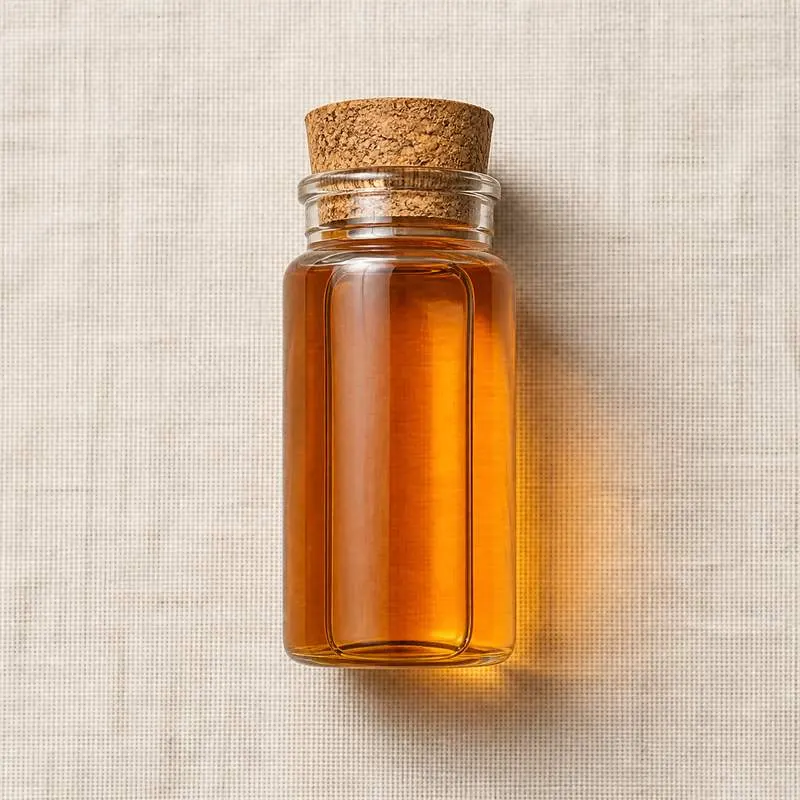
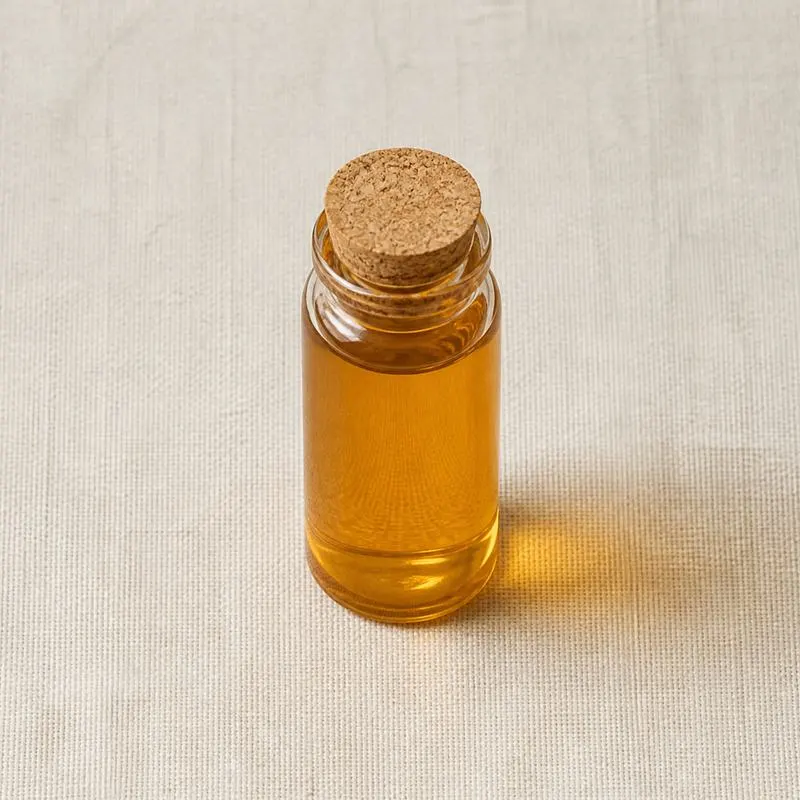
Deep-sea fish sauce is the clear amber to dark brown liquid drawn from small marine fish that have been salted and left to ferment for many months, and it is the oldest and most widely traded savoury condiment of coastal East and Southeast Asia. The deep-sea designation refers to the use of offshore pelagic species, principally anchovy and related small schooling fish, rather than to any distinct process.
The fermentation is a slow autolysis rather than a microbial conversion in the usual sense. Salt at a high concentration, commonly around a quarter to a third of the mass of the mixture, suppresses spoilage organisms. Meanwhile the fish's own proteases, chiefly those of the gut and muscle, and salt tolerant bacteria break muscle protein down into peptides and free amino acids. Glutamate released in this way carries the umami, while glycine and alanine give the underlying sweetness. A range of nitrogenous and sulphur compounds, together with short chain fatty acids, gives the pungent aroma that is characteristic of the product.
Quality is expressed almost entirely as total nitrogen, measured in grams per litre, since it tracks the extent of protein breakdown and therefore both taste intensity and price. The sauce is stable at ambient temperature because of its salt content and needs no preservative, though colour darkens with age.
We source bulk Deep-Sea Fish Sauce from top China manufacturers for our partners. The manufacturer is in Zhejiang. A smaller requirement can ship in a combined container with other ingredients.
Please send the grade you need, the volume and your destination port, and we will come back with a solution and a price.
or call +86-21-6858 0751

- Function
- Flavours and Aromas
Specifications
| Item | Specification |
|---|---|
| Appearance | Clear amber to dark brown liquid, free from sediment |
| Odour and Flavour | Characteristic fermented fish, salty and savoury, free from putrid notes |
| Total Nitrogen | Not less than 20 g per litre for standard grade |
| Amino Acid Nitrogen | Not less than 40 percent of total nitrogen |
| Sodium Chloride | 200 to 280 g per litre |
| pH | 5.0 to 6.5 |
| Colour | Conforms to retained reference |
| Histamine | Within the applicable limit for the destination market |
| Total Volatile Basic Nitrogen | Not more than 200 mg per 100 ml |
| Lead | Not more than 1 mg/kg |
| Cadmium | Not more than 0.1 mg/kg |
| Total Plate Count | Not more than 10,000 cfu/ml |
| Yeast and Mould | Not more than 100 cfu/ml |
| Salmonella | Absent in 25 ml |
Common Markets Grades
Grades follow total nitrogen. The first draw, taken from the fermenting tank without dilution, carries the highest nitrogen and the fullest flavour and is bottled as the top grade. Subsequent draws, made by percolating brine back through the residual fish mass, carry progressively less nitrogen and are blended down or sold as cooking grades. Nitrogen figures in the region of twenty five to forty grams per litre mark the upper end of the market, while lower cost grades sit well below that, and amino acid nitrogen as a proportion of total nitrogen is used as a measure of how genuinely the product was fermented.
Beyond nitrogen the axes are species and origin, colour, salt level and formulation. Pure fish sauce contains only fish, salt and often a little sugar, while widely sold commercial grades add water, caramel colour, sugar, glutamate and preservative and must declare them. Reduced salt versions are made by dilution and require preservation. Filtered and unfiltered, and pasteurised and unpasteurised, presentations exist, and bulk supply in drums for further manufacture sits alongside retail bottles.
Applications
- Dipping sauces such as nuoc cham and Thai prik nam pla, where it is the base
- Stir fries, curries and noodle dishes across Southeast Asia, used in place of salt
- Soup and broth bases, adding both salt and umami depth
- Marinades for meat, poultry and seafood, where the enzymes tenderise as well as season
- Kimchi and other fermented vegetable preparations, supplying the savoury base
- Compound seasonings, bottled sauces and dressings, as an umami component
- Western cooking, in Caesar dressing, Worcestershire style sauces and braises, often unlabelled as such
- Industrial savoury flavour production, as a fermented nitrogen source
- Instant noodle and ready meal seasoning, in liquid sachets and paste bases
China Manufacturers of Deep-Sea Fish Sauce
Top Deep-Sea Fish Sauce manufacturers in China.

Company names and logos are the property of the manufacturers themselves. They are listed here because our own directory records them as producing this ingredient. A listing is not an endorsement by them, and we do not represent them or speak on their behalf.
Regulatory Status
In the United States fish sauce is a food regulated by the Food and Drug Administration, and a producer or importer is subject to the seafood hazard analysis and critical control point regulation at 21 CFR 123 and to the foreign supplier verification requirements. Histamine is the controlling hazard for this commodity, and the agency's guidance level for scombrotoxin forming species is the figure against which imported lots are screened, with import alerts and detentions applied where it is exceeded. Fish is a major food allergen and must be declared. Where glutamate is added it is declared by name, and preservatives are subject to their own regulations.
In the European Union fish sauce is a fishery product, so the establishment must be approved under Regulation (EC) No 853/2004 and appear on the list of establishments authorised to export to the Union. Histamine limits for products from species associated with a high histidine content are set in the microbiological criteria regulation, Regulation (EC) No 2073/2005, which contains a specific and higher tolerance for fishery products that have undergone enzyme maturation in brine, recognising that the process itself generates some histamine. Additives used in commercial grades carry E numbers under Regulation (EC) No 1333/2008, and fish must be declared as an allergen. Codex maintains a regional standard for fish sauce covering composition, nitrogen content and hygiene, alongside the code of practice for fish and fishery products.
Manufacturing Process
Small pelagic fish are received as whole ungutted fish, since the digestive enzymes of the gut are essential to the process, and are washed and mixed with solar or refined salt at a fixed ratio, commonly around three parts fish to one part salt. The mixture is packed into concrete tanks, wooden barrels or lined vessels, weighted down and sealed. It is then held for between six and eighteen months at ambient temperature, during which the mass liquefies as protein is hydrolysed, and in some traditions the liquor is periodically drawn off and returned over the mass to even out the extraction and to expose it to sunlight, which darkens and rounds the flavour.
When the fermentation is judged complete the first liquor is drawn from a tap at the base of the tank and allowed to settle. Brine is percolated through the residue to recover further draws, which are blended with the first to a target nitrogen. The blended sauce is clarified by settling, filter aid filtration or centrifugation, standardised with salt, sugar and, in commercial grades, with glutamate, caramel colour and preservative, then pasteurised in line or bottled hot and cooled. Release testing covers total nitrogen, amino acid nitrogen, salt, pH, colour and, critically, histamine, which forms when raw material is held warm before salting and cannot be removed afterwards.