DHA Crude Oil
DHA crude oil is the unrefined oil recovered from docosahexaenoic acid rich biomass, most commonly microalgae of the genus Schizochytrium grown by fermentation, and in a smaller share of trade from tuna and other fish processing. It is an intermediate rather than a finished ingredient: the material that leaves the extraction step and enters the refinery, sold between producers and refiners rather than to formulators.
The DHA content on total fatty acids is essentially the same as in the refined oil that follows, typically 35 to 50 percent for algal material, because refining removes non triglyceride matter rather than changing the fatty acid profile. What distinguishes the crude oil is everything else it still carries: phospholipids and other gums, free fatty acids, sterols, carotenoid and chlorophyll pigments, residual moisture, cell fragments and extraction solvent.
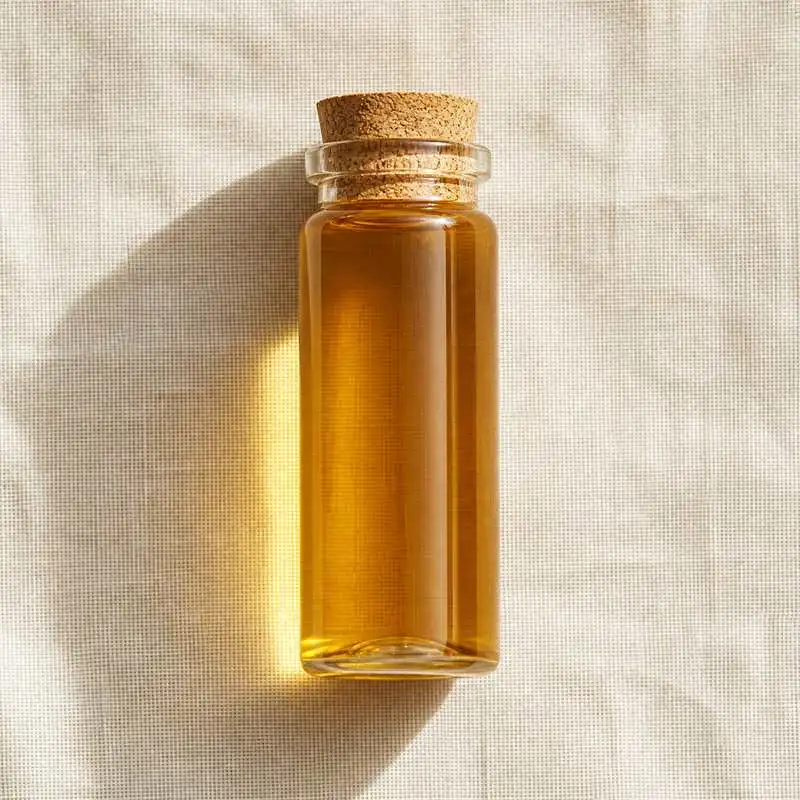
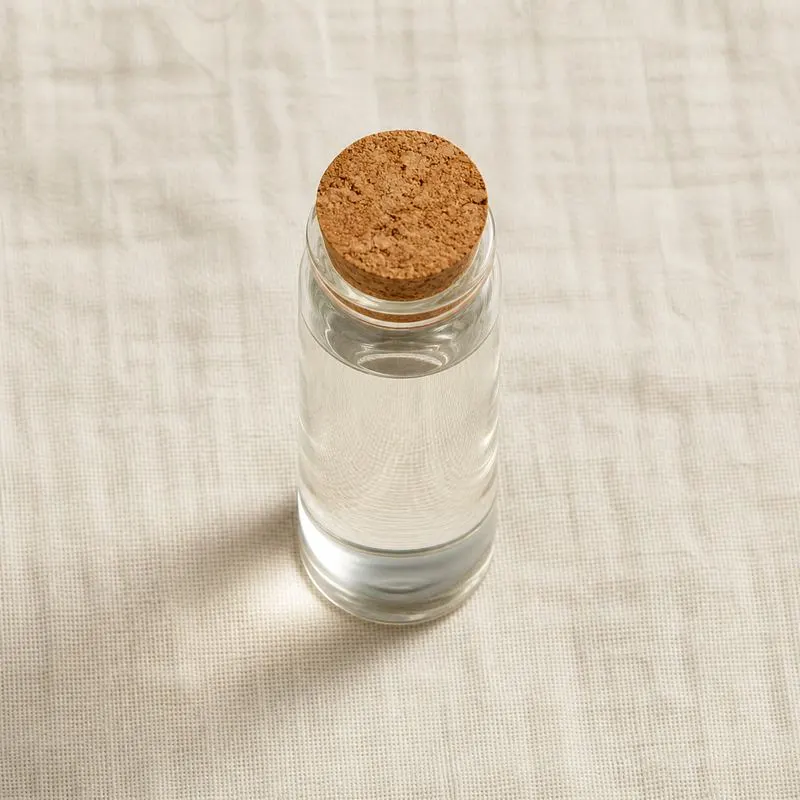
Those components make it a dark orange to reddish-brown, often turbid liquid with a pronounced marine odour, considerably more viscous than the refined product and prone to throwing a sediment on standing. It is insoluble in water and miscible with oils. Free fatty acid content of one to several percent and a peroxide value well above the finished oil limit are normal for the grade, and because the six double bonds of DHA oxidise rapidly the crude is blanketed with nitrogen, held cold and moved to the refinery promptly rather than stored.
We source bulk DHA Crude Oil from top China manufacturers for our partners. The manufacturer is in Zhejiang. A smaller requirement can ship in a combined container with other ingredients.
Please send the grade you need, the volume and your destination port, and we will come back with a solution and a price.
or call +86-21-6858 0751
- Function
- Specialty oil
Specifications
| Item | Specification |
|---|---|
| Appearance | Dark orange to reddish-brown viscous liquid, may be turbid |
| Odour | Strong marine, characteristic of crude oil |
| DHA (of total fatty acids) | ≥ 40.0% |
| Total Omega-3 Fatty Acids | ≥ 45.0% |
| Identification | Conforms by gas chromatography fatty acid profile |
| Free Fatty Acids (as oleic) | ≤ 3.0% |
| Peroxide Value | ≤ 10.0 meq/kg |
| Anisidine Value | ≤ 30 |
| Moisture and Volatiles | ≤ 0.5% |
| Insoluble Impurities | ≤ 0.2% |
| Unsaponifiable Matter | ≤ 6.0% |
| Phosphorus as Phospholipid | ≤ 200 mg/kg |
| Residual Hexane | ≤ 100 mg/kg |
| Lead | ≤ 0.1 mg/kg |
| Arsenic | ≤ 0.1 mg/kg |
| Mercury | ≤ 0.04 mg/kg |
| Salmonella | Negative in 25 g |
Common Markets Grades
Crude DHA oil is traded on a small set of parameters rather than as a range of named grades. DHA content on total fatty acids is the primary figure, quoted at 35, 40 or 50 percent for algal material and around 25 percent for tuna derived crude. Free fatty acid content, moisture and insoluble impurities, unsaponifiable matter and peroxide value together set the refining loss and therefore the price.
The extraction route is stated because it determines what the refiner must remove: hexane extracted crude carries a solvent residue that has to be stripped, supercritical carbon dioxide extracted crude does not, and mechanically separated crude carries more moisture and phospholipid. Source organism and, for fish derived material, species are declared, since these decide the claims that can be carried downstream and the contaminant screening required. There is no consumer grade of this product, and it is not suitable for direct use in food.
Applications
- Feedstock for edible oil refineries producing finished DHA oil for supplements and infant nutrition
- Starting material for omega-3 concentrates made by transesterification and molecular distillation
- Input to microencapsulation lines, where it is refined and then spray dried into powder
- Aquaculture and larval feed oils, where a lower degree of refining is acceptable
- Pet food and pet supplement fat blends, after basic refining
- Toll refining arrangements between fermentation producers and third party refiners
- Source material for laboratory and pilot scale process development work
- Recovery of co-products such as carotenoids and sterols from the refining side streams
China Manufacturers of DHA Crude Oil
Top DHA Crude Oil manufacturers in China.
Company names and logos are the property of the manufacturers themselves. They are listed here because our own directory records them as producing this ingredient. A listing is not an endorsement by them, and we do not represent them or speak on their behalf.
Regulatory Status
Crude DHA oil is a food manufacturing intermediate rather than a finished food ingredient, and it must be refined before it can be used in food. In the United States, the GRAS notifications covering algal DHA oils to which the FDA responded without objection describe a specification for the refined oil, so those notifications cover a crude oil only as an in-process material within that manufacturing description; it does not itself meet the notified specification. Manufacture is nonetheless subject to the preventive controls requirements that apply to human food facilities, and to the animal food rules where the material is destined for feed.
In the European Union, the Union list entries for oils from Schizochytrium and other microalgae set specifications, including limits on peroxide value, free fatty acids and unsaponifiable matter, that a crude oil will not meet, so the authorised novel food is the refined oil rather than the crude. Crude material moves between establishments as an intermediate under the general food hygiene regulation, with traceability obligations along the chain. Where it is destined for feed, the feed hygiene rules and the undesirable substances limits apply instead. Codex has adopted a standard for fish oils which distinguishes crude from refined oils and sets separate quality criteria for each.
Manufacturing Process
For the algal route, a production strain of Schizochytrium is grown heterotrophically in stirred tank fermenters on glucose or glycerol with a defined nitrogen and mineral medium. The culture is run first for biomass and then under nitrogen limitation, which switches the organism into lipid accumulation so that oil builds up in intracellular droplets to more than half the dry cell weight. At harvest the broth is pasteurised and the cells are concentrated by centrifugation or membrane filtration.
Oil release is the step that defines the crude. The concentrated biomass is either dried and then extracted with hexane or supercritical carbon dioxide, or disrupted mechanically by high pressure homogenisation and separated in an aqueous system with the aid of heat, salt or enzymes. In the solvent route the miscella is filtered and the solvent is evaporated under vacuum at low temperature; in the mechanical route the oil phase is separated by centrifuge. What comes off in either case is the crude oil, still carrying gums, free fatty acids, pigments, moisture and fine solids. It is coarse filtered, cooled, blanketed with nitrogen and drummed or tanked for transfer to the refinery, where degumming, neutralisation, bleaching, winterisation and deodorisation will follow.