Disodium Succinate
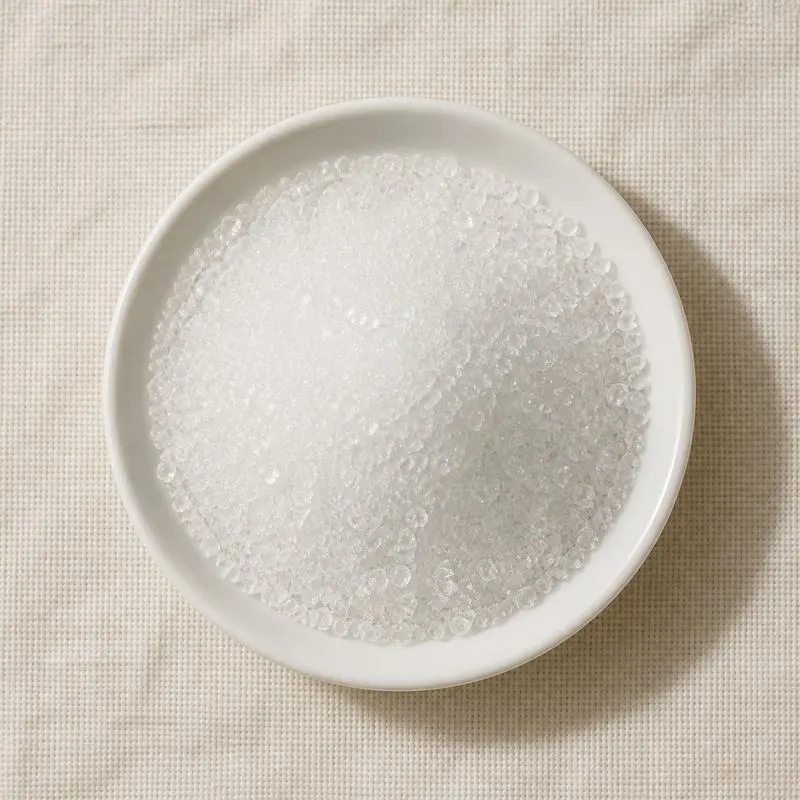
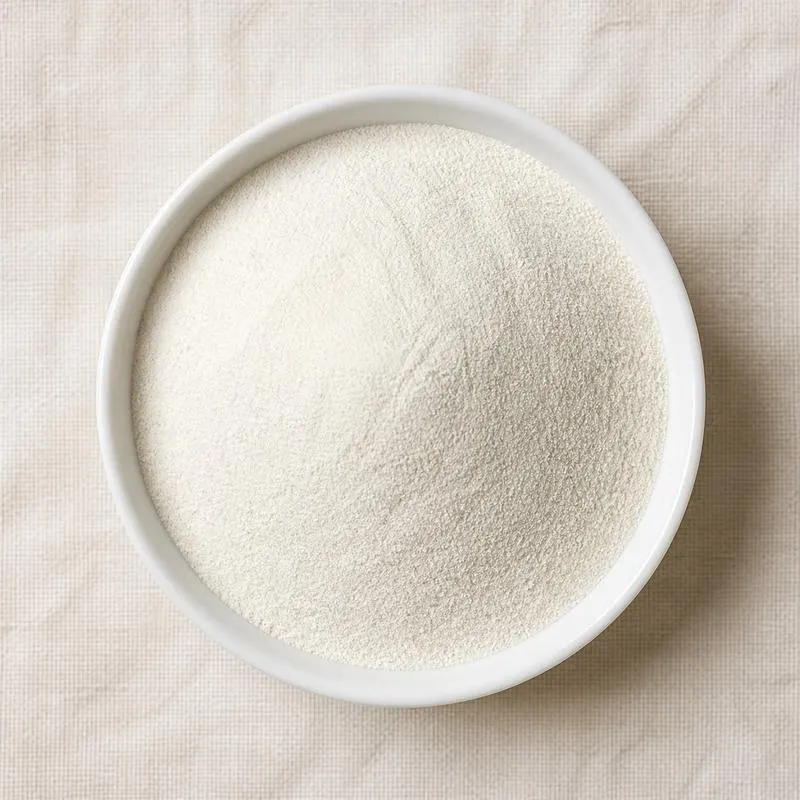
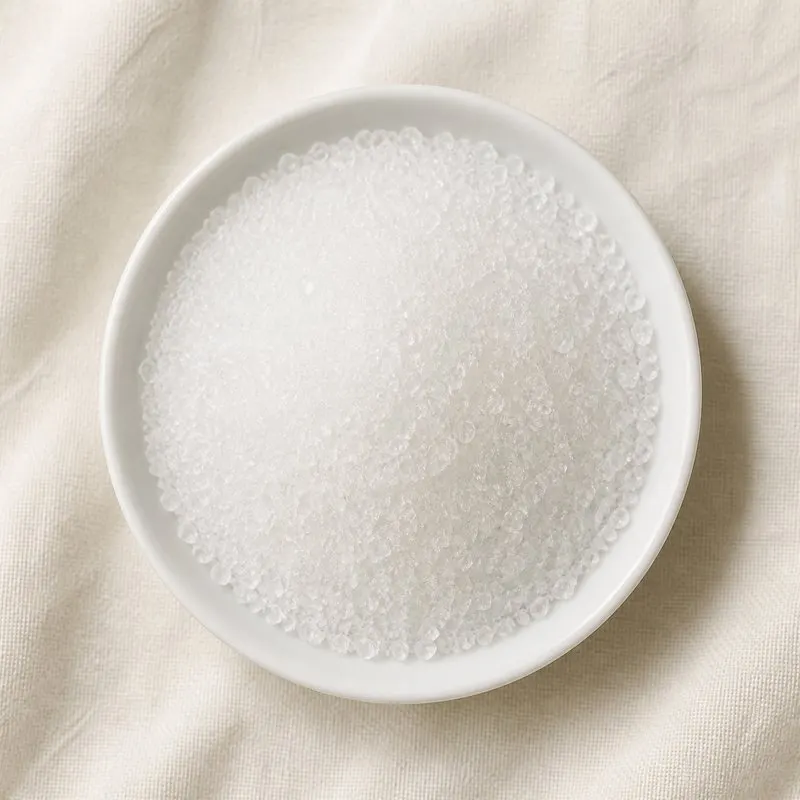
Disodium succinate is the disodium salt of succinic acid, a four-carbon dicarboxylic acid, sold as a white crystalline powder or granule. It functions as a flavour enhancer, contributing the taste that dominates shellfish and cured meat rather than the glutamate umami of monosodium glutamate.
Succinate is the compound largely responsible for the savoury character of clams, scallops, oysters and aged sake, and in low addition it produces a rounded, slightly sour savoury note with a lingering finish. It works alongside glutamate and the nucleotides inosinate and guanylate rather than duplicating them, which is why compound seasonings often carry all three, and it also softens the sharpness of salt and acid in a formulation.
Two hydration states are traded, the anhydrous salt and the hexahydrate. Both are freely soluble in water, giving a mildly alkaline solution, and practically insoluble in ethanol. The anhydrous form is hygroscopic and cakes if exposed to humid air, while the hexahydrate is more stable in storage but loses water on warming, so dosage is calculated on an anhydrous basis regardless of the form.
We source bulk Disodium Succinate from top China manufacturers for our partners, working with several of them. The manufacturers are in Shanghai, Hebei and Shandong. A smaller requirement can ship in a combined container with other ingredients.
Please send the grade you need, the volume and your destination port, and we will come back with a solution and a price.
or call +86-21-6858 0751
- Function
- Flavours and Aromas
Specifications
| Item | Specification |
|---|---|
| Appearance | White crystalline powder or granule, free from foreign matter |
| Identification | Positive for succinate and for sodium |
| Assay, anhydrous basis | Not less than 99.0 percent |
| Loss on Drying, anhydrous grade | Not more than 1.0 percent |
| Water of Crystallisation, hexahydrate | 38.0 to 42.0 percent |
| pH, 5 percent solution | 7.0 to 9.0 |
| Clarity of Solution | Clear and colourless at 5 percent in water |
| Chloride | Not more than 0.02 percent |
| Sulphate | Not more than 0.02 percent |
| Heavy Metals (as Pb) | Not more than 10 mg/kg |
| Lead | Not more than 2 mg/kg |
| Arsenic | Not more than 1 mg/kg |
| Particle Size | 98 percent through 40 mesh, powder grade |
| Total Plate Count | Not more than 1,000 cfu/g |
Common Markets Grades
The material is traded in two forms distinguished by water of crystallisation. Anhydrous disodium succinate assays at not less than 99 percent and is preferred for dry seasoning blends where added moisture would compromise the mix. The hexahydrate carries six molecules of water per molecule of salt and is assayed to a correspondingly lower nominal figure, and is used in liquid systems where its slower dissolution is not a disadvantage.
Within each form, food grade is the principal specification and is defined by assay, chloride and sulphate limits, heavy metals and clarity of solution. Particle size options run from fine powder for dry blends through granular grades that resist dusting and segregation during blending. Industrial and technical grades of the same salt exist for non-food use and are not interchangeable with food grade because the residue and heavy metal limits are looser.
Applications
- Compound seasonings and bouillon, where it works alongside glutamate and nucleotides to broaden the savoury profile
- Seafood flavourings, supplying the shellfish note in imitation crab, clam and scallop products
- Instant noodle seasoning sachets and soup bases
- Processed meat and sausage, where it rounds the flavour of cured products
- Soy sauce, dipping sauces and prepared condiments
- Snack seasoning blends applied dry or through an oil slurry
- Retorted and frozen ready meals
- Reduced-sodium formulations, where its savoury contribution allows some salt to be removed
- Fermented soybean pastes and prepared sauces
- Pet food palatants, in combination with other savoury enhancers
China Manufacturers of Disodium Succinate
Top Disodium Succinate manufacturers in China.
 Aipu Food Industry Co., Ltd.5 ingredients in the directory
- Hebei Huaheng Biological Technology Co., Ltd.9 ingredients in the directory
 Qingdao Baotai Pure Food Technology Co., Ltd.16 ingredients in the directory
Company names and logos are the property of the manufacturers themselves. They are listed here because our own directory records them as producing this ingredient. A listing is not an endorsement by them, and we do not represent them or speak on their behalf.
Regulatory Status
In the United States succinic acid is affirmed as generally recognised as safe for use as a flavour enhancer and pH control agent under 21 CFR 184.1091, and disodium succinate is used as a flavour enhancer under the FEMA GRAS programme for flavouring substances. It is not the subject of a separate food additive petition, and use levels are governed by good manufacturing practice.
In the European Union succinic acid is authorised as a food additive with the number E363, permitted in a limited set of categories such as desserts and soups. Disodium succinate is not itself listed in the Union list of authorised food additives, so it is not used as an additive in EU food, and any application there would have to be considered under the flavourings framework of Regulation (EC) No 1334/2008 rather than under the additive legislation. Japan has a long-established authorisation for the salt as a flavour enhancer, and it is widely used across East Asian seasoning manufacture. JECFA has evaluated succinic acid and its sodium salts within its programme for food additives, and specifications for the salt appear in the international pharmacopoeial and food chemical compendia used for purchase.
Manufacturing Process
Manufacture proceeds from succinic acid, which reaches the plant by one of two routes. The petrochemical route hydrogenates maleic anhydride to succinic anhydride and hydrates it to the acid. The fermentation route ferments glucose or another carbohydrate with an engineered bacterial strain that overproduces succinate, then recovers the acid from the broth by cell removal, ion exchange or precipitation, and crystallisation. Fermentation-derived acid supports a natural or bio-based declaration and now supplies a growing share of the food market.
The acid is dissolved in demineralised water in a stirred reactor and neutralised with sodium hydroxide or sodium carbonate to a defined end point, which fixes the stoichiometry at two sodium ions per molecule and therefore determines the pH of the finished salt. The solution is treated with activated carbon to remove colour, filtered, and concentrated under vacuum until crystallisation begins. Crystals are grown under controlled cooling, separated in a centrifuge, washed, and dried. Drying temperature decides the product form, since gentle drying preserves the hexahydrate while higher temperature drives off the water of crystallisation to give the anhydrous salt. The dried material is milled or granulated to the required particle size and packed against moisture.