Egcg
Epigallocatechin gallate, abbreviated EGCG, is the gallate ester of epigallocatechin and the most abundant catechin in green tea, accounting for roughly half of the total catechin content of the unoxidised leaf. It is a flavan-3-ol with eight phenolic hydroxyl groups, which is why it is a strong hydrogen-donating antioxidant and also why it is chemically fragile.
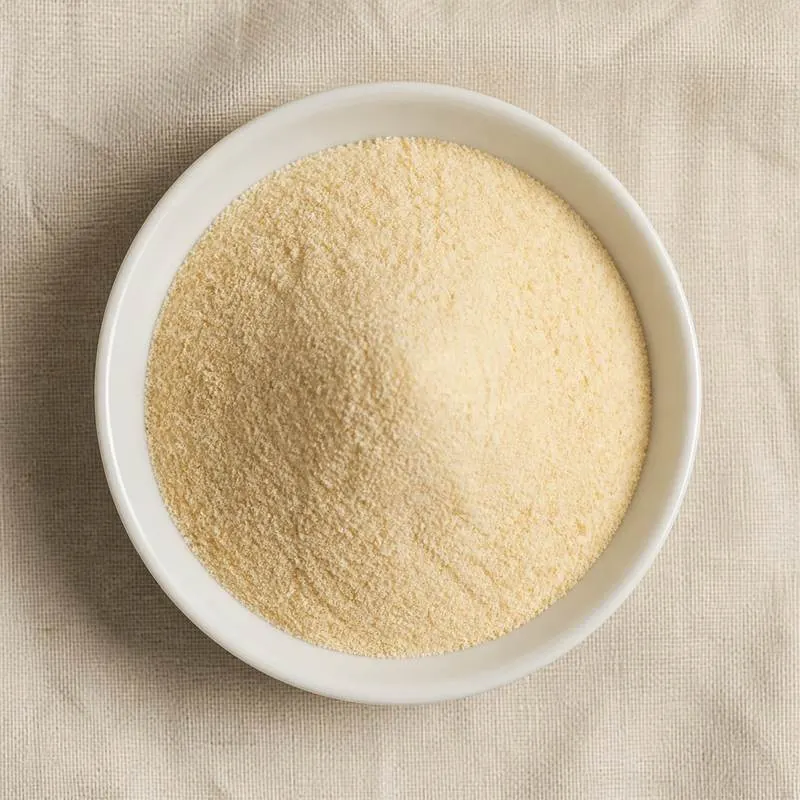
The purified material is an off-white to pale cream powder that is soluble in water, ethanol and warm aqueous systems. Its stability depends almost entirely on pH and oxygen: it is reasonably stable below pH 4, and above about pH 6 it oxidises and epimerises within hours, browning the solution and forming dimers such as theasinensins. Heat accelerates both processes, and metal ions catalyse them, so formulations acidify, exclude oxygen and add a chelating agent.
Trade material spans standardised green tea extracts in which EGCG is one assayed component and purified EGCG at 90 percent and above. Decaffeinated grades are common, because concentrating catechins concentrates caffeine at the same time and most supplement formats want the caffeine removed.
We source bulk Egcg from top China manufacturers for our partners. The manufacturers are in Zhejiang and Shanghai. A smaller requirement can ship in a combined container with other ingredients.
Please send the grade you need, the volume and your destination port, and we will come back with a solution and a price.
or call +86-21-6858 0751
- Function
- Plant extract
Specifications
| Item | Specification |
|---|---|
| Appearance | Off-white to pale cream fine powder |
| EGCG (HPLC, dry basis) | 94.0 percent minimum |
| Total catechins | 98.0 percent minimum |
| Identification | HPLC retention and UV maximum near 274 nm conform to reference standard |
| Caffeine | 0.5 percent maximum |
| Gallic acid | 0.5 percent maximum |
| Loss on drying | 5.0 percent maximum |
| Residue on ignition | 0.5 percent maximum |
| pH (1 percent aqueous solution) | 4.5 to 6.5 |
| Residual solvents (ethanol) | 5000 mg/kg maximum |
| Lead | 1.0 mg/kg maximum |
| Arsenic | 1.0 mg/kg maximum |
| Total plate count | 1000 cfu/g maximum |
| Salmonella | Absent in 25 g |
Common Markets Grades
Grades are best understood as a pair of numbers, total catechins and EGCG. A typical green tea extract is quoted at 50 percent polyphenols with 25 percent EGCG, or at 90 percent polyphenols with 45 to 50 percent EGCG and 80 percent catechins. Purified grades run 90, 94 and 98 percent EGCG by HPLC. Caffeine content is specified alongside, with decaffeinated grades held below 1 percent and sometimes below 0.5 percent.
Physical and delivery options include water-soluble powders, instantised granules for beverage use, and cyclodextrin or phospholipid complexes intended to improve stability and absorption. Buyers should check whether the assay is by HPLC against a reference standard or by a total-phenol colourimetric method, since the latter reads other polyphenols and gives a higher figure for the same material. Origin and pesticide residue certification matter because catechin concentration also concentrates residues carried on the leaf.
Applications
- Green tea catechin supplements in capsule and tablet form, usually decaffeinated
- Weight management and metabolic support formulas, often paired with caffeine or chromium
- Functional beverages and shots, formulated below pH 4 to keep the catechin intact
- Sports nutrition products positioned on antioxidant and recovery claims
- Antioxidant protection in fats, oils and meat products, where tea catechins slow lipid oxidation
- Oral care products including mouthwash and toothpaste for their astringency and antimicrobial action
- Skin care serums and creams formulated at acidic pH
- Gummies and chewables using an encapsulated or complexed grade to limit browning
- Analytical reference standards for catechin quantification in tea and botanical laboratories
Brands Using Egcg
Widely-distributed consumer products that list Egcg on the ingredient label.
Brand names, product names and logos are the property of their owners. They appear here as published evidence that the ingredient is used, taken from the brand's own label or website. Their appearance is not an endorsement, and it does not mean the brand buys from us or from any manufacturer listed on this site.
China Manufacturers of Egcg
Top Egcg manufacturers in China.
 Hangzhou Qinyuan Natural Plant Technology Co., Ltd.3 ingredients in the directory
 Shanghai Novanat Co., Ltd.2 ingredients in the directory
Company names and logos are the property of the manufacturers themselves. They are listed here because our own directory records them as producing this ingredient. A listing is not an endorsement by them, and we do not represent them or speak on their behalf.
Regulatory Status
In the United States green tea extracts and EGCG are used as dietary ingredients in supplements and green tea extract is also used in beverages, where suppliers rely on GRAS conclusions for defined uses rather than on a food additive listing. The FDA considered and declined to authorise health claims linking green tea consumption to reduced cancer risk, allowing only heavily qualified claim language, so labelling in this area is constrained. Liver safety at high catechin intakes has been the subject of regulatory attention, and responsible suppliers provide guidance on daily intake and on taking the product with food.
In the European Union green tea catechins have been assessed by the food safety authority, which concluded that catechins from green tea infusions are generally safe at traditional intakes but that high doses of EGCG from concentrated supplements are associated with liver injury, and labelling requirements follow from that assessment in several member states. EGCG has no E number. Health claims relating to green tea catechins and weight management are not authorised. Codex has not adopted a specification for EGCG, and the general Codex provisions on contaminants and on pesticide residues in tea apply to the raw material.
Manufacturing Process
Manufacture starts from green tea leaf, leaf fines or the fannings and dust fractions left from tea grading. The leaf is extracted with hot water or with aqueous ethanol at moderate temperature, run short and not too hot because catechins degrade during prolonged extraction. The liquor is separated from spent leaf by filtration and decanter centrifuge, chilled to precipitate tea cream, and clarified. Where a decaffeinated product is wanted the caffeine is removed at this stage, either by passing the liquor over a selective adsorption resin, by countercurrent contact with ethyl acetate, or by supercritical carbon dioxide treatment of the leaf before extraction.
Enrichment is done on macroporous adsorption resin, which retains the catechins while sugars, amino acids and salts pass through; graded alcohol elution then separates the catechin fraction. For purified EGCG the eluate is taken further, through preparative or simulated moving bed chromatography that resolves EGCG from epicatechin gallate, epigallocatechin and epicatechin, and the fraction is concentrated under vacuum at low temperature. Crystallisation or precipitation from aqueous alcohol gives the solid, which is washed, dried under vacuum below the temperature at which epimerisation begins, milled and packed under nitrogen in foil laminate away from light.