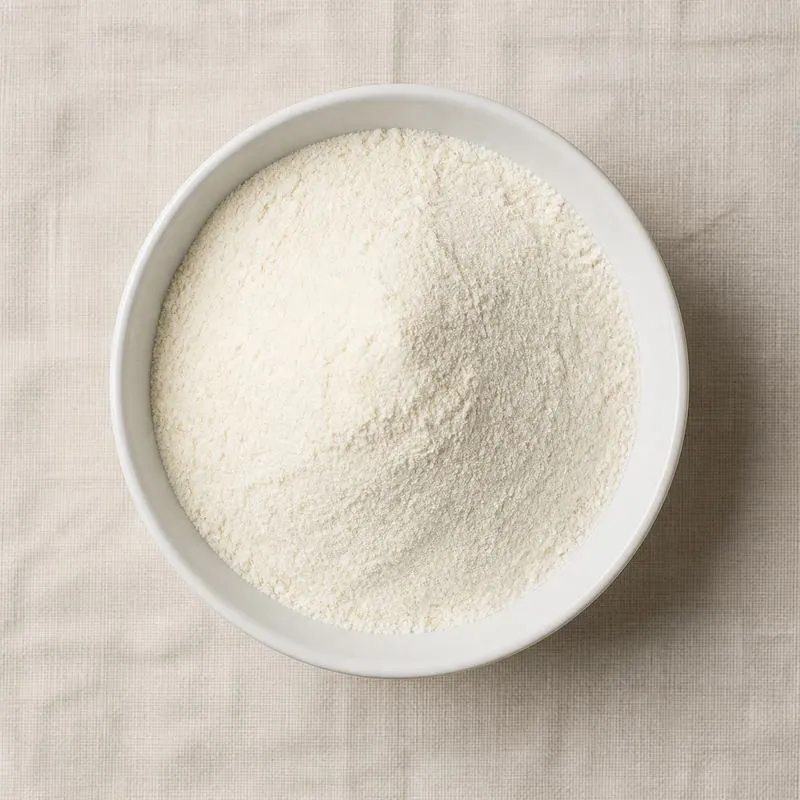
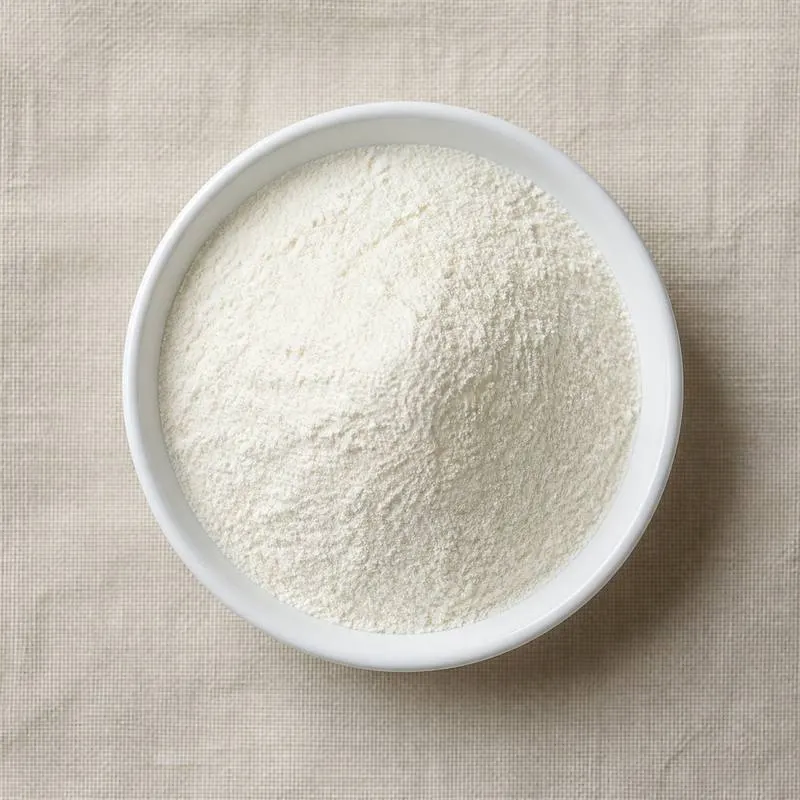
Egg White
Egg white, or albumen, is the clear fraction of the hen egg surrounding the yolk, sold to industry as a pasteurised liquid, frozen product or dried powder. It is roughly 88 percent water and 10 percent protein with almost no lipid and no cholesterol, which makes it the highest quality fat free protein available from a whole food and the reference against which other protein sources are scored.
Around forty proteins are present, but four dominate the functionality. Ovalbumin, at over half the protein, is responsible for heat set gelation. Ovotransferrin denatures at the lowest temperature and initiates coagulation. Ovomucoid is a trypsin inhibitor and unusually heat stable. Globulins and ovomucin together control foaming: the globulins lower surface tension and the ovomucin stabilises the foam film, which is why egg white whips to eight times its volume and holds.
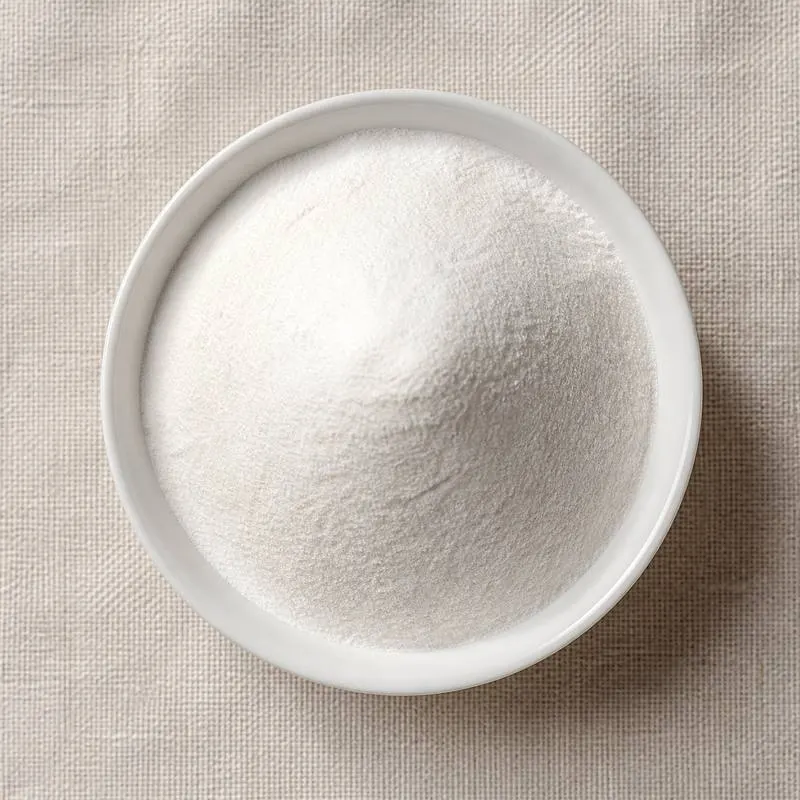
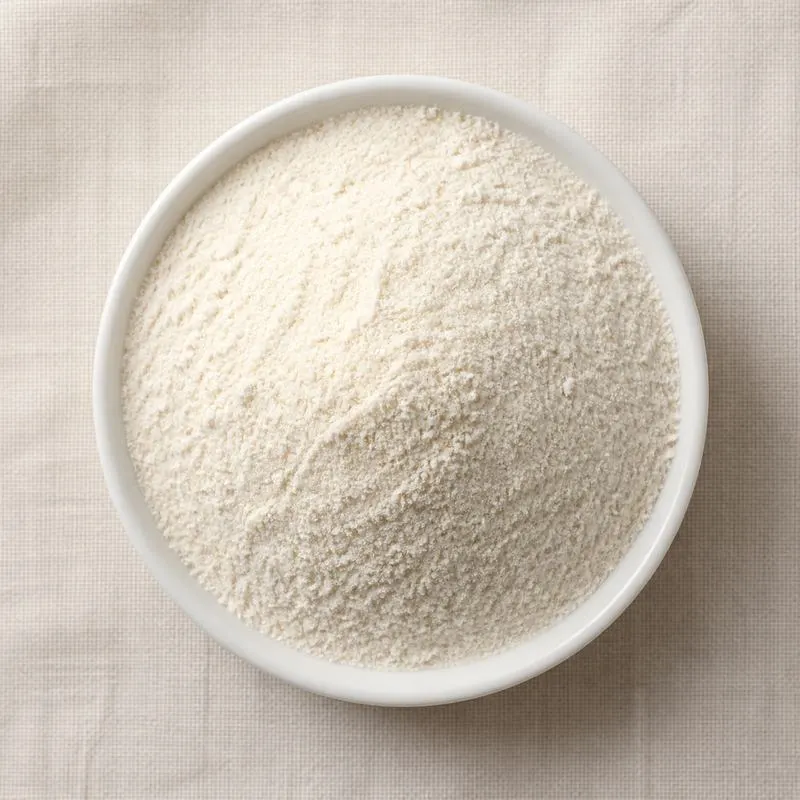
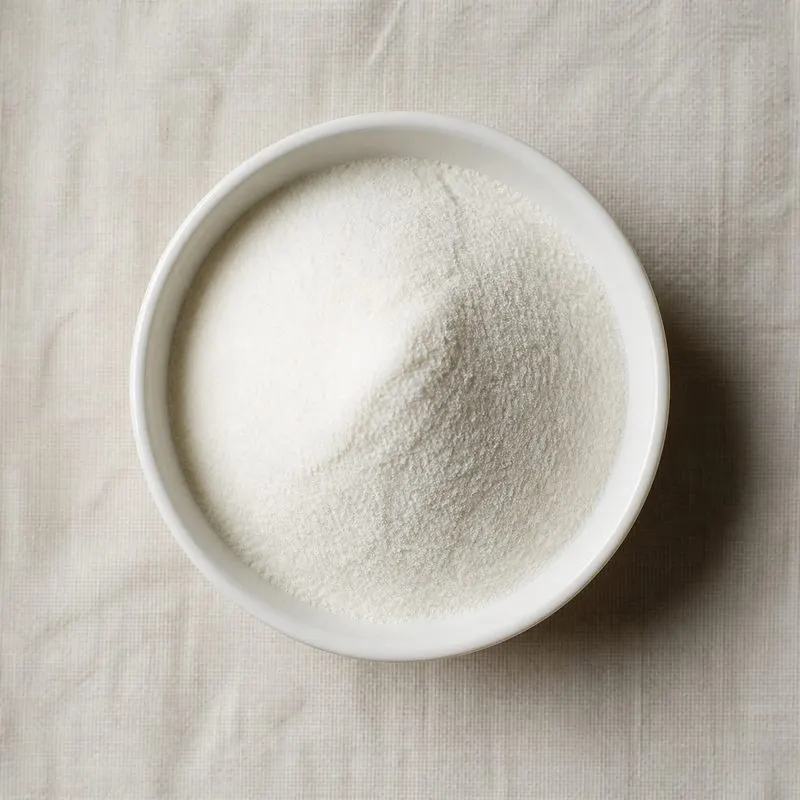
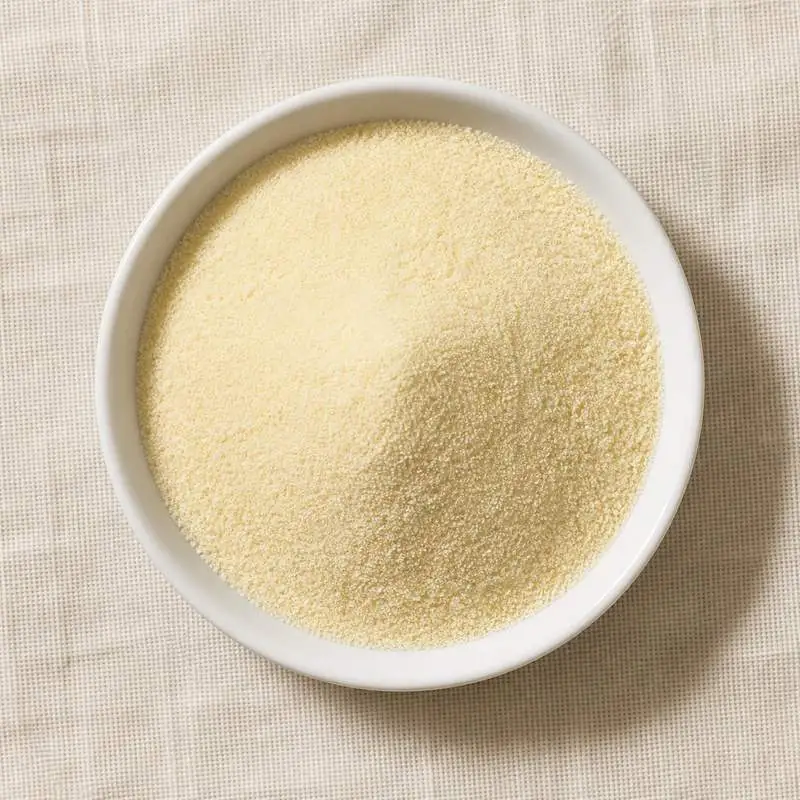
Liquid white is a slightly cloudy, viscous fluid at pH 8.5 to 9.2, and the alkalinity increases as carbon dioxide is lost from the egg after laying. Dried white is a white to pale cream powder or flake at 5 to 8 percent moisture. Protein begins to coagulate from about 62 degrees Celsius, which sets a hard ceiling on pasteurisation and on every downstream thermal process.
We source bulk Egg White from top China manufacturers for our partners. The manufacturers are in Anhui and Liaoning. A smaller requirement can ship in a combined container with other ingredients.
Please send the grade you need, the volume and your destination port, and we will come back with a solution and a price.
or call +86-21-6858 0751
- Function
- Protein
Specifications
| Item | Specification |
|---|---|
| Appearance | Opalescent viscous liquid, or white to pale cream powder or flake |
| Odour and Taste | Bland, characteristic, free from off notes |
| Total Solids, liquid | ≥ 11.0% |
| Moisture, powder | ≤ 8.0% |
| Protein, N x 6.25, dry basis | ≥ 80.0% |
| Fat | ≤ 0.2% |
| Yolk Contamination | ≤ 0.03% |
| Free Glucose | ≤ 0.1% |
| Ash | ≤ 6.0% |
| pH, reconstituted | 7.5 to 9.2 |
| Whipping Performance | Meets specified foam volume and stability |
| Lead | ≤ 0.1 mg/kg |
| Total Plate Count | ≤ 10,000 CFU/g |
| Enterobacteriaceae | ≤ 10 CFU/g |
| E. coli | Absent in 1 g |
| Salmonella | Absent in 25 g |
Common Markets Grades
The primary division is by form. Liquid pasteurised white requires a cold chain, frozen white keeps for months and thaws without the gelation problem that affects yolk, and spray dried white is ambient stable and is the form that moves internationally.
Within dried material the grades are defined by what the powder is for. High whip or angel grade is treated with a whipping aid, usually a trace of sodium lauryl sulphate or a triethyl citrate, to improve foam volume and stability in meringue and aerated confectionery. High gel grade is selected and processed for gel strength in meat and surimi work. Standard grade serves general bakery use. A separate high pH or high stability grade is produced where the powder must dissolve without lumping in cold water.
Every dried grade is desugared before drying, which is a process requirement rather than an option. Powder and flake forms are both traded, with flake the traditional form for bakery and powder for dry blending, and instantised agglomerated grades are used for beverage powders.
Applications
- Meringue, macarons and aerated confectionery such as nougat and marshmallow, using the foaming proteins
- Angel food and sponge cakes, where the whipped white carries the whole structure of the crumb
- Bakery glazes and washes, giving gloss without the colour of yolk
- Protein powders and ready to drink beverages, sold as a fat free complete protein
- Surimi and fish paste products, where the gelling proteins reinforce the gel network
- Processed meat and sausage, as a binder and water holding agent
- Confectionery such as marshmallow and mallow fillings, stabilising the aerated phase
- Wine and juice fining, where albumen protein flocculates tannin and haze forming polyphenols
- Low fat and cholesterol free formulations, replacing whole egg where the lipid is unwanted
- Pet food and specialty feed, as a highly digestible protein source
Brands Using Egg White
Widely-distributed consumer products that list Egg White on the ingredient label.
- Jay RobbEgg White Protein Powder ↗The powder is made from flash-pasteurised egg white protein and provides 24 g of protein per serving.Label verified 2026-08-31
- Naked NutritionNaked Egg Egg White Protein Powder ↗Egg white protein powder made from non-GMO chicken eggs processed to powder within a day, with no additives.Label verified 2026-08-31
Brand names, product names and logos are the property of their owners. They appear here as published evidence that the ingredient is used, taken from the brand's own label or website. Their appearance is not an endorsement, and it does not mean the brand buys from us or from any manufacturer listed on this site.
China Manufacturers of Egg White
Top Egg White manufacturers in China.
- Anhui Rongda Food Co., Ltd.7 ingredients in the directory
 Dalian Greensnow Egg Products Development Co., Ltd.7 ingredients in the directory
Company names and logos are the property of the manufacturers themselves. They are listed here because our own directory records them as producing this ingredient. A listing is not an endorsement by them, and we do not represent them or speak on their behalf.
Regulatory Status
In the United States liquid, frozen and dried egg products are regulated by the Food Safety and Inspection Service under the Egg Products Inspection Act, which requires continuous inspection of processing plants and pasteurisation to prescribed time and temperature combinations for each product form, with a specific lower schedule for egg white reflecting its heat sensitivity. Whipping aids used in dried albumen are permitted food additives subject to the limits set in the food additive regulations. Eggs are a major food allergen requiring plain declaration on the label.
In the European Union egg products are covered by the hygiene regulations for food of animal origin, which set the requirements for breaking plants, the pasteurisation obligation and the microbiological and compositional criteria for liquid and dried egg products, including limits on shell residue and on the indicators of incubated or spoiled eggs. Eggs and products thereof appear in the list of substances causing allergies or intolerances that must be emphasised in the ingredient list, and egg albumen is an authorised fining agent for wine under the oenological rules. Codex addresses the products through its code of hygienic practice for eggs and egg products.
Manufacturing Process
Shell eggs are candled, washed and sanitised, then broken on a high speed breaking machine that separates the white from the yolk mechanically. Separation efficiency is the critical control on this side of the operation, because yolk carried into the white brings lipid with it, and even a fraction of a percent of yolk lipid destroys the foaming capacity that most of the white market depends on. The specification for yolk contamination is correspondingly tight. The white is filtered to remove chalazae and shell fragments and chilled.
Pasteurisation runs in a very narrow window, since ovotransferrin begins to denature only a little above the temperature needed to destroy Salmonella. Processes therefore operate at a modest temperature for several minutes, and many plants lower the pH slightly with lactic acid or add aluminium sulphate as a stabiliser during pasteurisation, then restore the pH afterwards.
Material destined for powder must be desugared first. Free glucose in the white would otherwise react with protein during drying and storage, browning the powder and destroying its solubility and whipping ability, so the liquid is held with a yeast or with glucose oxidase and catalase until the glucose is gone. The desugared white is then spray dried at a low outlet temperature, and the powder is normally hot room treated, held at moderate temperature in the sealed pack for several days, which both further reduces Salmonella risk and improves the gelling and whipping performance of the finished powder.